.jpg?width=96) Vincent van GoghPaíses Bajos, 1853–1890
Vincent van GoghPaíses Bajos, 1853–1890Casa blanca por la noche
White House at Night
¿Se puede contemplar?
Sí, recibe visitas

Museo del Hermitage
Sala413San Petersburgo, Rusia
Expuesta al público. Quién lo avala figura más abajo.
- Comprobado
- En este estado desde
- Fuente
- El museo
Sobre el cuadro
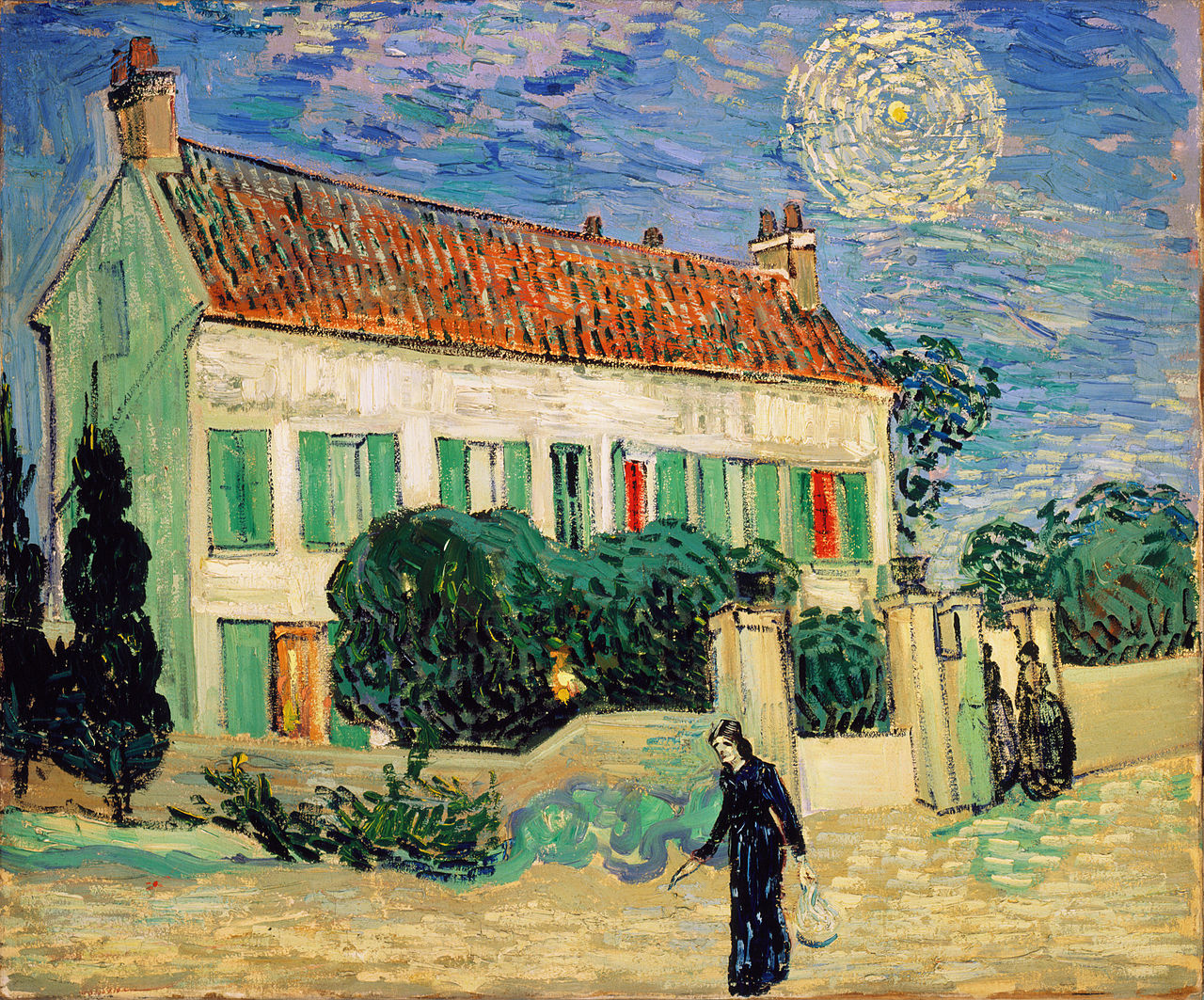
La casa blanca por la noche es un óleo sobre tela pintado el 16 de junio de 1890 en el pequeño pueblo francés de Auvers-sur-Oise por Vincent van Gogh, seis semanas antes de su muerte. Se exhibe en el Museo del Hermitage, San Petersburgo.
Según el Museo del Hermitage, la pintura "expresa la gran tensión psicológica bajo la que se encontraba Van Gogh"; dos de las ventanas, consideradas los "ojos" de una casa, muestran salpicaduras rojas "alarmantes", mientras la estrella, una señal del destino, es vista como un símbolo de la angustia de van Gogh.
Seguir leyendo
Se cree que pintó Casa blanca por la noche alrededor de las 20:00 p. m. debido a la posición de la "estrella" en la pintura. Los astrónomos Donald Olson y Russell Doescher de la Universidad Estatal de Texas calcularon que la estrella en la pintura tiene que ser Venus, tal como brillaba en el cielo nocturno en junio de 1890. La casa es la misma que aparece en Castaño floreciente.
La pintura tiene una historia turbulenta. Fue exhibida en Suiza varias veces durante los años 1920, pero a finales de la década desapareció en la colección privada del industrial alemán Otto Krebs. Muchas de sus adquisiciones eran de un estilo que pronto sería calificado de arte "degenerado" por los nazis, lo que contribuyó a que Krebs, que ya era publicitario, mantuviera en secreto su colección.
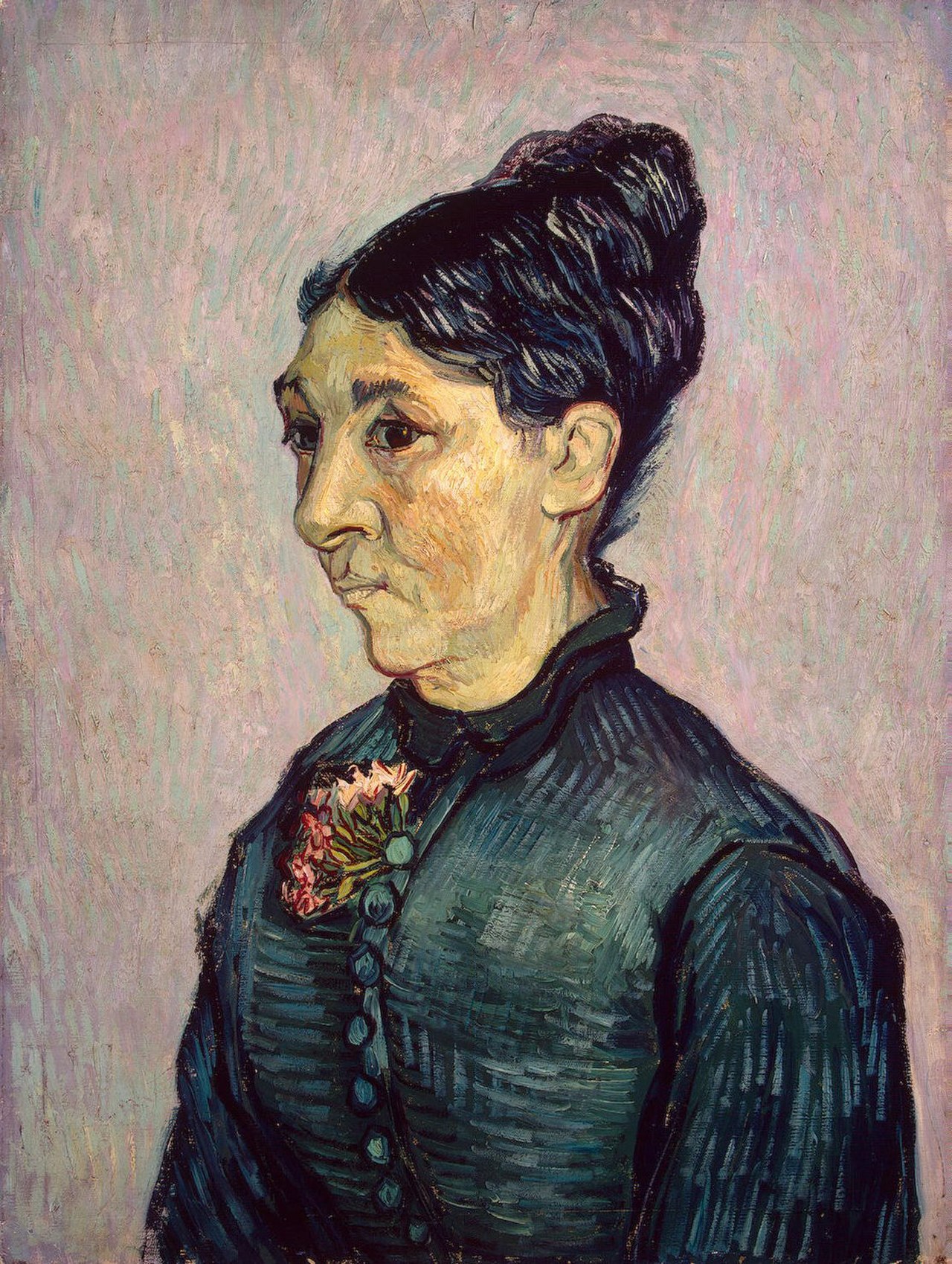
Creyéndose perdida después de la Segunda Guerra Mundial, la pintura languideció en los archivos del Hermitage cincuenta años, antes de su reaparición en 1995 cuando formó parte de una exposición que mostraba obras de arte saqueadas por los soviéticos al final de la guerra. También se mostraron otras tres obras de van Gogh de la colección Krebs: Paisaje con casa y labrador, Mañana, saliendo a trabajar (a partir de un Millet), y el Retrato de Madame Trabuc.
En palabras del museo — en ruso
Оверский период Ван Гога начинался с надежды на новую жизнь и выздоровление, о чем свидетельствуют пейзажи с домами, написанные сразу же по приезде в Овер в мае 1890 года. Но уже в июне, когда мотив дома по-прежнему в центре внимания художника и когда было написано настоящее полотно, эмоциональная гамма его картин расширяется - от мрачных предчувствий до умиротворения. И поскольку эмоции выражались не сюжетом, не описательно, а самими живописными средствами, построение его композиций, сохраняя внутренний динамизм, всякий раз менялось. В "Белом доме" господствует застылость, и главные линии здесь - горизонтали и вертикали. Художнику хочется верить в спасительность крова, но кров может обернуться и клеткой. Художник уделяет здесь особенное внимание окнам - "глазам" дома. В настоящей картине именно эти "глаза", а не три темных персонажа делают дом более живым. Красные пятна окон справа звучат драматическими нотами затаенного страха. Ночную звезду над домом - знак судьбы - Ван Гог писал в моменты наивысшего и опасного душевного напряжения.
Museo del Hermitage
Ficha
- Número de inventario
- ЗКРсэ-511
En el catálogo
Fuentes
- Museo del Hermitage
- Imagen: Museo del Hermitage — Museum open access
Mientras tanto, en la vida de Vincent van Gogh
La vida enteraFebruary 1888
To Arles, dreaming of a “Studio of the South”
The public still neither accepted nor bought his paintings, and in February 1888 Van Gogh left for Arles in the south of France to found a “Studio of the South”, a brotherhood of like-minded artists in which he gave Gauguin the leading role. Theo backed the plan with money.
23 October 1888
Gauguin arrives in Arles
After much pleading Gauguin arrived in Arles, and in November the two painted together: Gauguin portrayed Van Gogh in “The Painter of Sunflowers”, and their first joint outing was to the Alyscamps. At Gauguin's suggestion Vincent painted from memory, producing “Memory of the Garden at Etten”.
23 December 1888
The severed ear
After an altercation on the evening of 23 December, Van Gogh, seemingly hearing voices, severed his left ear, wholly or in part, with a razor and delivered it, wrapped in paper, to a woman at a brothel. Next morning a policeman found him unconscious; in hospital he was diagnosed with “acute mania with generalised delirium”.
May 1889
Voluntarily into the Saint-Paul asylum
Van Gogh left Arles and voluntarily entered the Saint-Paul-de-Mausole asylum, a former monastery in Saint-Rémy-de-Provence, accompanied by the Protestant clergyman Frédéric Salles. Of his two cells with barred windows one became a studio, and the clinic and its garden became the main subjects of his paintings.
27 July 1890
A fatal wound: a revolver shot
Out painting, Van Gogh shot himself in the chest with a revolver he had bought to scare off birds while working outdoors; the bullet passed below his heart, and he made his own way back to his room at the inn. Theo arrived the next day and stayed with him to the end; according to Theo, Vincent's last words were: “The sadness will last forever.”
29 de julio de 1890
Died