.jpg?width=96) Vincent van GoghPaíses Bajos, 1853–1890
Vincent van GoghPaíses Bajos, 1853–1890Las Arenas de Arlés
Arena in Arles
¿Se puede contemplar?
Sí, recibe visitas

San Petersburgo, Rusia
Expuesta al público.
- Comprobado
- En este estado desde
- Fuente
- El museo
Sobre el cuadro
La Arena de Arlés es un cuadro de Vincent van Gogh pintado en Arlés, en noviembre o diciembre de 1888, durante el período en que Paul Gauguin estaba viviendo con él en la La Casa Amarilla. La época de corridas de toros en Arlés comenzó aquel año el Domingo de Pascua (el 1 de abril) y acabó el 21 de octubre. El cuadro de Van Gogh no es, pues, hecho al momento, sino pintado de memoria. Gauguin motivó a Van Gogh que trabajase en el estudio de esta manera. Puede ser que el cuadro sea inacabado, ya que la capa de pintura es muy fina y se muestran parches de yute desnudo en algunos lugares.
Parece que miembros de la familia Roulin (presentes en otras obras del mismo autor) salen en este cuadro, y la mujer del vestido típico de Arlés tiene el perfil de Madame Ginoux.
Leer más
Unas semanas después de pintar este lienzo, por la Navidad de 1888, Van Gogh se cortó parte de su propia oreja. Una de las muchas teorías sobre este notorio incidente es que las corridas de toros (o "juegos de toros" como se les llamaba en Arlés) causaron una gran impresión en Van Gogh, en particular la costumbre de cortar una oreja de un toro derrotado. El torero victorioso volto al ruedo mostrando este premio a la multitud, antes de presentar a una dama de su elección. Hay dudas de si los toros eran matados siguiendo esta moda en Arlés en la época de Vincent van Gogh.
En palabras del museo — en ruso
Картина, написанная во Франции, в Провансе, изображает древний амфитеатр, в котором устраивались бои быков. Арена с участниками корриды едва намечена. Главное "действующее лицо" - публика, собравшаяся на любимое зрелище, пестрая людская толпа. Среди зрителей - знакомые художника, изображенные им и в других произведениях. В период, когда создавалась картина, в Арле с Ван Гогом работал Гоген, увлекший друга своей манерой. Это сказалось в уплощении пространства, замене мазка обобщенными цветовыми пятнами, обведенными широким темным контуром. А экспрессию живописи придают мощный темперамент Ван Гога, его глубоко драматическое мироощущение. Пережив увлечение импрессионизмом, мастер создал свой напряженный художественный язык.
Museo del Hermitage
Ficha
- Número de inventario
- ГЭ-6529
En el catálogo
Fuentes
- Museo del Hermitage
- Imagen: Museo del Hermitage — Museum open access
Mientras tanto, en la vida de Vincent van Gogh
La vida entera1886
Moves to Paris to join his brother Theo
Van Gogh left Antwerp to join his brother Theo, an art dealer, in Paris. So began a very fruitful and eventful Paris period: he painted some two hundred and thirty pictures there, more than anywhere else.
1888
To Arles, dreaming of a “Studio of the South”
The public still neither accepted nor bought his paintings, and in February 1888 Van Gogh left for Arles in the south of France to found a “Studio of the South”, a brotherhood of like-minded artists in which he gave Gauguin the leading role. Theo backed the plan with money.
23 October 1888
Gauguin arrives in Arles
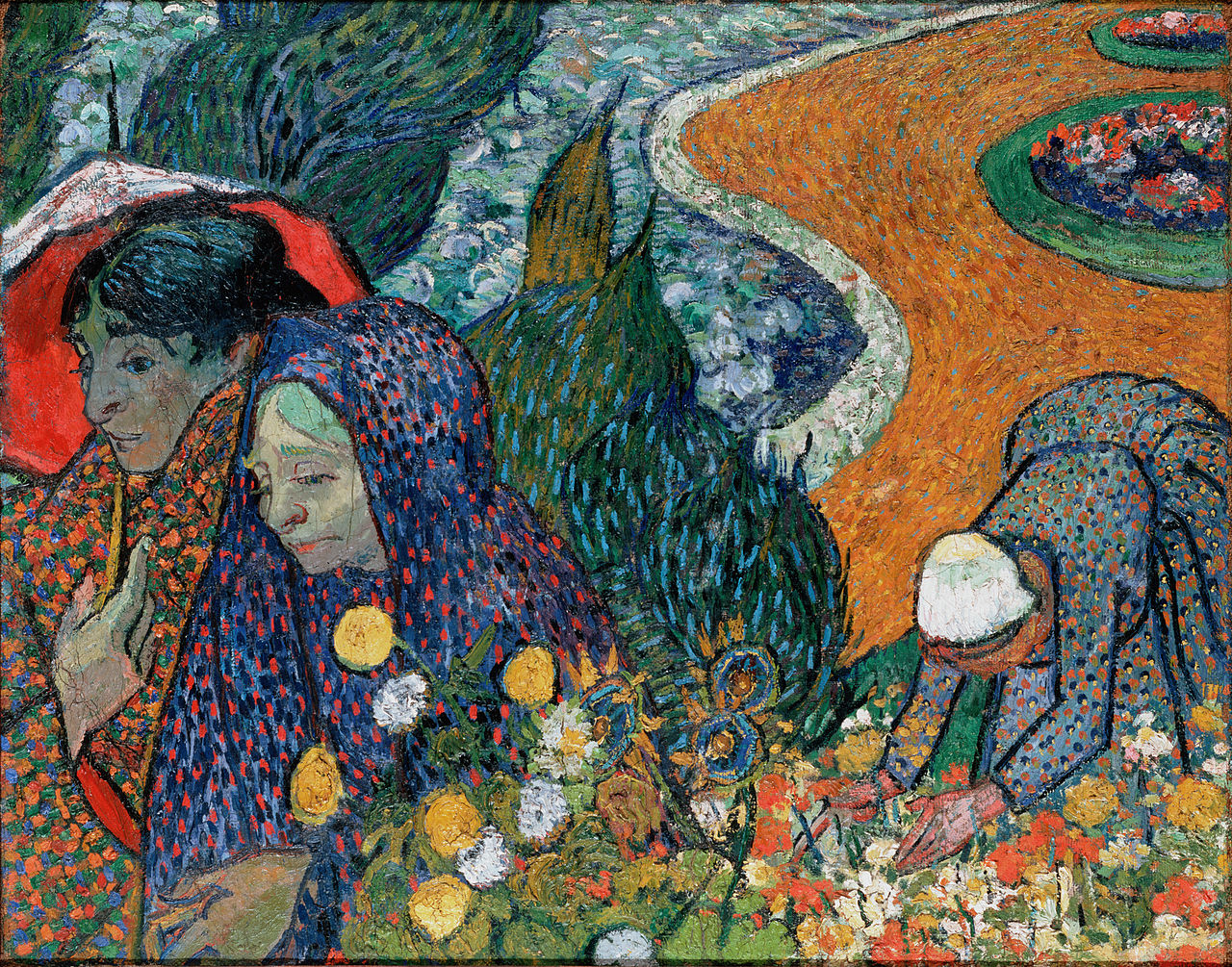
After much pleading Gauguin arrived in Arles, and in November the two painted together: Gauguin portrayed Van Gogh in “The Painter of Sunflowers”, and their first joint outing was to the Alyscamps. At Gauguin's suggestion Vincent painted from memory, producing “Memory of the Garden at Etten”.
23 December 1888
The severed ear
After an altercation on the evening of 23 December, Van Gogh, seemingly hearing voices, severed his left ear, wholly or in part, with a razor and delivered it, wrapped in paper, to a woman at a brothel. Next morning a policeman found him unconscious; in hospital he was diagnosed with “acute mania with generalised delirium”.
1889
Voluntarily into the Saint-Paul asylum
Van Gogh left Arles and voluntarily entered the Saint-Paul-de-Mausole asylum, a former monastery in Saint-Rémy-de-Provence, accompanied by the Protestant clergyman Frédéric Salles. Of his two cells with barred windows one became a studio, and the clinic and its garden became the main subjects of his paintings.
29 de julio de 1890
Died