ART WIKI37,187 on view
MapCollectionArtistsMuseumsExhibitionsJournal
Sign in

ART WIKI

Where to see art and when to visit.

Collections: Art Institute of Chicago, Cooper Hewitt, Smithsonian Design Museum, Getty Villa, Harvard Art Museums, Hirshhorn Museum and Sculpture Garden, J. Paul Getty Museum, Minneapolis Institute of Art, Musée du Louvre, National Gallery of Art, National Museum of Asian Art, National Portrait Gallery (Smithsonian), Pushkin State Museum of Fine Arts, Rijksmuseum, Smithsonian American Art Museum, SMK — National Gallery of Denmark, State Hermitage Museum, State Russian Museum, The Cleveland Museum of Art, The Metropolitan Museum of Art, The Museum of Modern Art, Tretyakov Gallery, Victoria and Albert Museum, Whitney Museum of American Art, Yale Center for British Art, Yale University Art Gallery, State Catalogue of the Museum Fund of Russia (274 museums), Europeana (19 museums), Wikidata (44 museums), Paris Musées (12 museums), Joconde, the French Ministry of Culture's museum database (495 museums), and the Catalogo generale dei Beni Culturali of Italy's Ministry of Culture (74 museums). Images belong to their rights holders.

Sections

  • Map
  • Search
  • Collection
  • Masterpieces
  • Stolen and lost
  • Embed artwork status
  • On view now
  • Artists

More

  • Museums & galleries
  • Exhibitions
  • Journal
  • Where the data comes from
  • Privacy & cookies
  • About
  • Terms of use
HomeMapBrowse

Browse

Platinum print

A platinum print is a photograph whose image consists of platinum particles held within paper. Iron salts respond to light and help form the metal image. Usually matte, these prints can distinguish many closely spaced tones without a glossy surface. Their history includes a peculiar interruption: the metal photographers valued for pictures became urgently needed by the weapons industry.

4,834 works from 17 museums13 on view nowClear all

/
Technique
  • All
  • Gelatin silver print142,366
  • Albumen print67,519
  • Colour print10,354
  • Salted paper print8,256
  • Inkjet print7,348
  • Platinum print4,834
  • Daguerreotype3,221
  • Cyanotype752
Church in Taos, Ansel Adams, ca. 1920–50Ansel AdamsChurch in Taosca. 1920–50Yale University Art Gallery
Two Pupils in Greek Dress, Thomas Eakins, 1883Thomas EakinsTwo Pupils in Greek Dress1883The Metropolitan Museum of Art
The Serra Curicuriari, with the Rio Negro in the background, lies south of São Gabriel da Cachoeira in the north of Brazil’s Amazon region. Amazonia. Brazil., Sebastião Salgado, 2009Sebastião SalgadoThe Serra Curicuriari, with the Rio Negro in the background, lies south of São Gabriel da Cachoeira in the north of Brazil’s Amazon region. Amazonia. Brazil.2009National Gallery of Art
On King George Island, there is a large concentration of elephant seals (Mirounga leonina). As adults, these animals, weighing four to five tons, are the largest seals in the world. Antarctic Peninsula., Sebastião Salgado, 2005Sebastião SalgadoOn King George Island, there is a large concentration of elephant seals (Mirounga leonina). As adults, these animals, weighing four to five tons, are the largest seals in the world. Antarctic Peninsula.2005National Gallery of Art
Yacare caimans (Caiman yacare) in the Pantanal, one of the world’s largest wetlands, covering a vast area of western Brazil and spilling into Paraguay and Bolivia. Mato Grosso do Sul, Brazil., Sebastião Salgado, 2011Sebastião SalgadoYacare caimans (Caiman yacare) in the Pantanal, one of the world’s largest wetlands, covering a vast area of western Brazil and spilling into Paraguay and Bolivia. Mato Grosso do Sul, Brazil.2011National Gallery of Art
The Zavodovski Island is home to some 750,000 couples of chinstrap penguins (Pygoscelis antarctica) as well as a large colony of macaroni penguins (Eudyptes chrysolophus). South Sandwich Islands., Sebastião Salgado, 2009Sebastião SalgadoThe Zavodovski Island is home to some 750,000 couples of chinstrap penguins (Pygoscelis antarctica) as well as a large colony of macaroni penguins (Eudyptes chrysolophus). South Sandwich Islands.2009National Gallery of Art
The Hay Wagon, Alfred Stieglitz, 1922Alfred StieglitzThe Hay Wagon1922National Gallery of Art
Georgia O'Keeffe, Alfred Stieglitz, 1918Alfred StieglitzGeorgia O'Keeffe1918National Gallery of Art
Georgia O'Keeffe—Hands, Alfred Stieglitz, 1918Alfred StieglitzGeorgia O'Keeffe—Hands1918National Gallery of Art
Georgia O'Keeffe, Alfred Stieglitz, probably 1918Alfred StieglitzGeorgia O'Keeffeprobably 1918National Gallery of Art
Hasemann's Studio, Alfred Stieglitz, 1894, printed 1895/1896Alfred StieglitzHasemann's Studio1894, printed 1895/1896National Gallery of Art
In the Dinka village of Ger, a symbolic representation of horns is carved on the inside wall of a traditional home. Southern Sudan., Sebastião Salgado, 2006Sebastião SalgadoIn the Dinka village of Ger, a symbolic representation of horns is carved on the inside wall of a traditional home. Southern Sudan.2006National Gallery of Art
[Thomas Eakins and John Laurie Wallace on a Beach], Thomas Eakins, ca. 1883Thomas Eakins[Thomas Eakins and John Laurie Wallace on a Beach]ca. 1883The Metropolitan Museum of Art
Two Weddell seals (Leptonychotes weddellii) on an iceberg close to Foyn Harbour on Enterprise Island, in Errera Canal. Antarctic Peninsula., Sebastião Salgado, 2005Sebastião SalgadoTwo Weddell seals (Leptonychotes weddellii) on an iceberg close to Foyn Harbour on Enterprise Island, in Errera Canal. Antarctic Peninsula.2005National Gallery of Art
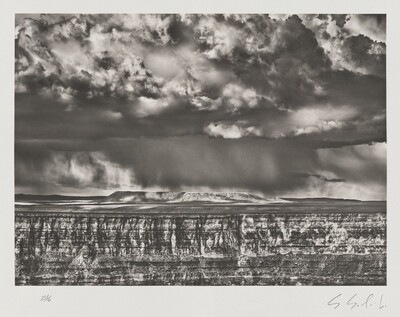
The Grand Canyon viewed from National Forest, Arizona. The big mesa visible on the far side of the canyon is in Navajo territory. This photograph was taken during a localized snowstorm. USA., Sebastião Salgado, 2010Sebastião SalgadoThe Grand Canyon viewed from National Forest, Arizona. The big mesa visible on the far side of the canyon is in Navajo territory. This photograph was taken during a localized snowstorm. USA.2010National Gallery of Art
The eastern part of the Brooks Range, which rises to over 9,800 feet. The Arctic National Wildlife Refuge. Alaska. USA., Sebastião Salgado, 2009Sebastião SalgadoThe eastern part of the Brooks Range, which rises to over 9,800 feet. The Arctic National Wildlife Refuge. Alaska. USA.2009National Gallery of Art
Approximately 1,500 miles long, the Juruá River is one of the Amazon’s longest tributaries. Amazonia. Brazil., Sebastião Salgado, 2009Sebastião SalgadoApproximately 1,500 miles long, the Juruá River is one of the Amazon’s longest tributaries. Amazonia. Brazil.2009National Gallery of Art
The Erg Ubari is a vast expanse of sand dunes. It has no fresh water, but it contains a number of salt lakes concentrated in an area known as the “Ramla d’El Daouda,” meaning the Dune of the Worm-Eaters. Libya., Sebastião Salgado, 2009Sebastião SalgadoThe Erg Ubari is a vast expanse of sand dunes. It has no fresh water, but it contains a number of salt lakes concentrated in an area known as the “Ramla d’El Daouda,” meaning the Dune of the Worm-Eaters. Libya.2009National Gallery of Art
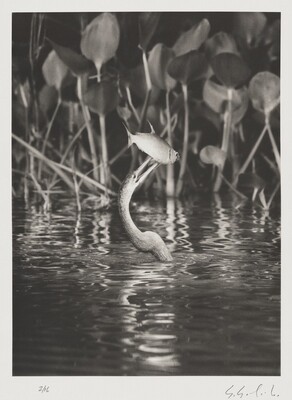
The biguatinga, or anhinga (Anhinga anhinga), is a large aquatic bird. Here it has just caught a lambari (Astyanax bimaculatus). Cuiabá River in northern Pantanal. Mato Grosso, Brazil., Sebastião Salgado, 2011Sebastião SalgadoThe biguatinga, or anhinga (Anhinga anhinga), is a large aquatic bird. Here it has just caught a lambari (Astyanax bimaculatus). Cuiabá River in northern Pantanal. Mato Grosso, Brazil.2011National Gallery of Art
Basaltic organ pipes on Mitsio Island. Madagascar., Sebastião Salgado, 2010Sebastião SalgadoBasaltic organ pipes on Mitsio Island. Madagascar.2010National Gallery of Art
A leopard (Panthera pardus) in the Barab River Valley, Damaraland. Namibia., Sebastião Salgado, 2005Sebastião SalgadoA leopard (Panthera pardus) in the Barab River Valley, Damaraland. Namibia.2005National Gallery of Art
Plains zebra (Equus quagga). Okavango Delta, Botswana., Sebastião Salgado, 2007Sebastião SalgadoPlains zebra (Equus quagga). Okavango Delta, Botswana.2007National Gallery of Art
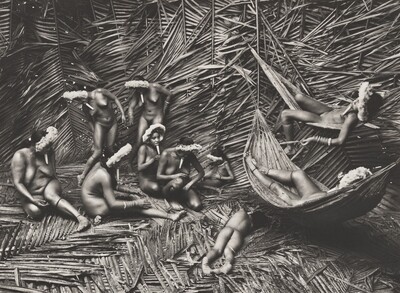
Typically, the women in the Zo’é village of Towari Ypy use the red fruit of the urucum (Bixa orellana) to color their bodies. It is also used in cooking. Pará, Brazil., Sebastião Salgado, 2009Sebastião SalgadoTypically, the women in the Zo’é village of Towari Ypy use the red fruit of the urucum (Bixa orellana) to color their bodies. It is also used in cooking. Pará, Brazil.2009National Gallery of Art
Performer of the singsing festival of Mount Hagen. Western Highlands Province. Papua New Guinea., Sebastião Salgado, 2008Sebastião SalgadoPerformer of the singsing festival of Mount Hagen. Western Highlands Province. Papua New Guinea.2008National Gallery of Art
The Pachypodium plant (Pachypodium lamerei) as shown here, in its homeland can grow up to 85 feet in height. Tsingy of Bemaraha National Park. Madagascar., Sebastião Salgado, 2010Sebastião SalgadoThe Pachypodium plant (Pachypodium lamerei) as shown here, in its homeland can grow up to 85 feet in height. Tsingy of Bemaraha National Park. Madagascar.2010National Gallery of Art
Freienwalde a. O., Alfred Stieglitz, 1886Alfred StieglitzFreienwalde a. O.1886National Gallery of Art
First Steichen Exhibition, Main Room—Photo-Secession Gallery, Alfred Stieglitz, 1906Alfred StieglitzFirst Steichen Exhibition, Main Room—Photo-Secession Gallery1906National Gallery of Art
Waldo Frank, Alfred Stieglitz, 1920Alfred StieglitzWaldo Frank1920National Gallery of Art
Frank S. Herrmann, Alfred Stieglitz, 1922Alfred StieglitzFrank S. Herrmann1922National Gallery of Art
Yali men spend most of their time hunting in the forest where they also collect insects, fruit and vegetables. West Papua. Indonesia., Sebastião Salgado, 2010Sebastião SalgadoYali men spend most of their time hunting in the forest where they also collect insects, fruit and vegetables. West Papua. Indonesia.2010National Gallery of Art
Large sand dunes between Albrg and Tin Merzouga, Tadrart. South of Djanet, Algeria., Sebastião Salgado, 2009Sebastião SalgadoLarge sand dunes between Albrg and Tin Merzouga, Tadrart. South of Djanet, Algeria.2009National Gallery of Art
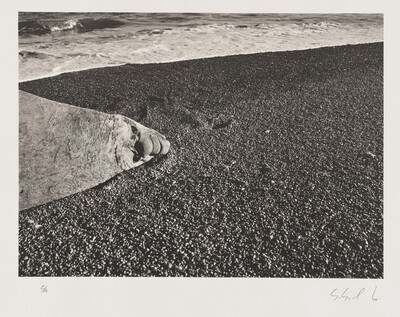
A southern elephant seal (Mirounga leonina). Males can weigh more than 6,600 pounds, although females rarely exceed 2,000 pounds. Valdés Peninsula. Argentina., Sebastião Salgado, 2004Sebastião SalgadoA southern elephant seal (Mirounga leonina). Males can weigh more than 6,600 pounds, although females rarely exceed 2,000 pounds. Valdés Peninsula. Argentina.2004National Gallery of Art
On the plateau of the Kukenan Tepui, wind and water erosion has sculpted bizarre shapes from the ancient rocks. Amazonia. Venezuela., Sebastião Salgado, 2006Sebastião SalgadoOn the plateau of the Kukenan Tepui, wind and water erosion has sculpted bizarre shapes from the ancient rocks. Amazonia. Venezuela.2006National Gallery of Art
Teureum, sikeirei and leader of the Mentawai clan. This shaman is preparing a filter for sago, with the leaves of this same tree. Siberut Island. West Sumatra. Indonesia., Sebastião Salgado, 2008Sebastião SalgadoTeureum, sikeirei and leader of the Mentawai clan. This shaman is preparing a filter for sago, with the leaves of this same tree. Siberut Island. West Sumatra. Indonesia.2008National Gallery of Art
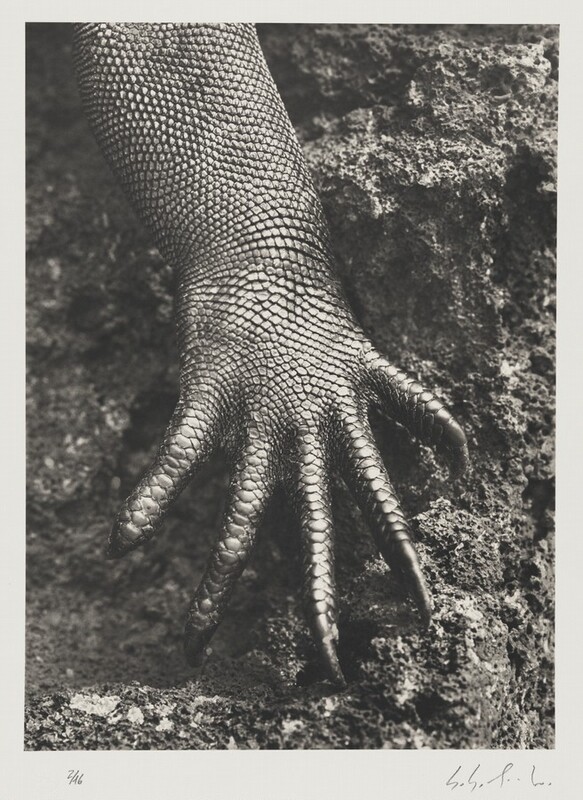
Marine iguana (Amblyrhynchus cristatus). It is the only type of iguana in the world able to live in salty waters. Galápagos. Ecuador., Sebastião Salgado, 2004Sebastião SalgadoMarine iguana (Amblyrhynchus cristatus). It is the only type of iguana in the world able to live in salty waters. Galápagos. Ecuador.2004National Gallery of Art
This view of the Grey Glacier from John Gardner Pass reveals the erosion of rocks caused by the constant movement of the glacier. Southern Patagonian Ice Field. Chile., Sebastião Salgado, 2007Sebastião SalgadoThis view of the Grey Glacier from John Gardner Pass reveals the erosion of rocks caused by the constant movement of the glacier. Southern Patagonian Ice Field. Chile.2007National Gallery of Art
Joan Lange Bowly "The Wuz", Dorothea Lange, 1916Dorothea LangeJoan Lange Bowly "The Wuz"1916National Gallery of Art
The Akanan River. Mirroring the forest and the Auyantepui in the background, its water is black because of organic tannins released during decomposition. Venezuela., Sebastião Salgado, 2006Sebastião SalgadoThe Akanan River. Mirroring the forest and the Auyantepui in the background, its water is black because of organic tannins released during decomposition. Venezuela.2006National Gallery of Art
A young Himba woman near the Katapati River in Marienfluss, Kaokoland. Namibia., Sebastião Salgado, 2005Sebastião SalgadoA young Himba woman near the Katapati River in Marienfluss, Kaokoland. Namibia.2005National Gallery of Art
Bryce Canyon National Park during a snowstorm. Utah. USA., Sebastião Salgado, 2010Sebastião SalgadoBryce Canyon National Park during a snowstorm. Utah. USA.2010National Gallery of Art
Group portrait of all the Kamayura shamans. Upper Xingu, Mato Grosso, Brazil., Sebastião Salgado, 2006Sebastião SalgadoGroup portrait of all the Kamayura shamans. Upper Xingu, Mato Grosso, Brazil.2006National Gallery of Art
A San hunter holding a korhaan (Eupodotis melanogaster). This bird is captured using its eggs as bait and a snare made of twigs. Botswana., Sebastião Salgado, 2008Sebastião SalgadoA San hunter holding a korhaan (Eupodotis melanogaster). This bird is captured using its eggs as bait and a snare made of twigs. Botswana.2008National Gallery of Art
Marine iguana (Amblyrhynchus cristatus). Galápagos. Ecuador., Sebastião Salgado, 2004Sebastião SalgadoMarine iguana (Amblyrhynchus cristatus). Galápagos. Ecuador.2004National Gallery of Art
A jaguar (Panthera onca), the largest cat of the Americas. Encontro das Águas National Park. Pantanal. Mato Grosso. Brazil., Sebastião Salgado, 2011Sebastião SalgadoA jaguar (Panthera onca), the largest cat of the Americas. Encontro das Águas National Park. Pantanal. Mato Grosso. Brazil.2011National Gallery of Art
Preparing a young girl for the final stage of the Amuricumã ceremony at the Kamayura village. Upper Xingu, Mato Grosso, Brazil., Sebastião Salgado, 2005Sebastião SalgadoPreparing a young girl for the final stage of the Amuricumã ceremony at the Kamayura village. Upper Xingu, Mato Grosso, Brazil.2005National Gallery of Art
Men from several of New Guinea’s ethnic groups, cover and protect their genitals with the koteka, or penis gourd. West Papua. Indonesia., Sebastião Salgado, 2010Sebastião SalgadoMen from several of New Guinea’s ethnic groups, cover and protect their genitals with the koteka, or penis gourd. West Papua. Indonesia.2010National Gallery of Art
On the Porch, Oaklawn, Lake George, Alfred Stieglitz, probably 1893, printed 1895/1896Alfred StieglitzOn the Porch, Oaklawn, Lake Georgeprobably 1893, printed 1895/1896National Gallery of Art

Platinum print

In August 1918 Alfred Stieglitz wrote to Paul Strand in frustration: he had run out of decent platinum paper and wanted only a few sheets. A photographer’s choice of grey was caught up in a war economy. Platinum was needed in making explosives, and restrictions on civilian use reduced the supply of photographic materials. The shortage helps explain a change that can otherwise look like a matter of taste: photographers turned to palladium, silver-platinum combinations and gelatin silver papers.

How is a platinum photograph made?

William Willis introduced a practical platinum process in 1873. In a common developed-out version, paper is coated with a mixture containing iron and platinum salts, then dried. A negative sits directly against it during exposure. The light-sensitive iron compounds change where light reaches them; during subsequent development, that pattern governs the formation of metallic platinum. Clearing baths and washing remove unwanted residues. The final image is metal distributed through the paper rather than a metal sheet.

The distinction is visible. An ordinary platinum print does not reflect like a daguerreotype, and it lacks the separate glossy image layer familiar from many silver photographs. Its paper contributes to the appearance throughout. The maker chooses the sheet as carefully as the chemistry. A rough or smooth surface, a warmer or cooler paper colour: these are parts of the photograph, not merely a support hidden behind it. They remain involved when light falls on the finished print.

There was never just one platinum recipe. Changes in chemistry, humidity and development could shift the tone; related palladium processes offered another range of colours. Nor is every platinum print entirely matte. Commercial Japine papers, introduced in 1906, had a modified surface with some sheen. This is why “brown means old” and “gloss means silver” are unreliable shortcuts. Identifying the process sometimes requires examination well beyond what a visitor can do through a frame.

A print can contain more than one process

Edward Steichen treated photographic methods as things that could be combined. In research at the Metropolitan Museum, scientists examined platinum prints containing mercury and photographs with gum pigment laid over platinum. X-ray fluorescence identified the metals without taking a sample. The findings explain why two areas of one photograph may behave differently: a detailed platinum image can coexist with a heavier pigment layer. A medium label is sometimes the beginning of a recipe, rather than its complete account.

1

Platinum’s reputation for lasting well also helped attract photographers. But the durability of the image metal and the survival of a paper object are separate questions. A print still has fibres, edges and a surface, and may have additional coatings. Look for the fine differences within a dark passage or a pale one, rather than expecting a metallic sparkle. The attraction often lies in how many small changes can remain distinct before the eye reaches black or the colour of the bare paper.

Why return to platinum after film and digital cameras?

Irving Penn began coating platinum papers by hand in the 1960s, part of a renewed interest in the process. Its later use is also visible in the catalogue’s photographs by Sebastião Salgado. His Bryce Canyon National Park during a Snowstorm dates to 2010, more than a century after Willis’s invention. A contemporary subject date and an old printing method are perfectly compatible. The camera records an image; the choice of how to make a physical print remains another decision.

Sebastião Salgado, Bryce Canyon National Park during a Snowstorm, 2010. A modern landscape printed through a nineteenth-century process.

Salgado’s Genesis project took eight years of travel, bringing landscapes, animals and communities into an extended account of the planet. He and curator Lélia Wanick Salgado presented it as a call to protect the environment. That purpose is worth keeping beside the beauty of the prints. A snowstorm is a particular weather event, not by itself proof of a wider environmental condition; the argument emerges through the selection and arrangement of photographs across the project.

The catalogue also includes Marine Iguana, Galápagos, Ecuador, dated 2004. Both this photograph and the Bryce Canyon view belong to the National Gallery of Art in Washington, D.C., in its Genesis portfolio of fifty platinum prints. Each museum record gives an image measuring 42 by 60 centimetres on a larger sheet. The material choice carries across a large landscape and an animal subject, binding very different things into a shared physical form.

Sebastião Salgado, Marine Iguana, Galápagos, Ecuador, 2004. One of fifty platinum prints in the National Gallery’s Genesis portfolio.

Neither of these National Gallery prints was on view at our autumn 2026 check. Their catalogue images make comparison possible, but a screen cannot establish the paper’s texture or the precise depth of a printed grey. When an original is available, follow a pale area through its small transitions. That unhurried discrimination is one reason an otherwise inconvenient process survived its industrial disappearance: the result offered photographers something they still wanted to make.