 Vera Mukhina1889–1953
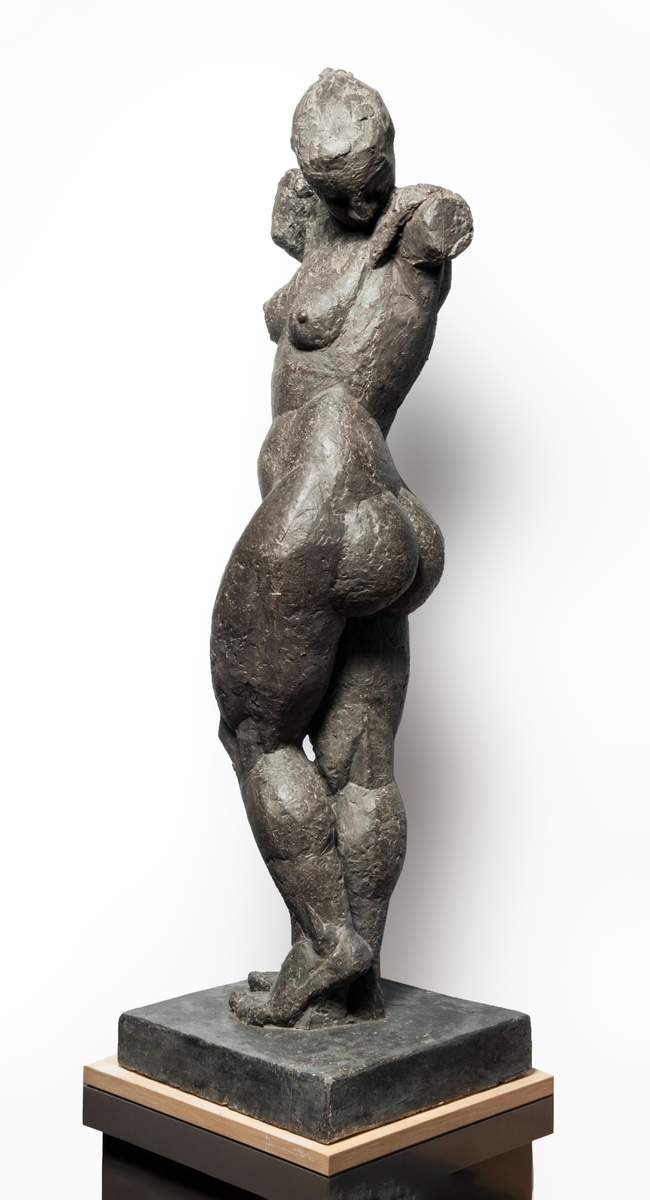
Юлия
Can I see it?
Unknown
Where is “Юлия” now? Collection: State Russian Museum, Saint Petersburg. Unknown.

Saint Petersburg, Russia
The owner is known; whether it is on view today is not.
- In this state since
- Source
- The museum
About the sculpture
Museum text in Russian
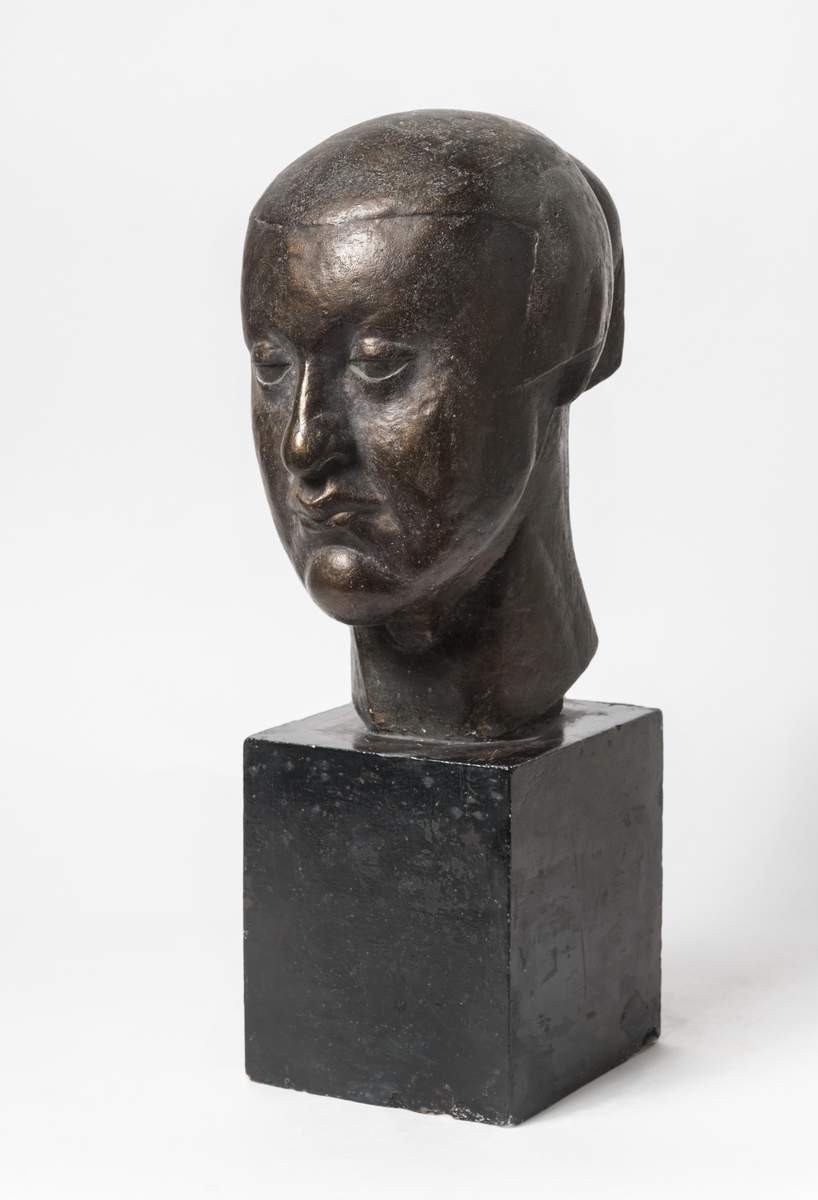
Несмотря на то, что свои наиболее популярные и общественно значимые произведения Мухина создала в 1930–1940-е годы, пожалуй, лучшие ее работы — самые вдохновенные, самые свободные, не затронутые идеологическим конформизмом — относятся к 1920-м.
Из тщательно продуманного и творчески переплавленного, пропорционально взвешенного «замеса» бурделевского динамизма, внутренней экспрессии с архитектонической логикой кубизма лепится мощная фигура «Юлии» (1925). В этой работе присущий Мухиной дар монументальности, тяга к широким обобщениям находят свое пластическое подтверждение. Объемная насыщенность сознательно утяжеленных форм, динамика композиции с ее сложным спиралевидным движением делают это произведение выразительным с любой точки зрения.
Read on
В работах « Женский торс » (1927) и «Ветер» (1927, ГТГ) тема движения как противоборства природной стихии диктует диагональное композиционное решение, мощный разворот торса, данного крупными массами, усиливает энергию сопротивления. Здесь, как и в «Юлии», соблюдено так трудно дающееся в искусстве равновесие между условностью и реальностью, между статикой и динамикой, между отдельными частями и целым. Елена Василевская . Минуя богов // Вера Мухина. СПб, 2009. С. 6.
Произведение экспонировалось на 1-й выставке ОРС.
State Russian Museum
Details
- Accession number
- СО-631
What it shows
In the catalog
Sources
- State Russian Museum
- Image: State Russian Museum — © State Russian Museum
In the life of Vera Mukhina
The whole life1920s
From Cubism to Socialist Realism
In the 1920s Mukhina became one of the most prominent Soviet sculptors: she was still producing Cubist sculpture as late as 1922, but went on to become a leading figure of Socialist Realism, both in style and in ideology.
1923
The Izvestia pavilion at the agricultural exhibition
Together with Aleksandra Ekster, Mukhina designed the pavilion of the newspaper Izvestia at the first All-Russian Agricultural and Handicraft-Industrial Exhibition in Moscow.
1924–1931
The “Four Arts” association
Mukhina was a member of the art association “The Four Arts”, which existed in Moscow and Leningrad from 1924 to 1931.
1925
A Grand Prix in Paris for a clothing collection
With the fashion designer Nadezhda Lamanova, Mukhina won the Grand Prix at an exhibition in Paris for a collection of elegant women's clothing made of cheap coarse fabrics — cloth, calico, canvas and flannel; the dresses were decorated with her invented “cockerel pattern”.
1926–1927
Employed by: Stroganov Moscow State Academy of Arts and Industry
1926–1930
Employed by: Vkhutemas






![The Barbaric Dance (Before Salomé and Hérod) [La danse barbare (devant Salomé et Hérode)], Pablo Picasso, 1905, published 1913](https://api.nga.gov/iiif/50a2abdc-52b3-49f7-af3f-2ef384c8f1d0/full/!2400,2400/0/default.jpg)