John Everett MillaisBritish, 1829–1896
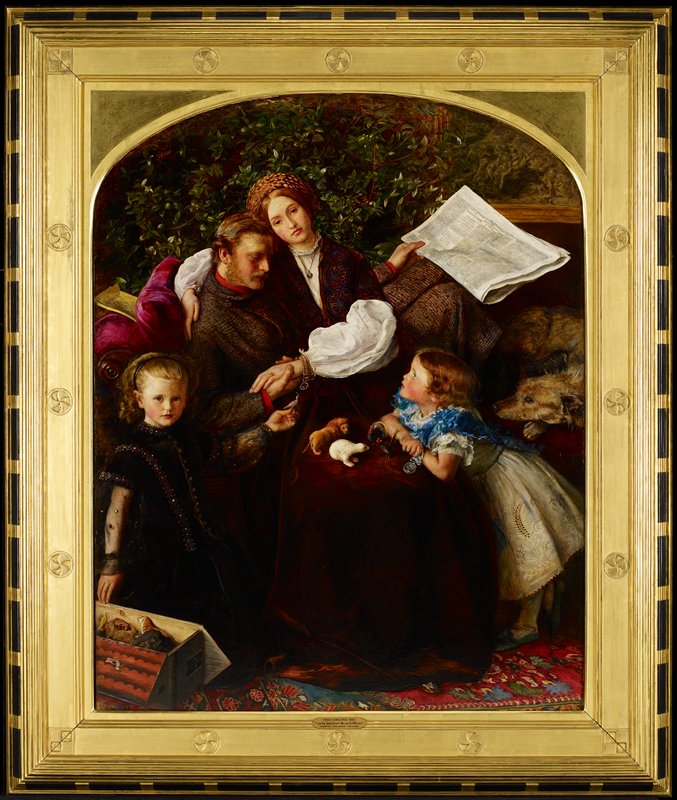
Wandering Thoughts
Can I see it?
Unknown
Where is “Wandering Thoughts” now? Collection: Manchester Art Gallery, Manchester. Whether it is on view today is unknown.
Manchester, United Kingdom
The owner is known; whether it is on view today is not.
- In this state since
- Source
- The museum
Details
- Accession number
- 1913.28
In the catalog
Sources
- Wikidata
- Image: Manchester Art Gallery — John Everett Millais · Public domain · Wikimedia Commons
In the life of John Everett Millais
The whole life1853
Elected an associate member of the Royal Academy
In 1853 Millais was elected an associate member of the Royal Academy of Arts.
summer 1853
A summer at Glenfinlas: falling in love with Effie Ruskin
In the summer of 1853 John Ruskin and his wife Effie invited Millais to spend the summer with them at Glenfinlas, where Millais and Effie fell in love. Effie modelled for his The Order of Release; her marriage to Ruskin, which had lasted several years, was annulled after her parents realised something was wrong and she filed for annulment, and Millais and Effie then married.
3 July 1855
Married: Effie Gray
1855–1857
After his marriage he changes manner: faster and dearer
Marriage changed Millais: to support his growing family he began to paint more quickly and in greater quantity and to sell his pictures dearly, moving away from Pre-Raphaelite principles. Effie became a powerful promoter of his work, and together they secured commissions and widened their circle; he gained great popularity and a fortune (up to £30,000 a year), while William Morris and other critics accused him of selling out.
30 May 1856
Son born: Sir Everett Millais, 2nd Baronet
1857
Ruskin calls “Sir Isumbras” a catastrophe
Ruskin called Sir Isumbras (1857), in which Millais had departed sharply from Pre-Raphaelite technique, not even a failure but a catastrophe.