
 Mark RothkoAmerican, 1903–1970
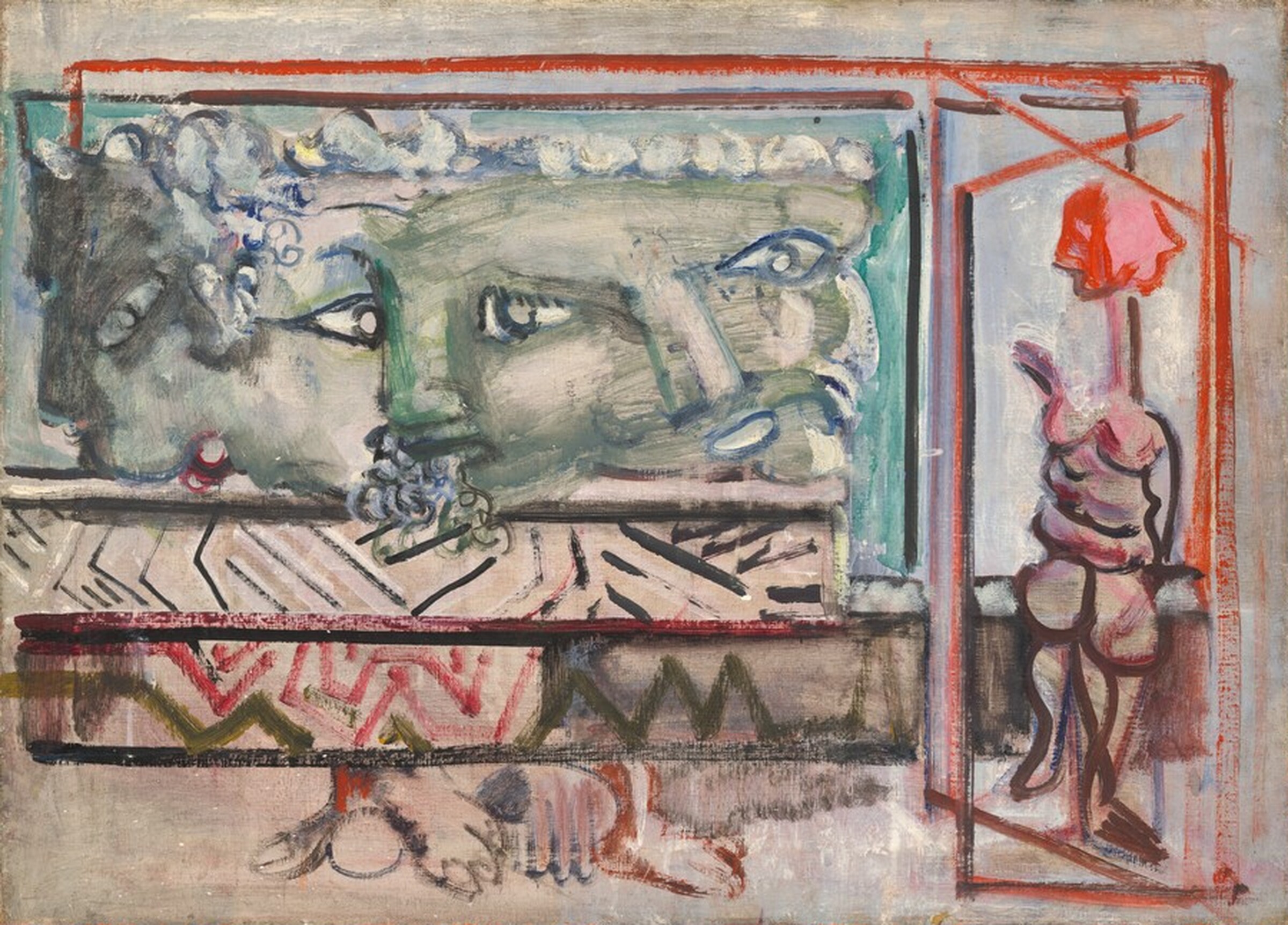
Untitled (sculptress)
May one see it?
Not receiving at present

Washington, D.C., United States
It belongs to the collection, but is not on display at present.
- Checked
- In this state since
- Source
- The museum
Particulars
- Accession number
- 1986.43.46
What it shows
In the catalog
Sources
- National Gallery of Art
- Image: National Gallery of Art — © the artist or rights holder
Meanwhile, in the life of Mark Rothko
The whole life1929–1952
Teaching children at the Brooklyn Jewish Center
From 1929 Rothko taught drawing, painting and clay sculpture part-time to schoolchildren at the Center Academy of the Brooklyn Jewish Center, where he remained until 1952.
early 1930s
Milton Avery and Adolph Gottlieb
In the early 1930s Rothko met Adolph Gottlieb and the circle around Milton Avery, including Barnett Newman, Joseph Solman, Louis Schanker and John Graham. According to Elaine de Kooning it was Avery who convinced Rothko that a professional artist’s life was possible; the friends vacationed together at Lake George and Gloucester, painting by day and talking about art in the evenings.
1932
Edith Sachar: meeting and marriage
At Lake George in 1932 Rothko met the jewelry designer Edith Sachar, whom he married later that year.
summer 1933
First solo show at the Portland Art Museum
In the summer of 1933 the Portland Art Museum held Rothko’s first one-person show, mostly drawings and watercolours. In a very unusual step he hung works by his young pupils from the Center Academy alongside his own.
21 November – 9 December 1933
First solo show in New York
At the Contemporary Arts Gallery Rothko showed fifteen oil paintings, mostly portraits, along with watercolours and drawings. The oils especially caught the critics’ eye: his fields of colour had already moved beyond Avery’s influence.
late 1935
Joins “The Ten”
In late 1935 Rothko joined Ilya Bolotowsky, Ben-Zion, Adolph Gottlieb, Louis Harris, Ralph Rosenborg, Louis Schanker and Joseph Solman to form “The Ten”, whose stated aim was to protest against the supposed equivalence of American painting and literal painting.




![Ginevra de' Benci [obverse], Leonardo da Vinci, c. 1474/1478](https://api.nga.gov/iiif/8f29e3c9-a289-4d53-abf0-31a66e9e98fa/full/!2400,2400/0/default.jpg)
![Wreath of Laurel, Palm, and Juniper with a Scroll inscribed Virtutem Forma Decorat [reverse], Leonardo da Vinci, c. 1474/1478](https://api.nga.gov/iiif/ff62e8d0-45c4-498f-ad36-6358de827e04/full/!2400,2400/0/default.jpg)


