Mark RothkoAmerican, 1903–1970
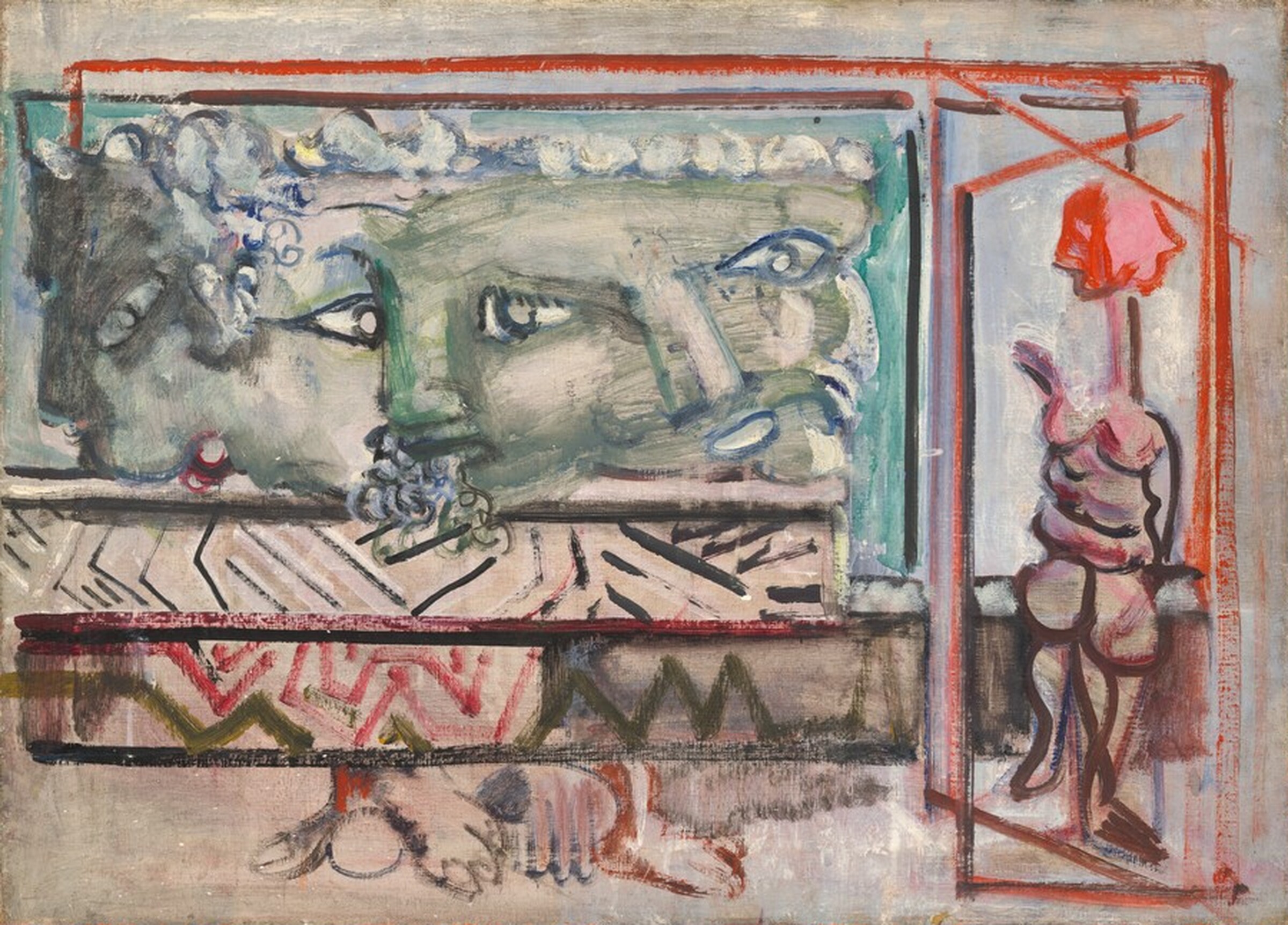
Untitled (man with racket and ball)
May one see it?
Not receiving at present

Washington, D.C., United States
It belongs to the collection, but is not on display at present.
- Checked
- In this state since
- Source
- The museum
Particulars
- Accession number
- 1986.56.658
What it shows
In the catalog
Sources
- National Gallery of Art
- Image: National Gallery of Art — © the artist or rights holder
Meanwhile, in the life of Mark Rothko
The whole life1929–1952
Teaching children at the Brooklyn Jewish Center
From 1929 Rothko taught drawing, painting and clay sculpture part-time to schoolchildren at the Center Academy of the Brooklyn Jewish Center, where he remained until 1952.
mid-1937
A rift with Edith
In mid-1937 Rothko separated temporarily from his wife Edith; they reconciled several months later, but the relationship stayed tense and they would divorce in 1944.
1938
The Mercury Gallery show: a protest against the Whitney
In 1938 the group held a show at the Mercury Gallery in New York as a protest against the Whitney Museum, which it regarded as having a provincial, regionalist agenda. In these years Rothko, like Avery, Gorky, Pollock and de Kooning, found work with the Works Progress Administration.
21 February 1938
Becomes a US citizen
On 21 February 1938 Rothko received American citizenship, relieved: he had feared that the growing influence of the Nazis in Europe might lead to the sudden deportation of Jews without citizenship.
1940
Shortens his name to Mark Rothko
Concerned about rising antisemitism in Europe and America, Rothko shortened “Markus Rothkowitz” to “Mark Rothko” in 1940; “Roth” still sounded identifiably Jewish, so he settled on “Rothko”. All his works have been signed with that name since.
1940
A pause in painting for the study of myth
In 1940, it is said, Rothko stopped painting altogether to immerse himself in James Frazer’s The Golden Bough and Freud’s The Interpretation of Dreams; he later said his approach had been “reformed” by the study of the dramatic themes of myth.




![Ginevra de' Benci [obverse], Leonardo da Vinci, c. 1474/1478](https://api.nga.gov/iiif/8f29e3c9-a289-4d53-abf0-31a66e9e98fa/full/!2400,2400/0/default.jpg)
![Wreath of Laurel, Palm, and Juniper with a Scroll inscribed Virtutem Forma Decorat [reverse], Leonardo da Vinci, c. 1474/1478](https://api.nga.gov/iiif/ff62e8d0-45c4-498f-ad36-6358de827e04/full/!2400,2400/0/default.jpg)