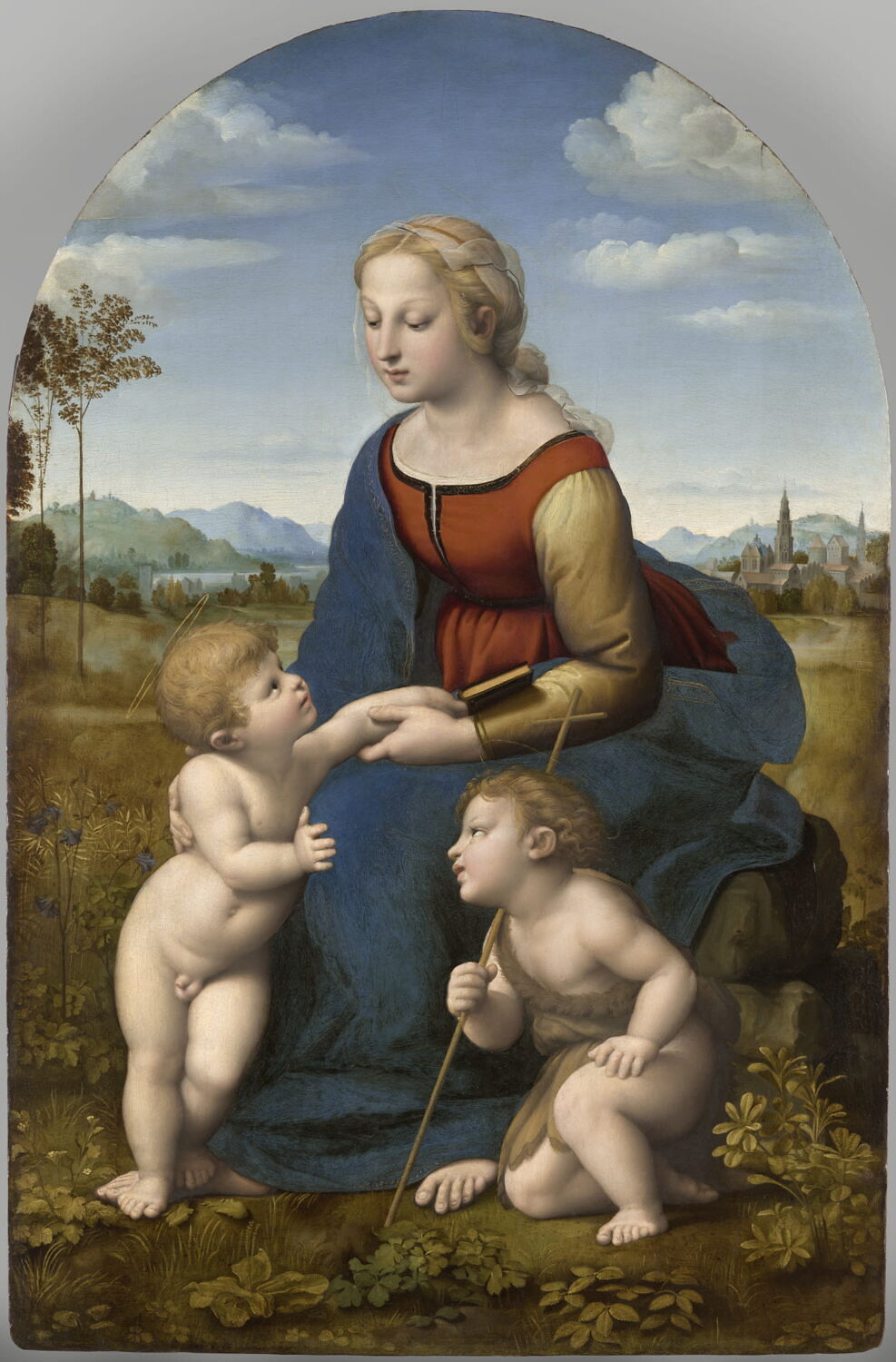
RaphaelItalian, 1483–1520
Триумф Венеры
May one see it?
Unknown
Saint Petersburg, Russia
The owner is known; whether it is on view today is not.
- In this state since
- Source
- The museum
Particulars
- Accession number
- Ж-66
In the catalog
Sources
- The State Catalogue of the Museum Fund of Russia
- Image: Scientific-research Museum of the Russian Academy of Arts — © Музей Российской академии художеств · Госкаталог музейного фонда РФ
Meanwhile, in the life of Raphael
The whole life1501
In Perugino's workshop
From 1501 Raphael studied and worked in Pietro Perugino's workshop in Perugia; according to Vasari, his early works cannot be told apart from his master's. He often travelled home to Urbino, to Città di Castello and, with Pinturicchio, to Siena.
late 1504
Meets Leonardo and Michelangelo
Having moved to Florence, Raphael met Leonardo da Vinci, Michelangelo and Bartolomeo della Porta and closely studied Leonardo's sfumato. His first Florentine commission, portraits of Agnolo Doni and his wife, was painted under the clear impression of the “Mona Lisa”.
1508
Moves to Rome at the invitation of Julius II
The new pope, Julius II, invited Raphael to Rome, perhaps at the suggestion of his architect Bramante, a distant relative of the artist. Unlike Michelangelo, kept waiting for months after his summons, Raphael was immediately commissioned to fresco what was to become the pope's private library, a far larger commission than any he had had before.
1514
Chief architect of St Peter's
After Bramante's death Raphael became chief architect of the new St Peter's and continued Bramante's construction of the Vatican Loggias, whose vaults his pupils painted.
1520
His last illness and a fatal bloodletting
Vasari blamed Raphael's death on debauchery, but modern researchers attribute it to a respiratory illness with high fever. A medical error proved fatal: doctors sent by the pope misdiagnosed him and tried to bring down the fever by bloodletting.
6 April 1520
Died