ART WIKI32,963 on view
MapCollectionArtistsMuseumsExhibitionsJournal
Sign in

ART WIKI

Where the masterpiece hangs, and when they let you in.

Collections: Art Institute of Chicago, Getty Villa, Harvard Art Museums, Hirshhorn Museum and Sculpture Garden, J. Paul Getty Museum, Minneapolis Institute of Art, Musée du Louvre, National Gallery of Art, National Museum of Asian Art, National Portrait Gallery (Smithsonian), Pushkin State Museum of Fine Arts, Rijksmuseum, Smithsonian American Art Museum, SMK — National Gallery of Denmark, State Hermitage Museum, State Russian Museum, The Cleveland Museum of Art, The Metropolitan Museum of Art, The Museum of Modern Art, Tretyakov Gallery, Victoria and Albert Museum, Whitney Museum of American Art, State Catalogue of the Museum Fund of Russia (274 museums), Europeana (19 museums), Wikidata (6 museums), Paris Musées (12 museums), and Joconde, the French Ministry of Culture's museum database (495 museums). Images belong to their rights holders.

Sections

  • Map
  • Search
  • Collection
  • Masterpieces
  • On view now
  • Artists

More

  • Museums & galleries
  • Exhibitions
  • Journal
  • Where the data comes from
  • Privacy & cookies
HomeMapBrowse
  1. Collection/
  2. Art Institute of Chicago/
  3. The Watcher, Tynemouth
The Watcher, Tynemouth, Winslow Homer, 1882
Winslow Homer, portraitWinslow HomerAmerican, 1836–1910

The Watcher, Tynemouth

1882 · Drawing and Watercolor

May one see it?

Not receiving at present

Art Institute of Chicago

Chicago, United States

It belongs to the collection, but is not on display at present.

Checked
3 days ago
In this state since
Aug 19, 2026
Source
The museum
On the mapMuseum page

About the work

During his sojourn in England, from 1881 to 1882, Homer settled in the small fishing village of Cullercoats, located about two miles from the city of Tynemouth. He often drew and painted the women of the village, as they watched and waited on the shore, eyes always trained on the frequently treacherous sea. The Watcher, Tynemouth emphasizes the woman's loneliness and anxiety as she faces the raw forces of nature. Homer chose to represent the woman with her back to the viewer. She is clad in dark blue and reddish-brown clothing, and her face is obscured by a headscarf, so as to shield her from probing eyes. The muted palette of this watercolor—overcast blue-gray sky, murky green and blue waves—exaggerates the stark whiteness of the foamy caps on the waves. Their peaks punctuate the horizon line, as do the sails of the two boats in the distance.

Art Institute of Chicago · CC BY 4.0

Particulars

1882 · aged 46
18361910
Accession number
1933.1255

What it shows

WomanPeopleBoatsSeaCentury of ProgressWorld's fairsChicago World's FairsWeather/seasons

In the catalog

Drawings & watercolorsGouacheImpressionism19th centuryUnited States

Sources

  • Art Institute of Chicago
  • Image: Art Institute of Chicago — CC0

Meanwhile, in the life of Winslow Homer

The whole life
  1. spring 1881 – November 1882

    England: the village of Cullercoats

    In 1881 Homer set off on his second and last trip abroad, to England, and from the spring of 1881 to November 1882 lived in the village of Cullercoats on the North Sea, depicting the courage of fishermen and above all of women: gutting fish, mending nets, waiting for the men at the water's edge. The period profoundly changed his later work: his palette grew sober and his pictures larger. Of the local women he wrote: “The women are the working bees.”

  2. November 1882

    Return: “a very different Homer”

    In November 1882 Homer returned to the United States and showed his English watercolours in New York. Critics noticed the change at once: “He is a very different Homer from the one we knew”, his pictures were “works of High Art”, and his women were no longer “dolls who flaunt their millinery” but sturdy, fearless wives and mothers.

  3. summer 1883

    Moves to Prouts Neck

    In the summer of 1883 Homer moved from New York to Prouts Neck, a peninsula ten miles south of Portland, Maine, and lived there for the rest of his life, using solitude to work. He settled on the family estate, in a remodelled carriage house seventy-five feet from the ocean.

  4. 1884

    Death of his mother

    In 1884 Homer's mother died: his first teacher and the strongest influence on him. After her death he became a “parent” to his ageing but domineering father, and his sister-in-law Martha (“Mattie”) became his closest female intimate.

  5. winter 1884 – 1885

    Florida, Cuba and the Bahamas

    In the winter of 1884–1885 Homer travelled to Florida, Cuba and the Bahamas, painting a series of watercolours commissioned by Century Magazine: the storm-tossed green sea of Prouts Neck gave way to the sparkling blue skies of the Caribbean, and for Edith Blake, wife of the governor of the Bahamas, he painted “Children Under a Palm Tree”. “A Garden in Nassau” (1885) is one of the best of these watercolours, but they proved too advanced for traditional buyers.
More by Winslow Homer

All works
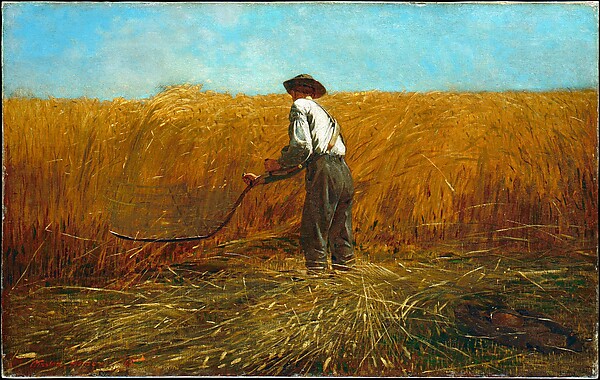
The Veteran in a New Field, Winslow Homer, 1865

The Veteran in a New Field

1865 · The Metropolitan Museum of Art

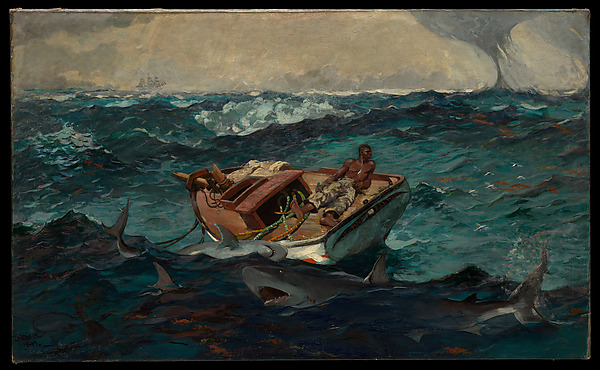
The Gulf Stream, Winslow Homer, 1899; reworked by 1906

The Gulf Stream

1899; reworked by 1906 · The Metropolitan Museum of Art

Home, Sweet Home, Winslow Homer, c. 1863

Home, Sweet Home

c. 1863 · National Gallery of Art

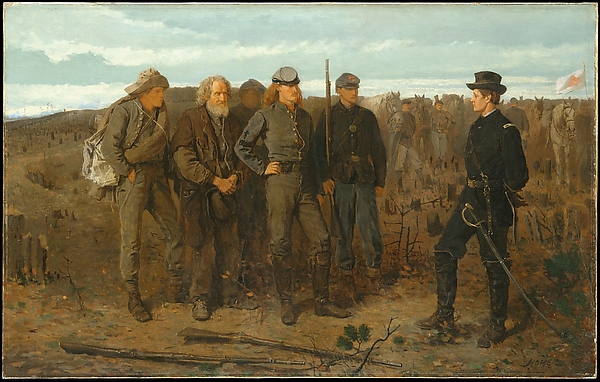
Prisoners from the Front, Winslow Homer, 1866

Prisoners from the Front

1866 · The Metropolitan Museum of Art

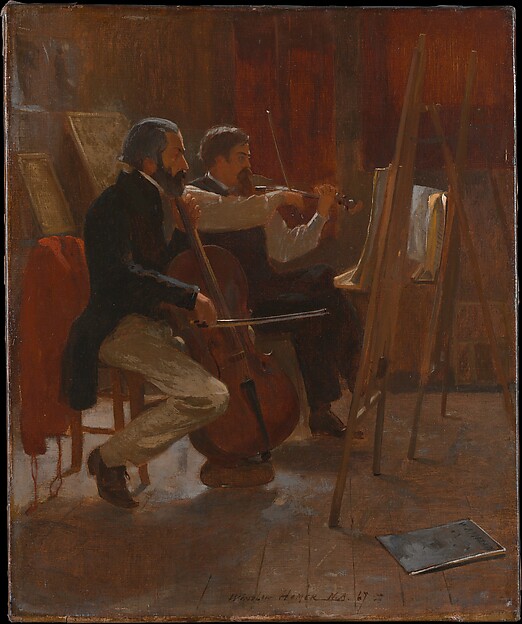
The Studio, Winslow Homer, 1867

The Studio

1867 · The Metropolitan Museum of Art

Coming through the Rye, Winslow Homer, 1867

Coming through the Rye

1867 · The Metropolitan Museum of Art

The Dinner Horn (Blowing the Horn at Seaside), Winslow Homer, 1870

The Dinner Horn (Blowing the Horn at Seaside)

1870 · National Gallery of Art

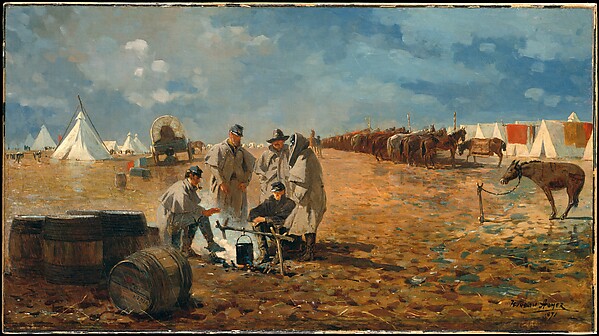
Rainy Day in Camp, Winslow Homer, 1871

Rainy Day in Camp

1871 · The Metropolitan Museum of Art

Neighbors at Art Institute of Chicago

Museum page
The Bedroom, Vincent van Gogh, 1889

Vincent van Gogh

The Bedroom, 1889

A Sunday on La Grande Jatte — 1884, Georges Seurat, 1884–86, border added 1888–89

Georges Seurat

A Sunday Afternoon on the Island of La Grande Jatte, 1884–86, border added 1888–89

Paris Street; Rainy Day, Gustave Caillebotte, 1877

Gustave Caillebotte

Paris Street; Rainy Day, 1877

Two Sisters (On the Terrace), Pierre-Auguste Renoir, 1881

Pierre-Auguste Renoir

Two Sisters (On the Terrace), 1881

The Basket of Apples, Paul Cézanne, c. 1893

Paul Cézanne

The Basket of Apples, c. 1893

Stacks of Wheat (End of Summer), Claude Monet, 1890–91

Claude Monet

Stacks of Wheat (End of Summer), 1890–91

American Gothic, Grant Wood, 1930

Grant Wood

American Gothic, 1930

Nighthawks, Edward Hopper, 1942

Edward Hopper

Nighthawks, 1942

On the same theme · Woman

All works on the theme
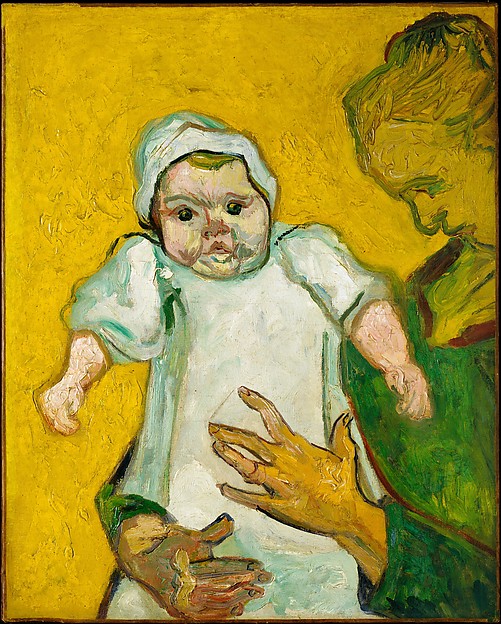
Madame Roulin and Her Baby, Vincent van Gogh, 1888

Vincent van Gogh

Madame Roulin and Her Baby, 1888

The Metropolitan Museum of Art

Garden at Sainte-Adresse, Claude Monet, 1867

Claude Monet

Garden at Sainte-Adresse, 1867

The Metropolitan Museum of Art

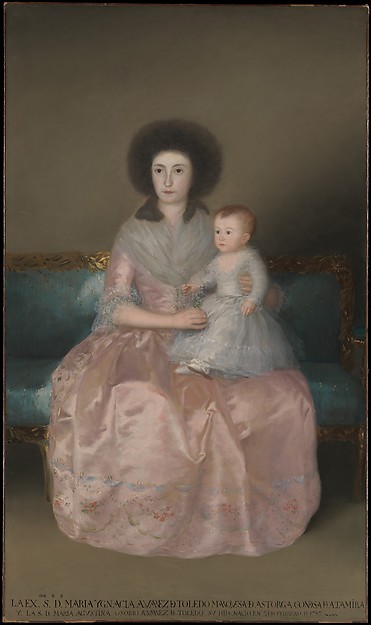
Condesa de Altamira and Her Daughter, María Agustina, Goya, 1787–88

Francisco de Goya

Condesa de Altamira and Her Daughter, María Agustina, 1787–88

The Metropolitan Museum of Art

Two Women on the Shore, Edvard Munch, 1898

Edvard Munch

Two Women on the Shore, 1898

Rijksmuseum

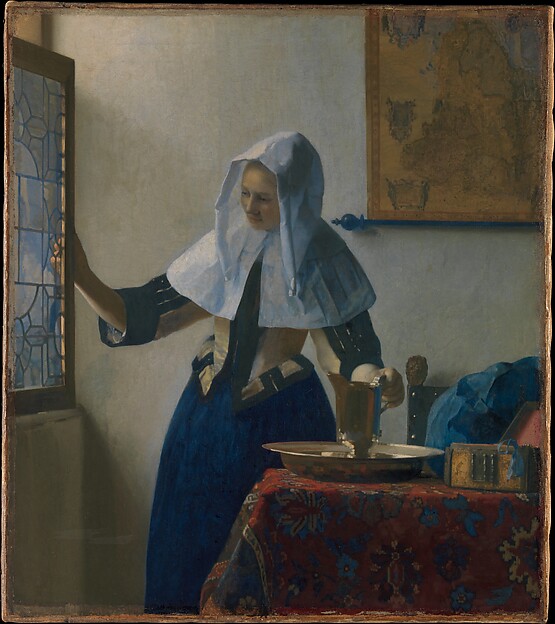
Young Woman with a Water Pitcher, Johannes Vermeer, ca. 1662

Johannes Vermeer

Woman with a Water Jug, ca. 1662

The Metropolitan Museum of Art

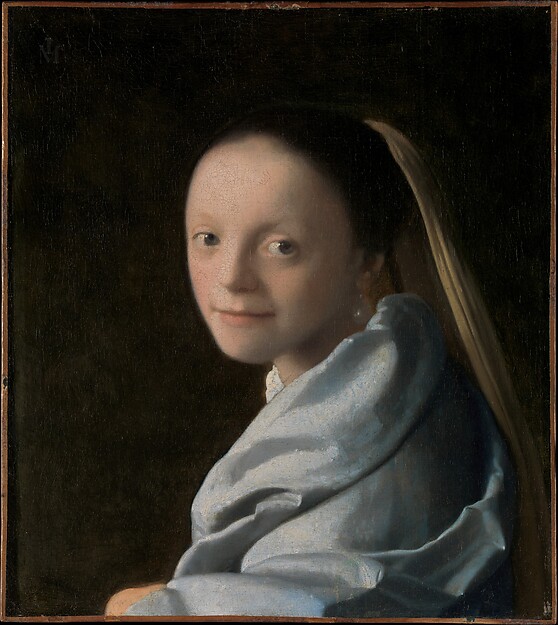
Study of a Young Woman, Johannes Vermeer, ca. 1665–67

Johannes Vermeer

Portrait of a Young Woman, ca. 1665–67

The Metropolitan Museum of Art

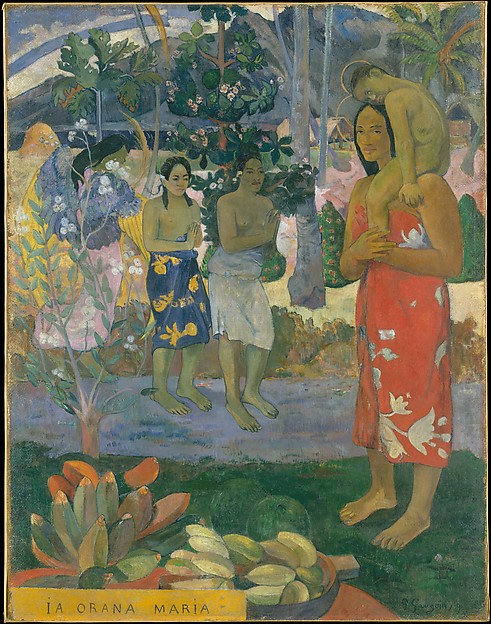
Ia Orana Maria (Hail Mary), Paul Gauguin, 1891

Paul Gauguin

Ia Orana Maria (Hail Mary), 1891

The Metropolitan Museum of Art

Rubens, Helena Fourment (1614–1673), and Their Son Frans (1633–1678), Peter Paul Rubens, ca. 1635

Peter Paul Rubens

Rubens, Helena Fourment (1614–1673), and Their Son Frans (1633–1678), ca. 1635

The Metropolitan Museum of Art