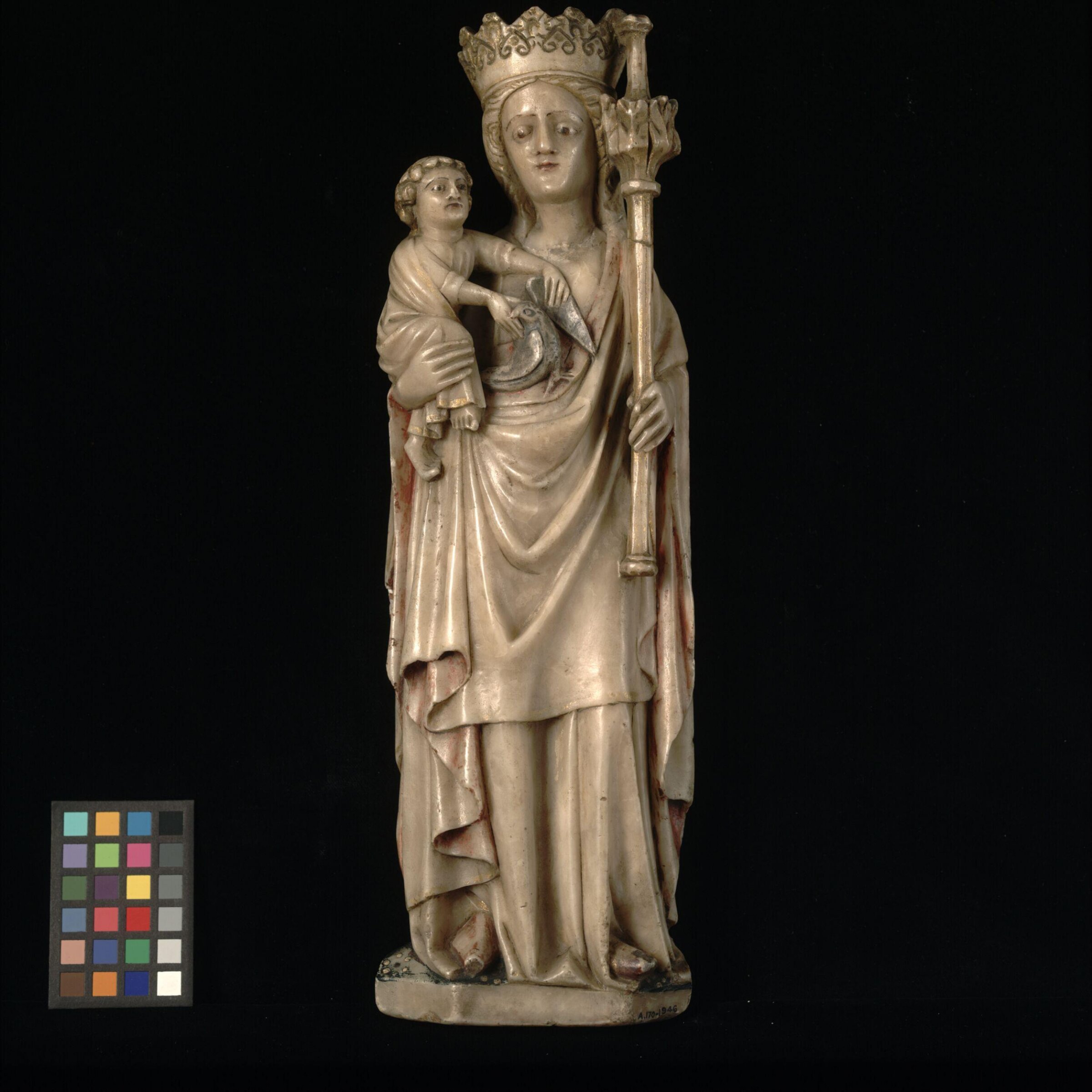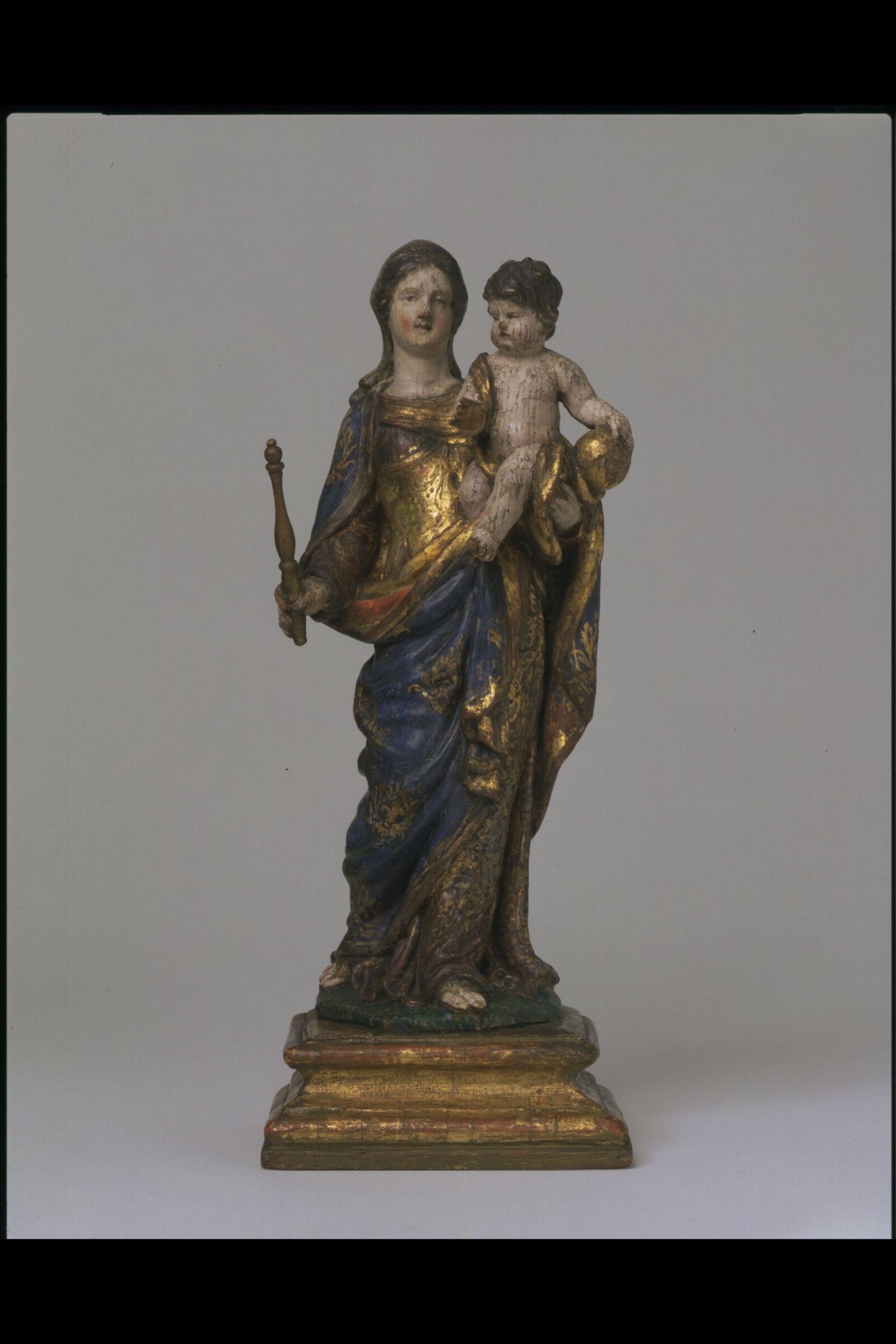
The Virgin and Child
May one see it?
Not receiving at present

Victoria and Albert Museum
London, United Kingdom
It belongs to the collection, but is not on display at present.
- Checked
- In this state since
- Source
- The museum
About the sculpture
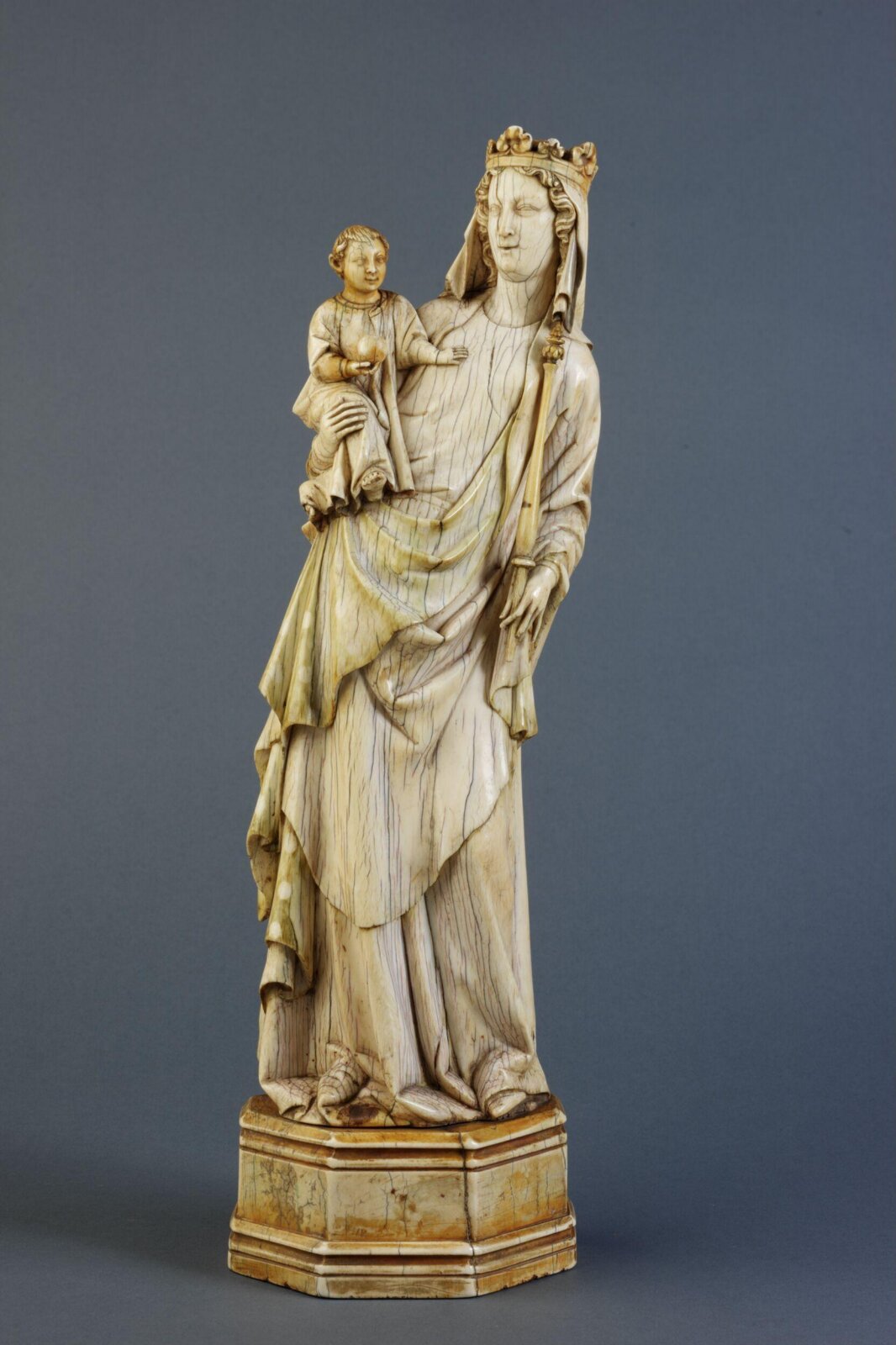
Ivory was used all over Europe for religious works of art. It was often combined with precious metals and usually took the form of relief panels, for book covers, portable altars and caskets. An almost unbroken tradition of ivory carving extends from the Roman and Byzantine empires until the end of the 14th century. From about 1250, Paris became the centre of production for figures and reliefs intended for private devotion.
This ivory statuette though, is a fake, and almost certainly made by a nineteenth century carver copying a fourteenth-century ivory. The production of ivories in historicizing styles in the 19th century flourished in a number of centres, including Cologne, Milan, Toulouse and Cordoba. Although not always made to deceive, unscrupulous dealers often sold them as genuine objects to their clients.
Read on
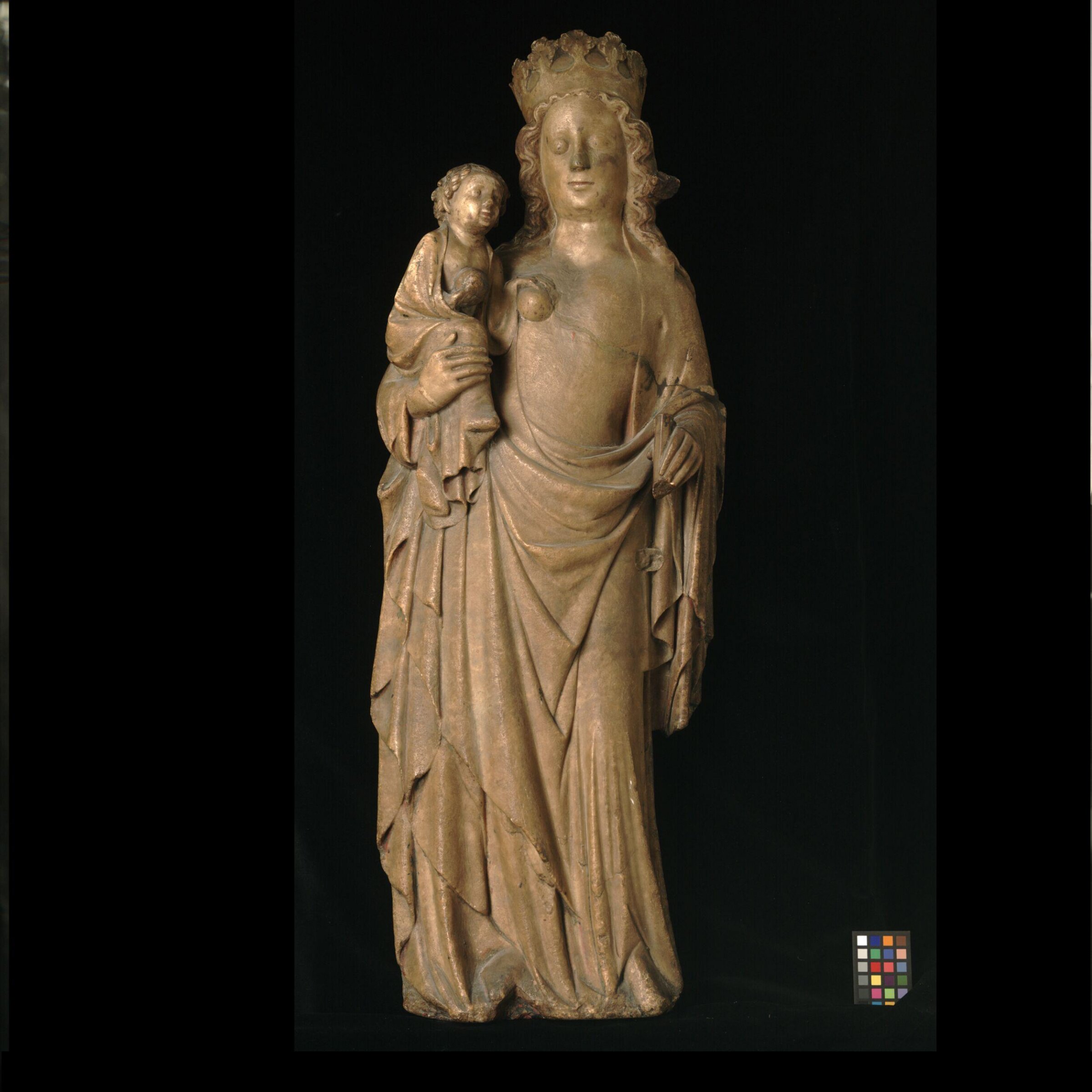
Three dimensional images of the Virgin and Child were ubiquitous from the twelfth to the fifteenth centuries, produced in a wide range of materials and sizes and testifying the overwhelming devotion to th Virgin. Together with the Crucifixion, statues and statuettes of the Virgin and Child were the pricipal objects of devotion in the Christian Church, and vast numbers were made for ecclesisastical, monastic and private worship.
This Virgin and Child is not a copy of a known piece but instead an intelligent nineteenth-century creation in the Gothic manner, taking its stylistic leads from late thirteenth-century prototypes. It is an ambitious forgery, and its original painted and gilded decoration - if this was ever complete rather than always being distressed - must have given it further credibility. The proportions of the figures and the carving of the faces and draperies are admirably executed, but the wear, staining and filled holes seem to be artificially contrived and the whole noe fails to convince.
Victoria and Albert Museum
Particulars
- Accession number
- A.549-1910