ART WIKI32,963 on view
MapCollectionArtistsMuseumsExhibitionsJournal
Sign in

ART WIKI

Where the masterpiece hangs, and when they let you in.

Collections: Art Institute of Chicago, Getty Villa, Harvard Art Museums, Hirshhorn Museum and Sculpture Garden, J. Paul Getty Museum, Minneapolis Institute of Art, Musée du Louvre, National Gallery of Art, National Museum of Asian Art, National Portrait Gallery (Smithsonian), Pushkin State Museum of Fine Arts, Rijksmuseum, Smithsonian American Art Museum, SMK — National Gallery of Denmark, State Hermitage Museum, State Russian Museum, The Cleveland Museum of Art, The Metropolitan Museum of Art, The Museum of Modern Art, Tretyakov Gallery, Victoria and Albert Museum, Whitney Museum of American Art, State Catalogue of the Museum Fund of Russia (274 museums), Europeana (19 museums), Wikidata (6 museums), Paris Musées (12 museums), and Joconde, the French Ministry of Culture's museum database (495 museums). Images belong to their rights holders.

Sections

  • Map
  • Search
  • Collection
  • Masterpieces
  • On view now
  • Artists

More

  • Museums & galleries
  • Exhibitions
  • Journal
  • Where the data comes from
  • Privacy & cookies
HomeMapBrowse
  1. Collection/
  2. The Cleveland Museum of Art/
  3. The Nymphs
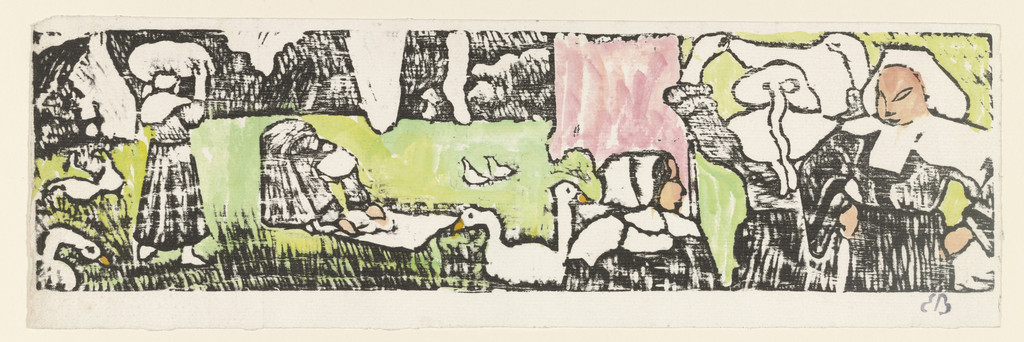
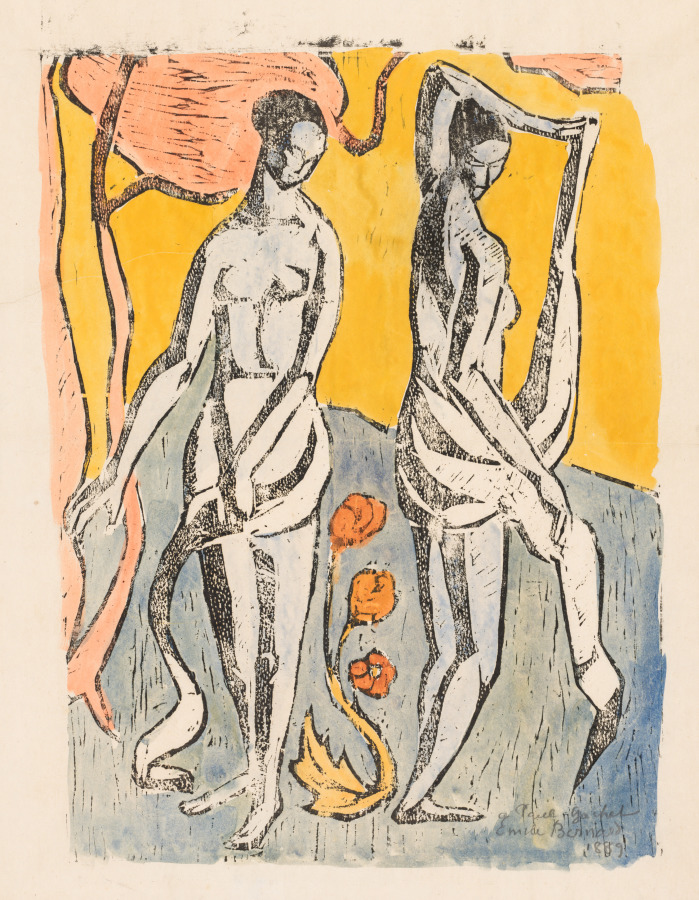
The Nymphs, Émile Bernard, 1890
Bernard, Emile, portraitBernard, EmileFrench, 1868–1941

The Nymphs

1890 · Print

May one see it?

Not receiving at present

The Cleveland Museum of Art

Cleveland, United States

It belongs to the collection, but is not on display at present.

Checked
3 days ago
In this state since
Aug 19, 2026
Source
The museum
On the mapMuseum page

About the work

Before he had reached age 20, the precocious Bernard worked alongside Paul Gauguin and engaged in a lively correspondence with Vincent van Gogh. Toward the end of 1889, Van Gogh observed a shift in the young artist’s work and noted in a letter to his sister, “Bernard is trying to do elegant, modern figures in the manner of ancient Greek and Egyptian art.” The elongated, seemingly weightless forms in The Nymphs reflect Bernard’s stylistic evolution. This vividly hand-colored woodcut is one of only three known impressions of this print.

The Cleveland Museum of Art

Particulars

1890 · aged 22
18681941
Accession number
2015.152

In the catalog

PrintsWoodcutImpressionism19th centuryFrance, 19th century

Sources

  • The Cleveland Museum of Art
  • Image: The Cleveland Museum of Art — Museum open access

Meanwhile, in the life of Bernard, Emile

The whole life
  1. 1887–1888

    An exhibition in the restaurant on the Avenue de Clichy

    Back in Paris, Bernard attends the Académie Julian and meets van Gogh, who is impressed by his work. He finds a restaurant on the Avenue de Clichy where his work is shown alongside that of van Gogh, Anquetin and Toulouse-Lautrec; van Gogh calls the group the “School of the Petit Boulevard”.

  2. 1888

    On foot to Pont-Aven: friendship with Gauguin

    A year later Bernard again sets out for Pont-Aven on foot and sees Gauguin; their friendship and artistic partnership quickly grow strong. Bernard wants an art of the most extreme simplicity, accessible to all and practised collectively, and Gauguin is impressed by his ability to put his ideas into words. Other accounts have him living in Pont-Aven in 1886–1888 and joining the Pont-Aven group.

  3. August 1888

    Drawings for van Gogh

    In August 1888 Bernard sends van Gogh a batch of drawings, acquainting him with his new style. One of them — a lane of trees near the sea with two women talking and some strollers — appears to have inspired the work van Gogh and Gauguin later did on the Allée des Alyscamps in Arles.

  4. 1890

    A religious crisis and a turn to the Middle Ages

    In 1890 Bernard goes through a religious crisis and turns to the subjects and themes of medieval art. In the same year he sets out to revive symbolism, which he saw as Christian in essence — the invisible expressed through the visible.

  5. 1891

    The break with Gauguin

    In 1891 Bernard breaks off his friendship with Gauguin. It was always his great frustration that Gauguin never named him as an influence on pictorial symbolism; one writer says his rivalry with Gauguin led him “out of spite” towards classicism.

  6. 1891

    Among the Symbolists and the Nabis

    In 1891 Bernard joins the group of Symbolist painters that includes Odilon Redon and Ferdinand Hodler, and in the same year becomes a member of the Nabis.

More by Bernard, Emile

All works
Still Life (Cup, Compote Dish, Teapot, and Fruit) 1890, Émile Bernard

Still Life (Cup, Compote Dish, Teapot, and Fruit) 1890

Van Gogh Museum

Le Repos du berger, Émile Bernard, 1900s

Le Repos du berger

1900s · Musée d'Orsay

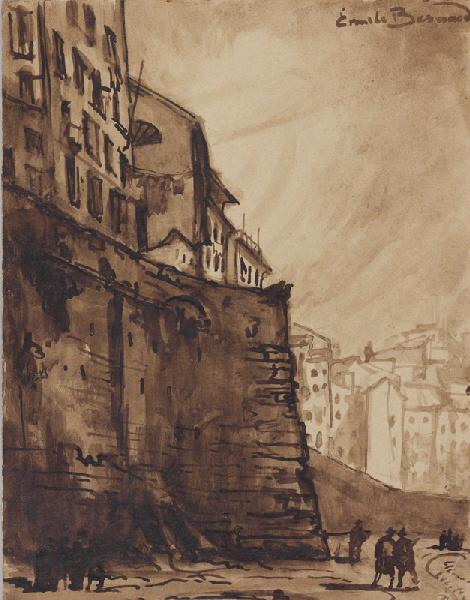
Les remparts, Emile Bernard, 4e quart 19e siècle, 1ère moitié 20e siècle

Les remparts

Musée des Beaux-Arts de Brest

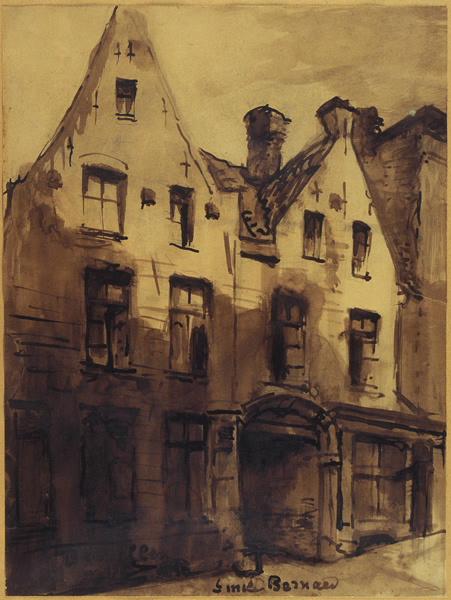
Maisons flamandes, Emile Bernard, 4e quart 19e siècle, 1ère moitié 20e siècle

Maisons flamandes

Musée des Beaux-Arts de Brest

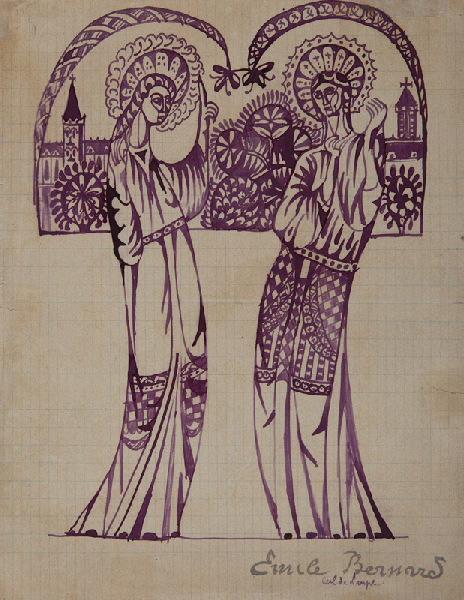
Personnages sur fond d'église, Emile Bernard, 4e quart 19e siècle, 1ère moitié 20e siècle

Personnages sur fond d'église

Musée des Beaux-Arts de Brest

Breton Woman (Les Bretonnes), Émile Bernard, (1883)

Breton Woman (Les Bretonnes)

(1883) · Not on view · The Museum of Modern Art

Fisherman and Boat, Émile Bernard, 1885

Fisherman and Boat

1885 · Van Gogh Museum

Bretonne walking near a canal, Émile Bernard, 1886

Bretonne walking near a canal

1886 · Van Gogh Museum

Neighbors at The Cleveland Museum of Art

Museum page
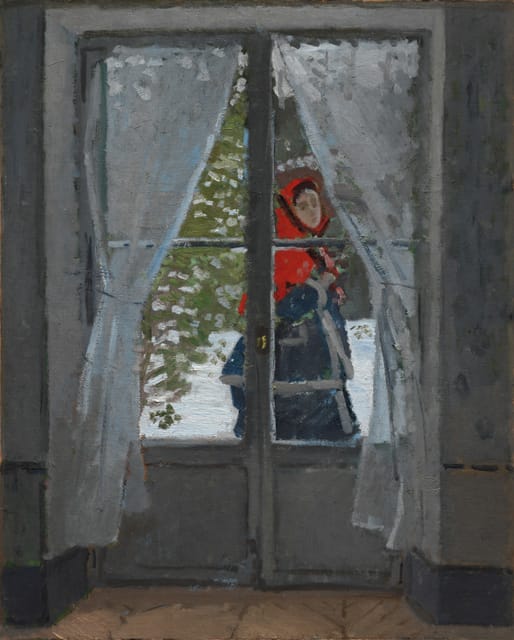
The Red Kerchief, Claude Monet, c. 1868–73

Claude Monet

The Red Kerchief, c. 1868–73

Melencolia I, Albrecht Dürer, 1514

Albrecht Dürer

Melencolia I, 1514

The Virgin and Child with the Pear, Albrecht Dürer, 1511

Albrecht Dürer

The Virgin and Child with the Pear, 1511

The Nativity, Albrecht Dürer, probably c. 1509/1510

Albrecht Dürer

The Nativity, probably c. 1509/1510

The Virgin and Child on a Crescent with a Starry Crown, Albrecht Dürer, 1508

Albrecht Dürer

The Virgin and Child on a Crescent with a Starry Crown, 1508

The Lamentation, Albrecht Dürer, 1507

Albrecht Dürer

The Lamentation, 1507

Large Horse, Albrecht Dürer, 1505

Albrecht Dürer

Large Horse, 1505

Nemesis (The Great Fortune), Albrecht Dürer, c. 1501/1502

Albrecht Dürer

Nemesis (The Great Fortune), c. 1501/1502