 Oskar KokoschkaAustrian, 1886–1980
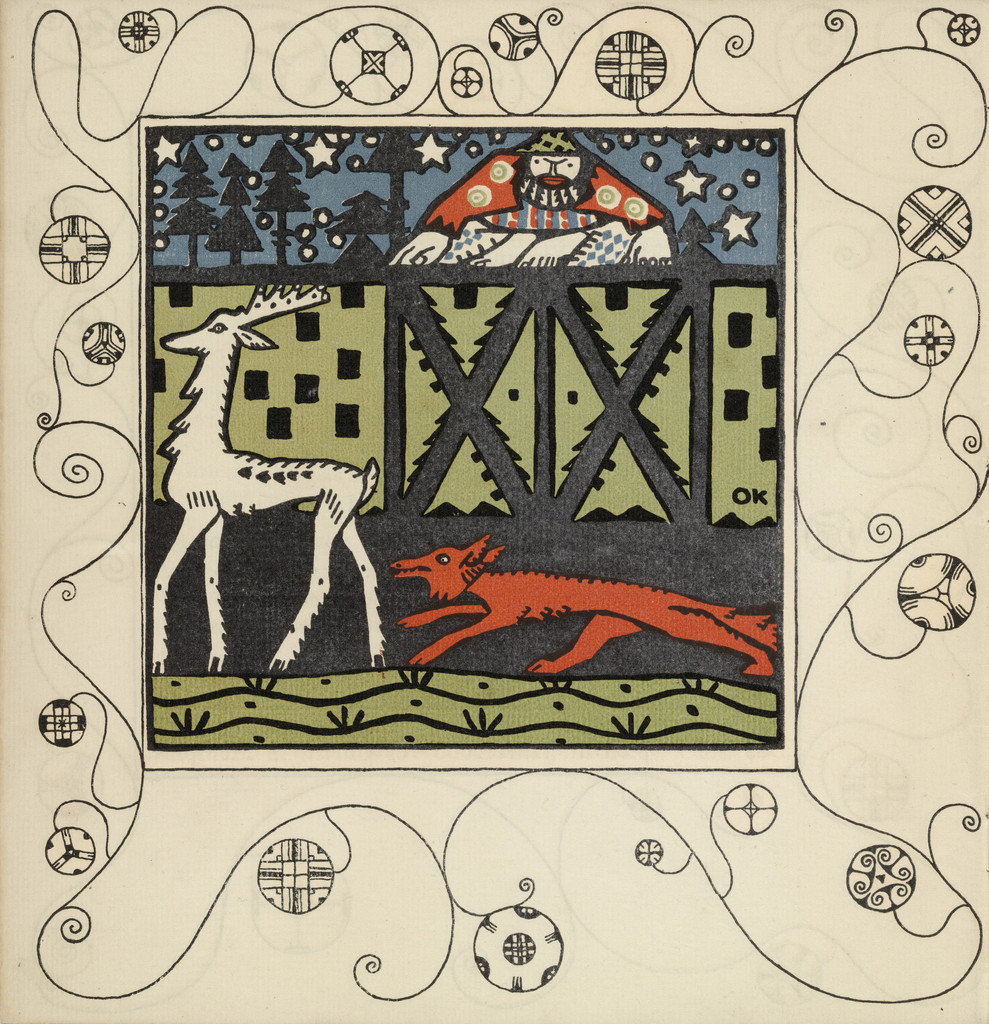
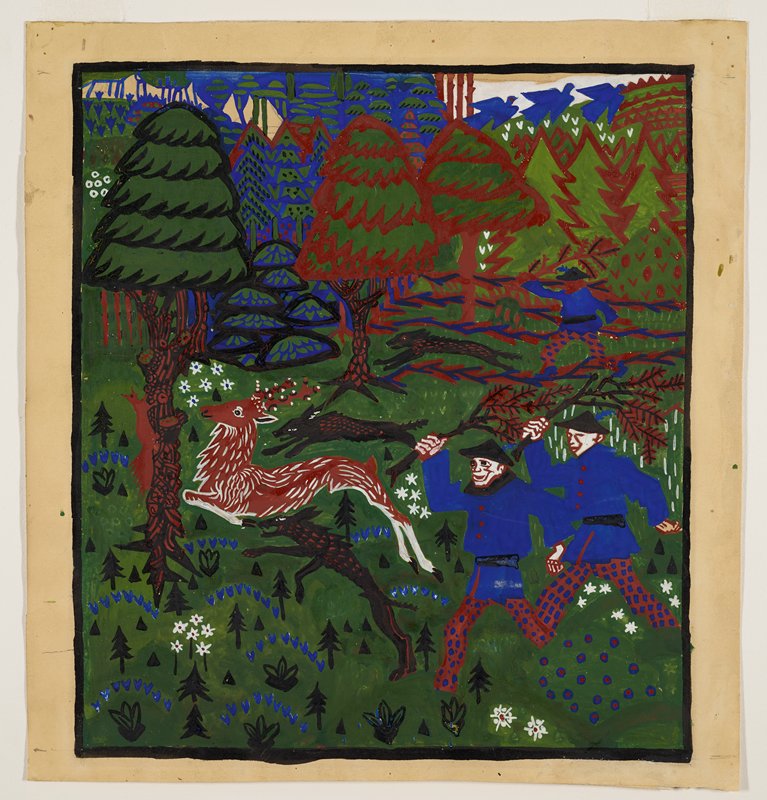
The Hunt
Can I see it?
Not on view at present
Where is “The Hunt” now? Collection: Minneapolis Institute of Art, Minneapolis. Not on view at present. Checked September 29, 2026.

Minneapolis, United States
It belongs to the collection, but is not on display at present.
- Checked
- In this state since
- Source
- The museum
About the work
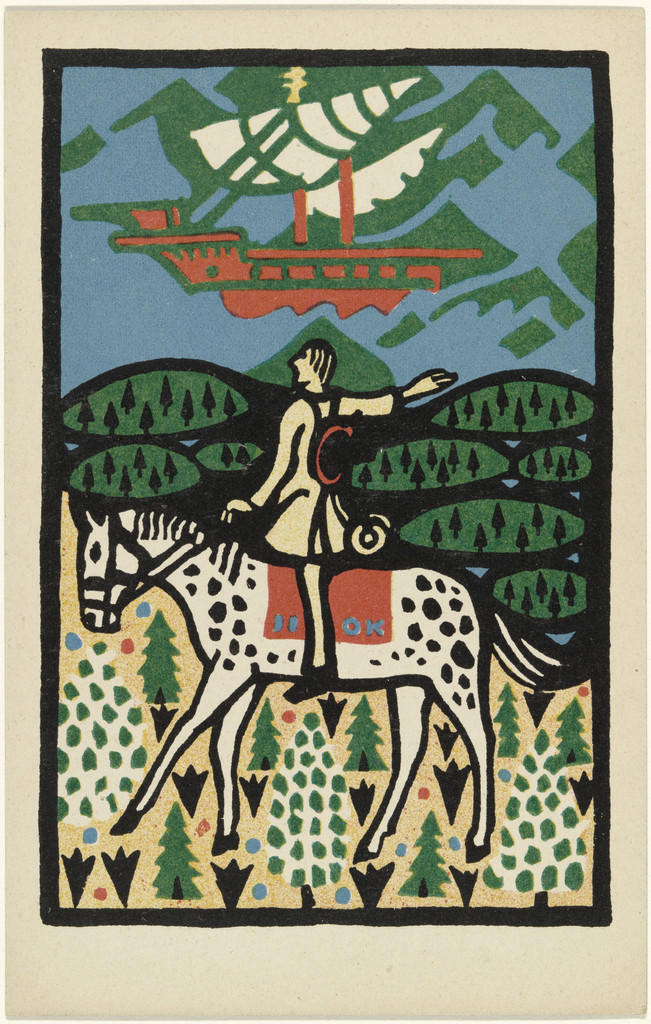
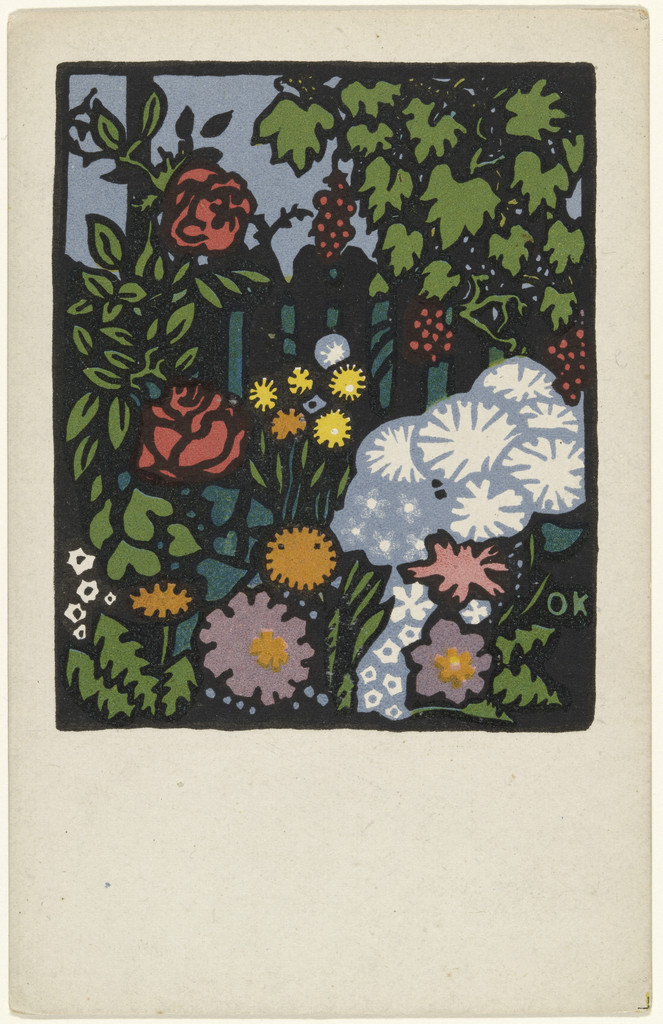
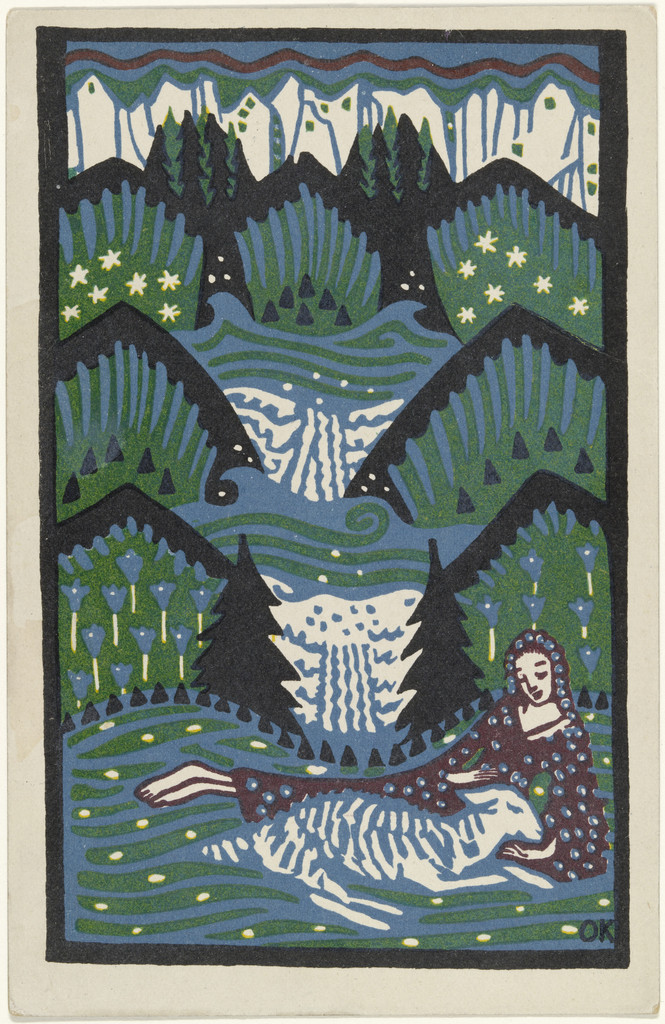
Oskar Kokoschka was a leader among Vienna’s avant-garde artists in the early 20th century. Though he would go to make his name as an expressionist, while a student at the Kunstgewerbeschule (School of Arts and Crafts, 1904-09), he was deeply engaged in the Jugendstil (Art nouveau) aesthetic of the Wiener Werkstätte (Viennese Workshops). The limited palette of colors, intense patterning, and fairytale sensibility of this hunting scene are all characteristic of that style. A half-century later, Kokoschka recalled that he had made this drawing and others in the hope that they would be reproduced as calendar illustrations. Though that project never came to fruition, he soon achieved success with similar drawings for postcards and book.
Minneapolis Institute of Art
Details
- Accession number
- 2015.132
In the catalog
Sources
- Minneapolis Institute of Art
- Image: Minneapolis Institute of Art — © Artists Rights Society (ARS), New York / Pro Litteris, Zurich
In the life of Oskar Kokoschka
The whole lifefrom 1904
Enters the School of Arts and Crafts against his father’s will
A teacher, impressed by his drawings, suggested he pursue fine art, and against his father’s will Kokoschka applied to the Kunstgewerbeschule in Vienna: he won a scholarship and was one of the few applicants accepted. At a school dominated by instructors of the Vienna Secession he was influenced by Carl Otto Czeschka in developing an original style; Gustav Klimt is also named among his teachers.
1908
A scandalous debut at the Vienna Kunstschau
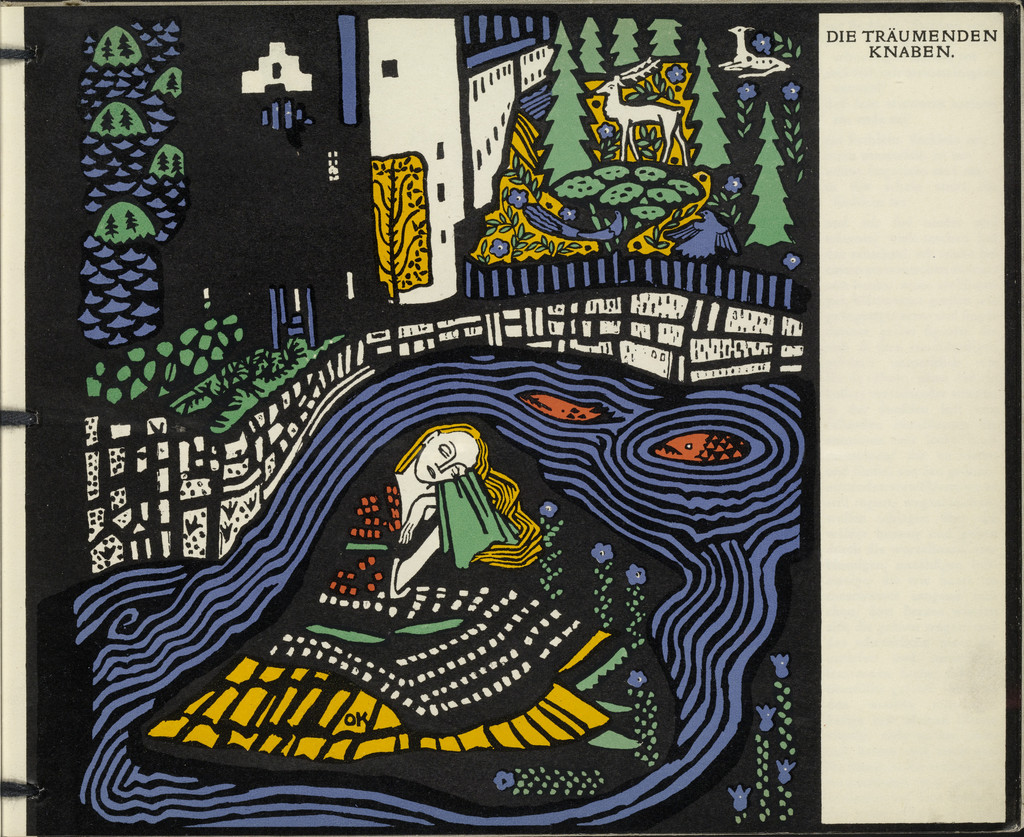
In 1908 Kokoschka was invited to submit works to the first Vienna Kunstschau. Instead of the colour pictures for a children’s book commissioned by Fritz Wärndorfer, director of the Wiener Werkstätte, he showed illustrations to his own poem “Die träumenden Knaben” and a tapestry, “The Dream Bearers” (now lost); the frank adolescent fantasies provoked a backlash from conservative officials and he was expelled from the school, but found his place in the Viennese avant-garde.
1908
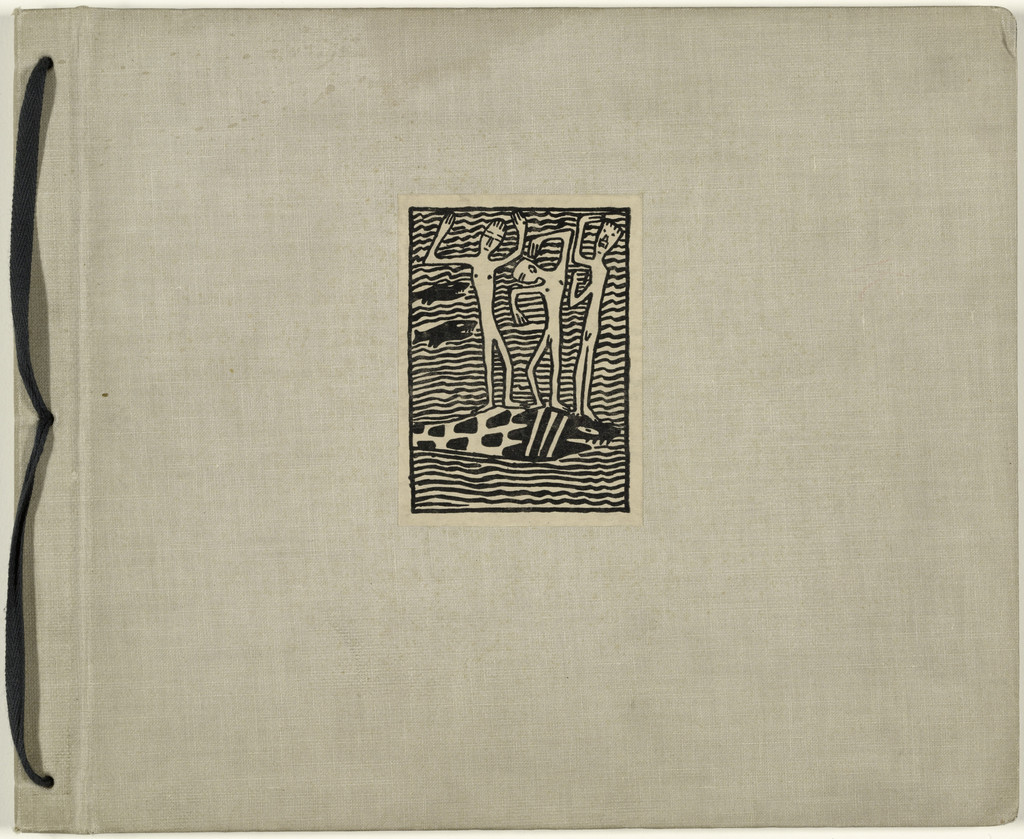
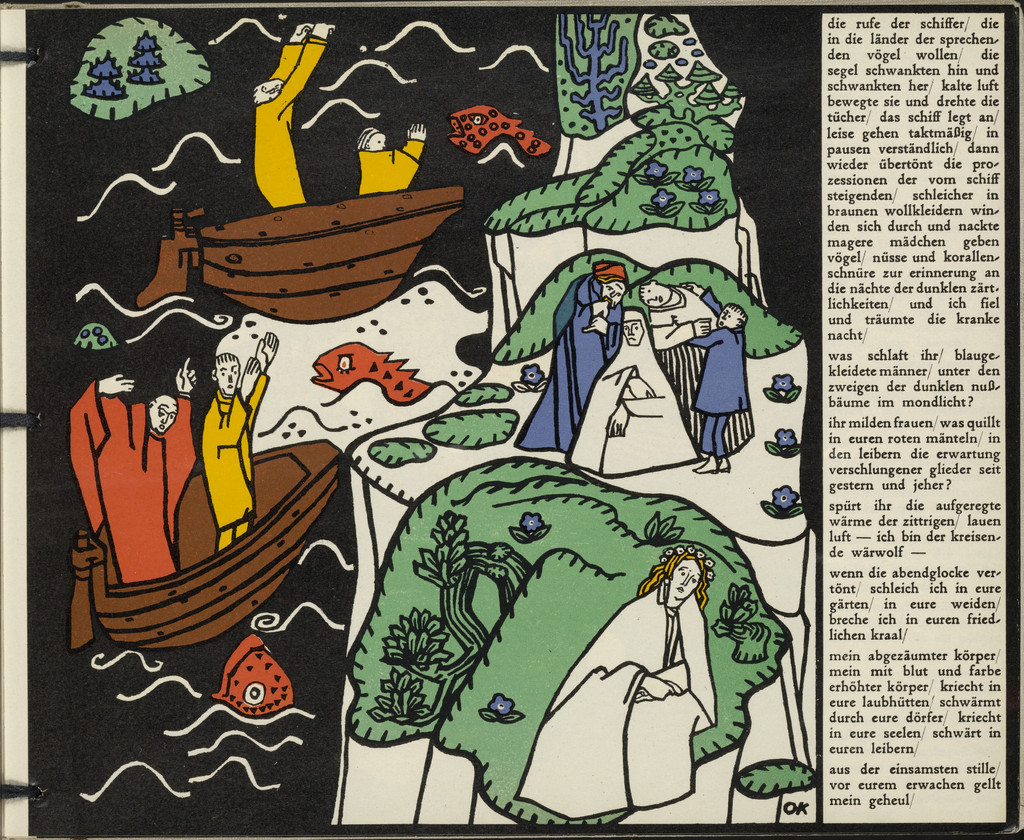
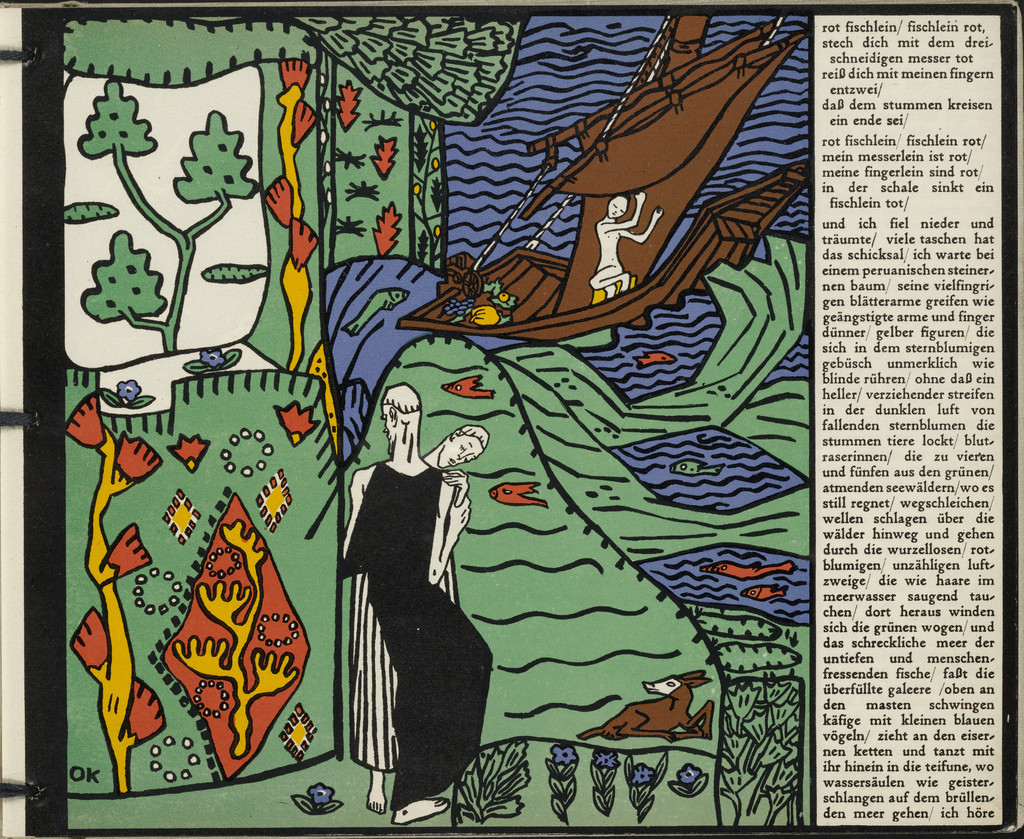
The book “Die träumenden Knaben” with lithographs
Kokoschka published the poem, written a year earlier, with the Wiener Werkstätte, with two small black-and-white and eight larger colour lithographs, and dedicated it to Gustav Klimt. Of the five hundred copies only a small proportion were bound and sold; the poem is an autobiographical adolescent fantasy about his love for a Swedish classmate, Lilith.
1909
The scandalous staging of “Murderer, the Hope of Women”
Kokoschka’s play “Murderer, the Hope of Women” was first staged in 1909, and the production on a Viennese stage caused a scandal. The play is often called the first Expressionist drama; Paul Hindemith made an opera of it in 1921.
1909–1914
Adolf Loos: patron and commissioner of portraits
The architect Adolf Loos befriended Kokoschka, introduced him to the Viennese avant-garde and ordered portraits of his clients and friends, agreeing to buy the work if the sitter declined. This left Kokoschka complete artistic freedom; he painted the bulk of his portraiture between 1909 and 1914.
1910
Berlin: Cassirer and Walden
In 1910 Kokoschka moved to Berlin. The art dealer Paul Cassirer saw promise in his work and launched him into the international circle, and the publisher and critic Herwarth Walden, introduced to him by Loos, employed him as an illustrator for his magazine “Der Sturm”; over the next four years Kokoschka travelled back and forth between Vienna and Berlin.