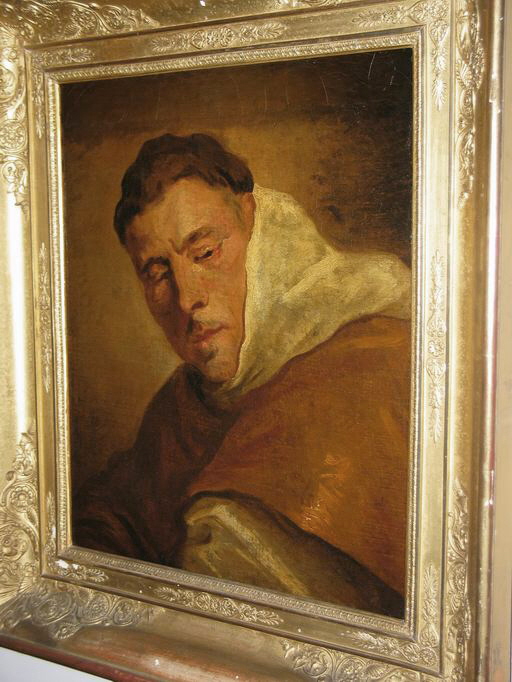
 Anthony van DyckFlemish, 1599–1641
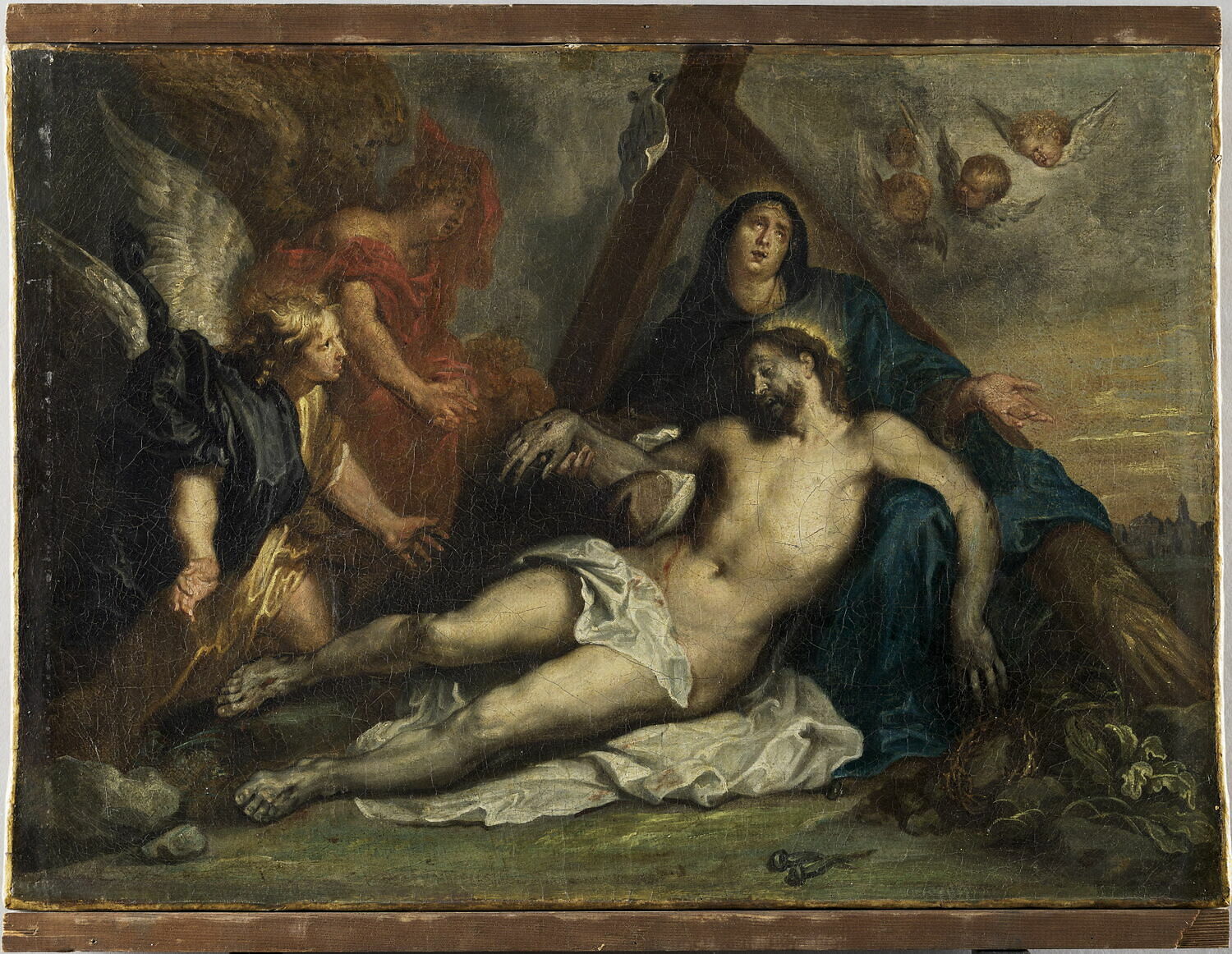
Tête de moine
Can I see it?
Unknown
Where is “Tête de moine” now? Collection: Musée du Louvre, Paris. Unknown.

Paris, France
The owner is known; whether it is on view today is not.
- In this state since
- Source
- The museum
Details
- Accession number
- MI 1263
In the catalog
Sources
- Musée du Louvre
- Image: Musée du Louvre — © 2003 Musée du Louvre / Département des Peintures
In the life of Anthony van Dyck
The whole life22 March 1599
Born
from 1617
Beginning of Work with Rubens
From 1617 Van Dyck collaborated for a long period with Peter Paul Rubens, whose pupil he became, giving up his independent workshop; Rubens spoke of him as his best pupil.
20 November 1621
Departure for Italy, Arrival in Genoa
In 1621 Van Dyck decided to go to Italy; Rubens supplied him with funds and letters of introduction. On 20 November 1621 he arrived in Genoa and remained in Italy for six years, where his fame as a portraitist was consolidated.
5 July 1632
Principal Painter to King Charles I
On 5 July 1632 Charles I officially appointed Van Dyck principal painter to the king, guaranteeing an annual income of two hundred pounds sterling; the king gave him a large house with a garden on the banks of the Thames.
27 February 1640
Married: Mary Ruthven
9 December 1641
Died