 Piet MondrianDutch, 1872–1944
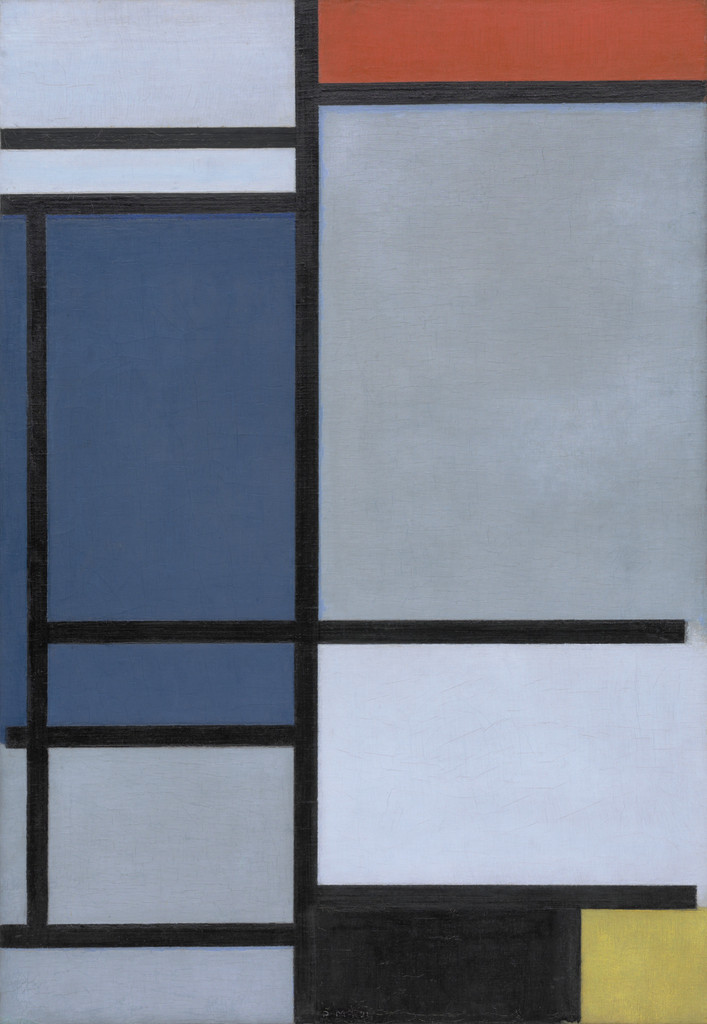
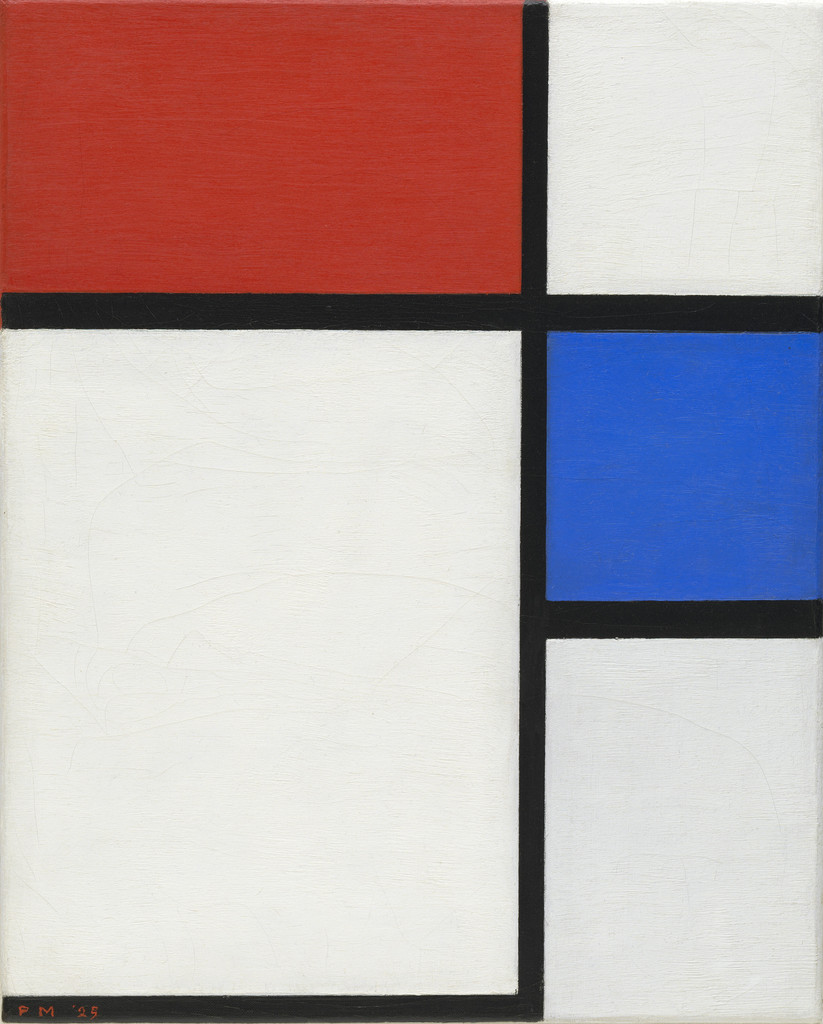
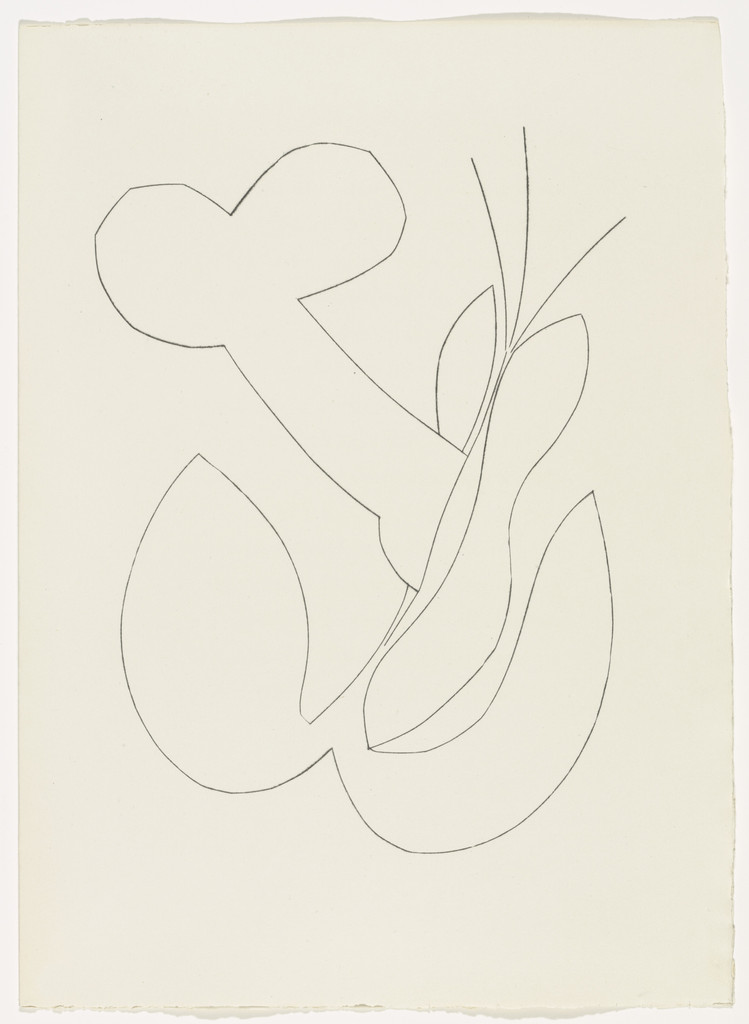
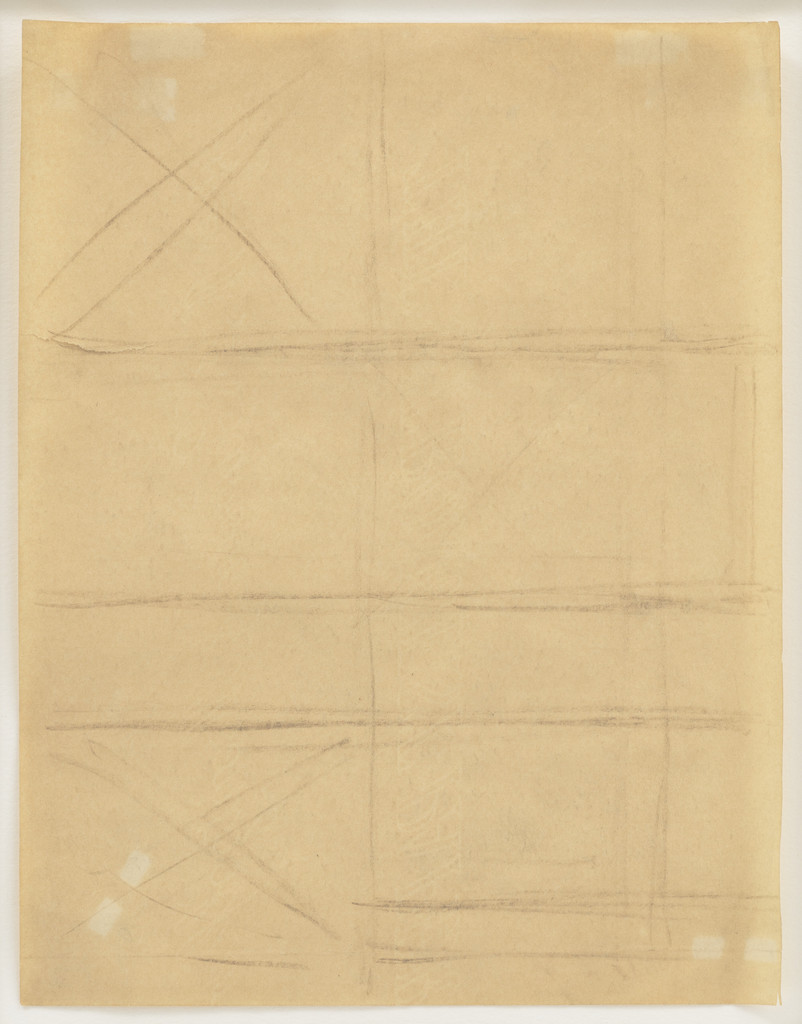
Study for a Composition
May one see it?
Not receiving at present

The Museum of Modern Art
New York, United States
It belongs to the collection, but is not on display at present.
- Checked
- 12 days ago
- Source
- The museum's own collection data
Particulars
- Accession number
- 1516.2018
Sources
- The Museum of Modern Art: the museum's own open data · fetched 12 days ago
- Image: The Museum of Modern Art — © the artist or rights holder
Meanwhile, in the life of Piet Mondrian
The whole life1919–1938
Return to Paris
In 1919 Mondrian left the Netherlands for Paris for the second and last time and at once turned to his studio: to hide its flaws he tacked large single-colour placards to the walls, accented by compositions of smaller coloured paper rectangles. From then on, periods of painting alternated with experiments in regrouping the papers on the walls.
1930s
Double lines, influenced by Marlow Moss
In the 1930s Mondrian began to use thinner and double lines more often, punctuated by a few small coloured forms; the double line, in which he saw a new dynamism, was influenced by the work of his friend and contemporary Marlow Moss.
1934–1935
The “Abstract and Concrete” exhibitions in Britain
Three of Mondrian's paintings were shown in the “Abstract and Concrete” exhibitions at Oxford, London and Liverpool.