 Ivan Aivazovsky1817–1900
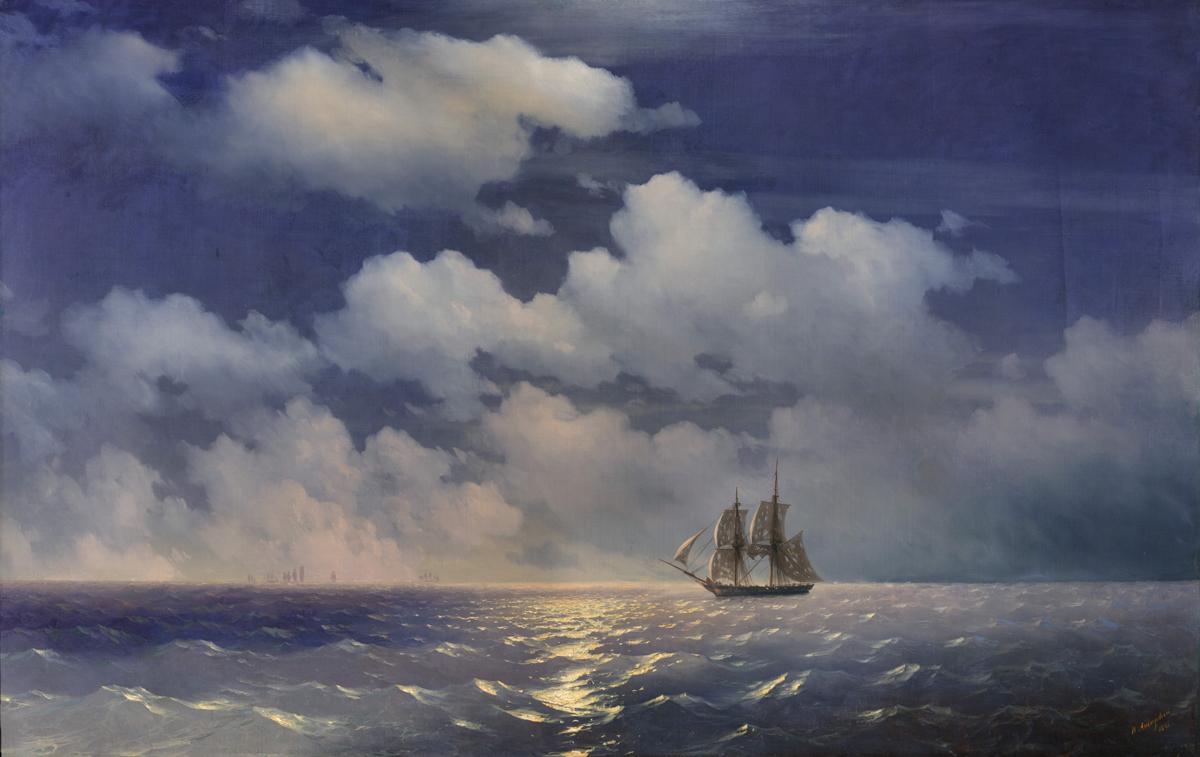
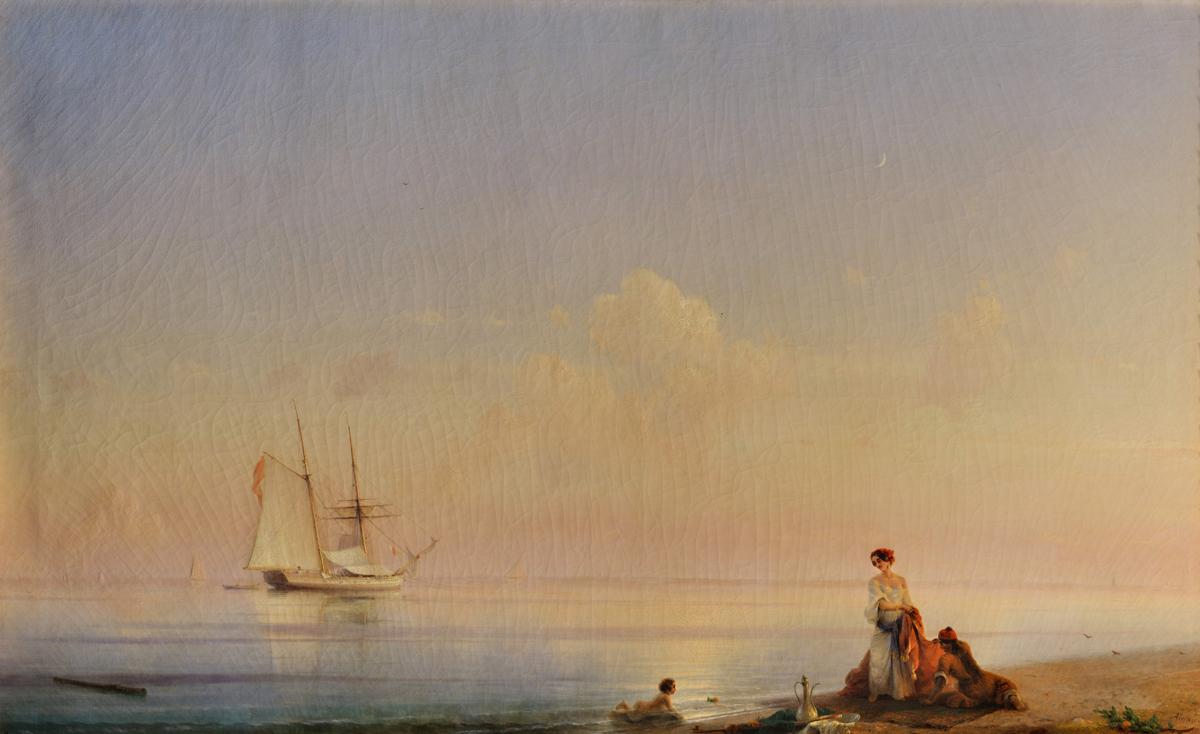
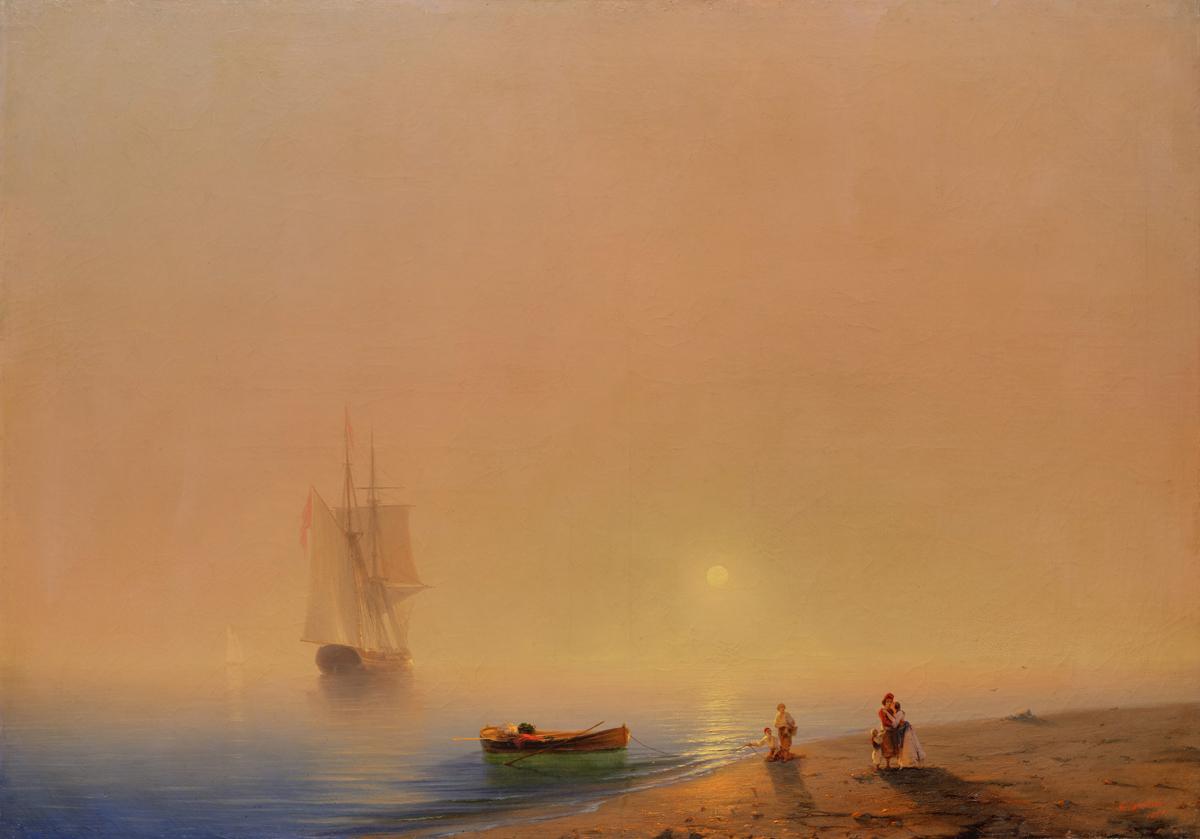
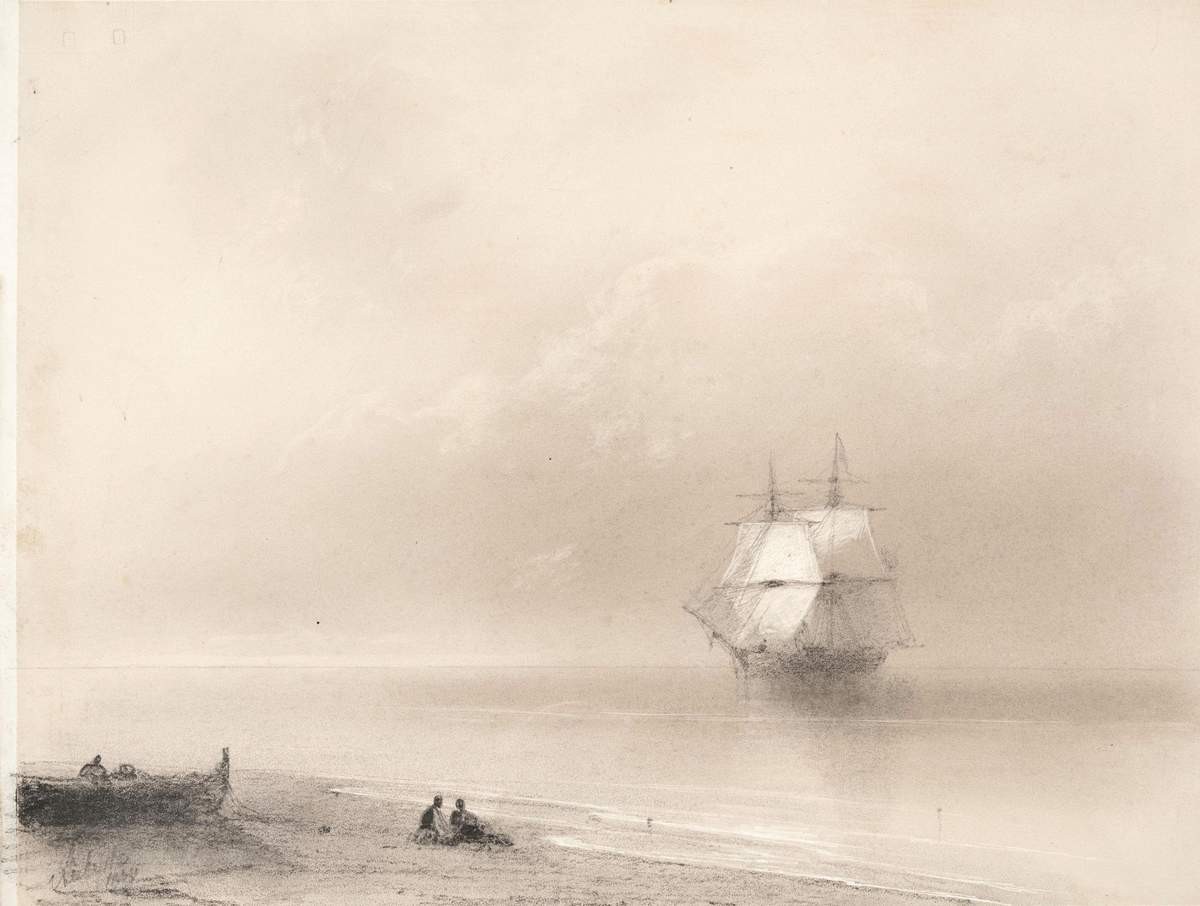
Штиль
Can I see it?
Unknown
Where is “Штиль” now? Collection: State Russian Museum, Saint Petersburg. Unknown.

Saint Petersburg, Russia
The owner is known; whether it is on view today is not.
- In this state since
- Source
- The museum
Details
- Accession number
- Р-53101
What it shows
In the catalog
Sources
- State Russian Museum
- Image: State Russian Museum — © State Russian Museum
In the life of Ivan Aivazovsky
The whole life1860–1877
Separation from Julia Graves and divorce
After twelve years of marriage his wife leaves Aivazovsky; the marriage is dissolved only in 1877, with the Armenian Church's permission, since Graves was a Lutheran. The cause of the divorce is given as Aivazovsky's systematic physical abuse of his wife.
1874–1876
Self-portraits for the Uffizi and the Palazzo Pitti
In 1874 the Florence Academy of Fine Arts asks Aivazovsky for a self-portrait to hang in the Uffizi (a show of his work is held in Florence the same year); in 1876 he is made a member of the academy and becomes the second Russian artist, after Orest Kiprensky, to paint a self-portrait for the Palazzo Pitti.
1877
Exhibitions for soldiers' families
During the Russo-Turkish War Aivazovsky holds exhibitions in Simferopol, Moscow and Saint Petersburg in aid of needy soldiers' families; he often devotes the proceeds of his shows to charity.
1878–1879
Europe in search of material on Columbus
In 1878 Aivazovsky is elected an honorary member of the Royal Academy of Fine Arts in Stuttgart. He travels to the Netherlands and France, stays briefly in Frankfurt until 1879, then visits Munich and goes on to Genoa and Venice to collect material on Columbus's discovery of America; in 1879 his shows are held in Frankfurt and Stuttgart.
1880
Opens an art gallery in Feodosia
In 1880 Aivazovsky opens an exhibition hall in his Feodosia house for paintings that were never to leave Feodosia and for recently finished works; the year is officially counted as the founding of the Feodosia Art Gallery, the third museum in the Russian Empire after the Hermitage and the Tretyakov Gallery. He bequeaths the gallery to his native town.