Shiva Dakshinamurti
May one see it?
Not receiving at present

Victoria and Albert Museum
London, United Kingdom
It belongs to the collection, but is not on display at present.
- Checked
- In this state since
- Source
- The museum
About the sculpture
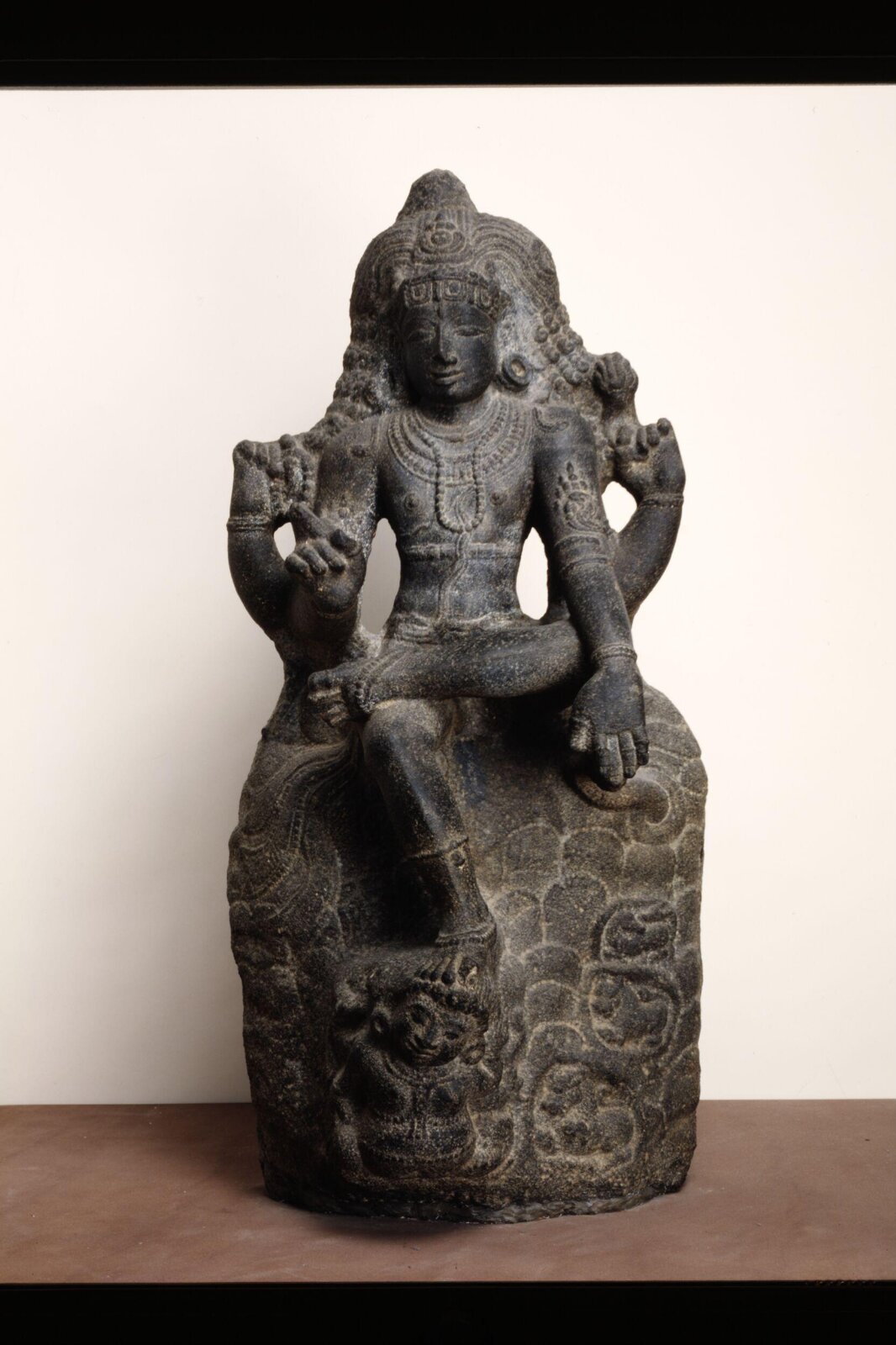
Dakshinamurti, the "Lord who faces South", represents Shiva as the supreme teacher of yoga, music, jnana (divine knowledge) and all the arts and sciences. Each of these four aspects is distinguished iconographically. This image, with a rosary and flame in the upper hands, is Vyakhyanamurti, Shiva as the expounder of the shastras. Four-armed Shiva is depicted with the uncut hair of an ascetic, seated in the virasana (heroic) posture, the lower right hand raised in the gesture of teaching in silence (chinmudra). The rocky landscape upon which he sits is an allusion to his Himalayan retreat where he instructs through mind-speech the secrets of the shastras to the holy men (rishis). With his right foot he suppresses the dwarf-like figure of Apasmarapurusha, the demon embodying ignorance and forgetfulness. The wild animals of the mountain, carved in low relief, gather around him to hear his profound message.
Read on
In the medieval period images of Dakshinamurti came to occupy a position on the south wall of the central shrine of a Hindu temple, displacing Ganesha in the south Indian temple schema in the early Chola period. By being positioned south-facing, Dakshinamurti was able to look down from his temple as if still seated in his beloved Mt Kailasha in the Himalayas. This sculpture would have originally occupied a niche on the south elevation of a late Chola temple.
Victoria and Albert Museum
Particulars
- Accession number
- IS.41-1966