 Mikhail Vrubel1856–1910
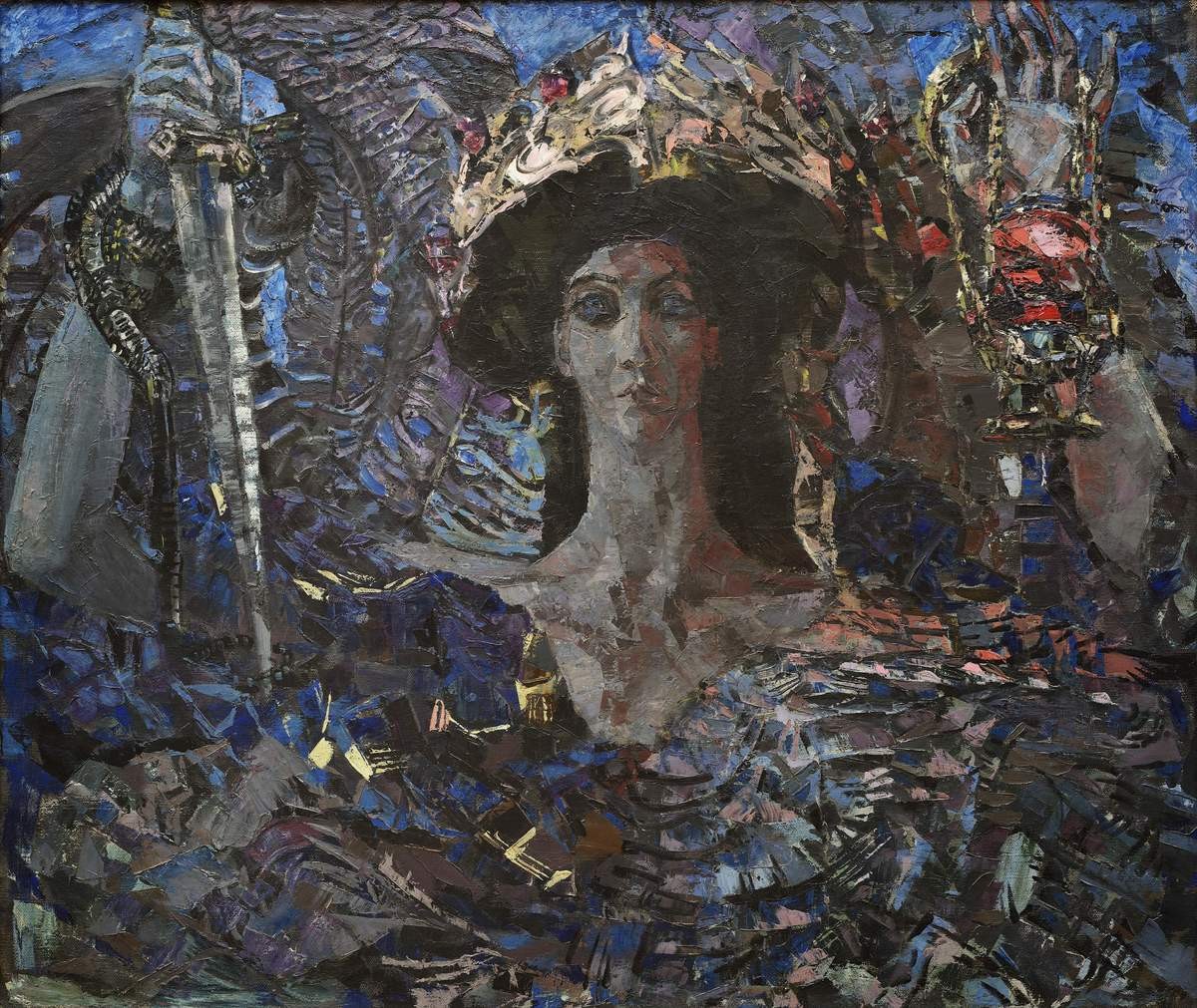
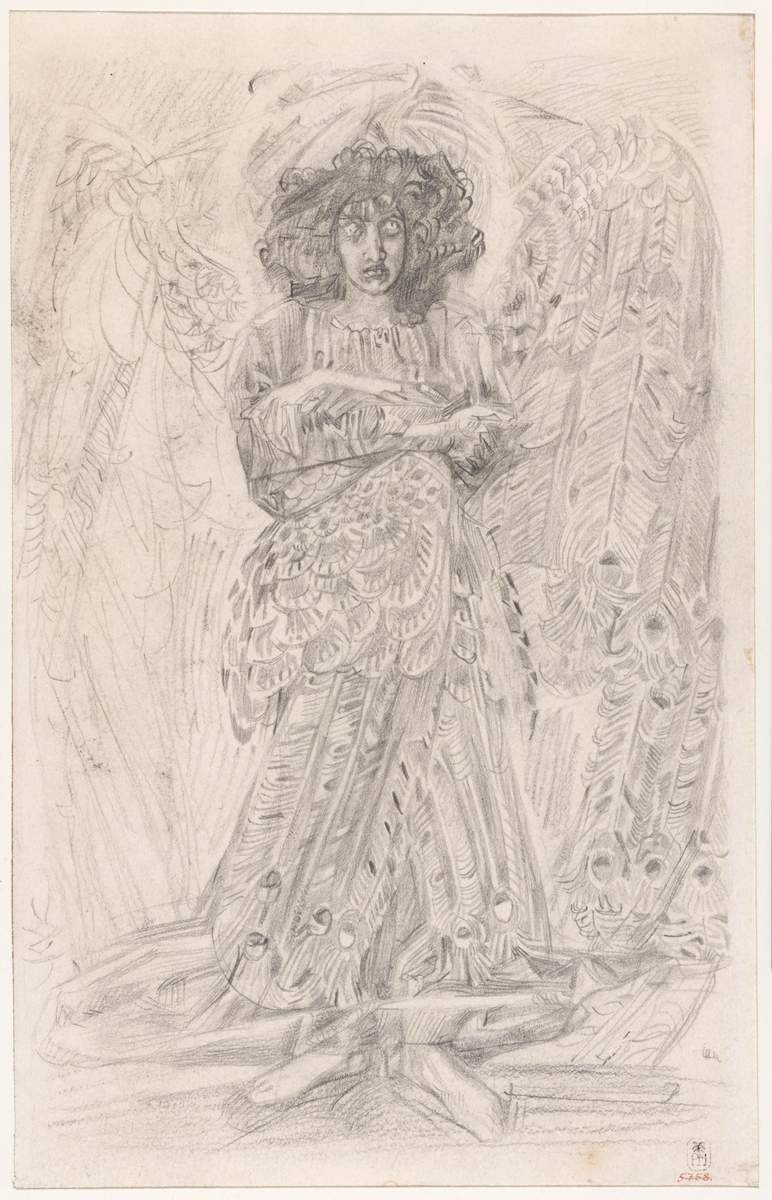
Серафим
Can I see it?
Unknown
Where is “Серафим” now? Collection: State Russian Museum, Saint Petersburg. Unknown.

Saint Petersburg, Russia
The owner is known; whether it is on view today is not.
- In this state since
- Source
- The museum
About the work
Museum text in Russian
Как и прежде, в позднем творчестве Врубеля в равной мере присутствовали и лирика, и патетика, смиренное «припадание» к натуре и желание воплотить возникавшие в его сознании фантастические видения: « Серафим », « Видение пророка Иезекииля », «Иоанн Креститель» (1905, ГТГ). Нельзя отрицать, что в яростном хаосе штрихов, наслаивающихся друг на друга изображениях, горящем колорите, искаженной анатомии сказалось лихорадочное состояние ума художника, но их убедительность абсолютна, и, кажется, иного пластического языка для воплощения подобных экстатических образов и быть не может — как иначе « заставить формы говорить там, где они могут только рассыпаться и тлеть » (Н. Н. Пунин). Юлия Солонович. Графика Михаила Врубеля // Михаил Врубель. К 165-летию со дня рождения. СПб, 2022. С. 24.
Read on
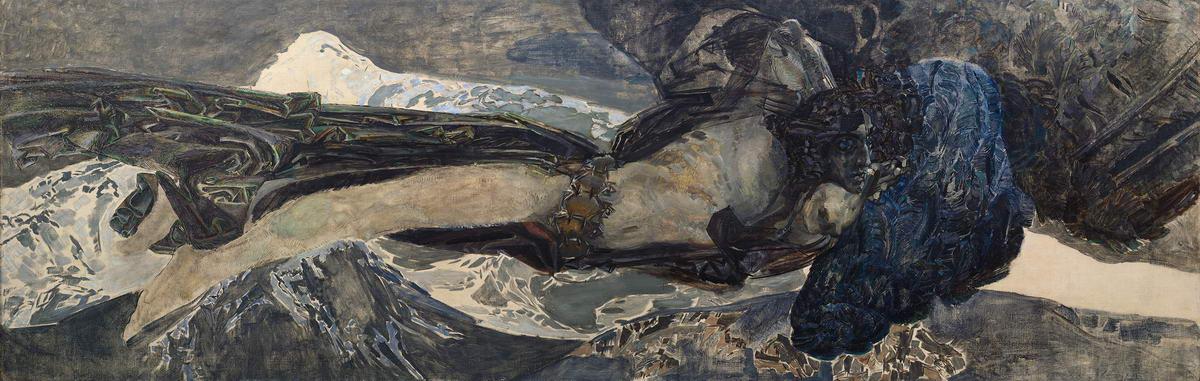
Варианты — «Демон стоящий» (1900; КМРИ); «Демон» (местонахождение неизвестно; первоначально находился в собрании П. И. Карпова).
В литературе о Врубеле эта работа именовалась по-разному: «Ангел», «Эскиз к «Демону», «Набросок демона», «Серафим». Сомнения в том, кем является изображенный Врубелем персонаж, отражены в книге А. П. Иванова: « Возможно, что на только что упомянутом рисунке № 48 „Серафим“, а не „Демон“, которого Врубель нигде в другом месте не изображает шестикрылым. За Демона говорит экспрессия лица у стоящей фигуры. За Серафима — третья пара крыл, скрещенных у бедер» ( Иванов А. П. М. А. Врубель. Л., 1928. С. 52 ). В дополнение к этим соображениям следует сказать, что тема «Демона» в творчестве Врубеля завершилась в 1902 году «Демоном поверженным». По стилистическим особенностям лист тяготеет к более позднему времени. Над образом «Серафима» Врубель работал в 1904–1905 годах. Юлия Солонович // Михаил Врубель из собрания Русского музея. СПб, 2006. С. 293.
State Russian Museum
Details
- Accession number
- Р-530
What it shows
In the catalog
Sources
- State Russian Museum
- Image: State Russian Museum — © State Russian Museum
In the life of Mikhail Vrubel
The whole life1902
Bekhterev’s diagnosis
In St Petersburg Vrubel went on repainting the “Demon” without pause, ruining it in his friends’ view, and his family took him to the psychiatrist Vladimir Bekhterev, who diagnosed “incurable progressive paralysis” — tertiary syphilis; the artist himself was told nothing. In Moscow, although the collector Vladimir von Meck bought the painting for 3,000 roubles, he grew worse still: he drank and squandered money, and his wife and son tried to take refuge from him with relatives in Ryazan.
2 February 1902
“The Demon Downcast” fails in Moscow
The painting went on show in Moscow a day before the “Group of 36” exhibition closed; Vrubel hoped it would be bought for the Tretyakov Gallery. The failure coincided with news of the suicide of Alexander Rizzoni after unfair criticism in the journal Mir iskusstva.
April 1902
First hospitalisation
In early April, with symptoms of acute mental disorder, Vrubel was admitted to F. A. Savey-Mogilevich’s private clinic; until August his condition was so grave that even his wife and sister were not allowed to see him. In September he was moved to Vladimir Serbsky’s clinic at Moscow University, and Serbsky confirmed the diagnosis, establishing that the infection dated back to 1892.
November 1902
An exhibition of 36 works turns the tide
The papers greeted Vrubel’s illness with articles such as “Mentally Ill Decadents” in Russky Listok, so Benois and Diaghilev, set on proving the artist’s sanity to the public, mounted an exhibition of thirty-six of his works, including all three painted “Demons”. It marked a turning point in how critics and the public saw Vrubel, though few believed he would recover, and Mir iskusstva wrote of him in the past tense.
3 May 1903
Death of his son Savva
Vrubel had been discharged from the clinic in February, and von Meck invited the family to spend the summer on his estate in Kiev province, but on the eve of departure two-year-old Savva fell ill, and in Kiev the child died. Vrubel at once shook off his apathy, busied himself with the funeral and supported his wife, who would not say a word; their son was buried on Baikove Hill.
February 1906
Total blindness
Despite the “voices” that tormented him, Vrubel returned to the theme of the Prophet — he began painting a six-winged seraph and took up the visions of Ezekiel — but the picture was never finished: his sight began to fail catastrophically, and atrophy of the optic nerve set in. On 12 February 1906 he complained in a letter to his wife that he could neither read nor draw, and a few days later he was completely blind.