ART WIKI32,979 on view
MapCollectionArtistsMuseumsExhibitionsJournal
Sign in

ART WIKI

Where the masterpiece hangs, and when they let you in.

Collections: Art Institute of Chicago, Getty Villa, Harvard Art Museums, Hirshhorn Museum and Sculpture Garden, J. Paul Getty Museum, Minneapolis Institute of Art, Musée du Louvre, National Gallery of Art, National Museum of Asian Art, National Portrait Gallery (Smithsonian), Pushkin State Museum of Fine Arts, Rijksmuseum, Smithsonian American Art Museum, SMK — National Gallery of Denmark, State Hermitage Museum, State Russian Museum, The Cleveland Museum of Art, The Metropolitan Museum of Art, The Museum of Modern Art, Tretyakov Gallery, Victoria and Albert Museum, Whitney Museum of American Art, State Catalogue of the Museum Fund of Russia (274 museums), Europeana (19 museums), Wikidata (6 museums), Paris Musées (12 museums), and Joconde, the French Ministry of Culture's museum database (495 museums). Images belong to their rights holders.

Sections

  • Map
  • Search
  • Collection
  • Masterpieces
  • On view now
  • Artists

More

  • Museums & galleries
  • Exhibitions
  • Journal
  • Where the data comes from
  • Privacy & cookies
HomeMapBrowse
  1. Collection/
  2. Minneapolis Institute of Art/
  3. Seated Nude
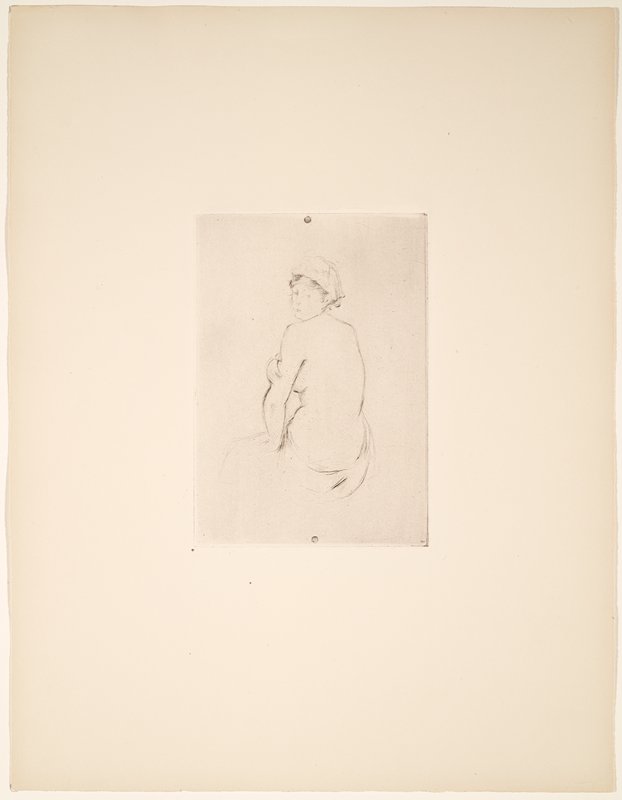
Seated Nude, Berthe Morisot, 1887–88
Berthe Morisot, portraitBerthe MorisotFrench, 1841–1895

Seated Nude

1887–88 · Print · 13.97 × 9.68 cm

May one see it?

Not receiving at present

Minneapolis Institute of Art

Minneapolis, United States

It belongs to the collection, but is not on display at present.

Checked
3 days ago
In this state since
Sep 25, 2026
Source
The museum
On the mapMuseum page

Particulars

1887–88
18411895
Accession number
P.71.195

In the catalog

PrintsDrypointImpressionism19th centuryFrance

Sources

  • Minneapolis Institute of Art
  • Image: Minneapolis Institute of Art — public domain

Meanwhile, in the life of Berthe Morisot

The whole life
  1. 1875–1885

    Oil, watercolour and pastel at once

    Grown more confident in oil, Morisot, like Degas, works in oil, watercolour and pastel at the same time. She paints very quickly but prepares with countless studies, so that she can paint “a mouth, eyes, and a nose with a single brushstroke”.

  2. 1885–1887

    A turn to drawing: line and form

    After 1885 drawing begins to dominate Morisot's work: she experiments with charcoal and coloured pencils and clarifies form and line, influenced by photography and Japonism. Like the Japanese prints of the time, she places objects away from the centre of the composition.

  3. 1887–1895

    Squaring and tracing paper: the synthesis of her last years

    Morisot starts to use squaring and tracing paper to transcribe her drawings exactly onto the canvas, which lets her build compositions with more complicated interaction between figures. Her late works are distinctive for their synthesis of the Impressionist touch with broad strokes and light reflections and the graphic approach of clear lines.

  4. 1888–1889

    From short strokes to long, sinuous ones

    In 1888–89 Morisot's brushstrokes change from short, rapid ones to long, sinuous ones that define form; the outer edges of her paintings are often left unfinished, so that the canvas shows through and increases the sense of spontaneity.

  5. 1890

    “No man has ever treated a woman as an equal”

    In 1890 Morisot writes in a notebook about her struggle to be taken seriously as an artist: she does not think there has ever been a man who treated a woman as an equal, and that is all she would have asked for, since she knows she is worth as much as they are.

More by Berthe Morisot

All works
Young Woman Seated on a Sofa, Berthe Morisot, ca. 1879

Young Woman Seated on a Sofa

ca. 1879 · The Metropolitan Museum of Art

The Harbor at Lorient, Berthe Morisot, 1869

The Harbor at Lorient

1869 · National Gallery of Art

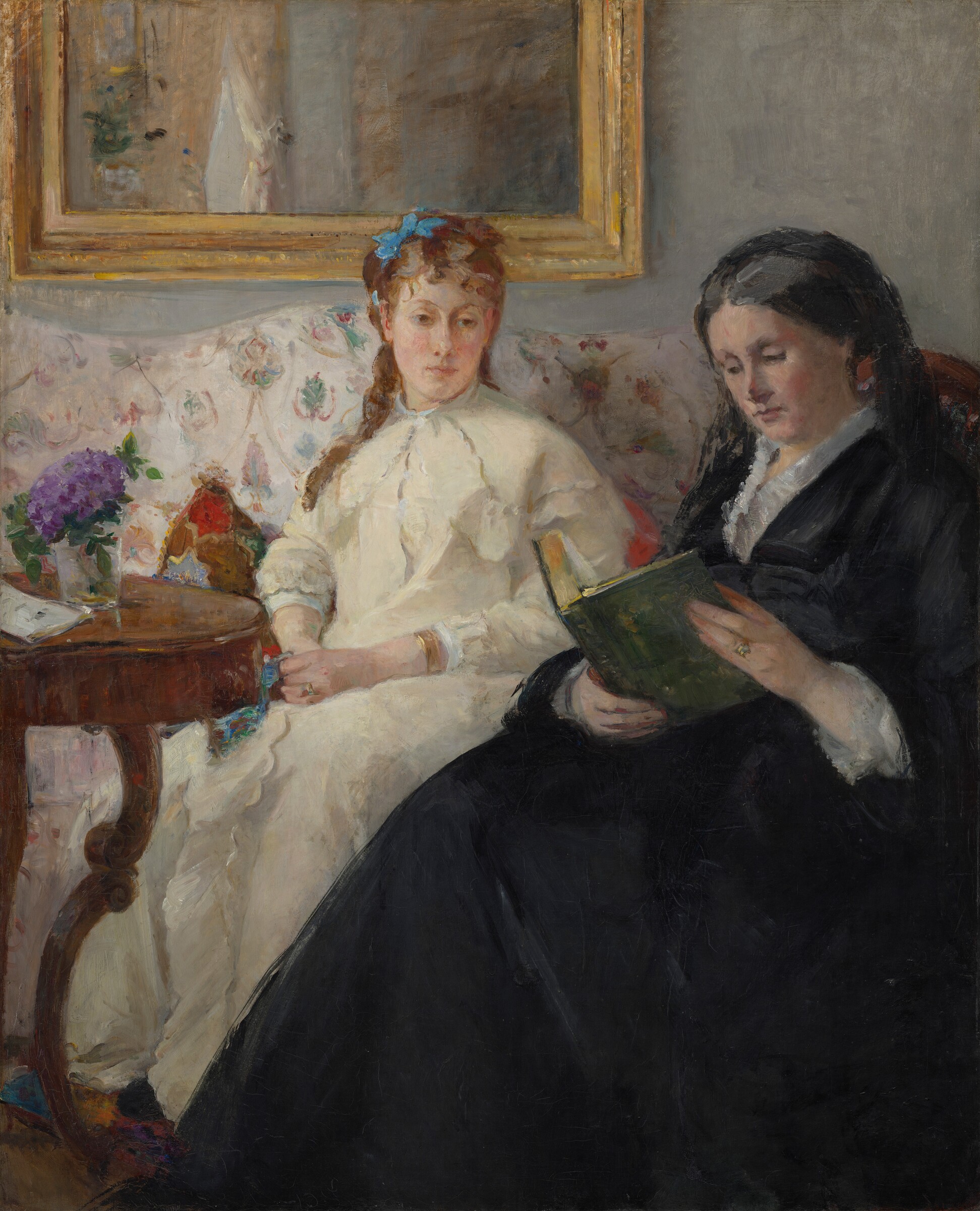
The Mother and Sister of the Artist, Berthe Morisot, 1869/1870

The Mother and Sister of the Artist

1869/1870 · National Gallery of Art

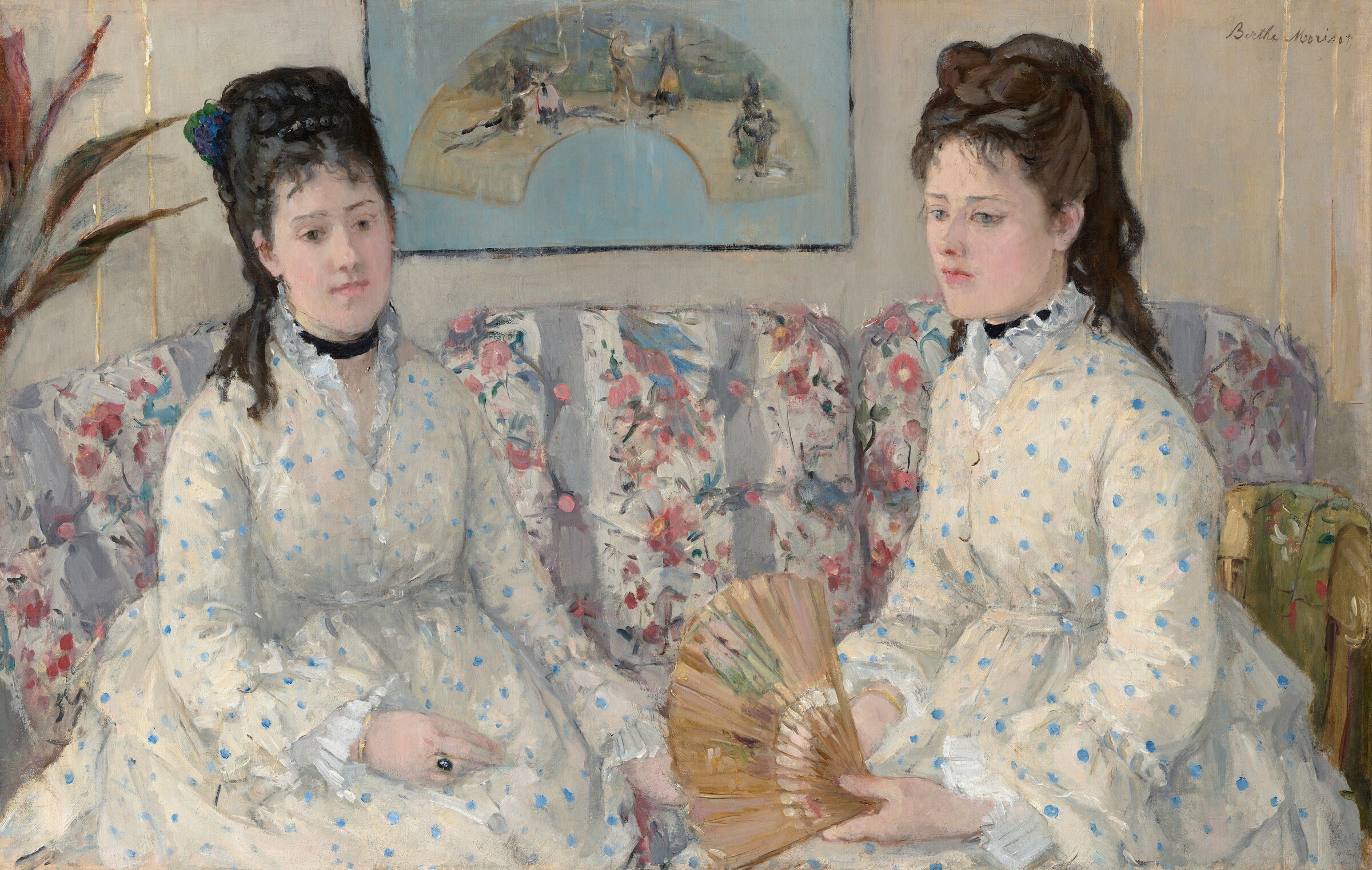
The Sisters, Berthe Morisot, 1869

The Sisters

1869 · National Gallery of Art

The Artist's Sister at a Window, Berthe Morisot, 1869

The Artist's Sister at a Window

1869 · National Gallery of Art

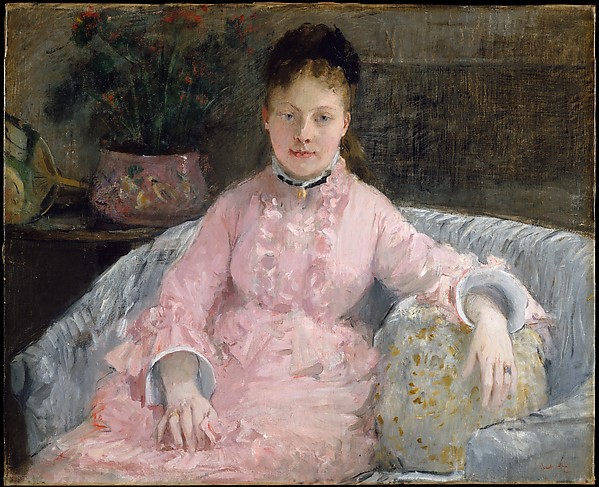
The Pink Dress (Albertie-Marguerite Carré, later Madame Ferdinand-Henri Himmes, 1854–1935), Berthe Morisot, ca. 1870

The Pink Dress (Albertie-Marguerite Carré, later Madame Ferdinand-Henri Himmes, 1854–1935)

ca. 1870 · The Metropolitan Museum of Art

In the Dining Room, Berthe Morisot, 1886

In the Dining Room

1886 · National Gallery of Art

The Artist's Daughter with a Parakeet, Berthe Morisot, 1890

The Artist's Daughter with a Parakeet

1890 · National Gallery of Art

Neighbors at Minneapolis Institute of Art

Museum page
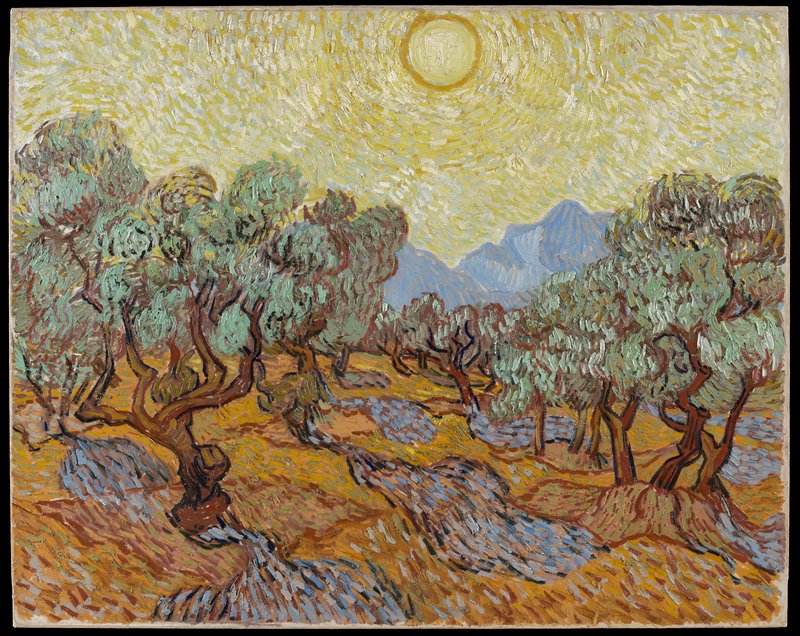
Olive Trees, Vincent van Gogh, 1889

Vincent van Gogh

Olive Trees, 1889

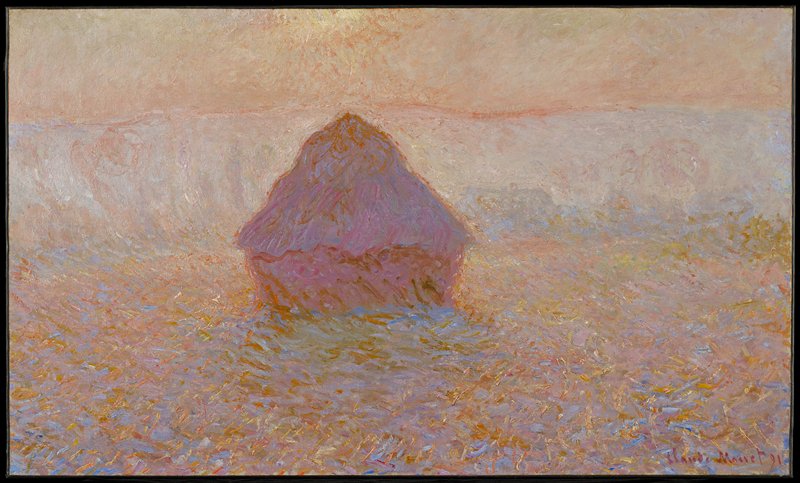
Grainstack, Sun in the Mist, Claude Monet, 1891

Claude Monet

Grainstack, Sun in the Mist, 1891

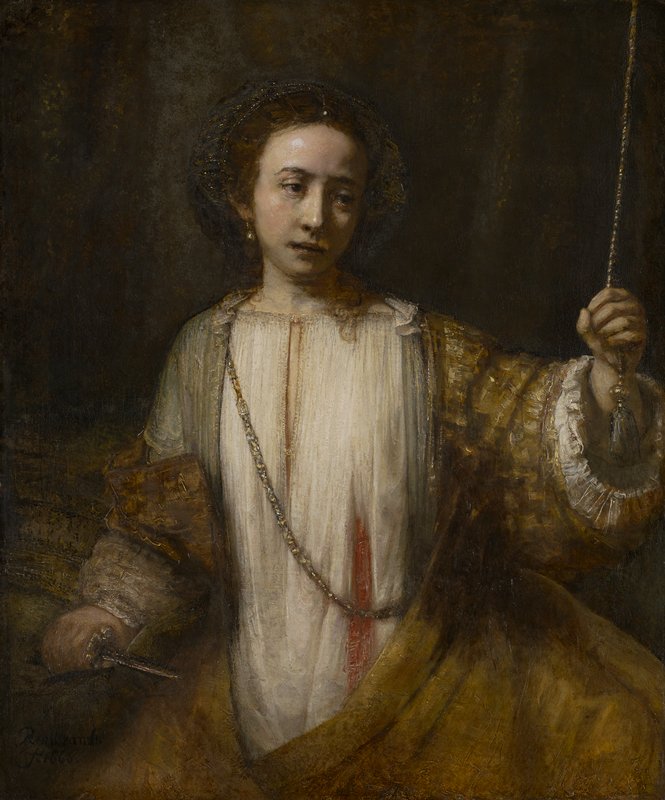
Lucretia, Rembrandt van Rijn, 1666

Rembrandt van Rijn

Lucretia, 1666

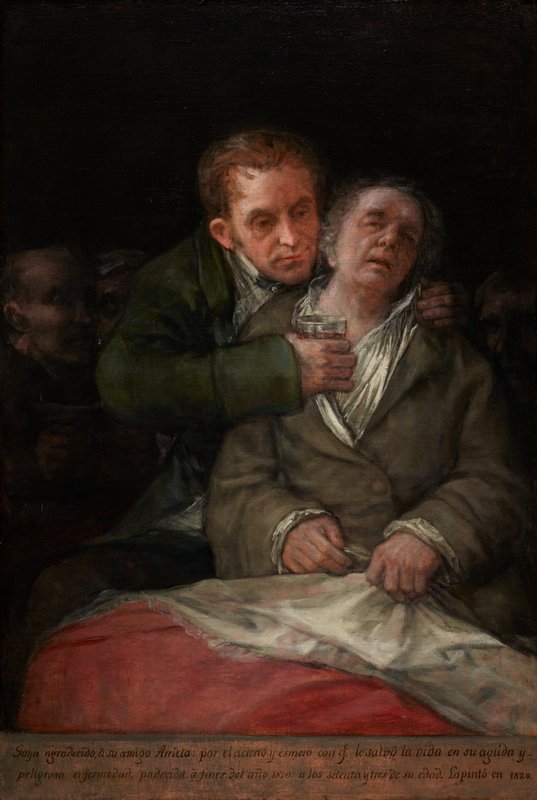
Self-Portrait with Dr. Arrieta, Francisco José de Goya y Lucientes, 1820

Francisco de Goya

Self-Portrait with Dr. Arrieta, 1820

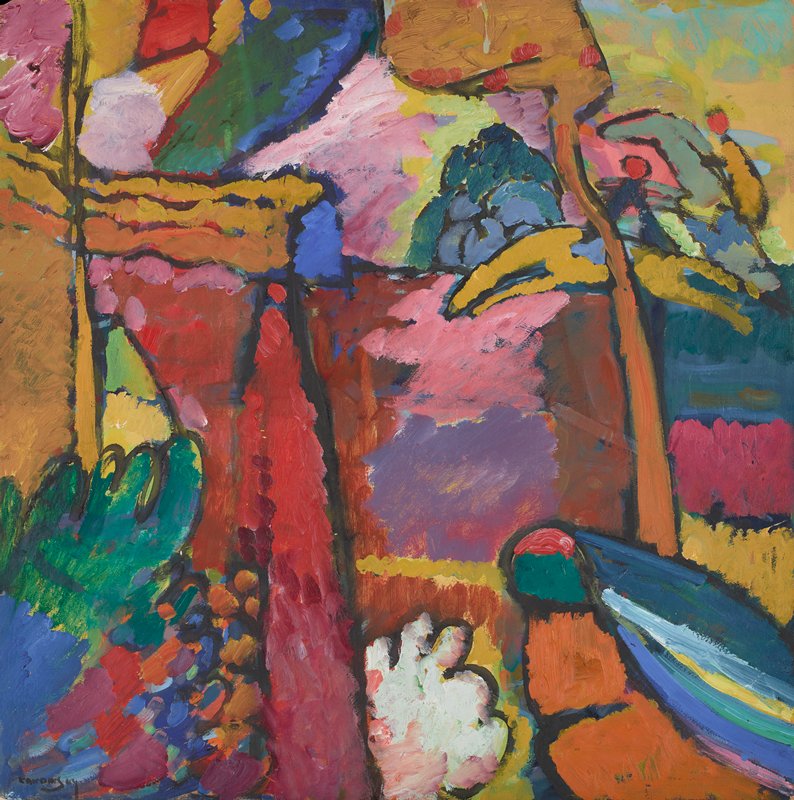
Study for Improvisation V, Vassily Kandinsky, 1910

Vasily Kandinsky

Study for Improvisation V, 1910

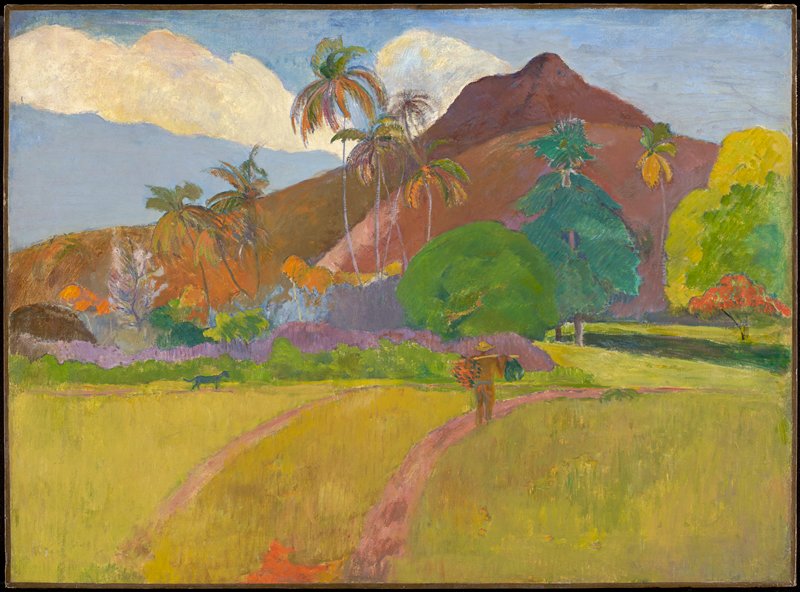
Tahitian Landscape, Paul Gauguin, 1891

Paul Gauguin

Tahitian Landscape, 1891

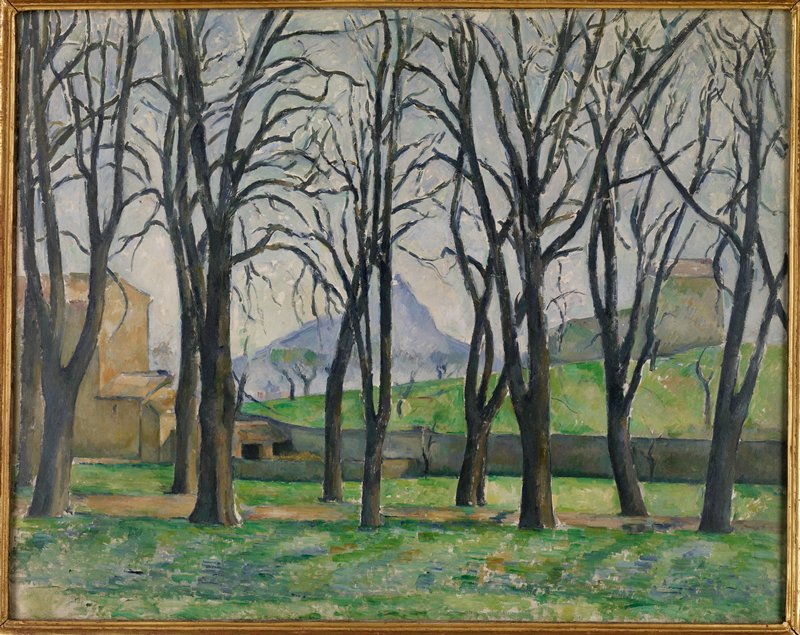
Chestnut Trees at Jas de Bouffan, Paul Cézanne, c. 1885–86

Paul Cézanne

Chestnut Trees at Jas de Bouffan, c. 1885–86

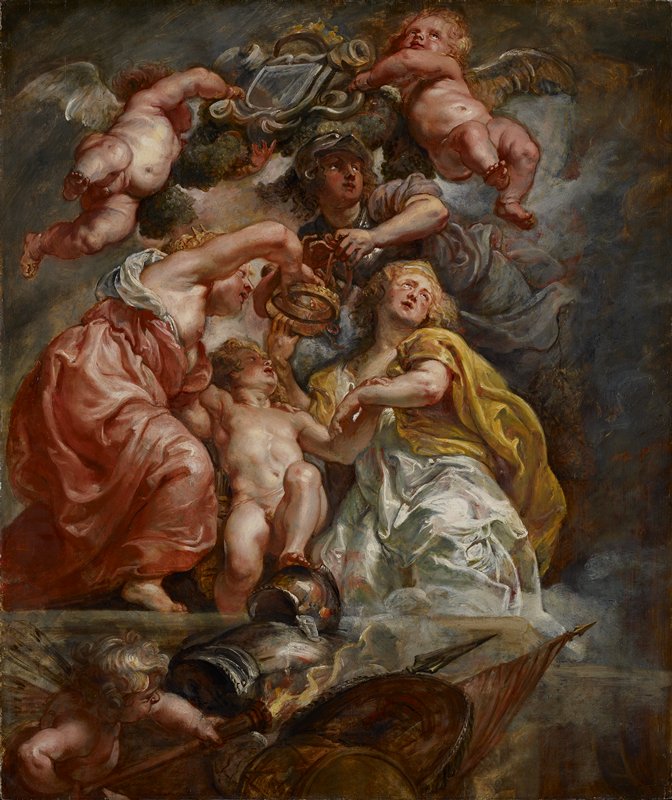
The Union of England and Scotland (Charles I as the Prince of Wales), Peter Paul Rubens, 1633–34

Peter Paul Rubens

The Union of England and Scotland (Charles I as the Prince of Wales), 1633–34