 Constantin BrancusiRomanian, 1876–1957
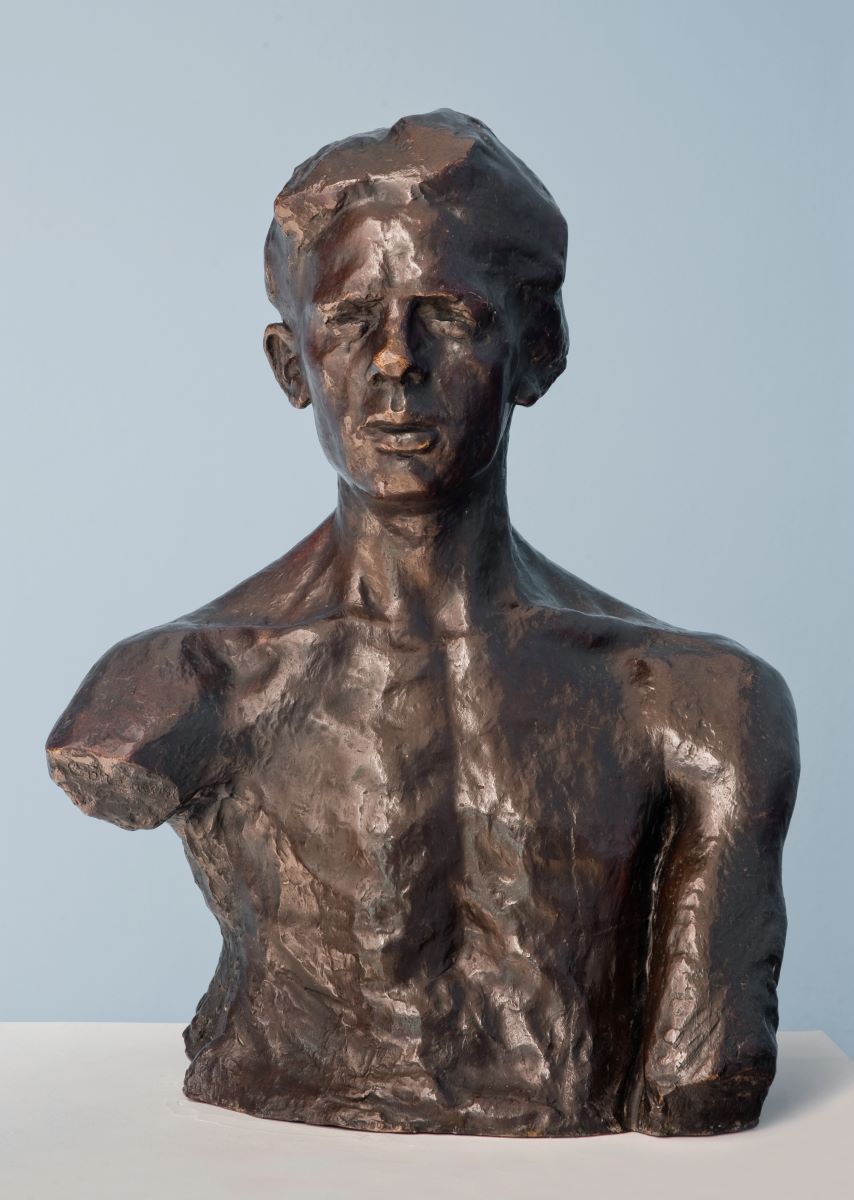
Pictorul Nicolae Dărăscu
May one see it?
Unknown: the museum keeps its counsel

National Museum of Art of Romania
Bucharest, Romania
The owner is known. Whether it is on view today, the museum does not say, and we were not trained to guess.
- In this state since
- Sep 27, 2026
- Source
- The museum's own collection data
About the sculpture
Pentru acest bust, Brancusi va primi premiul al doilea, la Salonul oficial bucurestean din 1909, prezidat de Spiru Haret. Pictorul Nicolae Darascu, era prietenul lui Brancusi. Forma definitiva a lucrarii are bratul stang indoit si bratul drept sectionat putin mai jos de umar. in aceata lucrare se poate sesiza influenta lui Auguste Rodin. Lucrarea va fi achizitionata de Ministerul Cultelor si Instructiunii Publice. Semnat lateral pe brațul drept "C. Brâncuși".
National Museum of Art of Romania
Particulars
What it shows
Sources
- National Museum of Art of Romania: the museum's own open data · fetched 3 days ago
- Image: National Museum of Art of Romania — CC BY-SA 4.0
Meanwhile, in the life of Constantin Brancusi
The whole life1903 – 14 July 1904
On foot from Bucharest to Paris
Later in 1903 Brâncuși leaves Bucharest for Western Europe, walking much of the way and working along the road to support himself; passing through Vienna, Munich and Basel, where he stays for a time, he arrives in Paris on 14 July 1904. Other accounts put his departure in 1902 and name poverty, indifference to his work and the coarse manners of his compatriots as the reasons.
1904
The first months in Paris: a dishwasher
During his first months in Paris Brâncuși works as a dishwasher at the Brasserie Chartier; when money is scarce, he assists at services in the Romanian Orthodox church on rue Jean-de-Beauvais.
June 1905
The École des Beaux-Arts: Mercié’s class and a scholarship
In June 1905 Brâncuși passes the entrance examination for the École des Beaux-Arts in Paris and enters the sculpture class of Antonin Mercié. From 1905 to 1908 he receives an annual scholarship from the Romanian Ministry of Education.
1906
His first Paris salons
In 1906 Brâncuși exhibits for the first time at the salon of the Société Nationale des Beaux-Arts and at the Salon d’Automne; his works include the plaster sculptures “L’Enfant” and “L’Orgueil”. At the following salon of the Société Nationale he shows “Le Supplice”, a portrait of Nicolae Dărăscu and two heads of children.
1907
The turn to direct carving in stone
In 1907 Brâncuși moves away from modelling in clay, the method used to prepare sculpture for casting, and begins carving stone directly, adding wood soon afterward; he continues to make plaster and bronze versions as well. The methods he learned in Romania remain present in his handling of tools and his sustained contact with the material.
March 1907
A brief stint with Rodin, and the break
In March 1907 Brâncuși begins working as an assistant to Auguste Rodin but stays in his studio for only a few weeks (other accounts say two months): he prefers to find his own path and sums up the decision with the words “Nothing grows in the shade of large trees.”