Jean Baptiste GreuzeFrench, 1725–1805
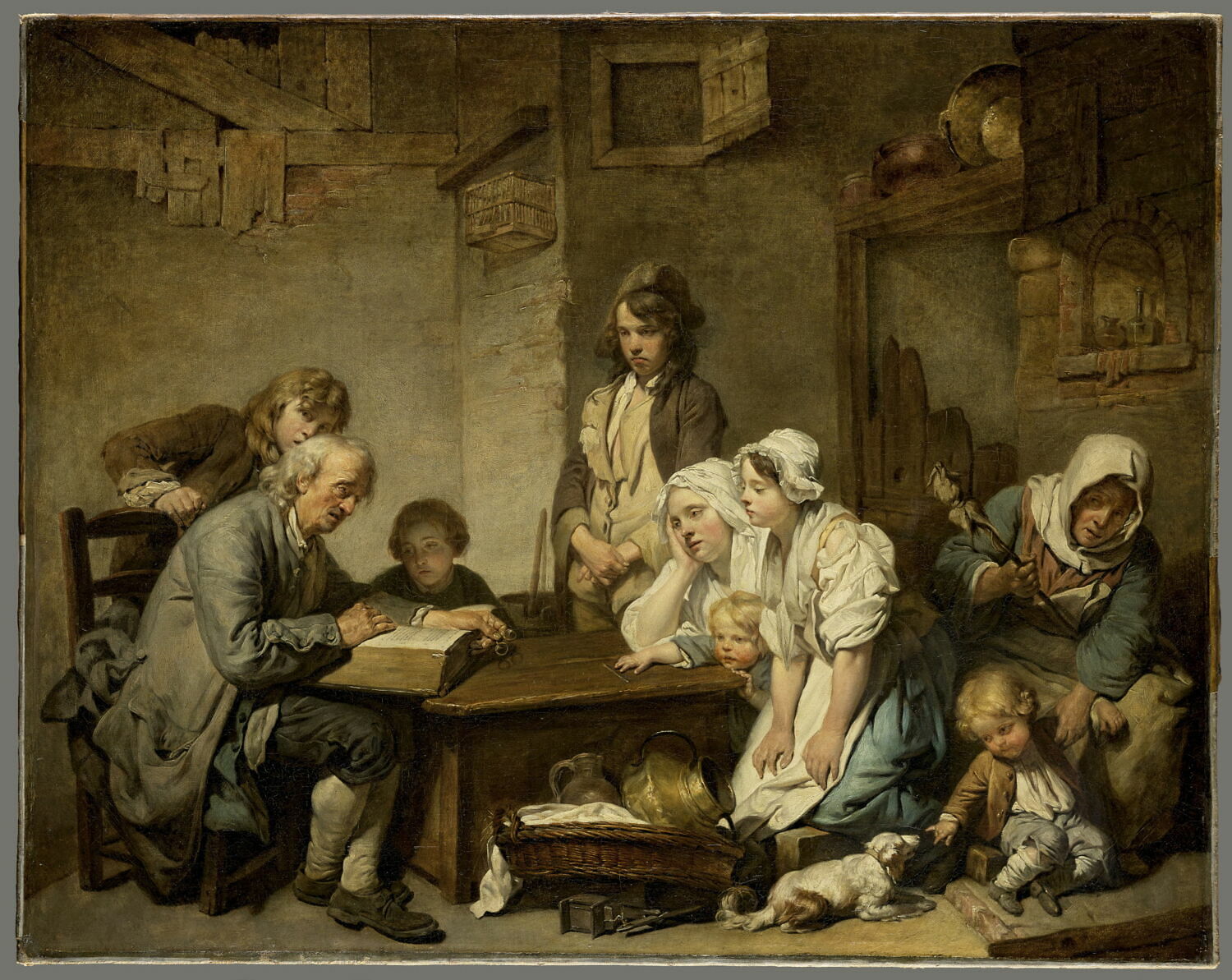
Filial Piety (The Paralytic)
May one see it?
Not receiving at present

Saint Petersburg, Russia
It belongs to the collection, but is not on display at present.
- Checked
- In this state since
- Source
- The museum
About the painting
In the museum's own words — in Russian
Грез создал целую серию работ, посвященных семейной морали, среди которых эта картина, известная как "Паралитик, окруженный заботами своего семейства" или "Плоды хорошего воспитания" - одна из лучших. Она изображает престарелого паралитика, окруженного заботой своей любящей семьи. Написанная в 1763 г., картина принесла автору известность и была приобретена Екатериной II благодаря посредничеству Дени Дидро, известного французского философа эпохи Просвещения, на которого полотно Греза произвело очень сильное впечатление. Дидро определил этот жанр как "мораль в красках", и именно он был первым, кто назвал эту работу "Плоды хорошего воспитания" в соответствии с новыми эстетическими принципами, согласно которым искусство должно играть образовательную и просветительскую роль. Художник построил свою картину наподобие античного барельефа, четко разделяя ее на планы, чтобы подчеркнуть значимость сюжета и содержащейся в нем морали. В то же время он проявил редкий дар в реалистической трактовке выразительных поз и жестов, для чего им было создано множество подготовительных рисунков и этюдов.
State Hermitage Museum
Particulars
- Accession number
- ГЭ-1168
In the catalog
Sources
- State Hermitage Museum
- Image: State Hermitage Museum — Museum open access
Meanwhile, in the life of Jean Baptiste Greuze
The whole life16 April 1762
Daughter born: Anna-Geneviève Greuze
1763
The Paralytic and the triumph of the Salon of 1763
Greuze exhibits at the Salons of 1759, 1761 and 1763 with growing success; the high point is The Paralytic (1763), which immediately wins unheard-of fame. The painting is bought by Empress Catherine II on the recommendation of Diderot, one of its most passionate admirers.
1765
The Salon of 1765: thirteen paintings and the height of his fame
At the Salon Greuze is represented by thirteen works, among them Young Girl Weeping for Her Dead Bird, The Good Mother, The Bad Son Punished and The Father’s Curse (the last two now in the Louvre); this is the zenith of his fame. He continues his series of pictures on upbringing and the relations between fathers and children, one of the great questions of the Enlightenment.
1765–1769
The Academy demands his diploma piece and bars him from exhibiting
The Academy presses Greuze for his long-delayed diploma picture and forbids him to exhibit on its walls until he complies with its regulations. Diderot calls the Academy’s letter a model of honesty and reverence and Greuze’s reply a model of vanity and impertinence: he should have backed it up with a masterpiece, which he did not.