.jpg?width=96) Vincent van GoghDutch, 1853–1890
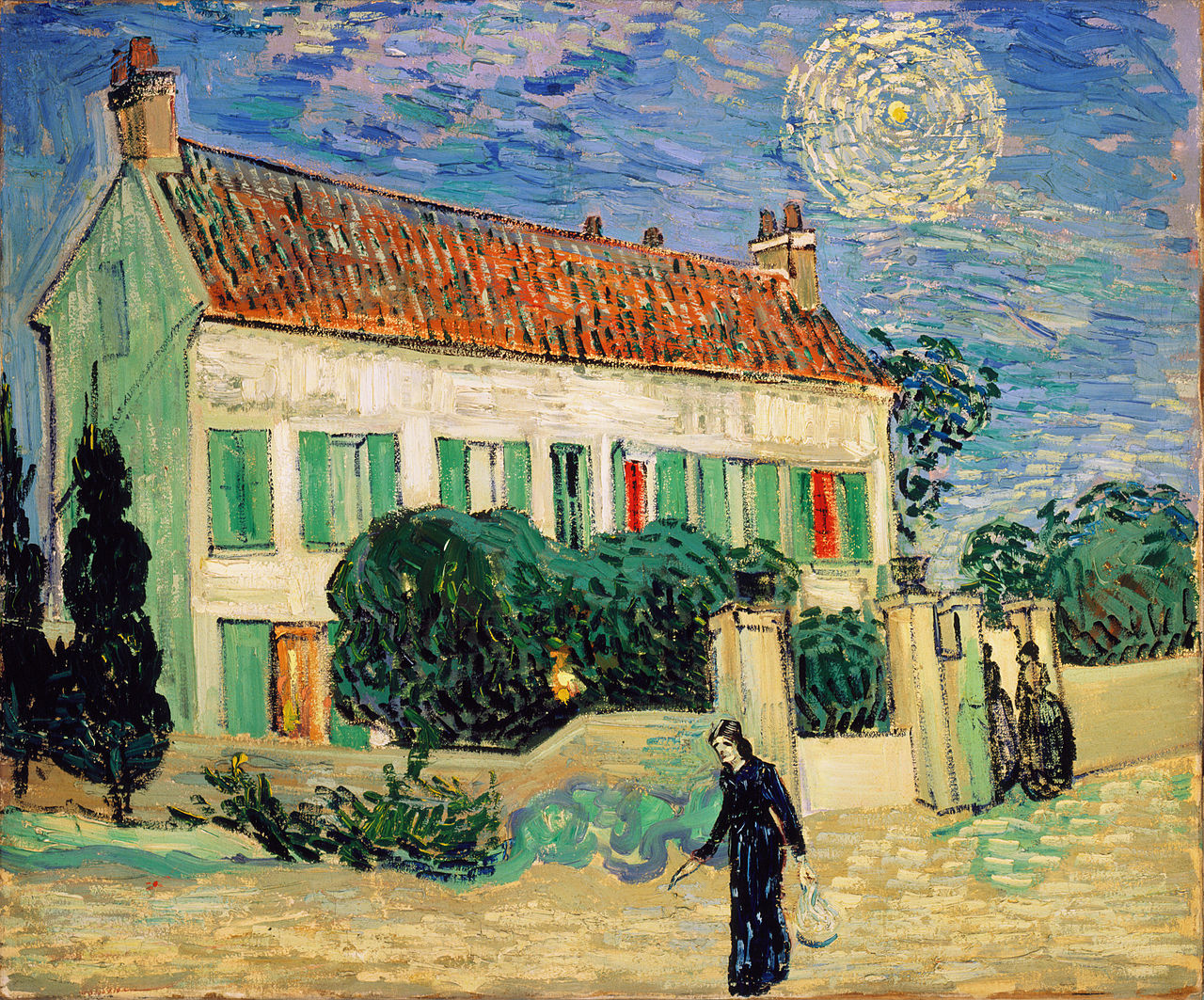
Vincent van GoghDutch, 1853–1890White House at Night
Can I see it?
Yes, on view now
Where is “White House at Night” now? State Hermitage Museum, Room 413, Saint Petersburg. Yes, on view now. Checked August 29, 2026.

Saint Petersburg, Russia
Closed· opens at 12:00 PM
On public display.
- Checked
- In this state since
- Source
- The museum
About the painting
White House at Night is an oil-on-canvas painting created on 16 June 1890 in the small town of Auvers-sur-Oise by Vincent van Gogh, six weeks before his death. It is displayed at the Hermitage Museum, St. Petersburg.
According to the Hermitage Museum, the painting "expresses the great psychological tension under which Van Gogh found himself"; two of the windows, considered the "eyes" of a home, are rendered with "alarming" red splashes, while the star, a sign of fate, is seen as symbolic of van Gogh's anguish.
It is thought that van Gogh painted White House at Night around 8:00 PM due to the position of the "star" in the painting. Astronomers Donald Olson and Russell Doescher from the Texas State University-San Marcos calculated that the star in the painting must be Venus which was bright in the evening sky in June 1890. The house is the same one depicted in Blossoming Chestnut Tree.
Read on
The painting has a turbulent history. It was exhibited in Switzerland several times during the 1920s, but in the late 1920s disappeared into the private collection of German industrialist Otto Krebs. Many of his acquisitions were of a style which was soon to be labelled "degenerate art" by the Nazis, which contributed towards the already publicity-shy Krebs keeping his collection secret.
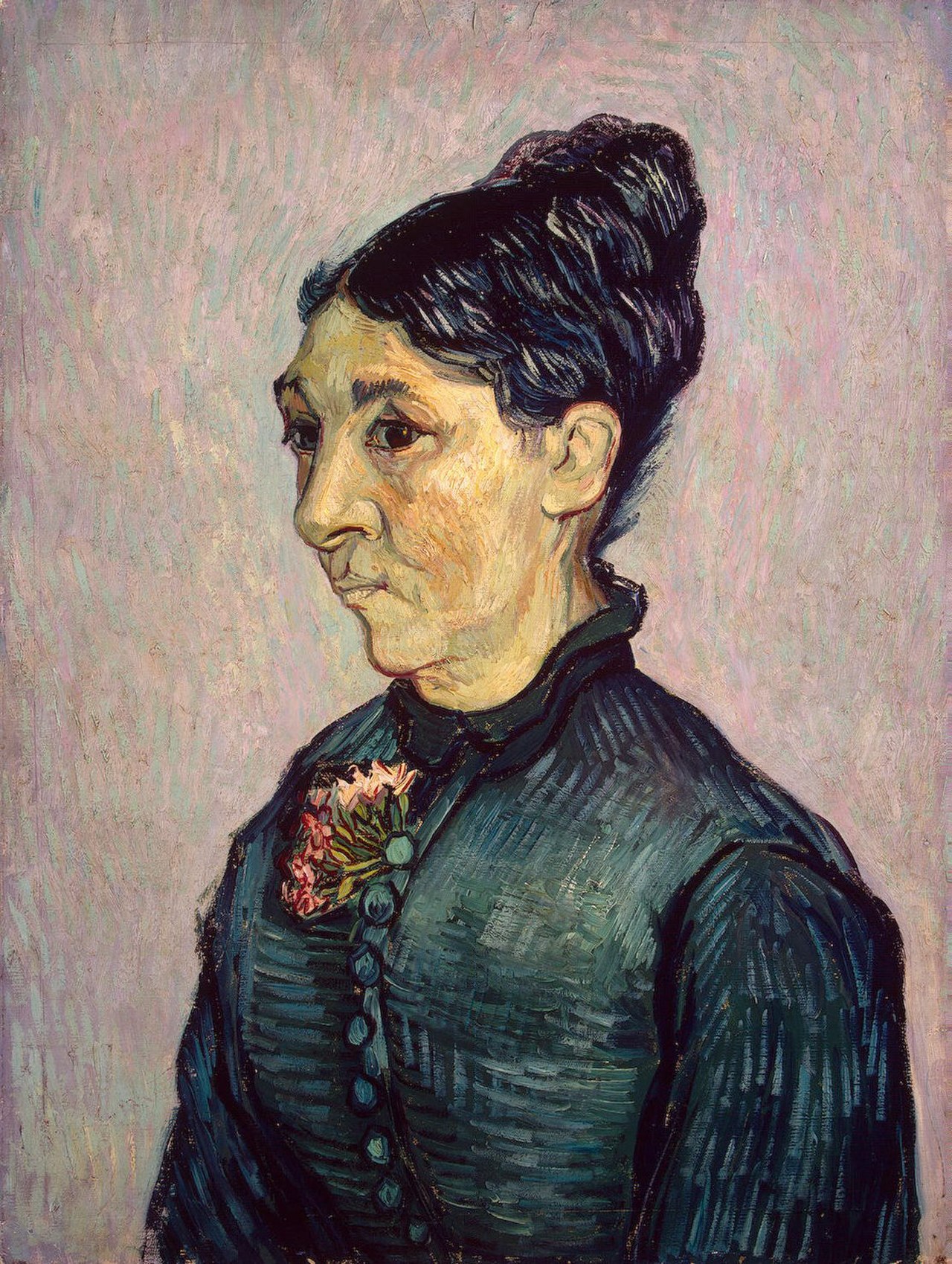
Thought to have been lost after World War II, the painting languished in the Hermitage archives for fifty years before resurfacing in 1995 as part of an exhibition displaying artworks looted by the Soviets at the end of the war. Three other van Goghs from Krebs's collection were also shown: Landscape with House and Ploughman, Morning: Going out to Work (After Millet), and the Portrait of Madame Trabuc.
Museum text in Russian
Оверский период Ван Гога начинался с надежды на новую жизнь и выздоровление, о чем свидетельствуют пейзажи с домами, написанные сразу же по приезде в Овер в мае 1890 года. Но уже в июне, когда мотив дома по-прежнему в центре внимания художника и когда было написано настоящее полотно, эмоциональная гамма его картин расширяется - от мрачных предчувствий до умиротворения. И поскольку эмоции выражались не сюжетом, не описательно, а самими живописными средствами, построение его композиций, сохраняя внутренний динамизм, всякий раз менялось. В "Белом доме" господствует застылость, и главные линии здесь - горизонтали и вертикали. Художнику хочется верить в спасительность крова, но кров может обернуться и клеткой. Художник уделяет здесь особенное внимание окнам - "глазам" дома. В настоящей картине именно эти "глаза", а не три темных персонажа делают дом более живым. Красные пятна окон справа звучат драматическими нотами затаенного страха. Ночную звезду над домом - знак судьбы - Ван Гог писал в моменты наивысшего и опасного душевного напряжения.
State Hermitage Museum
Details
- Accession number
- ЗКРсэ-511
In the catalog
Sources
- State Hermitage Museum
- Image: State Hermitage Museum — Museum open access
In the life of Vincent van Gogh
The whole lifeFebruary 1888
To Arles, dreaming of a “Studio of the South”
The public still neither accepted nor bought his paintings, and in February 1888 Van Gogh left for Arles in the south of France to found a “Studio of the South”, a brotherhood of like-minded artists in which he gave Gauguin the leading role. Theo backed the plan with money.
23 October 1888
Gauguin arrives in Arles
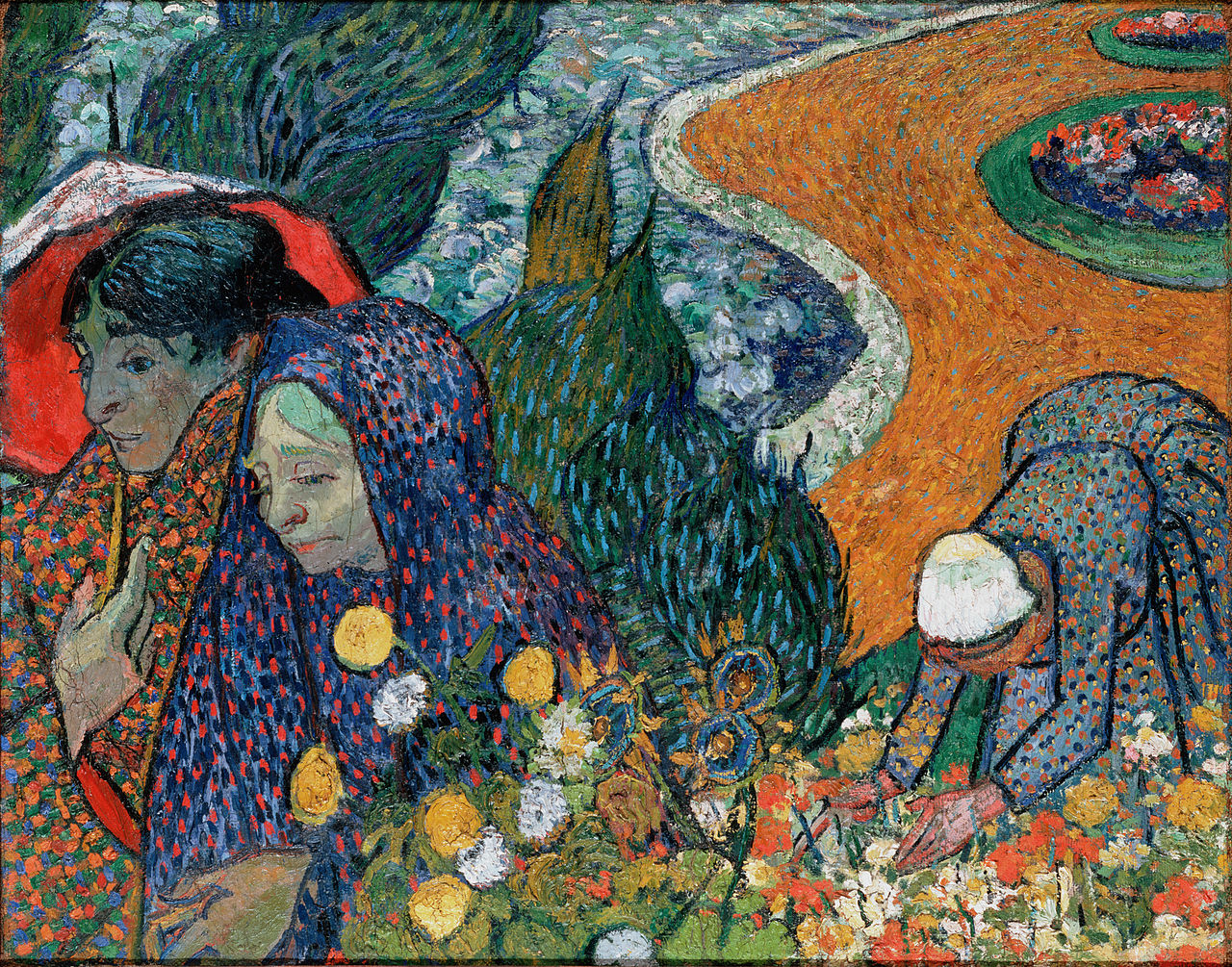
After much pleading Gauguin arrived in Arles, and in November the two painted together: Gauguin portrayed Van Gogh in “The Painter of Sunflowers”, and their first joint outing was to the Alyscamps. At Gauguin's suggestion Vincent painted from memory, producing “Memory of the Garden at Etten”.
23 December 1888
The severed ear
After an altercation on the evening of 23 December, Van Gogh, seemingly hearing voices, severed his left ear, wholly or in part, with a razor and delivered it, wrapped in paper, to a woman at a brothel. Next morning a policeman found him unconscious; in hospital he was diagnosed with “acute mania with generalised delirium”.
May 1889
Voluntarily into the Saint-Paul asylum
Van Gogh left Arles and voluntarily entered the Saint-Paul-de-Mausole asylum, a former monastery in Saint-Rémy-de-Provence, accompanied by the Protestant clergyman Frédéric Salles. Of his two cells with barred windows one became a studio, and the clinic and its garden became the main subjects of his paintings.
27 July 1890
A fatal wound: a revolver shot
Out painting, Van Gogh shot himself in the chest with a revolver he had bought to scare off birds while working outdoors; the bullet passed below his heart, and he made his own way back to his room at the inn. Theo arrived the next day and stayed with him to the end; according to Theo, Vincent's last words were: “The sadness will last forever.”
29 July 1890
Died