 Vincent van GoghDutch, 1853–1890
Lilac Bush
Can I see it?
Yes, on view now
Where is “Lilac Bush” now? State Hermitage Museum, Room 413, Saint Petersburg. Yes, on view now. Checked August 29, 2026.

Saint Petersburg, Russia
Open now· until 9:00 PM
On public display.
- Checked
- In this state since
- Source
- The museum
About the painting
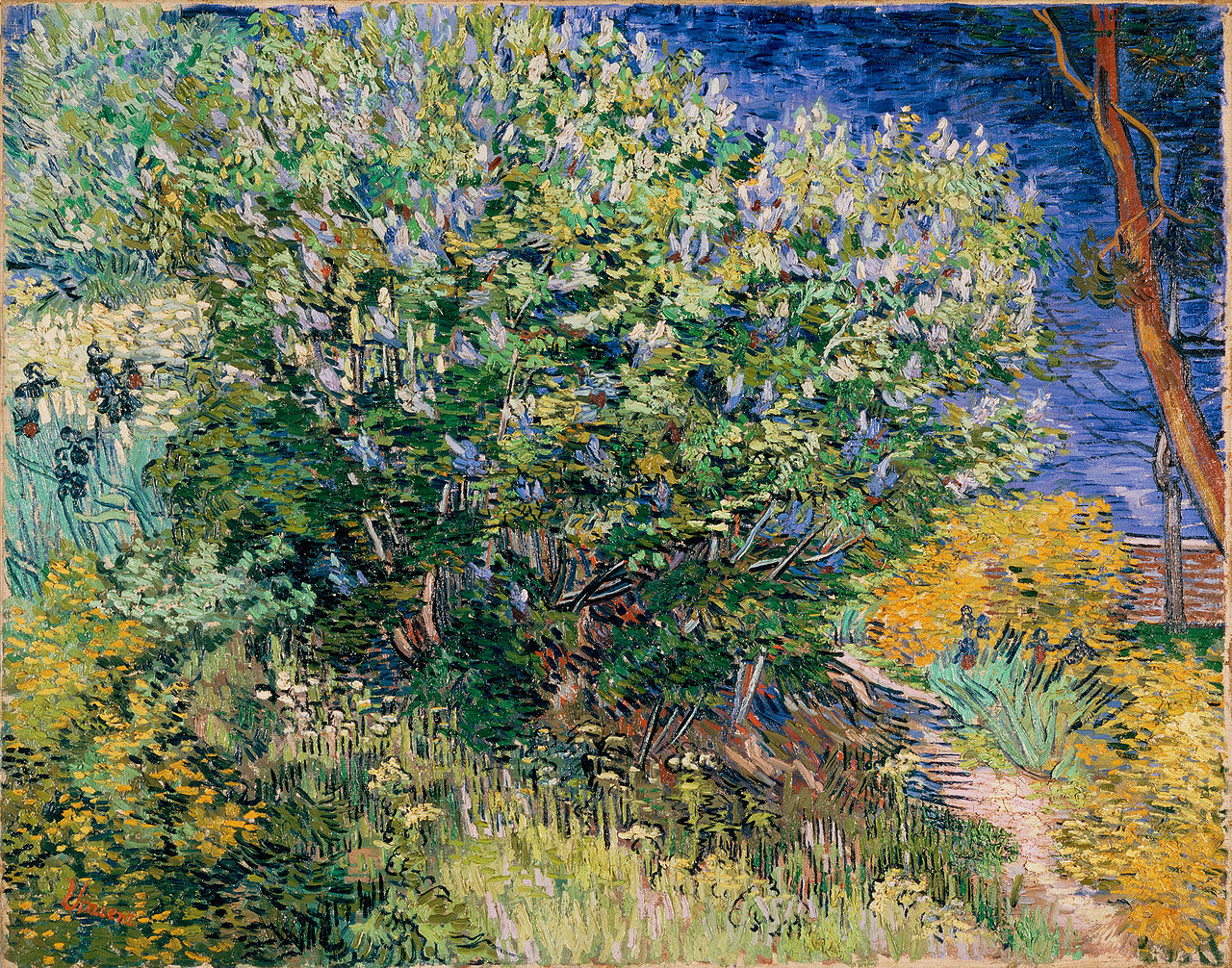
Lilac Bush (catalogue number: F 579, JH 1692) is a May 1889 oil on canvas painting by Vincent van Gogh, produced during his stay in Saint-Rémy.
Museum text in Russian
Картина, принадлежащая к лучшим творениям Ван Гога, была написана в Сен-Реми, где художник лечился. Изображен куст сирени в больничном саду. Дробный раздельный мазок и вибрирующие формы напоминают об уроках импрессионизма. Однако живопись импрессионистов не знала такой динамики пространства. У Ван Гога куст полон мощной жизненной энергии и драматической экспрессии. Скромный натурный мотив преображен могучим темпераментом мастера, яркостью эмоционального переживания. Во фрагменте садовой растительности воплощены животворящие силы природы. Отказавшись от импрессионизма, Ван Гог создал свой художественный язык, выразивший романтически-страстное и глубоко драматическое мироощущение художника.
State Hermitage Museum
Details
- Accession number
- ГЭ-6511
In the catalog
Sources
- State Hermitage Museum
- Image: State Hermitage Museum — Museum open access
In the life of Vincent van Gogh
The whole lifeFebruary 1888
To Arles, dreaming of a “Studio of the South”
The public still neither accepted nor bought his paintings, and in February 1888 Van Gogh left for Arles in the south of France to found a “Studio of the South”, a brotherhood of like-minded artists in which he gave Gauguin the leading role. Theo backed the plan with money.
23 October 1888
Gauguin arrives in Arles
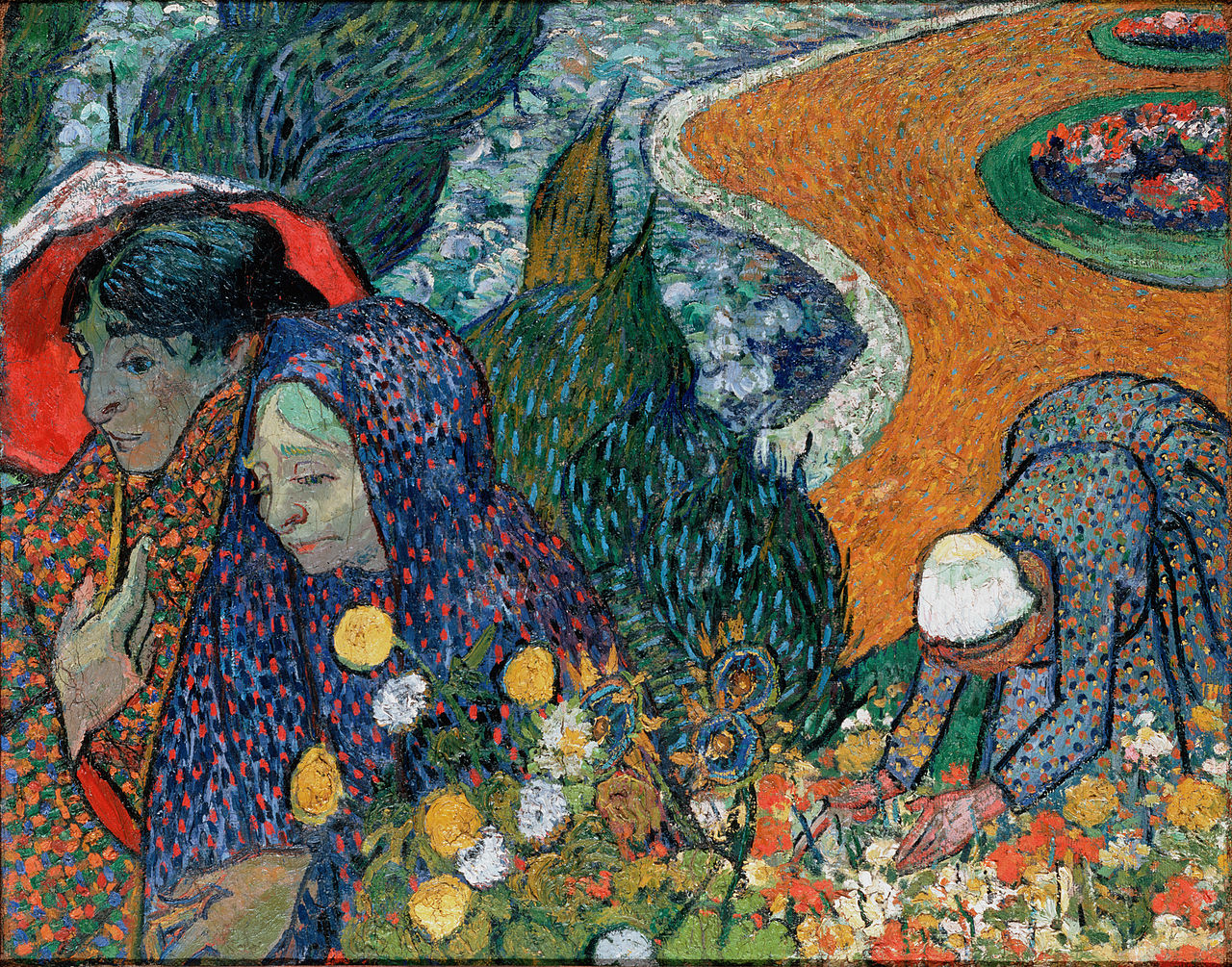
After much pleading Gauguin arrived in Arles, and in November the two painted together: Gauguin portrayed Van Gogh in “The Painter of Sunflowers”, and their first joint outing was to the Alyscamps. At Gauguin's suggestion Vincent painted from memory, producing “Memory of the Garden at Etten”.
23 December 1888
The severed ear
After an altercation on the evening of 23 December, Van Gogh, seemingly hearing voices, severed his left ear, wholly or in part, with a razor and delivered it, wrapped in paper, to a woman at a brothel. Next morning a policeman found him unconscious; in hospital he was diagnosed with “acute mania with generalised delirium”.
May 1889
Voluntarily into the Saint-Paul asylum
Van Gogh left Arles and voluntarily entered the Saint-Paul-de-Mausole asylum, a former monastery in Saint-Rémy-de-Provence, accompanied by the Protestant clergyman Frédéric Salles. Of his two cells with barred windows one became a studio, and the clinic and its garden became the main subjects of his paintings.
27 July 1890
A fatal wound: a revolver shot
Out painting, Van Gogh shot himself in the chest with a revolver he had bought to scare off birds while working outdoors; the bullet passed below his heart, and he made his own way back to his room at the inn. Theo arrived the next day and stayed with him to the end; according to Theo, Vincent's last words were: “The sadness will last forever.”
29 July 1890
Died