ART WIKI32,963 on view
MapCollectionArtistsMuseumsExhibitionsJournal
Sign in

ART WIKI

Where the masterpiece hangs, and when they let you in.

Collections: Art Institute of Chicago, Getty Villa, Harvard Art Museums, Hirshhorn Museum and Sculpture Garden, J. Paul Getty Museum, Minneapolis Institute of Art, Musée du Louvre, National Gallery of Art, National Museum of Asian Art, National Portrait Gallery (Smithsonian), Pushkin State Museum of Fine Arts, Rijksmuseum, Smithsonian American Art Museum, SMK — National Gallery of Denmark, State Hermitage Museum, State Russian Museum, The Cleveland Museum of Art, The Metropolitan Museum of Art, The Museum of Modern Art, Tretyakov Gallery, Victoria and Albert Museum, Whitney Museum of American Art, State Catalogue of the Museum Fund of Russia (274 museums), Europeana (19 museums), Wikidata (6 museums), Paris Musées (12 museums), and Joconde, the French Ministry of Culture's museum database (495 museums). Images belong to their rights holders.

Sections

  • Map
  • Search
  • Collection
  • Masterpieces
  • On view now
  • Artists

More

  • Museums & galleries
  • Exhibitions
  • Journal
  • Where the data comes from
  • Privacy & cookies
HomeMapBrowse
  1. Collection/
  2. The Cleveland Museum of Art/
  3. Pair of Putti
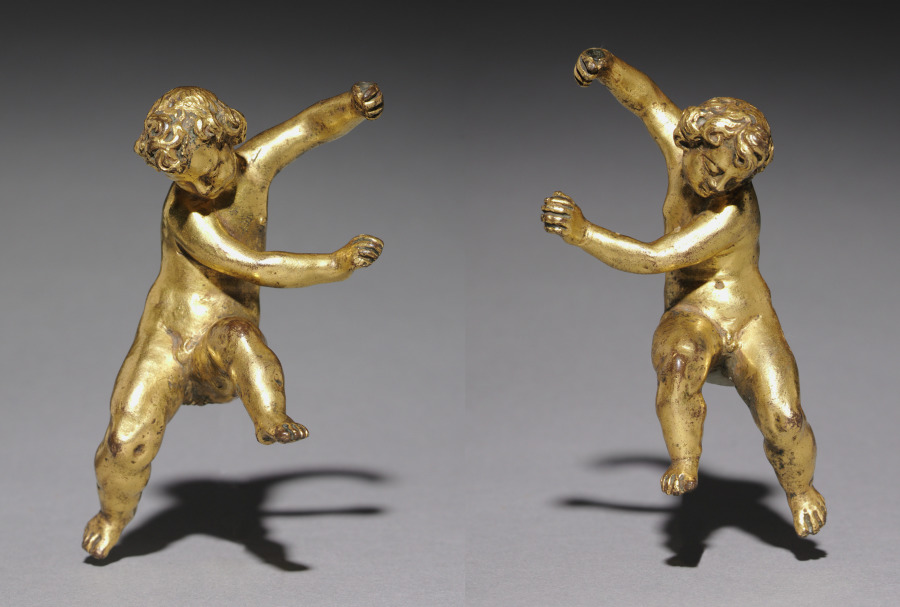
Pair of Putti, late 1500s

Pair of Putti

late 1500s · Sculpture

May one see it?

Not receiving at present

The Cleveland Museum of Art

Cleveland, United States

It belongs to the collection, but is not on display at present.

Checked
3 days ago
In this state since
Aug 19, 2026
Source
The museum
On the mapMuseum page

About the sculpture

These gilt bronze putti, or figures of plump male children in the nude, are near mirror images of one another. Both are seated, with their arms flung to the side. Minimal detailing exists in the hands and feet, with the fingers and toes signified only by simple line indentations. The function and original placement of the putti is uncertain, but their posture and the placement of their hands suggest that originally they may have been placed in a larger statue group, perhaps holding either side of a banner, or even a piece of furniture. A will drawn up by Guglielmo della Porta in 1558 mentions the existence of bronze Passion scenes and crucifixes, suggesting that the artist may have created other small bronze groups as well. John Pope-Hennessey attributed these works to della Porta based on their similarity to the figures of Apollo and Artemis in Latona and her Children (Victoria and Albert Museum, London) and the monumental putti in his Tomb of Cardinal Paolo Cesi in Santa Maria Maggiore in Rome, although more recent research points away from della Porta as the maker.

Read on

Ana Dieglio 2009

The Cleveland Museum of Art

Particulars

Accession number
1968.64

In the catalog

SculptureBronzeItaly, Rome

Sources

  • The Cleveland Museum of Art
  • Image: The Cleveland Museum of Art — Museum open access
Neighbors at The Cleveland Museum of Art

Museum page
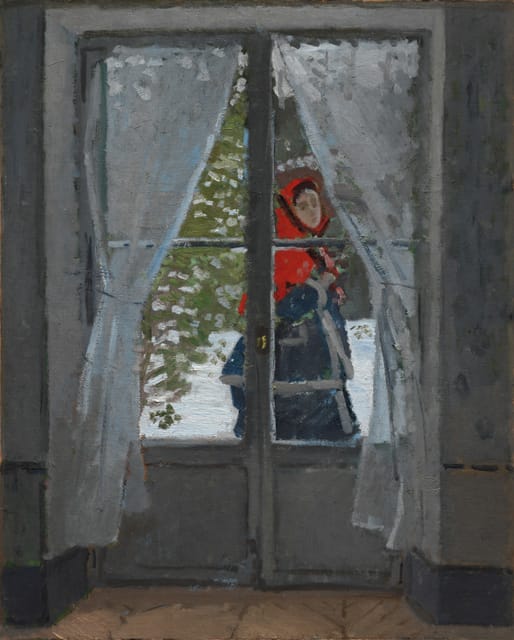
The Red Kerchief, Claude Monet, c. 1868–73

Claude Monet

The Red Kerchief, c. 1868–73

Melencolia I, Albrecht Dürer, 1514

Albrecht Dürer

Melencolia I, 1514

The Virgin and Child with the Pear, Albrecht Dürer, 1511

Albrecht Dürer

The Virgin and Child with the Pear, 1511

The Nativity, Albrecht Dürer, probably c. 1509/1510

Albrecht Dürer

The Nativity, probably c. 1509/1510

The Virgin and Child on a Crescent with a Starry Crown, Albrecht Dürer, 1508

Albrecht Dürer

The Virgin and Child on a Crescent with a Starry Crown, 1508

The Lamentation, Albrecht Dürer, 1507

Albrecht Dürer

The Lamentation, 1507

Large Horse, Albrecht Dürer, 1505

Albrecht Dürer

Large Horse, 1505

Nemesis (The Great Fortune), Albrecht Dürer, c. 1501/1502

Albrecht Dürer

Nemesis (The Great Fortune), c. 1501/1502