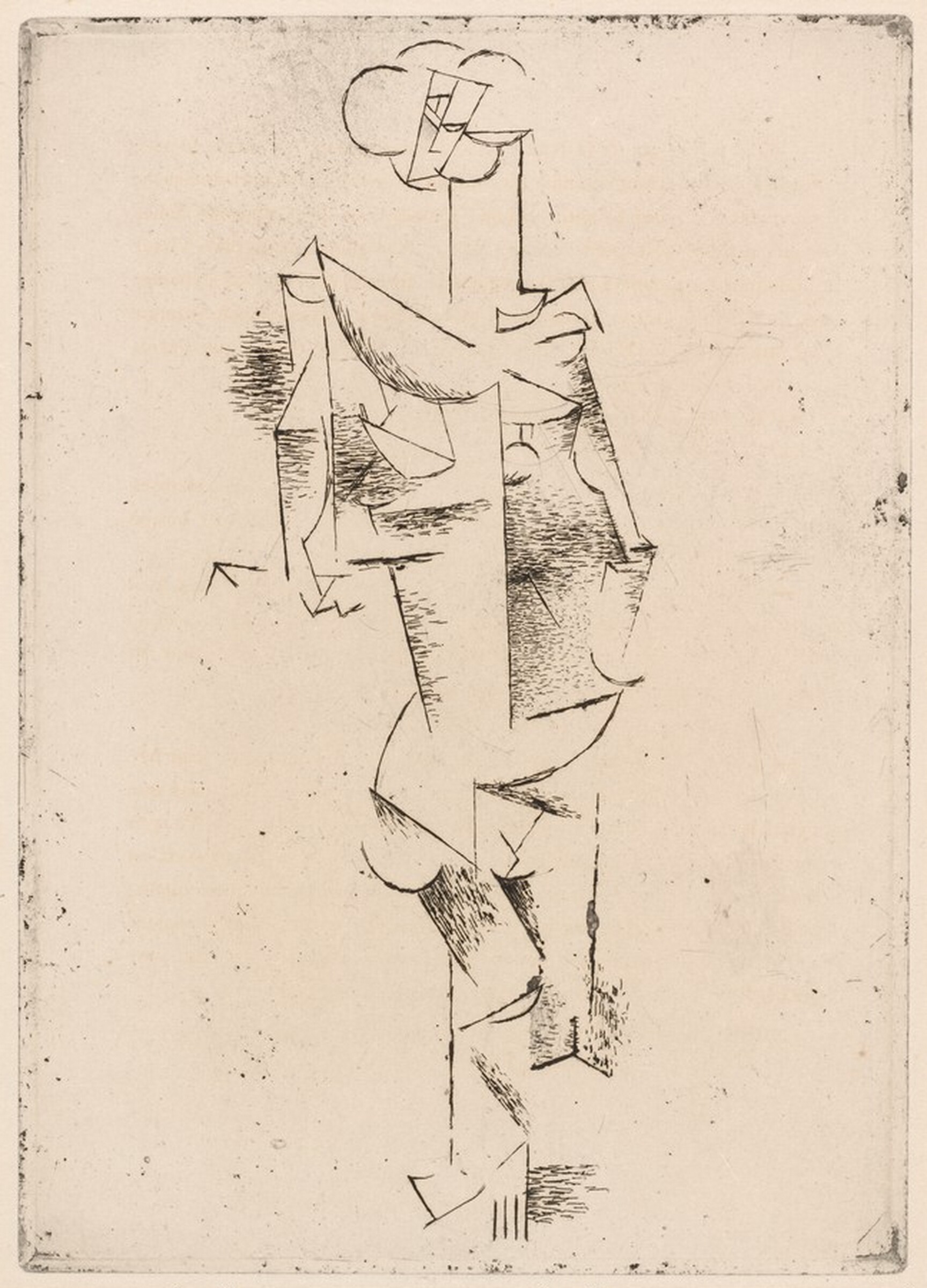
Georgia O'KeeffeAmerican, 1887–1986
Nude No. III
May one see it?
Not receiving at present

Washington, D.C., United States
It belongs to the collection, but is not on display at present.
- Checked
- In this state since
- Source
- The museum
Particulars
- Accession number
- 1996.46.1
What it shows
In the catalog
Sources
- National Gallery of Art
- Image: National Gallery of Art — © the artist or rights holder
Meanwhile, in the life of Georgia O'Keeffe
The whole lifeearly 1916
O’Keeffe’s drawings reach Stieglitz
She mailed the charcoal drawings to her friend and former Teachers College classmate Anita Pollitzer, who took them to Stieglitz at his gallery 291 early in the year. He prized their purity and sincerity and said he would like to show them.
April 1916
Ten of her drawings shown at gallery 291
In April Stieglitz exhibited ten of her drawings at his gallery 291, which promoted avant-garde American and European artists and photographers.
1917
Exhibition of her work organised by Stieglitz
Stieglitz held an exhibition of her work, and O’Keeffe came to New York to see it. From that visit he began to photograph her — and went on doing so for many years, often in the nude.
1918
Stieglitz leaves his family for O’Keeffe
Within a month Stieglitz took the first of many nude photographs of her at his family’s apartment while his wife was away; his wife came home and gave him an ultimatum, and he left at once and moved in with O’Keeffe. The divorce, delayed by his first wife and her family, took six years — until the wedding in December 1924.
from 1918
Meets the modernists of the Stieglitz circle
In New York she came to know the early American modernists of Stieglitz’s circle: the painters Charles Demuth, Arthur Dove, Marsden Hartley and John Marin, and the photographers Paul Strand and Edward Steichen. The photography of Strand and of Stieglitz himself inspired her work.
June 1918
Moves to New York at Stieglitz’s invitation
Stieglitz invited her to live and work in New York, promising a quiet studio and to underwrite a year of painting; to accept she resigned from teaching at West Texas State. He discouraged her use of watercolour, which was associated with amateur women artists.



![Ginevra de' Benci [obverse], Leonardo da Vinci, c. 1474/1478](https://api.nga.gov/iiif/8f29e3c9-a289-4d53-abf0-31a66e9e98fa/full/!2400,2400/0/default.jpg)
![Wreath of Laurel, Palm, and Juniper with a Scroll inscribed Virtutem Forma Decorat [reverse], Leonardo da Vinci, c. 1474/1478](https://api.nga.gov/iiif/ff62e8d0-45c4-498f-ad36-6358de827e04/full/!2400,2400/0/default.jpg)