ART WIKI32,963 on view
MapCollectionArtistsMuseumsExhibitionsJournal
Sign in

ART WIKI

Where the masterpiece hangs, and when they let you in.

Collections: Art Institute of Chicago, Getty Villa, Harvard Art Museums, Hirshhorn Museum and Sculpture Garden, J. Paul Getty Museum, Minneapolis Institute of Art, Musée du Louvre, National Gallery of Art, National Museum of Asian Art, National Portrait Gallery (Smithsonian), Pushkin State Museum of Fine Arts, Rijksmuseum, Smithsonian American Art Museum, SMK — National Gallery of Denmark, State Hermitage Museum, State Russian Museum, The Cleveland Museum of Art, The Metropolitan Museum of Art, The Museum of Modern Art, Tretyakov Gallery, Victoria and Albert Museum, Whitney Museum of American Art, State Catalogue of the Museum Fund of Russia (274 museums), Europeana (19 museums), Wikidata (6 museums), Paris Musées (12 museums), and Joconde, the French Ministry of Culture's museum database (495 museums). Images belong to their rights holders.

Sections

  • Map
  • Search
  • Collection
  • Masterpieces
  • On view now
  • Artists

More

  • Museums & galleries
  • Exhibitions
  • Journal
  • Where the data comes from
  • Privacy & cookies
HomeMapBrowse
  1. Collection/
  2. Kunstpalast/
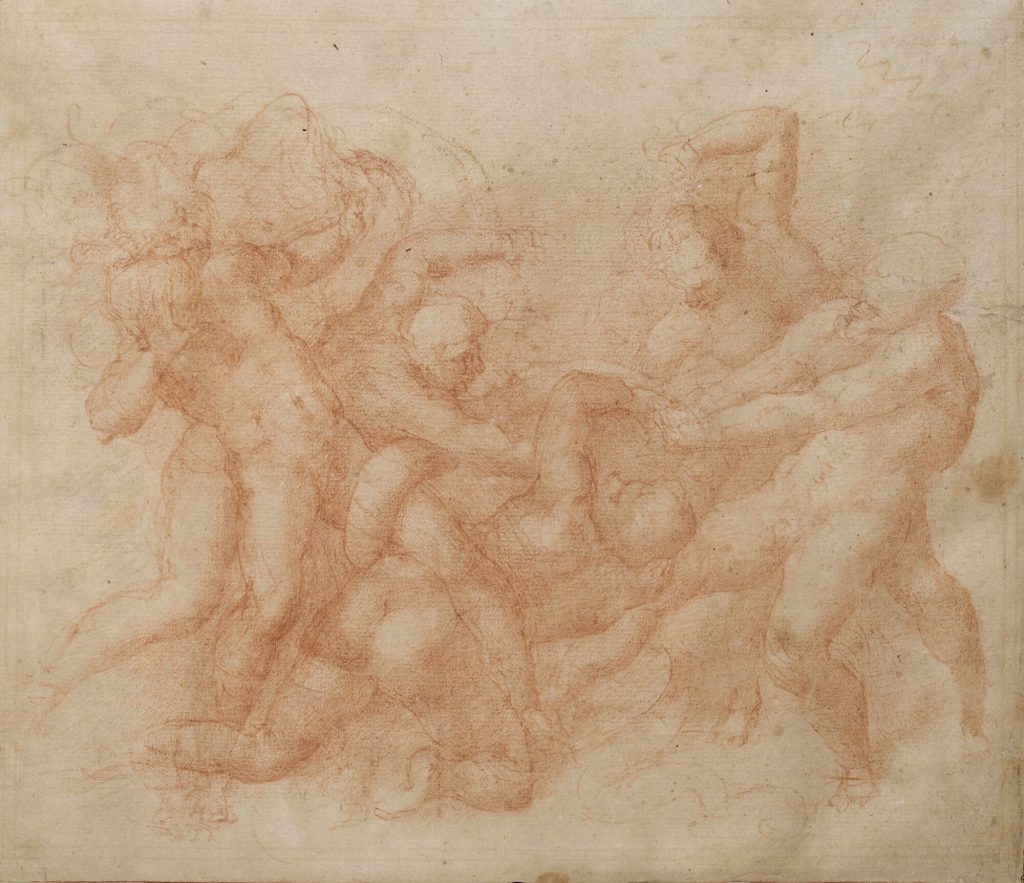
  3. Männer im Kampf mit einer Schlange
Männer im Kampf mit einer Schlange, Michelangelo, 1525–1535
Michelangelo, portraitMichelangeloItalian, 1475–1564

Männer im Kampf mit einer Schlange

1525–1535 · Drawing

May one see it?

Unknown: the museum keeps its counsel

Kunstpalast

Düsseldorf, Germany

The owner is known. Whether it is on view today, the museum does not say, and we were not trained to guess.

In this state since
Sep 27, 2026
Source
The museum's own collection data
On the mapMuseum page

Particulars

1525–1535
14751564

In the catalog

Drawings & watercolorsRenaissance16th century

Sources

  • Kunstpalast: the museum's own open data · fetched 8 days ago
  • Image: Kunstpalast — In Copyright

Meanwhile, in the life of Michelangelo

The whole life
  1. 1516–1534 · Workplace

    Florence

  2. 1527

    The Medici expelled: inspector of the republic's fortifications

    After the Medici were expelled from Florence, Michelangelo, a republican at heart, joined the popular movement and became chief inspector of fortifications. He abandoned his post and set off for Venice, meaning to go on to France, but returned and rendered his city important services during the siege by imperial troops.

  3. 1530

    A death sentence and a hiding place under the Medici Chapel

    Florence fell, the Medici returned to power and Pope Clement VII sentenced Michelangelo to death. He is thought to have hidden for two months in a small chamber under the Medici chapels, covering its walls with charcoal and chalk drawings, until he was pardoned so that he could complete the Sistine Chapel and the Medici tombs.

  4. 1532

    Meets Tommaso dei Cavalieri

    Aged 57, Michelangelo met the 23-year-old Roman patrician Tommaso dei Cavalieri and addressed to him his longest, deeply felt sequence of poems, as well as drawings such as the Ganymede and the Fall of Phaëthon. Cavalieri replied, “Never have I loved a man more than I love you,” and remained devoted to him until his death.

  5. 1534

    Moves from Florence to Rome

    Michelangelo left Florence for Rome and lived near the church of Santa Maria di Loreto. Despite his support for the republic, Pope Clement VII restored his allowance and made a new contract with him for the tomb of Julius II.

  6. c. 1537

    Friendship with Vittoria Colonna

    In Rome Michelangelo met the poet Vittoria Colonna, a noble widow, then forty-seven. They shared a sincere platonic love, exchanging sonnets on spiritual matters, and in the 1530s she was his spiritual guide.
More by Michelangelo

All works
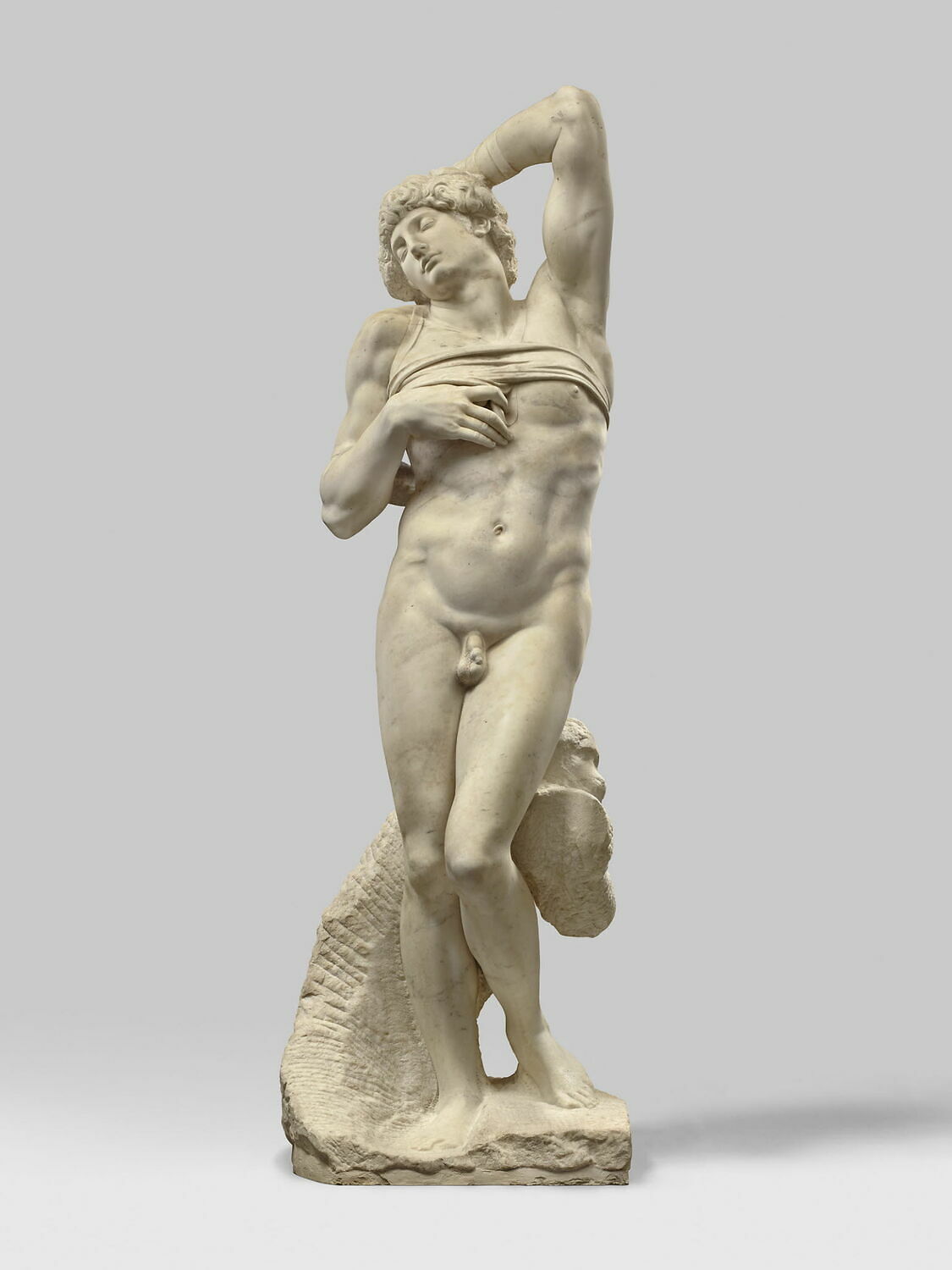
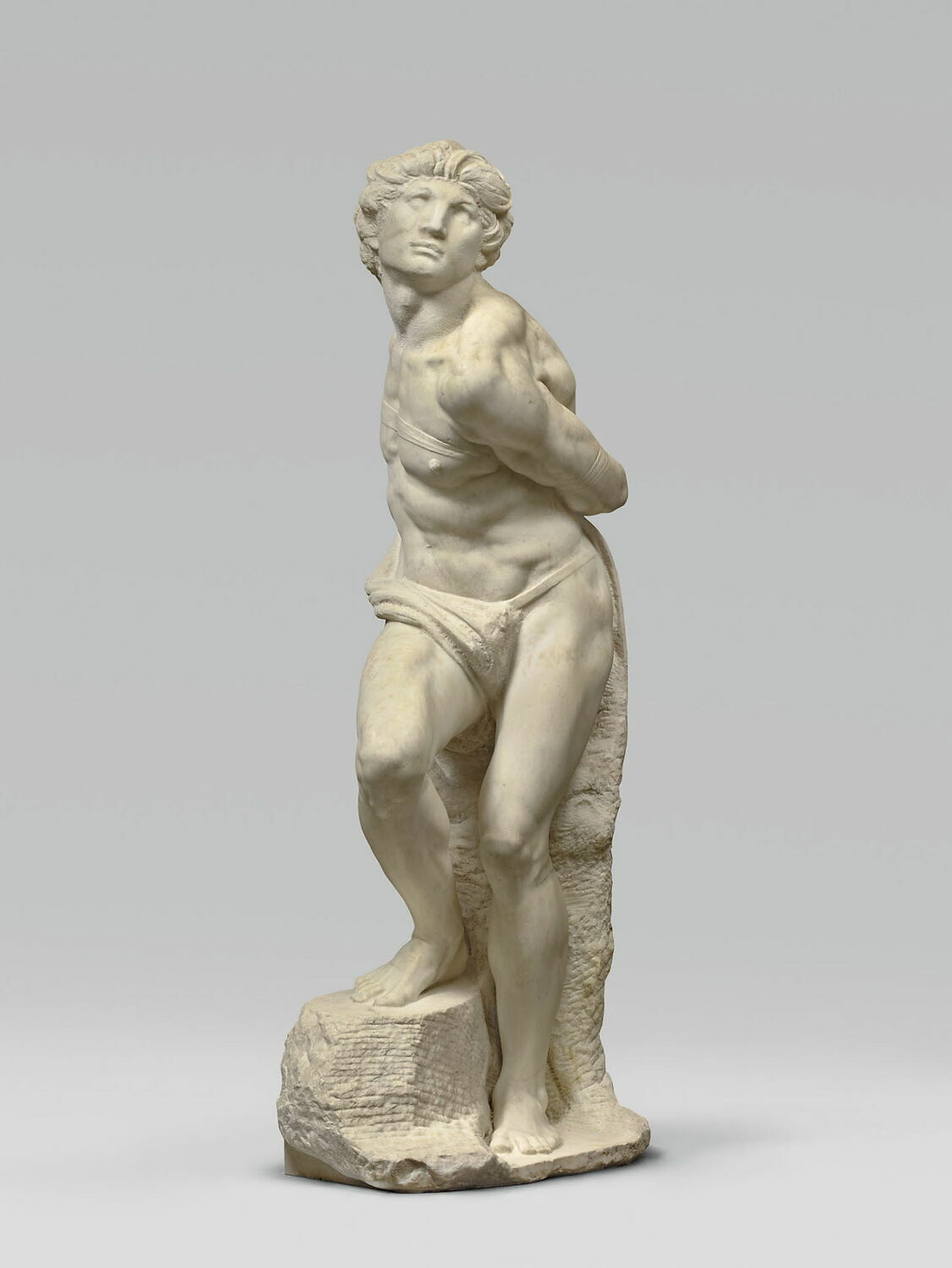
Esclave mourant, Buonarroti, Michelangelo dit Michel-Ange, 1513 - 1515

Dying Slave

1513 - 1515 · Musée du Louvre

Esclave rebelle, Buonarroti, Michelangelo dit Michel-Ange, 1513 - 1515

Rebellious Slave

1513 - 1515 · Musée du Louvre

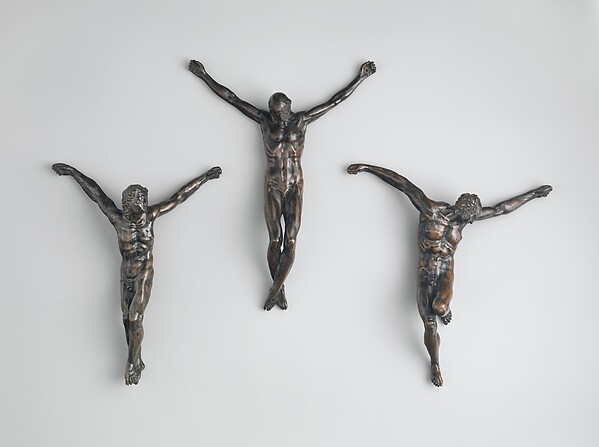
Christ and the Two Thieves Crucified, Michelangelo Buonarroti, ca. 1560–70

Christ and the Two Thieves Crucified

ca. 1560–70 · The Metropolitan Museum of Art

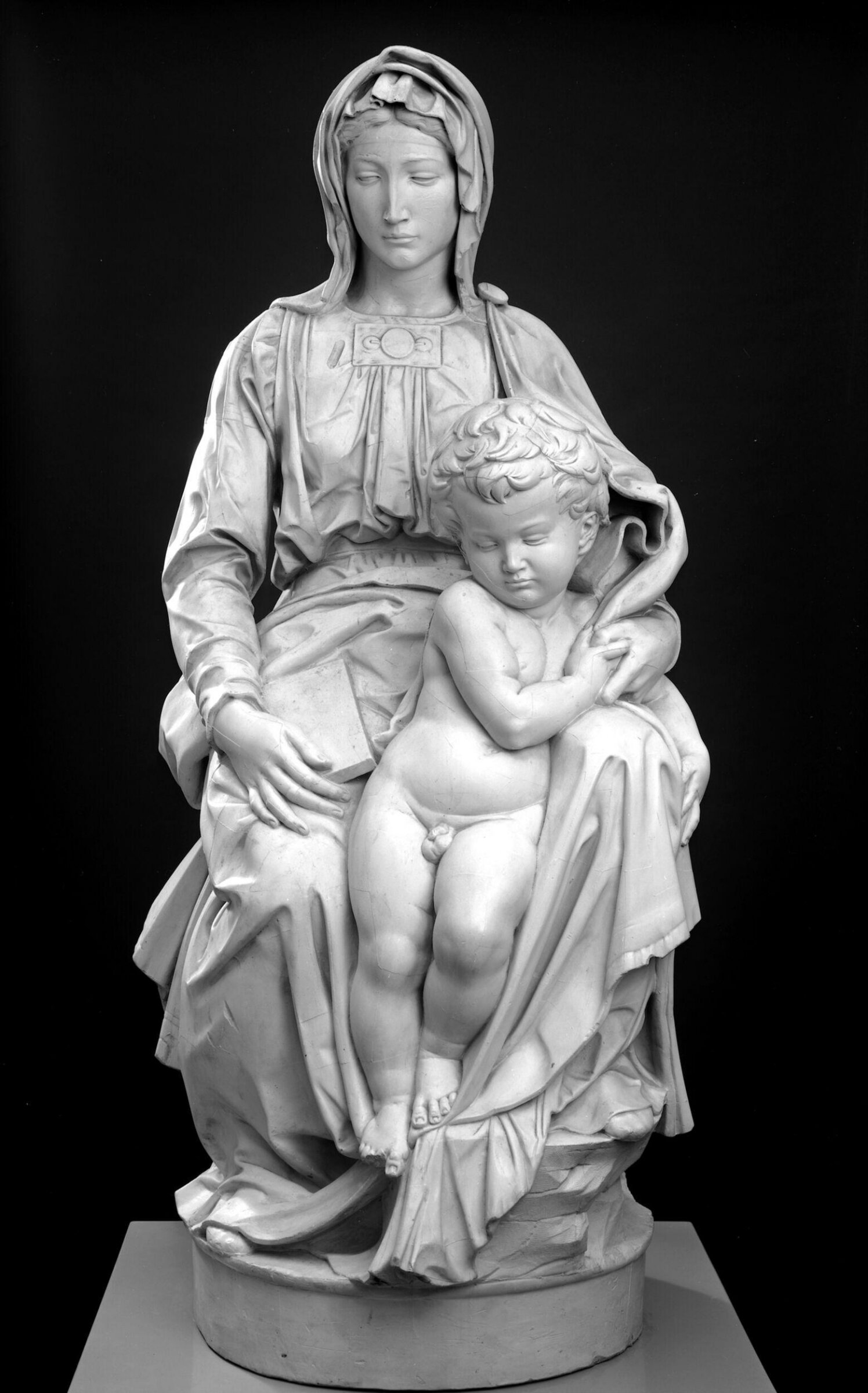
Bruges Madonna, Michelangelo, 1504-6

Bruges Madonna

1504-6 · Victoria and Albert Museum

Design for an Equestrian Statue of Henry II of France, Michelangelo, 1559 - 1564

Design for an Equestrian Statue of Henry II of France

1559 - 1564 · Rijksmuseum

The Prophet Ezekiel, Giorgio Ghisi after Michelangelo, early 1570s

The Prophet Ezekiel

early 1570s · Not on view · National Gallery of Art

The Eritrean Sibyl, Giorgio Ghisi after Michelangelo, early 1570s

The Eritrean Sibyl

early 1570s · Not on view · National Gallery of Art

Two Nude Men, Marcantonio Raimondi after Michelangelo

Two Nude Men

Not on view · National Gallery of Art