 Alexander CalderAmerican, 1898–1976
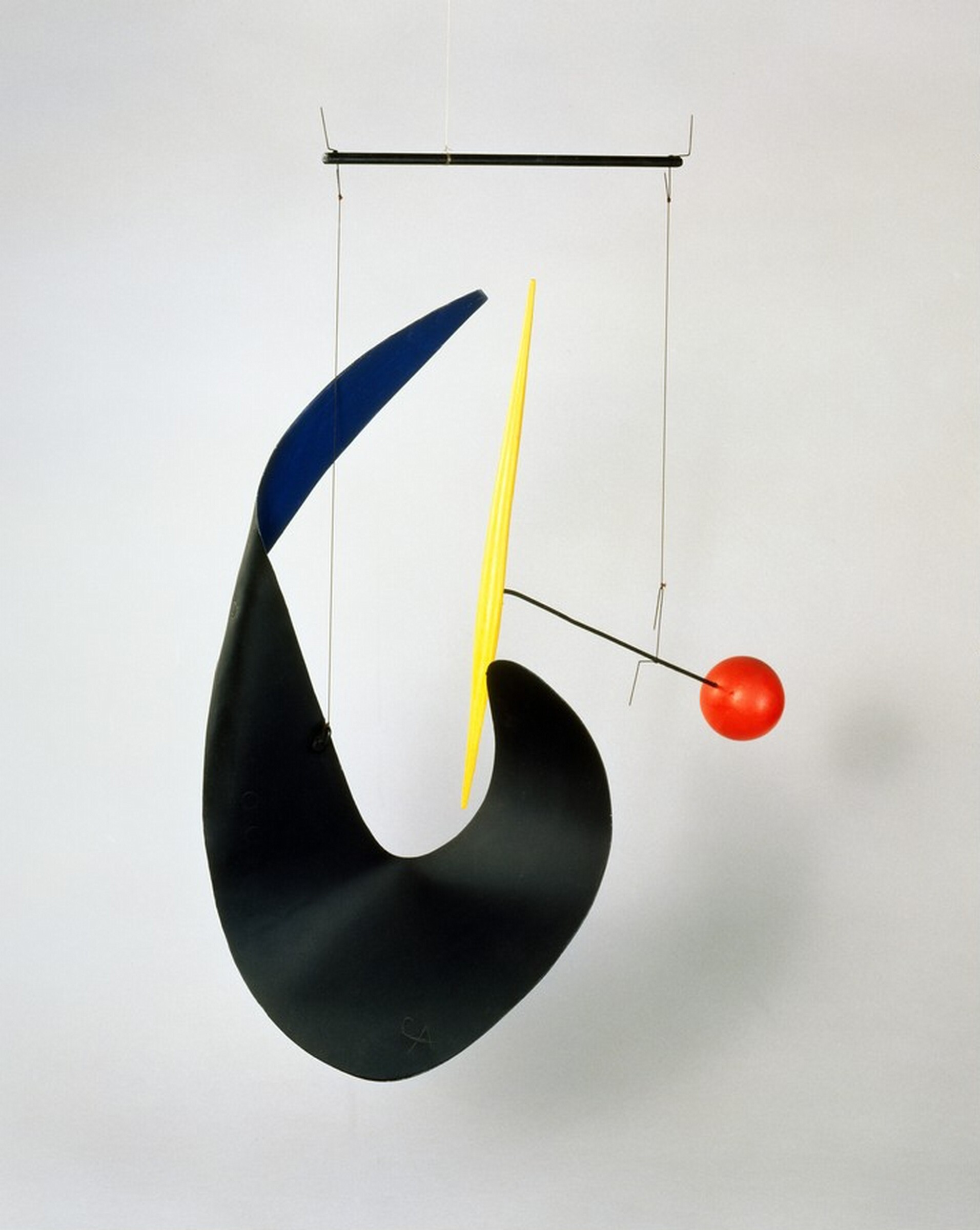
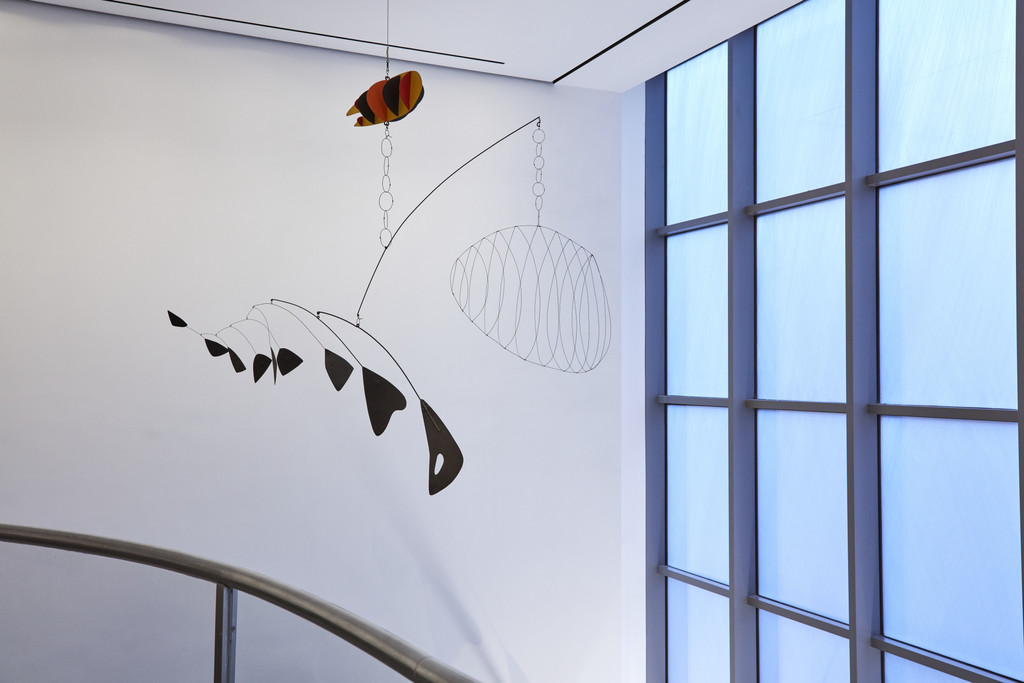
Lobster Trap and Fish Tail
Can I see it?
Not on view at present
Where is “Lobster Trap and Fish Tail” now? Collection: The Museum of Modern Art, New York. Not on view at present. Checked September 22, 2026.

New York, United States
It belongs to the collection, but is not on display at present.
- Checked
- Source
- The museum
About the sculpture
Lobster Trap and Fish Tail, a mobile by American artist Alexander Calder, is located at the Museum of Modern Art in New York City, New York, United States. It is one of Calder's earliest hanging mobiles and "the first to reveal the basic characteristics of the genre that launched his enormous international reputation and popularity."
Details
- Accession number
- 590.1939.a-d
In the catalog
Sources
- The Museum of Modern Art
- Image: The Museum of Modern Art — © the artist or rights holder
In the life of Alexander Calder
The whole life1937
“Mercury Fountain” in the Spanish pavilion
At the 1937 Exposition Internationale des Arts et Techniques dans la Vie Moderne the Spanish pavilion includes Calder’s sculpture “Mercury Fountain”, made of sheet iron and mercury.
1938
His first retrospective, in Springfield
Calder’s first retrospective is held in 1938 at the George Walter Vincent Smith Gallery in Springfield, Massachusetts. Other accounts call the 1943 exhibition at the Museum of Modern Art his first retrospective.
1939
Daughter born: Mary Calder Rower
1939–1945
The war years: “constellations” instead of aluminium
During the Second World War Calder tries to join the Marines as a camoufleur but is rejected. Adapting to a scarcity of aluminium, he returns to carved wood in a new open form of sculpture called “constellations”.
1940
His first jewellery exhibition at the Willard Gallery
In 1940 the first exhibition of Calder’s jewellery is held, with success, at the Willard Gallery. His pieces are worn by Peggy Guggenheim, Simone de Beauvoir and other celebrities.
1941
A show at Pierre Matisse’s: few buyers
At Calder’s 1941 show with Pierre Matisse, a copy of the gallery’s sales ledger shows, only a few pieces found buyers; Solomon R. Guggenheim paid just $233.34 for one work. In the late 1930s and early 1940s Calder’s works were not highly sought after and, when they sold, it was often for relatively little money.