 Théodore GéricaultFrench, 1791–1824
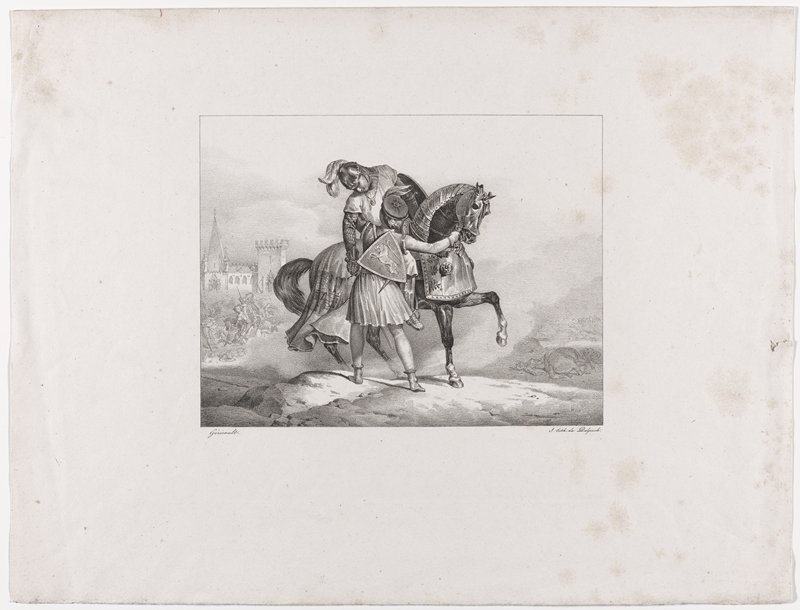
Lara blessé
Can I see it?
Not on view at present
Where is “Lara blessé” now? Collection: Minneapolis Institute of Art, Minneapolis. Not on view at present. Checked September 29, 2026.

Minneapolis, United States
It belongs to the collection, but is not on display at present.
- Checked
- In this state since
- Source
- The museum
About the work
In 1814, the epic poem Lara, A Tale appeared in print anonymously. Still, the book sold briskly, and after a couple of years, it was revealed that the author was George Gordon, Lord Byron, one of England's greatest poets and a leader of the Romantic movement. The title character was a knight who travels widely with only his page for company. The tragic tale brings his from one conflict to another. He prevails until one night he attempts to fight at large force of men and is mortally wounded. Here Théodore Géricault shows us Lara in his final moments as his trusted page attempts to support the wounded knight and steady his horse.
Géricault lived in London from 1817-1821, where he became familiar with Byron's poem. This print is usually dated to about 1820, but it might be slightly later, since the printer François-Séraphin Delpech lived and worked in Paris.
Minneapolis Institute of Art
Details
- Accession number
- 2021.69.39
In the catalog
Sources
- Minneapolis Institute of Art
- Image: Minneapolis Institute of Art — public domain
In the life of Théodore Géricault
The whole life1817–1818
Investigating the disaster: survivors, a model raft, morgues
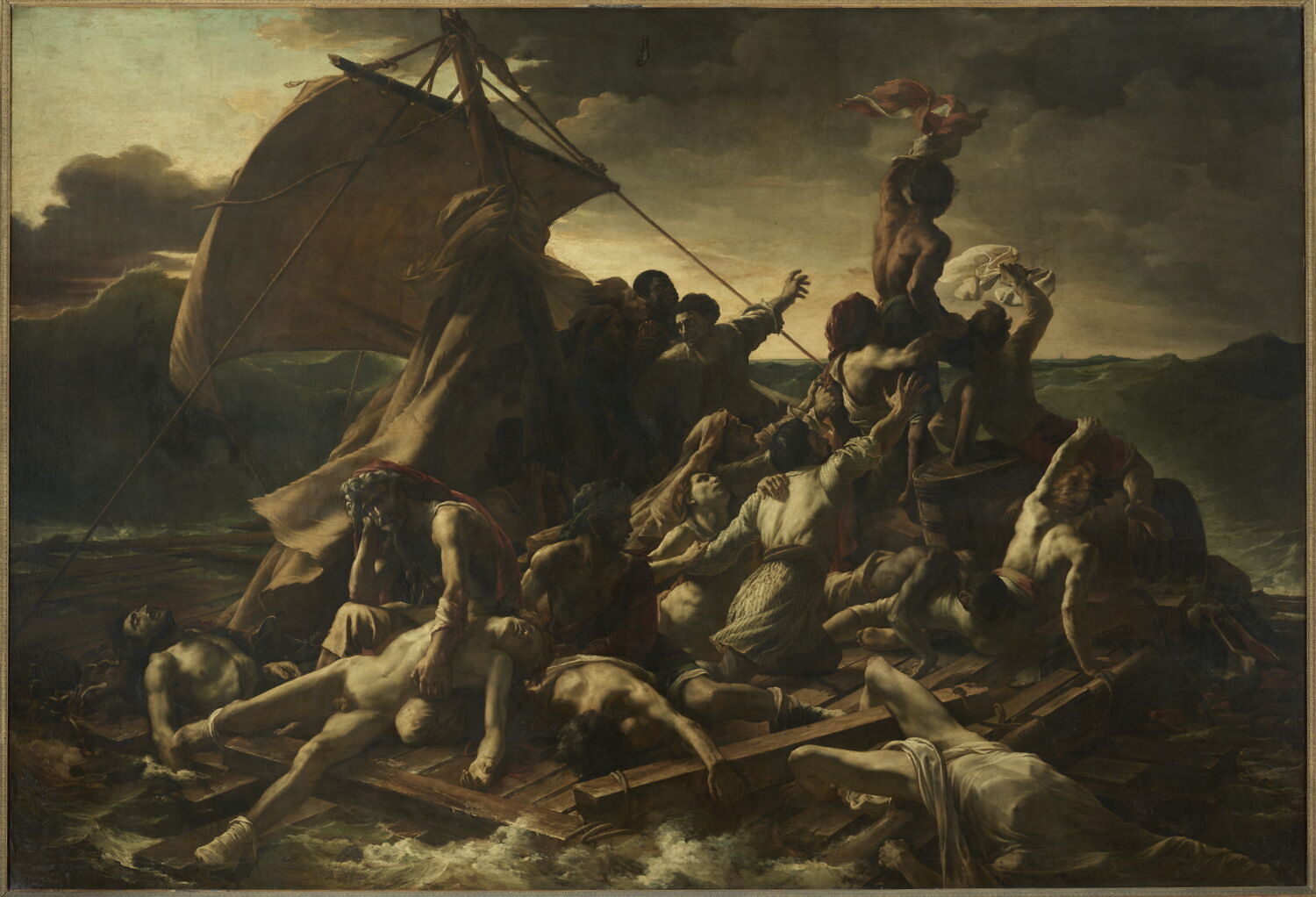
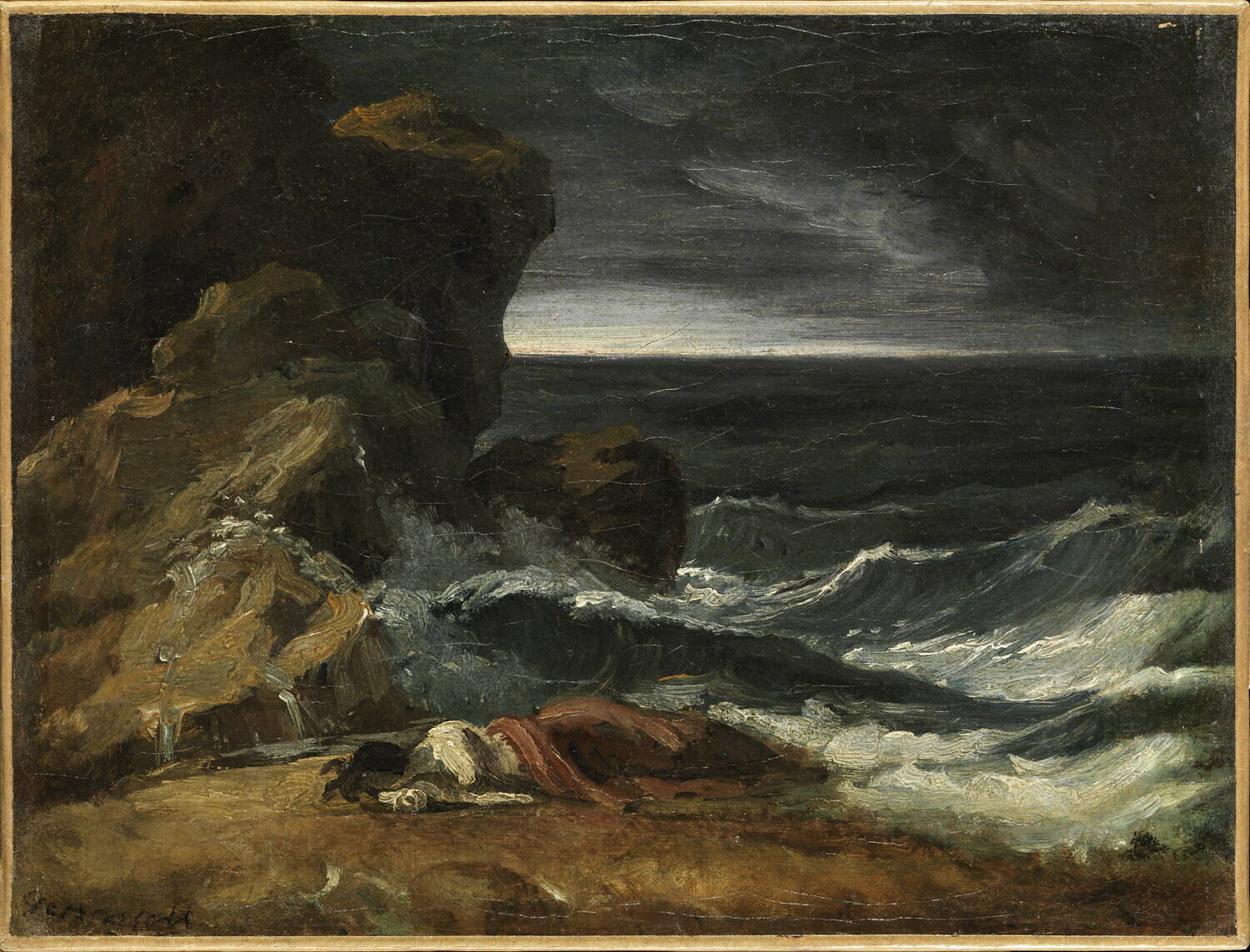
Géricault re-created the event by studying the available materials and meeting witnesses: he got to know Corréard and Savigny, a carpenter from the Méduse made a scale model of the raft for him, and the artist modelled wax figures himself. He visited hospital morgues, drawing dead heads, emaciated bodies and severed limbs, and the preparation ended with a trip to Le Havre, where he painted studies of sea and sky.
c. 1818 – 1819
Delacroix poses for a dying figure
The painter Eugène Delacroix posed for one of the dying figures in “The Raft of the Medusa”.
1819
“The Raft of the Medusa” sparks a political controversy at the Salon
When first exhibited at the Paris Salon of 1819, “The Raft of the Medusa” ignited political controversy: it indicted a corrupt establishment, in which the captain had left the crew and passengers to die, but also dramatized the eternal struggle of man against nature.
12 June – 30 December 1820
London: 50,000 visitors and 20,000 francs
The entrepreneur Bullock exhibited “The Raft of the Medusa” in London from 12 June to 30 December 1820; about 50,000 people saw it, critics called it a masterpiece, and its author was compared to Michelangelo and Caravaggio. Géricault was entitled to a third of the ticket receipts and received 20,000 francs.
1820–1821
London: urban poverty and friendship with Charlet
In London Géricault witnessed urban poverty, made drawings of his impressions and published lithographs based on these observations, free of sentimentality. He associated much there with Charlet, the lithographer and caricaturist.
1821–1824
Illness and falls from horses after his return from England
After returning to Paris from England Géricault was often ill, and his condition was made worse by several falls during horseback rides.