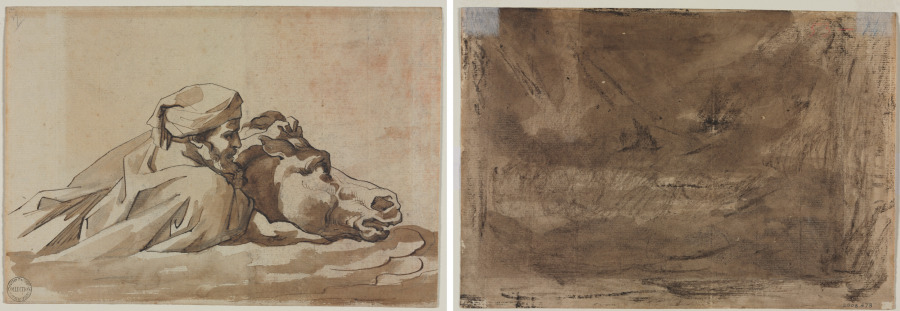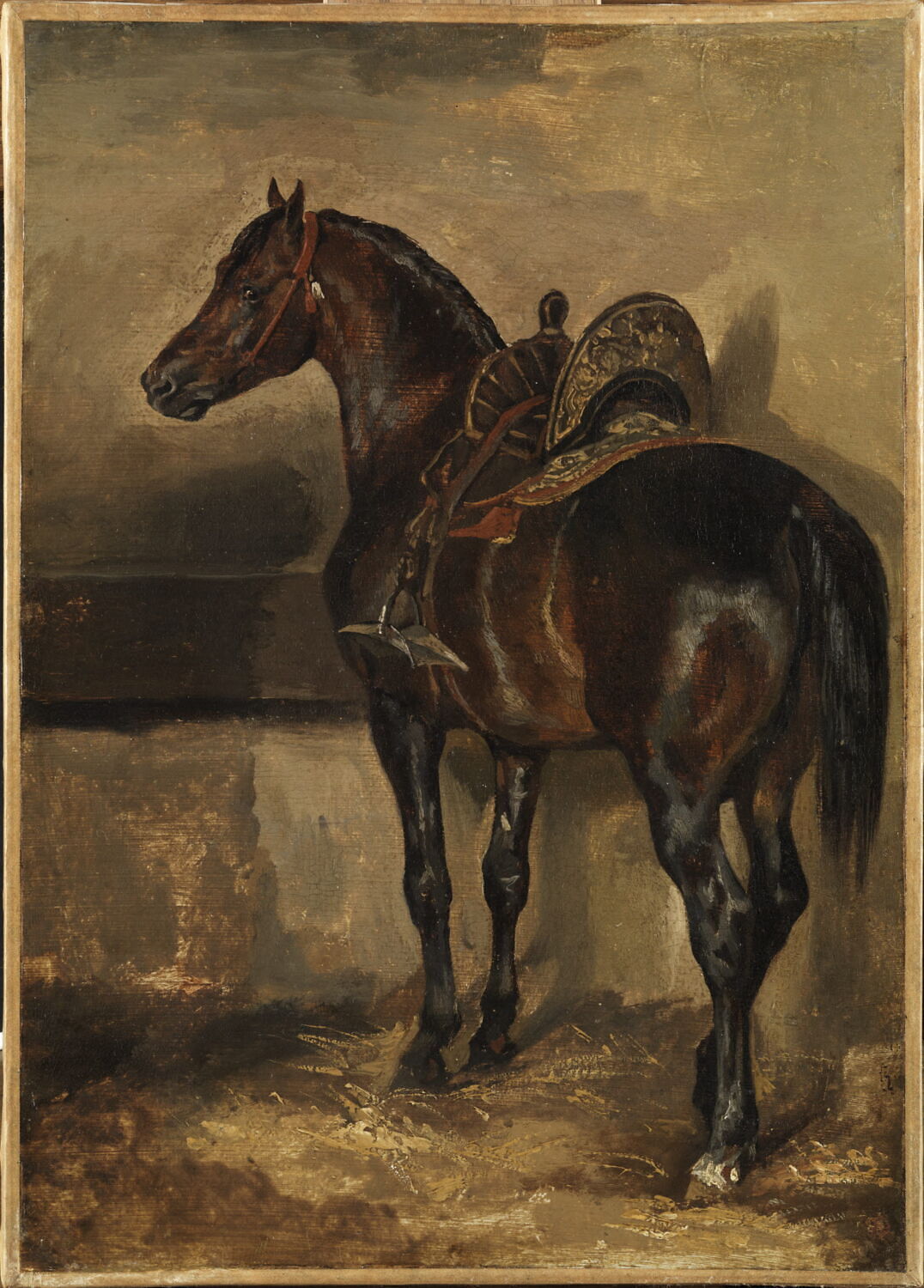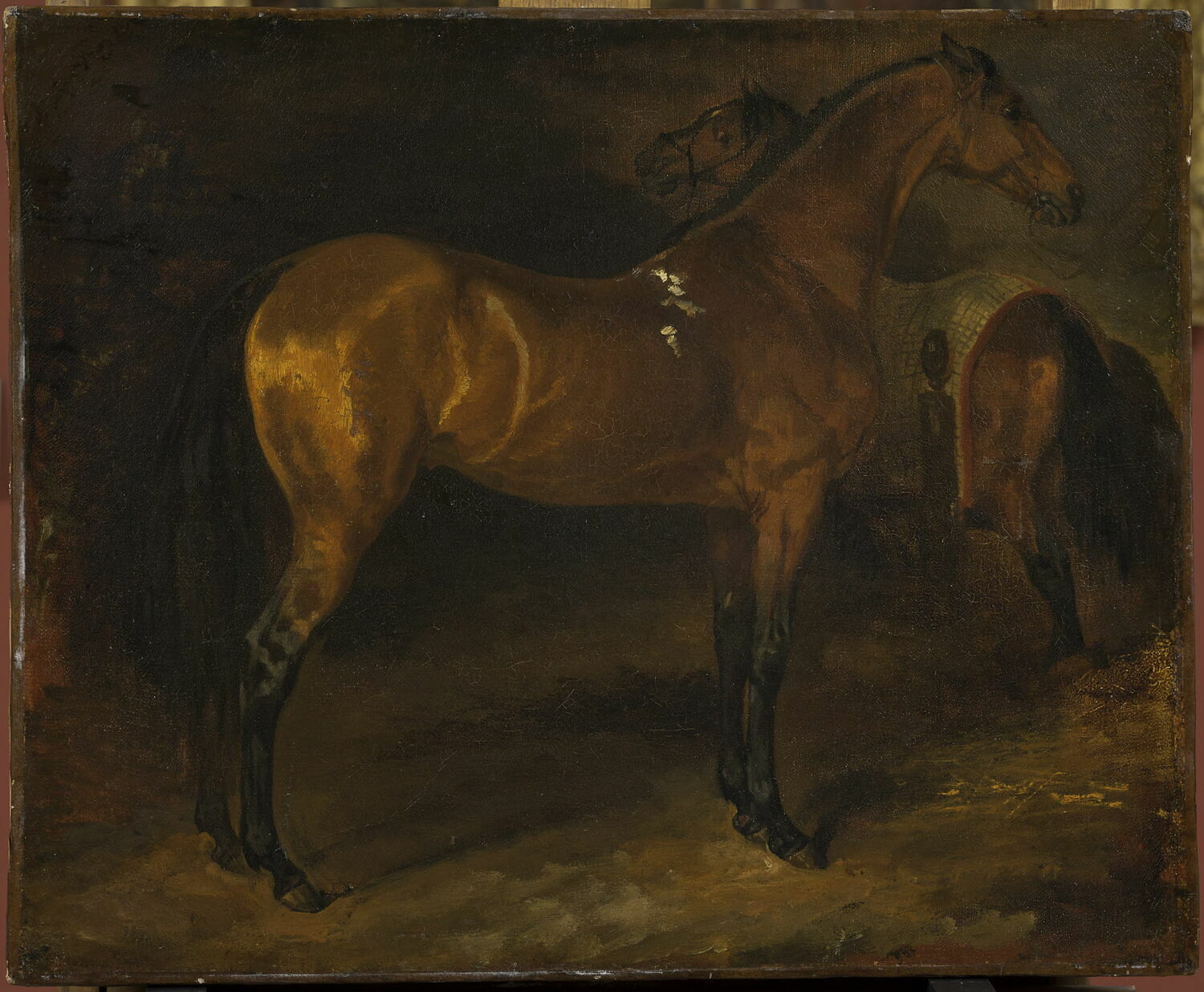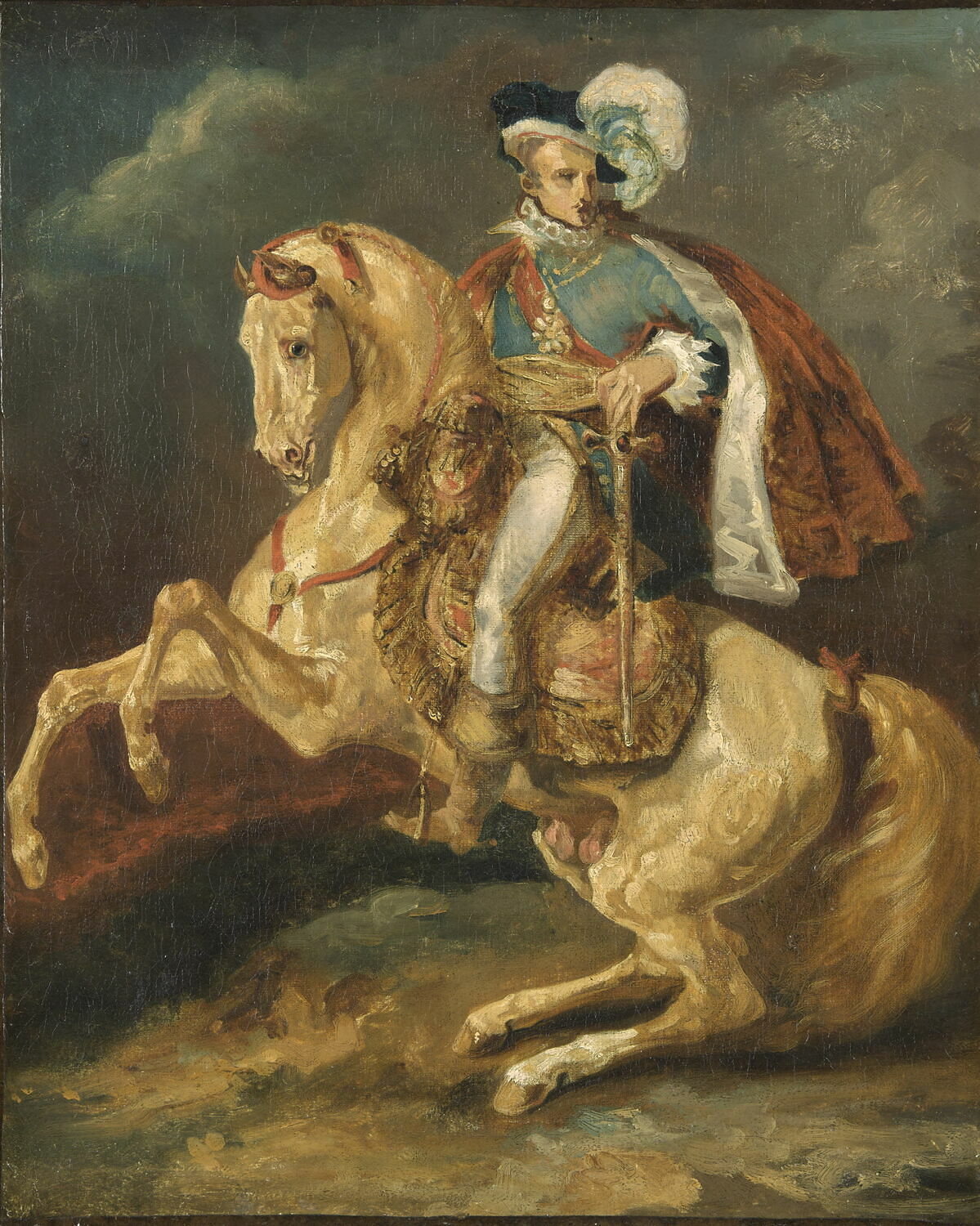
Jean-Louis André Théodore Géricault (26 September 1791 – 26 January 1824) was a French painter and lithographer. His best-known painting is The Raft of the Medusa. Despite his short life, he was one of the pioneers of the Romantic movement.
Born · 26 September 1791
Rouen
Travel · c. 1796 – 1797
The family moves to Paris: the Hôtel de Longueville
The family moved to Paris, where Théodore's father worked in the family tobacco business based at the Hôtel de Longueville on the Place du Carrousel. His maternal uncle Jean-Baptiste Caruel lived there too, together with the painter and art dealer Jean-Louis Laneuville, who was probably the first to recognize the boy's artistic abilities.
Event · Paris
His family and the Musée Français: engravings of the Louvre
In 1802 the family relation Louis Robillard de Peronville and the engraver Pierre Laurent founded a private business producing engravings of paintings, sculptures and bas-reliefs in the Louvre. Géricault's family circle embraced this Musée Français, which gave him a rare education in the production and history of art.
Career · late 1808 · Paris
Carle Vernet's studio: horses and the Cirque Franconi
In late 1808 Géricault began training with Carle Vernet, a master of battle and genre scenes. He mostly practised drawing horses, saw engravings after English animal painters, visited the Cirque Franconi, riding schools and stud farms with his teacher, and it was here that his friendship with Vernet's son Horace began.
Event · until 1808
Childhood: a collector uncle, museum copies, Norman horses
The boy took an early interest in painting: his uncle Jean-Baptiste Caruel collected Flemish and Dutch paintings, and the uncle's acquaintances, the Guérin pupils Adélaïde de Montgolfier and Louise Swaton, took Théodore to the museum where they copied the old masters. He spent his holidays in Normandy, where he fell in love with the beauty of horses for life, sketching in stables and at races.
Career
To Pierre Guérin: six months of irregular lessons
In 1810 Géricault left Vernet's studio for the rigorous classicist Pierre Guérin, who disapproved of his student's impulsive temperament while recognizing his talent. He attended the studio irregularly for about six months, probably to work from the live model and meet the other pupils, and painted “Samson and Delilah”, “The Departure of Odysseus from Ithaca” and “The Defense of Thermopylae” at the time.
Artwork · 1810s
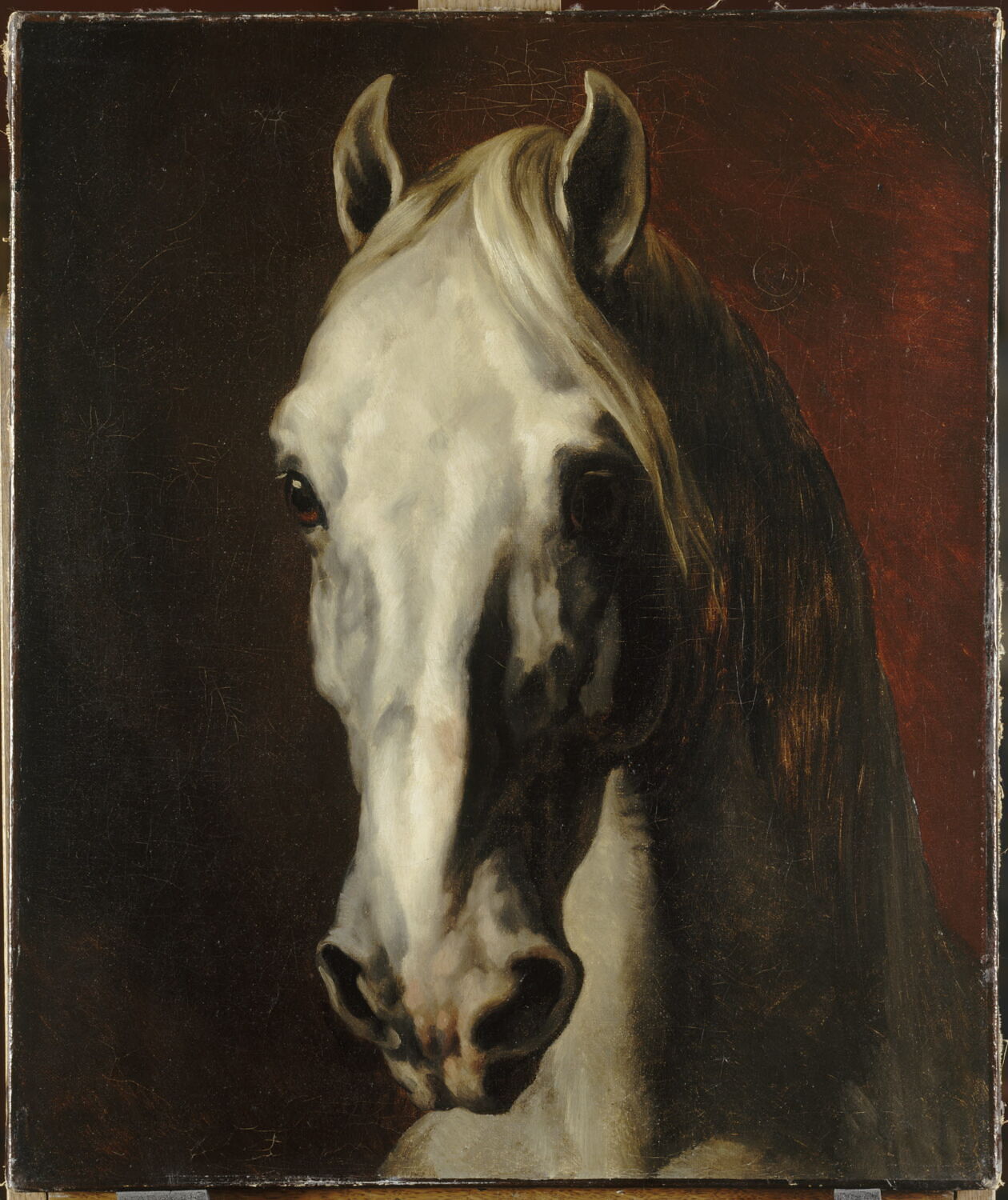
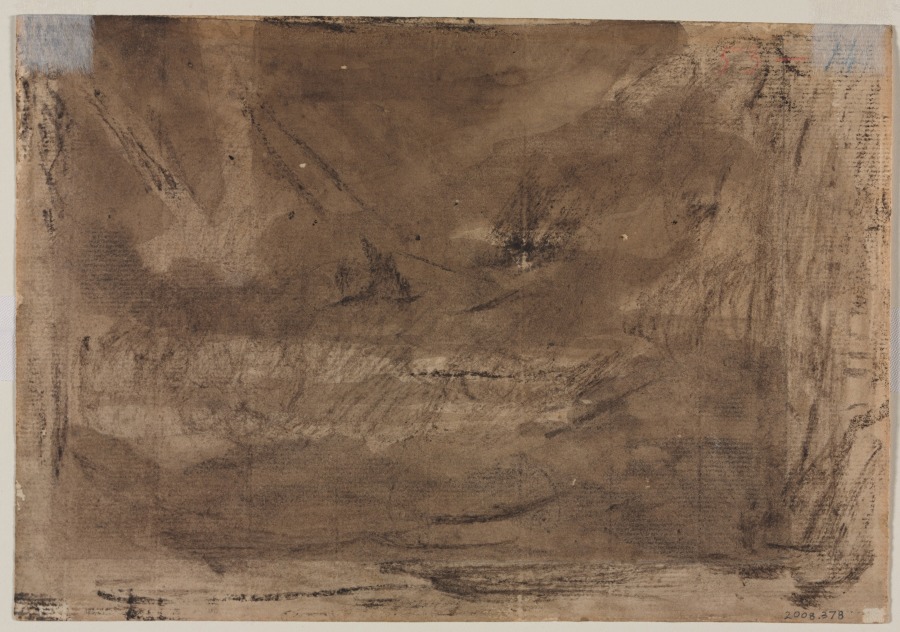
“Head of a white horse”
Artwork · c. 1820s
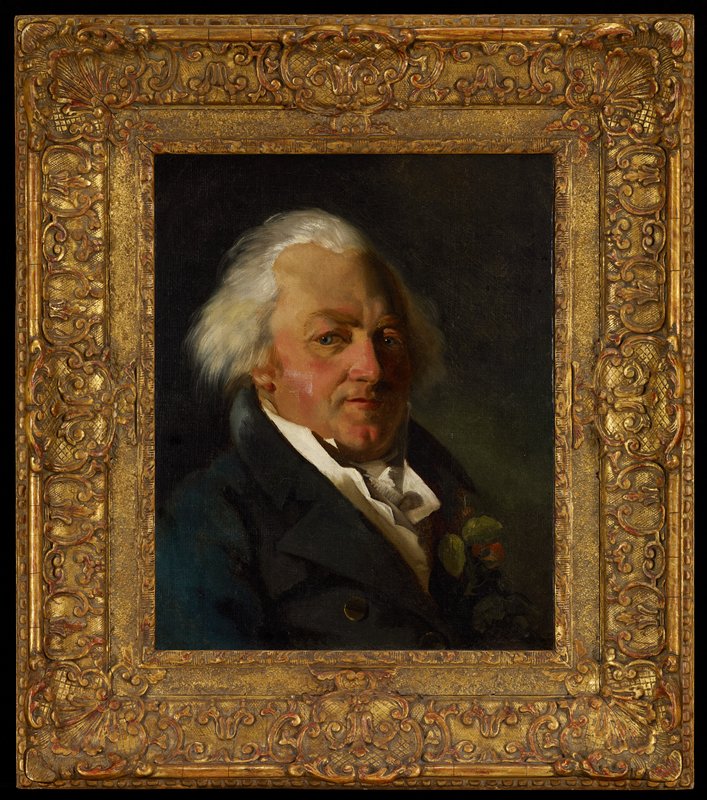
“Portrait of a Kleptomaniac”
Event · 1811–1813
The Versailles stables: portraits of racehorses
In 1811–1813 Géricault worked chiefly in the royal stables at Versailles and painted “portraits” of famous racehorses; one of them, “Napoleon's Horse”, won a prize from Empress Marie-Louise. Probably in the same years he modelled the plaster écorché “Horse”, which was widely known among his contemporaries.
Artwork · c. 1811 – 1812
Some fifty studies of nude models
Probably in 1811–1812 Géricault made about fifty studies of nude models, marked by unexpected, almost theatrical effects of light and shade. Guérin remarked that such contrasts of light and shadow might make one think he was painting by moonlight.
Education · 5 February 1811
Beaux-Arts de Paris
Exhibition · Paris
Salon debut: “Officer of the Imperial Guard Chasseurs”
In 1812 Géricault sent “Portrait of Dieudonné” (now “Officer of the Imperial Guard Chasseurs Charging”, Louvre) to the Paris Salon. An artist unknown until then, said to have “hardly studied”, he at once drew the critics' attention: Boutard advised him to take up battle painting, Durdent called him “perhaps the best of all our painters”, and David himself noticed the picture.
Artwork · 1813–1815
A series of portraits of Napoleonic soldiers and officers
Probably inspired by the success of the “Officer”, Géricault conceived not huge battle canvases but a series of portraits of soldiers and officers of every branch of the army, such as “Trumpeter of the Hussars”, “Three Buglers” and “The Veteran”, to convey the “spirit of the age”. Free of official commissions, unlike Gros, Girodet and David, he painted them with a “vivid painterly temperament”.
Exhibition · Paris
Salon of 1814: “Wounded Cuirassier” and cold reviews
At the Salon of 1814, held after Napoleon's fall, the “Officer” was shown paired with “Wounded Cuirassier Leaving the Field of Battle”, the only reminder of a passing tragic and glorious era among the neutral subjects chosen by other artists. Critics either said nothing of Géricault's pictures or received them unfavorably.
Career · December 1814
He buys a commission as a musketeer
Having recently evaded military service, in December 1814 Géricault, with the help of his father and uncle, bought a commission in the musketeer company commanded by Lauriston, a privileged military unit. His biographers find it hard to explain what motivated him.
Artwork · after summer 1815 · Paris
Begins “The Deluge”, after Poussin
Back in Paris, Géricault began work on “The Deluge”, a free reworking of Nicolas Poussin's painting of the same name in the Louvre, made under the influence of Italian art, above all Michelangelo. He later developed the theme of man in the face of the elements most fully in “The Raft of the Medusa”.
Travel · 1816–1817
Naples and Rome: the shock of Michelangelo
Géricault visited Naples, drawing the landscapes and people, but spent most of his time in Rome. The frescoes of the Sistine Chapel shook him: Michelangelo's monumentality of form inspired his pen drawings, such as “Man Felling a Bull”, among the most interesting made in Rome.
Meeting · 1816–1817 · Rome
Roman acquaintances: Augustin, Schnetz, Thomas, Robert
Carrying recommendations from Pierre-Narcisse Guérin, Géricault met the residents of the French Academy in Rome, though he did not share their ideals. His close acquaintances in Rome were Jules Robert Auguste, Jean-Victor Schnetz, Jean Antoine Thomas and Léopold Robert.
Career · until October 1816 · Ville-Kotre
Funding Italy: panels at Villers-Cotterêts instead of the prize
Géricault did not get to Italy on the École des Beaux-Arts prize: his composition “The Dying Paris” did not work out. He raised the money for the journey by painting landscape panels for a friend's house at Villers-Cotterêts, whereas winning the prize would have bound him to six years in Italy, which he did not want.
Travel · 10 October 1816
Florence: a “terrible state of mind” and a sketchbook
Géricault arrived in Florence on 10 October 1816, where by his own admission he could not shake off a “terrible state of mind” caused by troubles in his personal life. He went into society and to the theater, rode, and did no painting, but always carried a sketchbook: he drew Masaccio's frescoes in Santa Maria del Carmine, Michelangelo's sculptures in the Medici Chapel and the paintings on ancient vases.
Event · autumn 1817
The book on the wreck of the Méduse reaches Géricault
In the autumn of 1817 the book “The Wreck of the Frigate Medusa” appeared, in which the eyewitnesses, the geographer-engineer Alexandre Corréard and the physician Henri Savigny, described the thirteen-day drift of the raft after the ship ran aground off the coast of Mauritania. The book reached Géricault, who saw in it the subject for the large painting he had long dreamed of.
Event · 1817–1818
Investigating the disaster: survivors, a model raft, morgues
Géricault re-created the event by studying the available materials and meeting witnesses: he got to know Corréard and Savigny, a carpenter from the Méduse made a scale model of the raft for him, and the artist modelled wax figures himself. He visited hospital morgues, drawing dead heads, emaciated bodies and severed limbs, and the preparation ended with a trip to Le Havre, where he painted studies of sea and sky.
Artwork · 1817–1818
About a hundred sketches and the chosen moment: the Argus appears
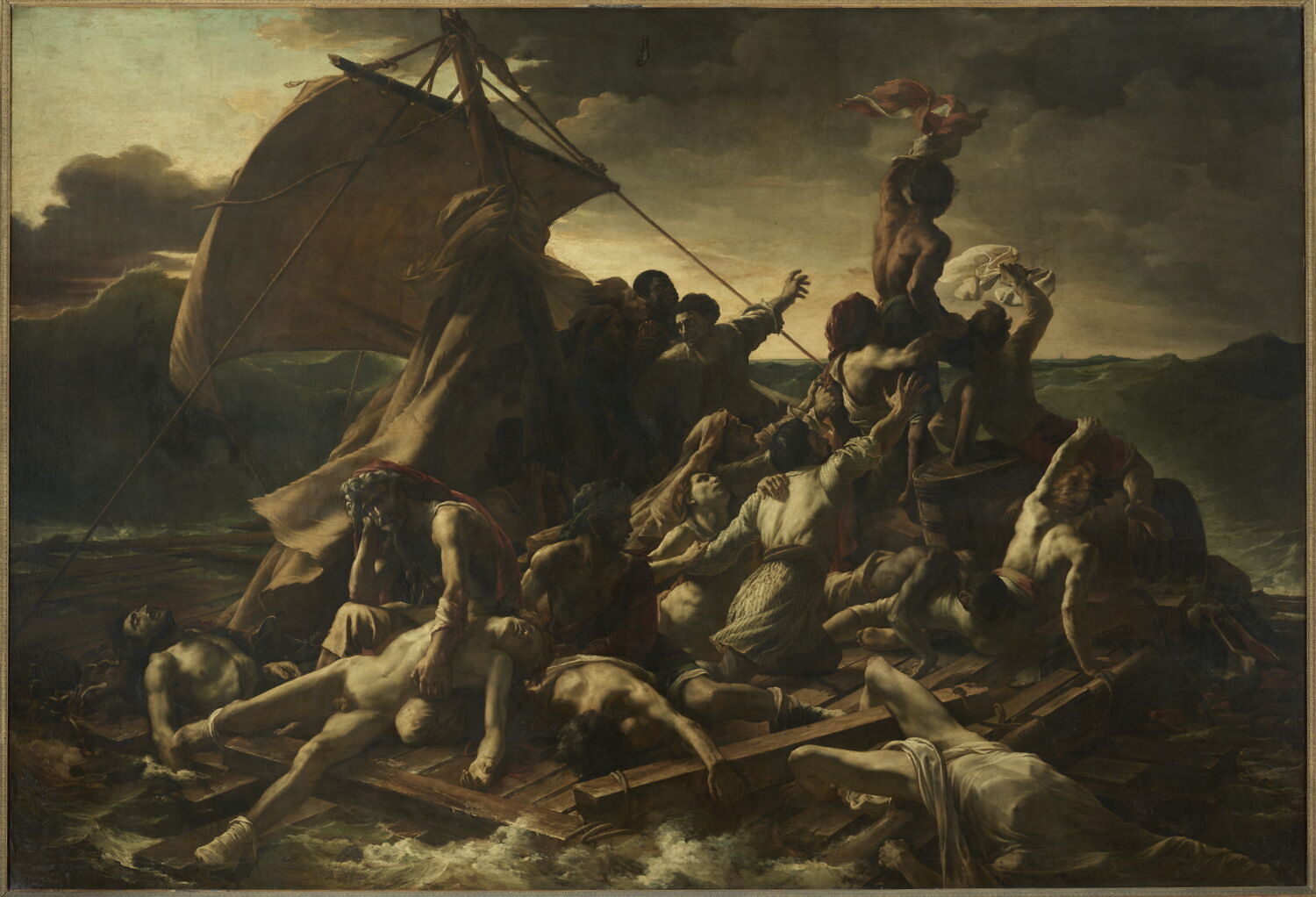
In choosing his subject Géricault made about a hundred sketches; the scenes of rescue and of cannibalism on the raft interested him most. He settled in the end on the morning of the last day of the drift, when the few survivors saw the ship Argus on the horizon.
Artwork · February 1817 · Rome
The idea for the “Race of the Barberi Horses” at the Roman carnival
Inspiration came in early February 1817, at the end of the Roman carnival, which closed with a race of riderless horses along the Corso from Piazza del Popolo to Palazzo Venezia. Géricault conceived a grandiose composition about ten meters long; the project is linked to “Race of the Barberi Horses” (1817, Baltimore).
Travel · September 1817
Leaving Italy after a “wretched and sad” year
Géricault left Italy in September 1817. He himself called the year spent there “wretched and sad”: loneliness, personal troubles and above all dissatisfaction with the results weighed on him, since he had not created the large epic work he longed for.
Workplace · October 1817
Florence
Artwork · 1818–1819
Eight months in the studio: painting “The Raft of the Medusa”
Géricault rented a studio large enough for the grandiose canvas he had in mind and worked on it for eight months, almost never leaving it and giving up society, painting from early morning until evening while the light allowed. According to his friend Antoine Montfort, he painted directly on the white canvas, without an underpainting, and his brushstroke fell precisely in place.
Family
Son born: Georges-Hippolyte Géricault
Exhibition · Paris
“The Raft of the Medusa” sparks a political controversy at the Salon
When first exhibited at the Paris Salon of 1819, “The Raft of the Medusa” ignited political controversy: it indicted a corrupt establishment, in which the captain had left the crew and passengers to die, but also dramatized the eternal struggle of man against nature.
Artwork
“The Raft of the Medusa”
Exhibition · 12 June – 30 December 1820
London: 50,000 visitors and 20,000 francs
The entrepreneur Bullock exhibited “The Raft of the Medusa” in London from 12 June to 30 December 1820; about 50,000 people saw it, critics called it a masterpiece, and its author was compared to Michelangelo and Caravaggio. Géricault was entitled to a third of the ticket receipts and received 20,000 francs.
Artwork
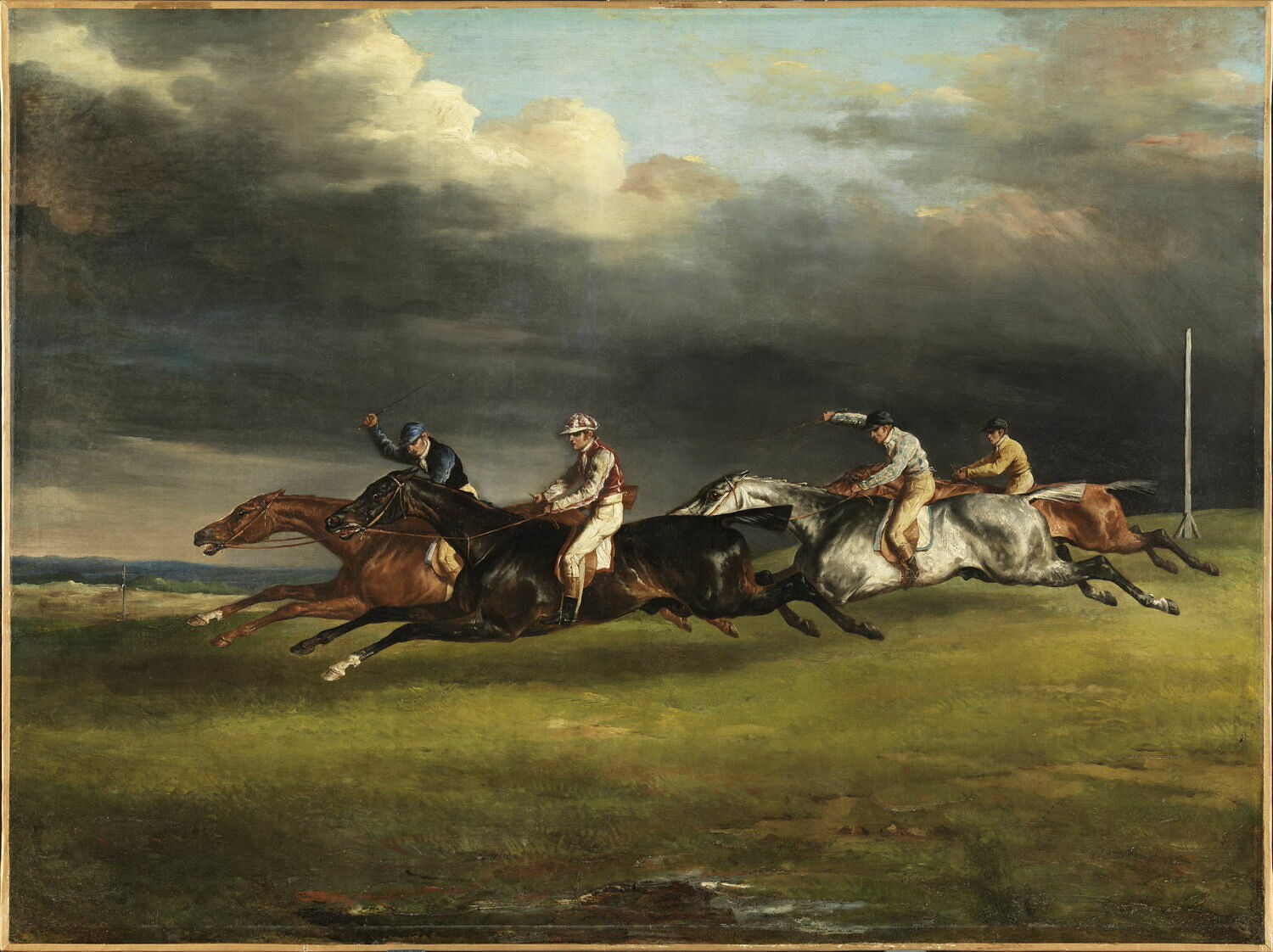
“The 1821 Derby at Epsom”
Artwork · after 1821
Ten portraits of the insane, patients of Dr. Georget
After his return to France in 1821 Géricault painted a series of ten portraits of the insane, the patients of his friend Dr. Étienne-Jean Georget, a pioneer of psychiatric medicine, each sitter showing a different affliction. Five survive, including “Insane Woman”.
Artwork · last years of life
Last projects: the Inquisition and the slave trade
Géricault's last efforts went into preliminary studies for several epic compositions, among them “Opening of the Doors of the Spanish Inquisition” and “The African Slave Trade”. The drawings suggest works of great ambition, but his waning health intervened.