.jpg?width=96) Vincent van GoghDutch, 1853–1890
Vincent van GoghDutch, 1853–1890Arena in Arles
May one see it?
Yes, receiving visitors

State Hermitage Museum
Room413Saint Petersburg, Russia
On public display.
- Checked
- In this state since
- Source
- The museum
About the painting
Les Arènes is a painting by Vincent van Gogh executed in Arles, in November or December 1888, during the period of time when Paul Gauguin was living with him in The Yellow House. The bullfight season in Arles that year started on Easter Sunday 1 April and ended on 21 October. Van Gogh's painting is therefore not a study of nature but done from memory. Gauguin encouraged van Gogh to work in the studio in this manner. The painting may not be finished as the paint is very thinly applied, and patches of bare jute show through in places.
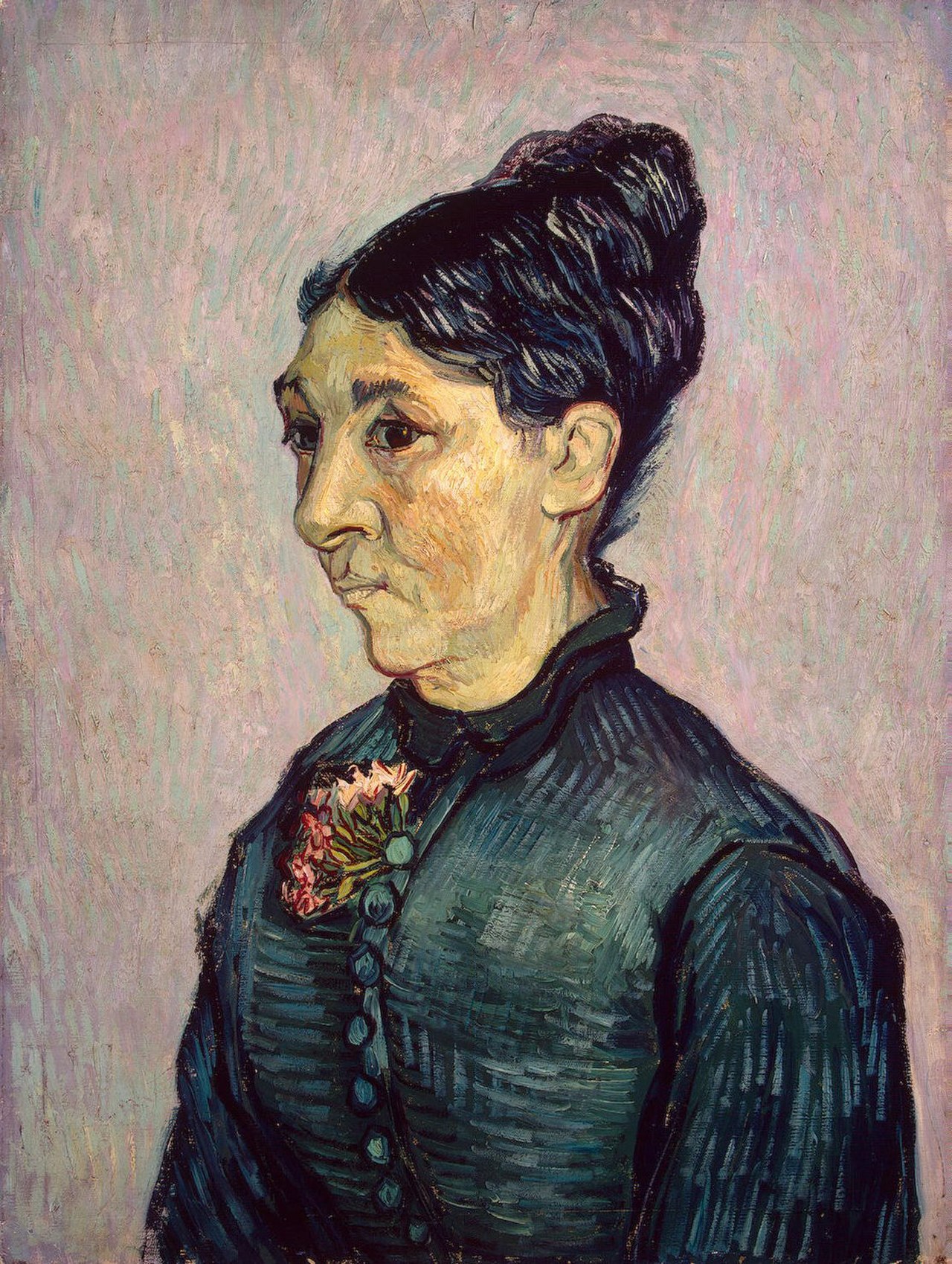
It seems that members of the Roulin Family are depicted in this portrait, and the woman in Arlésienne costume has the profile of Madame Ginoux.
Read on
A matter of weeks after painting this canvas, van Gogh cut off part of his own ear. One of the many theories about this notorious incident is that the bullfights (or "bull games" as they are called in Arles) made a deep impression on van Gogh, in particular the custom of severing one ear of a defeated bull. The victorious matador circles the arena displaying this prize to the crowd, before presenting it to a lady of his choice. There is some doubt as to whether the bulls were killed in this fashion in Arles in van Gogh's time.
In the museum's own words — in Russian
Картина, написанная во Франции, в Провансе, изображает древний амфитеатр, в котором устраивались бои быков. Арена с участниками корриды едва намечена. Главное "действующее лицо" - публика, собравшаяся на любимое зрелище, пестрая людская толпа. Среди зрителей - знакомые художника, изображенные им и в других произведениях. В период, когда создавалась картина, в Арле с Ван Гогом работал Гоген, увлекший друга своей манерой. Это сказалось в уплощении пространства, замене мазка обобщенными цветовыми пятнами, обведенными широким темным контуром. А экспрессию живописи придают мощный темперамент Ван Гога, его глубоко драматическое мироощущение. Пережив увлечение импрессионизмом, мастер создал свой напряженный художественный язык.
State Hermitage Museum
Particulars
- Accession number
- ГЭ-6529
In the catalog
Sources
- State Hermitage Museum
- Image: State Hermitage Museum — Museum open access
Meanwhile, in the life of Vincent van Gogh
The whole lifeFebruary 1886
Moves to Paris to join his brother Theo
Van Gogh left Antwerp to join his brother Theo, an art dealer, in Paris. So began a very fruitful and eventful Paris period: he painted some two hundred and thirty pictures there, more than anywhere else.
February 1888
To Arles, dreaming of a “Studio of the South”
The public still neither accepted nor bought his paintings, and in February 1888 Van Gogh left for Arles in the south of France to found a “Studio of the South”, a brotherhood of like-minded artists in which he gave Gauguin the leading role. Theo backed the plan with money.
23 October 1888
Gauguin arrives in Arles
After much pleading Gauguin arrived in Arles, and in November the two painted together: Gauguin portrayed Van Gogh in “The Painter of Sunflowers”, and their first joint outing was to the Alyscamps. At Gauguin's suggestion Vincent painted from memory, producing “Memory of the Garden at Etten”.
23 December 1888
The severed ear
After an altercation on the evening of 23 December, Van Gogh, seemingly hearing voices, severed his left ear, wholly or in part, with a razor and delivered it, wrapped in paper, to a woman at a brothel. Next morning a policeman found him unconscious; in hospital he was diagnosed with “acute mania with generalised delirium”.
May 1889
Voluntarily into the Saint-Paul asylum
Van Gogh left Arles and voluntarily entered the Saint-Paul-de-Mausole asylum, a former monastery in Saint-Rémy-de-Provence, accompanied by the Protestant clergyman Frédéric Salles. Of his two cells with barred windows one became a studio, and the clinic and its garden became the main subjects of his paintings.
29 July 1890
Died