Edgar DegasFrench, 1834–1917
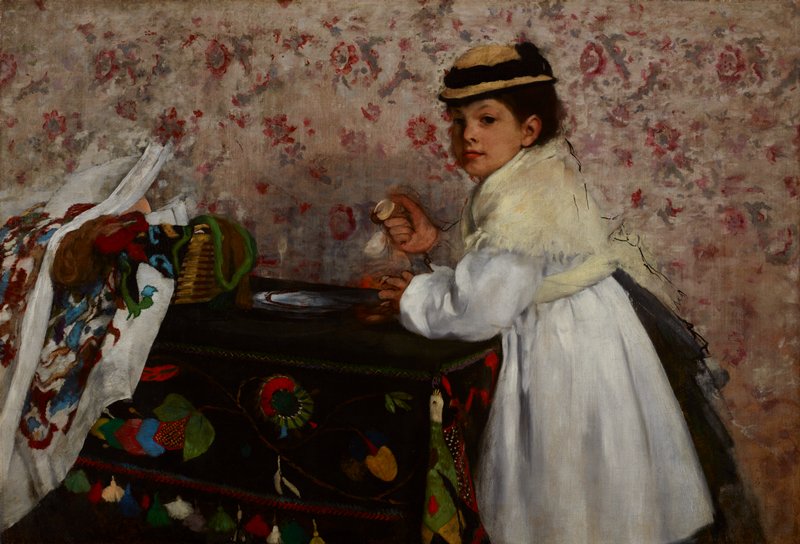
Ballet Dancer
Can I see it?
Not on view at present
Where is “Ballet Dancer” now? Collection: Harvard Art Museums, Cambridge. Not on view at present. Checked September 29, 2026.

Cambridge, United States
It belongs to the collection, but is not on display at present.
- Checked
- In this state since
- Source
- The museum
Details
- Accession number
- 1943.232
In the catalog
Sources
- Harvard Art Museums
- Image: Harvard Art Museums — © President and Fellows of Harvard College
In the life of Edgar Degas
The whole lifeOctober 1872 – March 1873 · Residence
New Orleans
1873–1874
His brother's debts: he sells his house and collection
After his father's death Degas learned that his brother René had run up enormous business debts. To save the family's reputation he sold his house and an inherited art collection and for the first time in his life depended on sales of his own work.
1874
The first Impressionist exhibition
Disenchanted with the Salon, Degas joined a group of young artists organizing an independent exhibiting society. He took a leading role in organizing the eight shows of 1874–1886 and exhibited in all but one, despite constant conflicts with the group.
1881
“The Little Dancer of Fourteen Years” on show
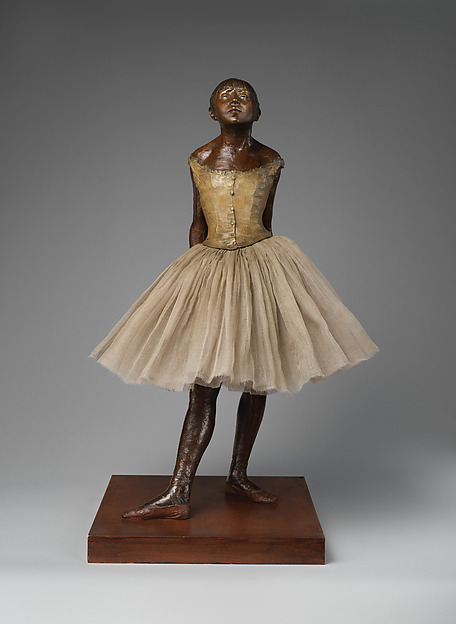
The nearly life-size wax figure with real hair and a cloth tutu, modelled on Marie van Goethem, provoked a strong reaction: critics found its realism extraordinary, but many denounced the dancer as ugly. It was the only sculpture Degas showed in his lifetime.
by 1882
His eyesight sharply worsens
By 1882 Degas's eyesight began to worsen sharply: he turned to pastel and then to sculpture, where he could rely more on touch.
1886
The eighth exhibition: pastel nudes, and the end of the group
At the last Impressionist exhibition Degas showed a suite of pastel nudes, which drew more critical writing than anything else in his lifetime, mostly laudatory. The group broke up, partly through rancour over the inclusion of non-Impressionists such as Forain and Raffaëlli.