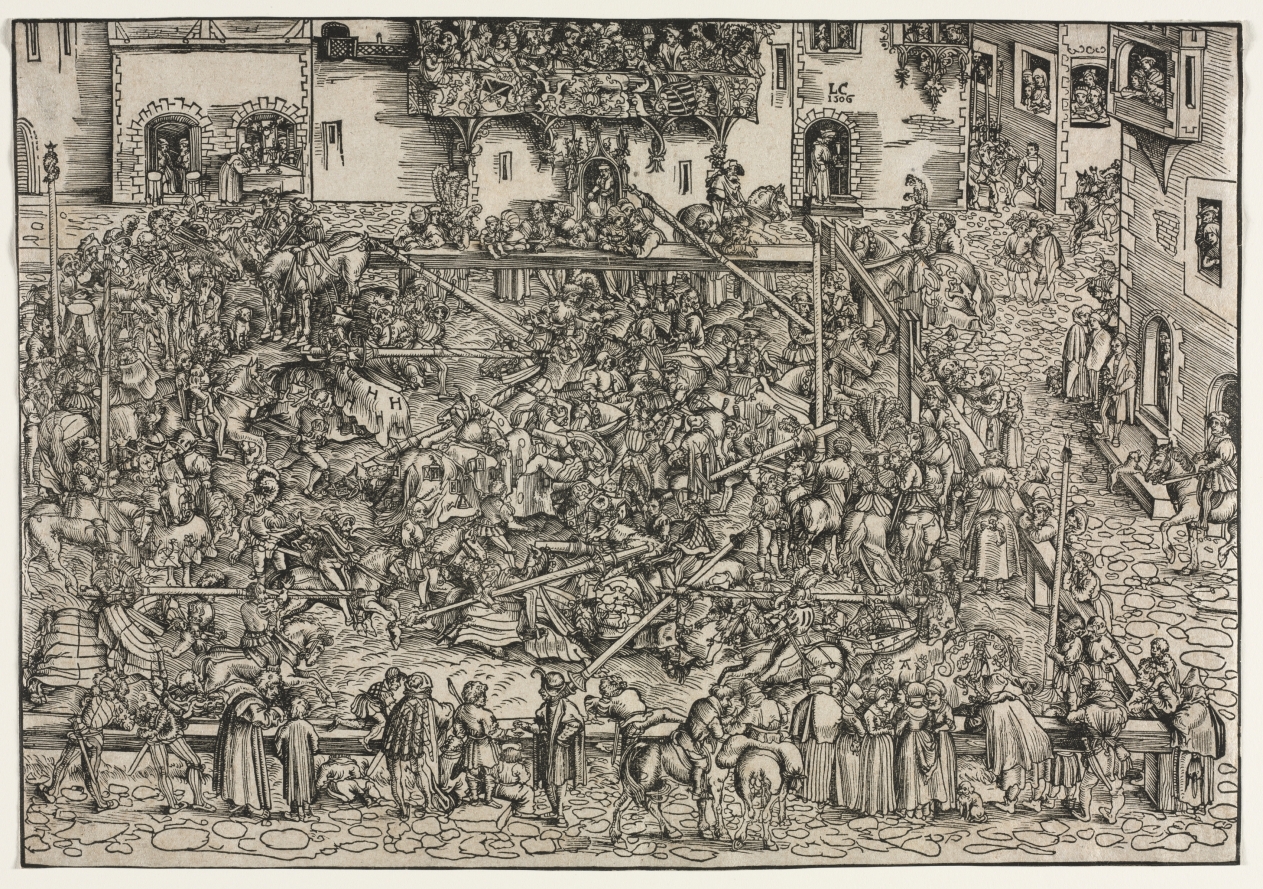
 Lucas CranachGerman, 1472–1553
A Tournament
May one see it?
Not receiving at present

The Cleveland Museum of Art
Cleveland, United States
It belongs to the collection, but is not on display at present.
- Checked
- In this state since
- Source
- The museum's own collection data
About the work
Tournaments in the age of Holy Roman Emperor Maximilian were not the serious affairs of the Middle Ages, nor did they reflect actual methods of warfare, which relied on heavy cannons and mercenaries. Instead, they provided amusing entertainment for the aristocracy. This complex design, containing numerous combatants jousting with lances, was based on events that took place in the Wittenberg marketplace. Given Cranach's position as painter to the Saxon court, his workshop would probably have been responsible for the various painted decorations associated with such tournaments.
The Cleveland Museum of Art
Particulars
- Accession number
- 1922.246
In the catalog
Sources
- The Cleveland Museum of Art: the museum's own open data · fetched 6 days ago
- Image: The Cleveland Museum of Art — Museum open access
Meanwhile, in the life of Lucas Cranach
The whole life1501–1504 · Workplace
Vienna
1502–1504
First Contacts with Humanists in Vienna
During his stay in Vienna, Cranach made his first contacts with the leading humanists of his age and began signing his paintings "Lucas aus Kronach."
24 June 1504
First Record as Court Painter
Cranach's name first appears in the Wittenberg accounts: he received 50 guilders as a half-year's salary as pictor ducalis — painter to Elector Frederick the Wise.
1505 · Workplace
Lutherstadt Wittenberg
1508
Diplomatic Mission to Mechelen
He was sent on a diplomatic mission to Mechelen (Netherlands), where he painted portraits of Emperor Maximilian I and the future Emperor Charles V.
6 January 1508
Granted Nobility and a Coat of Arms
Cranach was granted nobility and a personal coat of arms — a winged serpent with a ruby ring in its mouth, which became the signature of his works and workshop.