 Salvador DalíSpanien, 1904–1989
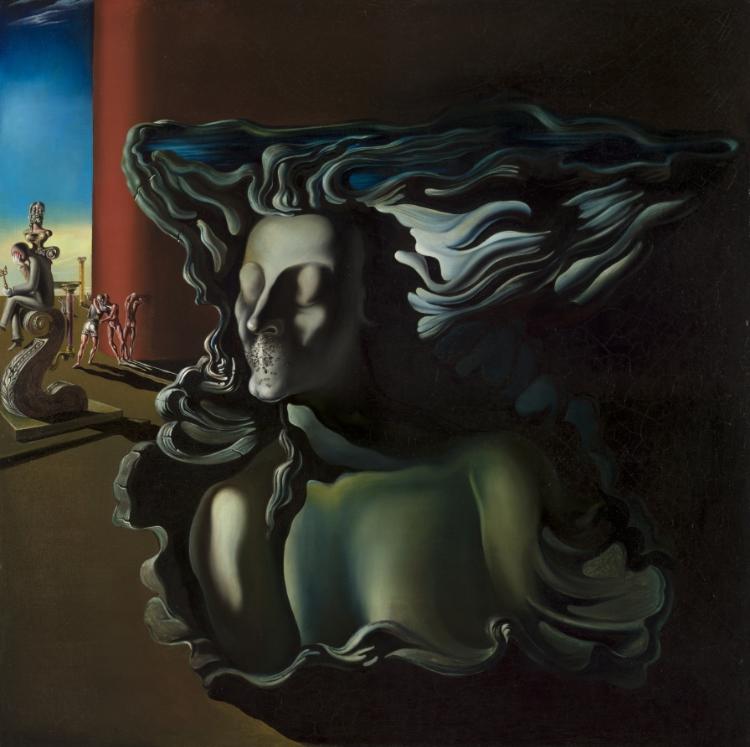
The Dream
Darf man es sehen?
Ja, es empfängt Besucher

Öffentlich ausgestellt.
- Geprüft
- Unverändert seit
- Quelle
- Das Museum
Über das Gemälde
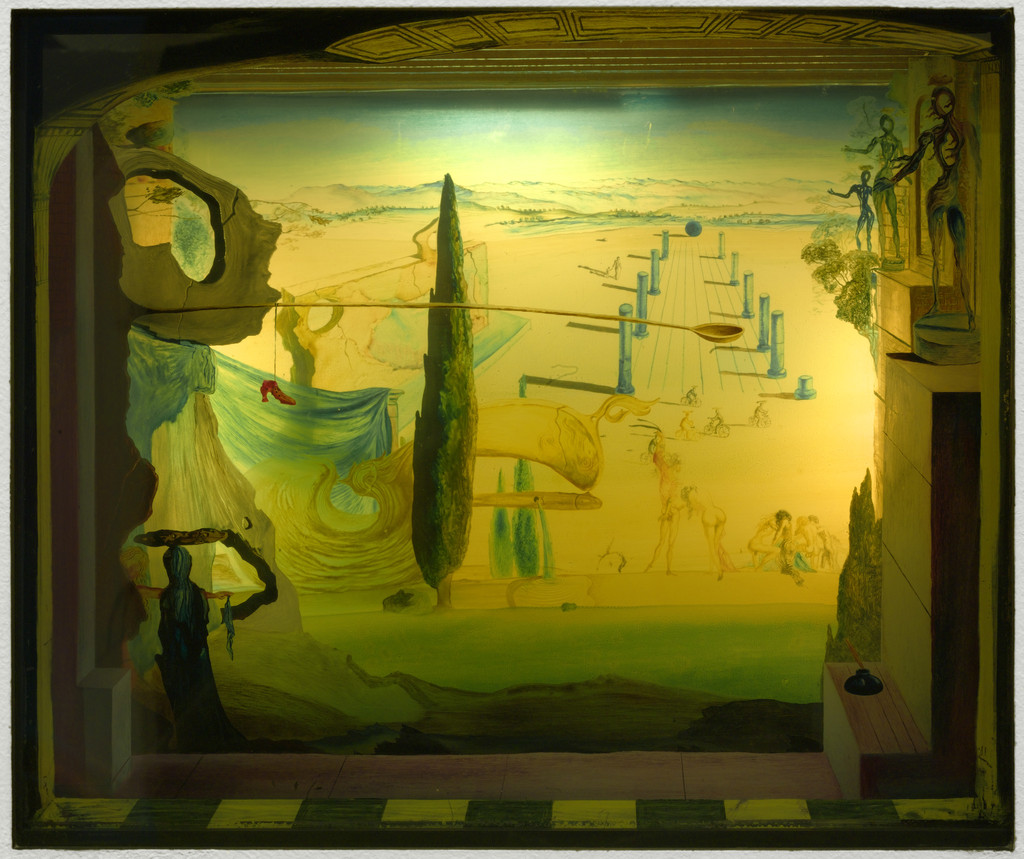
The Dream gives visual form to the strange, often disturbing world of dreams and hallucinations. Ants cluster over the face of the central figure, obscuring the mouth, while the sealed, bulging eyelids suggest the sensory confusion and frustration of a dream. The man at the far left—with a bleeding face and amputated left foot—refers to the classical myth of Oedipus, who unwittingly killed his father and married his mother. The column that grows from the man’s back and sprouts into a bust of a bearded man refers to the Freudian father, the punishing superego who suppresses the son’s sexual fantasies. In the distance, two men embrace, one holding a golden key or scepter symbolizing access to the unconscious. Behind them, a naked man reaches into a permeable red form, as if trying to enter it.
Cleveland Museum of Art
Angaben
- Inventarnummer
- 2001.34
Im Katalog
Quellen
- Cleveland Museum of Art
- Bild: Cleveland Museum of Art — © Salvador Dali, Gala-Salvador Dali Foundation / Artists Rights Society (ARS), New York
Derweil im Leben von Salvador Dalí
Das ganze LebenAugust 1929
Meets Gala
Dalí met his lifelong muse and future wife Gala, born Elena Diakonova, a Russian émigrée ten years his senior, then married to the Surrealist poet Paul Éluard.
1929
First Paris show; joins the Surrealists
Dalí's first Paris exhibition, eleven works at the Goemans Gallery, was a commercial success; André Breton called his new work “the most hallucinatory that has been produced up to now”. That year he officially joined the Surrealist group, who hailed what he would call his paranoiac-critical method.
28 December 1929
His father throws him out
His father disapproved of his romance with Gala and his Surrealist friends, and on reading that he had exhibited in Paris a drawing inscribed “Sometimes, I spit for fun on my mother's portrait”, demanded a public recantation. Dalí refused and was thrown out of the family home, told he would be disinherited and must never set foot in Cadaqués again.
summer 1930
A fisherman's cabin at Port Lligat
Dalí and Gala rented a small fisherman's cabin in the nearby bay of Port Lligat; he soon bought it and over the years added the neighbouring ones, gradually building his beloved villa by the sea.
November – December 1933
First New York show: “frozen nightmares”
Dalí's first New York exhibition, twenty-six works at Julien Levy's gallery, was a commercial and critical success. The New Yorker's critic praised their precision and lack of sentimentality, calling them “frozen nightmares”.