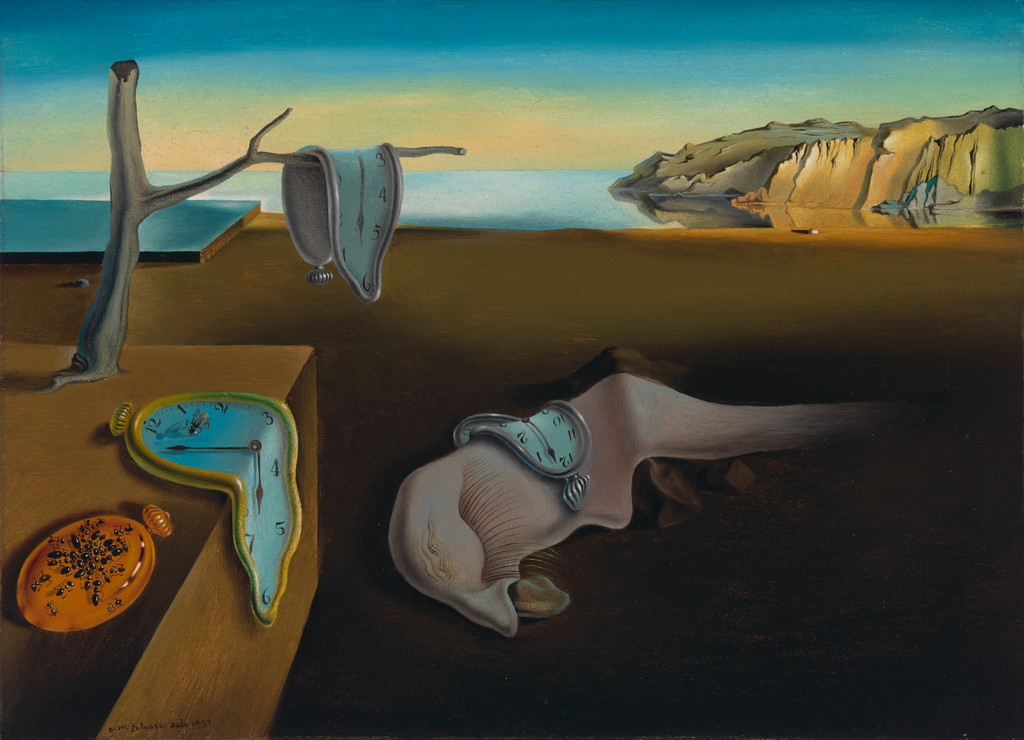
 Salvador DalíSpanien, 1904–1989
Die Beständigkeit der Erinnerung
The Persistence of Memory
Kann ich es sehen?
Ja, derzeit ausgestellt
Wo ist „Die Beständigkeit der Erinnerung“ heute? Museum of Modern Art, MoMA, 5. Etage, 517, New York City. Ja, derzeit ausgestellt. Geprüft 6. Oktober 2026.

Jetzt geöffnet· bis 17:30
Öffentlich ausgestellt.
- Geprüft
- Quelle
- Das Museum
Über das Gemälde
Die Beständigkeit der Erinnerung (auf Spanisch La persistencia de la memoria), auch Die zerrinnende Zeit oder Die weichen Uhren genannt, ist das bekannteste Gemälde des surrealistischen Malers Salvador Dalí aus dem Jahr 1931.
Angaben
- Inventarnummer
- 162.1934
Im Katalog
Quellen
- Museum of Modern Art
- Bild: Museum of Modern Art — © the artist or rights holder
Im Leben von Salvador Dalí
Das ganze LebenAugust 1929
Meets Gala
Dalí met his lifelong muse and future wife Gala, born Elena Diakonova, a Russian émigrée ten years his senior, then married to the Surrealist poet Paul Éluard.
1929
First Paris show; joins the Surrealists
Dalí's first Paris exhibition, eleven works at the Goemans Gallery, was a commercial success; André Breton called his new work “the most hallucinatory that has been produced up to now”. That year he officially joined the Surrealist group, who hailed what he would call his paranoiac-critical method.
28 December 1929
His father throws him out
His father disapproved of his romance with Gala and his Surrealist friends, and on reading that he had exhibited in Paris a drawing inscribed “Sometimes, I spit for fun on my mother's portrait”, demanded a public recantation. Dalí refused and was thrown out of the family home, told he would be disinherited and must never set foot in Cadaqués again.
summer 1930
A fisherman's cabin at Port Lligat
Dalí and Gala rented a small fisherman's cabin in the nearby bay of Port Lligat; he soon bought it and over the years added the neighbouring ones, gradually building his beloved villa by the sea.
November – December 1933
First New York show: “frozen nightmares”
Dalí's first New York exhibition, twenty-six works at Julien Levy's gallery, was a commercial and critical success. The New Yorker's critic praised their precision and lack of sentimentality, calling them “frozen nightmares”.