 Henry MooreEngland, 1898–1986
Helmet Head
Kann ich es sehen?
Ja, derzeit ausgestellt
Wo ist „Helmet Head“ heute? Cleveland Museum of Art, 225 German Expressionism & Surrealism, Cleveland. Ja, derzeit ausgestellt. Geprüft 23. November 2026.

Jetzt geöffnet· bis 17:00
Öffentlich ausgestellt.
- Geprüft
- Unverändert seit
- Quelle
- Das Museum
Über die Skulptur
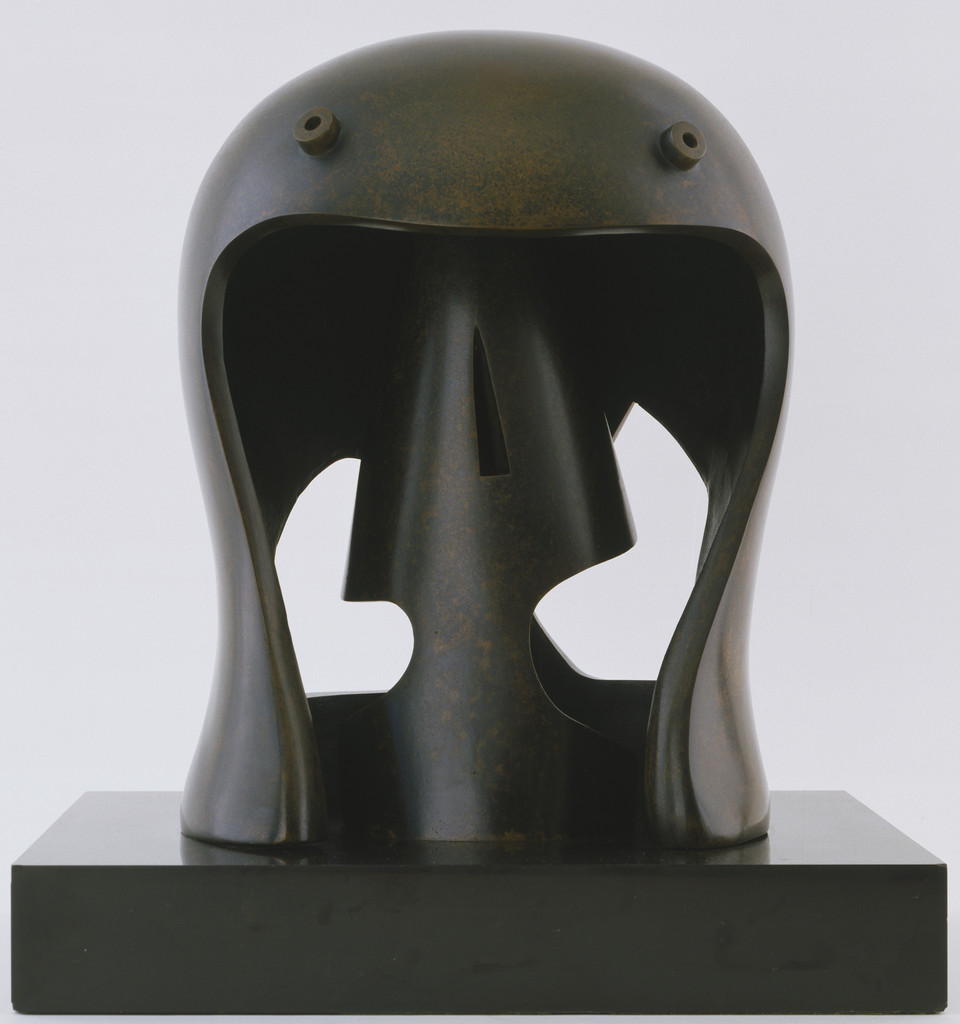
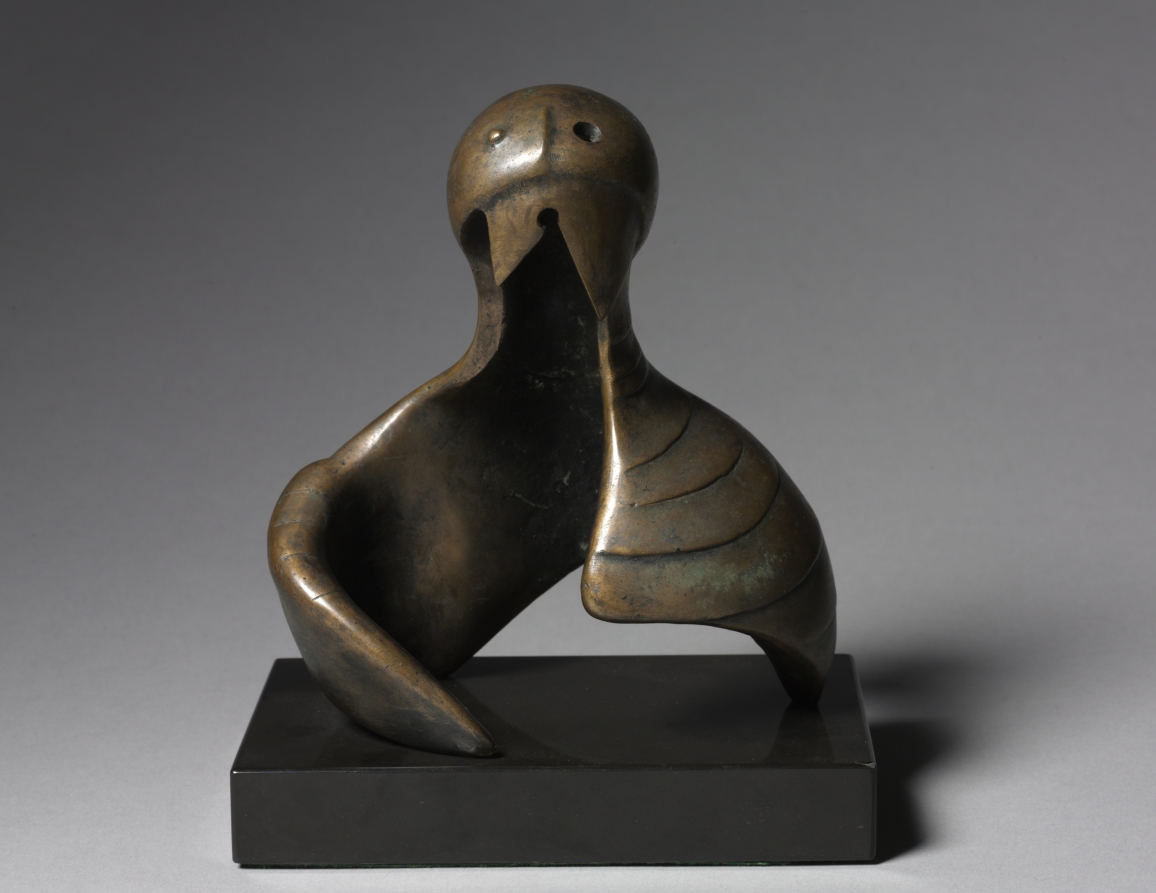
Henry Moore's Helmet Head, a small bronze made in 1952, is in the Cleveland Museum of Art, Cleveland. An armored-looking head and shoulders curve around an empty space. Moore repeatedly returned to helmet heads during his career, using the human body as the starting point for a form that could suggest a protective shell. On view in gallery 225.
In den Worten des Museums
British sculptor Henry Moore is known for his abstract bronze sculptures that evoke the human form. This small bronze sculpture is one of many "helmet heads" made by Moore throughout his career, reflecting his interest in visualizing the body as a protective shell. Here, the sculpture's armor-like head and shoulders appear to be embracing an empty void.
Cleveland Museum of Art
Angaben
- Inventarnummer
- 1958.470
Im Katalog
Quellen
- Cleveland Museum of Art
- Bild: Cleveland Museum of Art — © 2010 The Henry Moore Foundation. All Rights Reserved / Artists Rights Society (ARS), New York
Im Leben von Henry Moore
Das ganze Leben1940–1986
A bomb in Hampstead: the move to Hoglands
In September 1940 bomb shrapnel hit the Moores’ Hampstead home and they left London for Hoglands, a farmhouse in the hamlet of Perry Green near Much Hadham in Hertfordshire. It remained Moore’s home and workshop for the rest of his life; though he grew wealthy he never felt the need to move to larger premises.
1950s
Assistants at Much Hadham
In the 1950s the scale of Moore’s sculptures grew so much that he took on a growing number of assistants at Much Hadham, among them Anthony Caro, Roland Piché, Maurice Lowe and Richard Wentworth.
1951
Turns down a knighthood
In 1951 Moore declined a knighthood, feeling that it would make him seem an establishment figure and might cut him off from fellow artists with similar aims. He later accepted the Order of the Companions of Honour (1955) and the Order of Merit (1963).
1951
“Reclining Figure: Festival” at the Festival of Britain
At the 1951 Festival of Britain Moore exhibited Reclining Figure: Festival, a plaster typical of his later manner: an abstract female figure intercut with voids.
1952
“Geometry of Fear” against Moore’s ideals
At the 1952 Venice Biennale eight new British sculptors showed their Geometry of Fear works as a direct contrast to Moore’s ideals of endurance and continuity; his large bronze Double Standing Figure stood outside the British pavilion, in sharp contrast to the rougher, more angular works inside.
1953
The São Paulo Biennale prize
In 1953 Moore received an international prize at the São Paulo Biennale, following his Venice prize of 1948.