ART WIKI32.963 ausgestellt
KarteSammlungKünstlerMuseenAusstellungenJournal
Anmelden

ART WIKI

Wo das Meisterwerk hängt und wann man vorgelassen wird.

Sammlungen: Art Institute of Chicago, Cleveland Museum of Art, Eremitage, Getty Villa, Harvard Art Museums, Hirshhorn Museum and Sculpture Garden, J. Paul Getty Museum, Louvre, Metropolitan Museum of Art, Minneapolis Institute of Art, Museum of Modern Art, National Gallery of Art, National Museum of Asian Art, National Portrait Gallery, Puschkin-Museum, Rijksmuseum Amsterdam, Russisches Museum, Smithsonian American Art Museum, Statens Museum for Kunst, Tretjakow-Galerie, Victoria and Albert Museum, Whitney Museum of American Art, Staatskatalog des Museumsfonds Russlands (274 Museen), Europeana (19 Museen), Wikidata (6 Museen), Paris Musées (12 Museen) und Joconde, die Museumsdatenbank des französischen Kulturministeriums (495 Museen). Die Bilder gehören ihren Rechteinhabern.

Rubriken

  • Karte
  • Suche
  • Sammlung
  • Meisterwerke
  • Jetzt ausgestellt
  • Künstler

Mehr

  • Museen & Galerien
  • Ausstellungen
  • Journal
  • Woher die Daten stammen
  • Datenschutz & Cookies
StartseiteKarteKatalog
  1. Sammlung/
  2. Art Institute of Chicago/
  3. People on a Forest Trail
People on a Forest Trail, Andy Warhol, 1960/87
Andy Warhol, PorträtAndy WarholVereinigte Staaten, 1928–1987

People on a Forest Trail

1960/87 · Photograph

Darf man es sehen?

Empfängt derzeit nicht

Art Institute of Chicago

Chicago, Vereinigte Staaten

Es gehört zur Sammlung, ist derzeit aber nicht ausgestellt.

Geprüft
vorgestern
Unverändert seit
19. Aug. 2026
Quelle
Sammlungsdaten des Museums selbst
Auf der KarteMuseumsseite

Angaben

1960/87 · mit 32 Jahren
19281987
Inventarnummer
2008.388

Im Katalog

FotografienSilbergelatineabzugNachkriegskunst20. JahrhundertPop ArtVereinigte Staaten

Quellen

  • Art Institute of Chicago: die offenen Daten des Museums · abgerufen vor 8 Tagen
  • Bild: Art Institute of Chicago — © the artist or rights holder

Derweil im Leben von Andy Warhol

Das ganze Leben
  1. 1961

    Leo Castelli turns him down

    In 1961 Warhol sold paintings directly to the collector Robert Scull and attracted major buyers, but the dealer Ivan Karp could not find him a gallery: Leo Castelli declined, feeling the work was too close to Roy Lichtenstein's.

  2. December 1961

    The decision to paint money

    After seeing Claes Oldenburg's installation The Store in December 1961, Warhol went home frustrated, feeling his comic-strip paintings were no longer original enough. He accepted Muriel Flatow's tongue-in-cheek advice, given for $50, to paint what he liked most — money — and began painting dollar bills.

  3. 1961–1962

    Mastering silkscreen

    Seeking technical advice, Warhol turned to Floriano Vecchi of Tiber Press, who showed him the basics of silkscreen printing: transferring designs to acetate, preparing screens and pulling ink with a squeegee. The experiments became a turning point and soon led to some of his earliest silkscreen works.

  4. 9 July 1962

    Soup cans at the Ferus Gallery

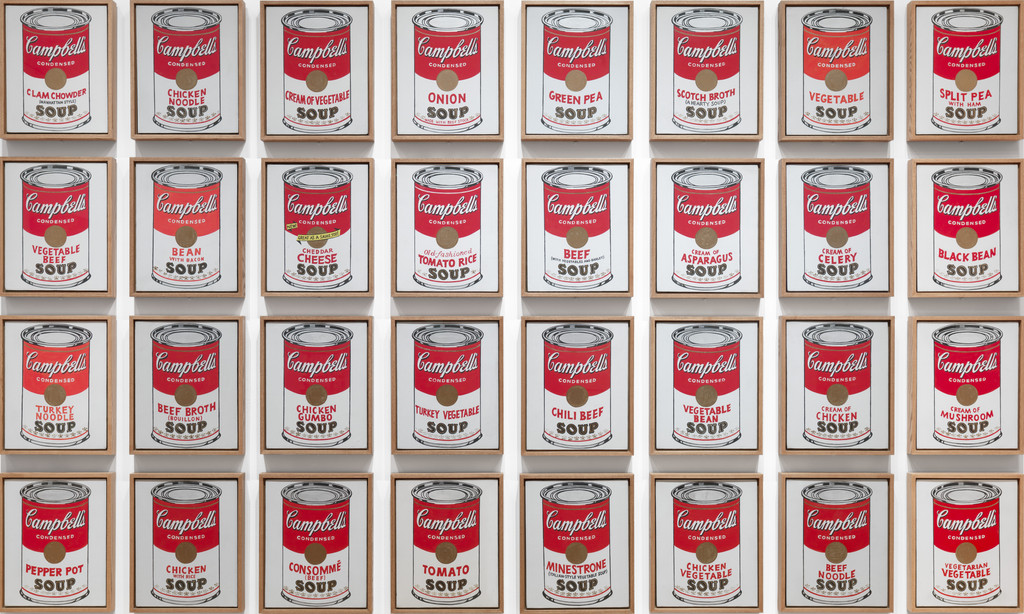
    The Los Angeles dealer Irving Blum, surprised that Warhol had no gallery, offered him a solo show at the Ferus Gallery. Warhol sent 32 canvases, one for each variety of Campbell's soup; the exhibition opened on 9 July 1962 and marked his West Coast debut.

  5. October 1962

    “The New Realists” at the Sidney Janis Gallery

    Invited by the dealer Sidney Janis, Warhol took part in the exhibition The New Realists, showing 200 Soup Cans, Big Campbell's Soup Can 19c (Beef Noodle) and Do It Yourself (Flowers). The show was widely seen as a turning point for the acceptance of Pop art: The New Yorker likened its effect on the New York art world to an “earthquake”.

  6. 6 November 1962

    First solo Pop show in New York

    The filmmaker Emile de Antonio introduced Warhol to Eleanor Ward of the Stable Gallery, who agreed to a show in exchange for a painting of a two-dollar bill; the eighteen new works included Marilyn Monroe Twenty Times and Red Elvis. Michael Fried wrote in Art International that of all the painters working in the service of a popular iconography, Warhol was probably the most single-minded and the most spectacular.

Mehr von Andy Warhol

Alle Werke
A Boy for Meg, Andy Warhol, 1962

A Boy for Meg

1962 · National Gallery of Art

Gold Marilyn Monroe, Andy Warhol, 1962

Gold Marilyn Monroe

1962 · Museum of Modern Art

Campbell's Soup Cans, Andy Warhol, 1962

Campbell's Soup Cans

1962 · Museum of Modern Art

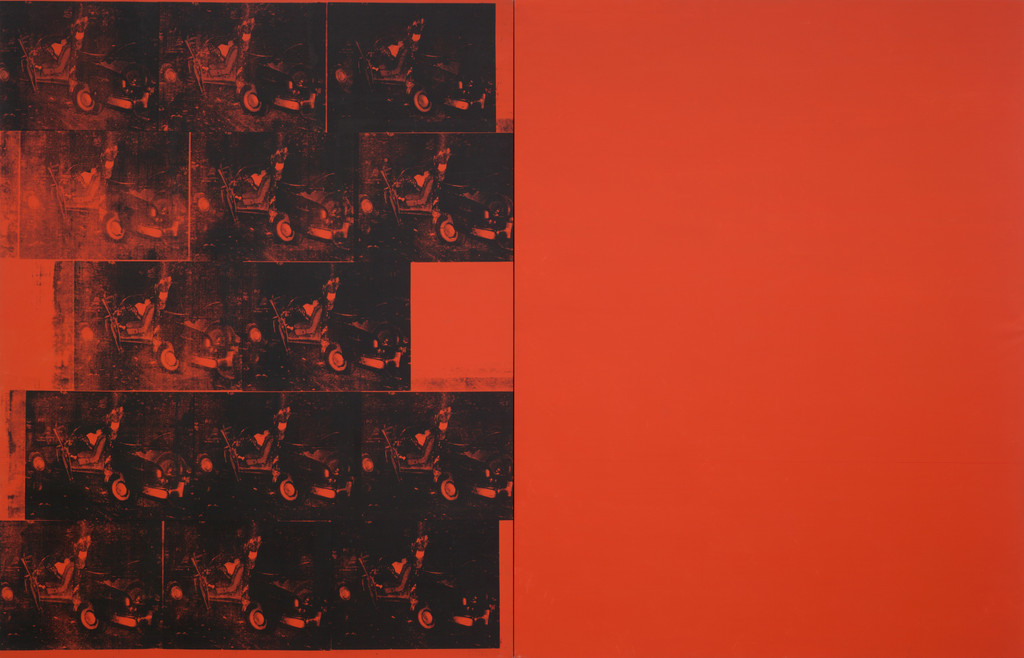
Orange Car Crash Fourteen Times, Andy Warhol, 1963

Orange Car Crash Fourteen Times

1963 · Museum of Modern Art

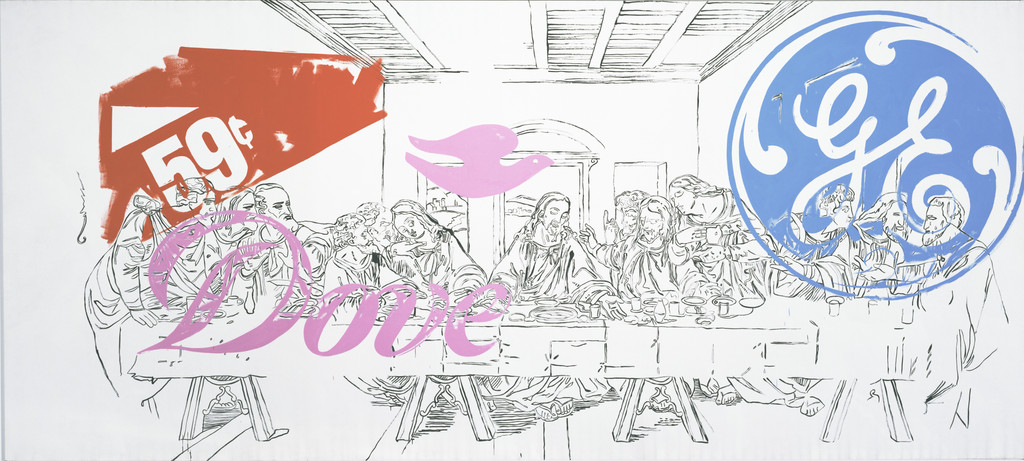
The Last Supper, Andy Warhol, 1986

The Last Supper

1986 · Museum of Modern Art

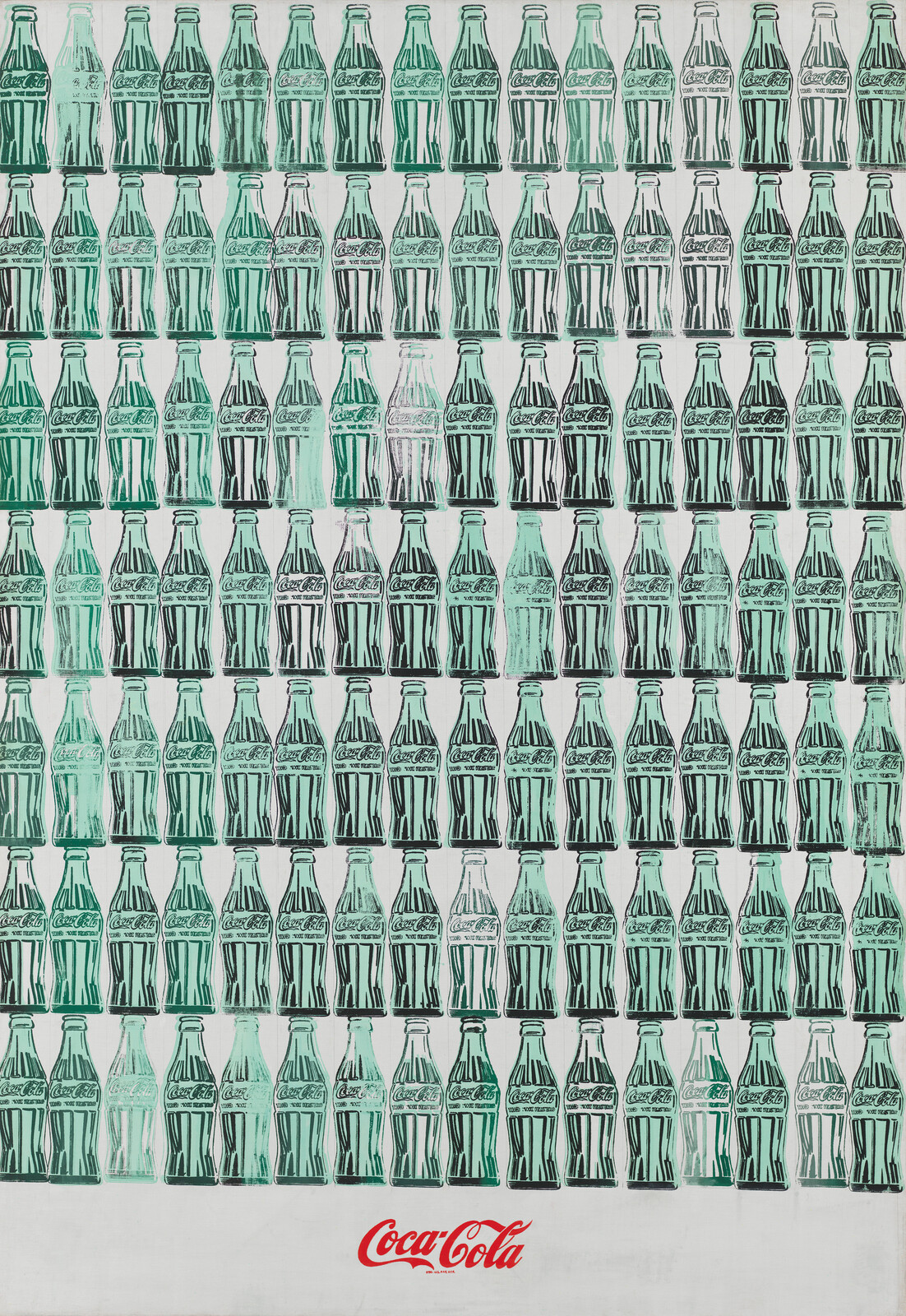
Green Coca-Cola Bottles, Andy Warhol, 1962

Green Coca-Cola Bottles

1962 · Whitney Museum of American Art

Marilyn x 100, Andy Warhol, 1962

Marilyn x 100

1962 · Cleveland Museum of Art

Liz #3 [Early Colored Liz], Andy Warhol, 1963

Liz #3 [Early Colored Liz]

1963 · Art Institute of Chicago

Nachbarn im Haus: Art Institute of Chicago

Museumsseite
The Bedroom, Vincent van Gogh, 1889

Vincent van Gogh

The Bedroom, 1889

A Sunday on La Grande Jatte — 1884, Georges Seurat, 1884–86, border added 1888–89

Georges Seurat

Ein Sonntagnachmittag auf der Insel La Grande Jatte, 1884–86, border added 1888–89

Paris Street; Rainy Day, Gustave Caillebotte, 1877

Gustave Caillebotte

Straße in Paris an einem regnerischen Tag, 1877

Two Sisters (On the Terrace), Pierre-Auguste Renoir, 1881

Pierre-Auguste Renoir

Auf der Terrasse, 1881

The Basket of Apples, Paul Cézanne, c. 1893

Paul Cézanne

The Basket of Apples, c. 1893

Stacks of Wheat (End of Summer), Claude Monet, 1890–91

Claude Monet

Stacks of Wheat (End of Summer), 1890–91

American Gothic, Grant Wood, 1930

Grant Wood

American Gothic, 1930

Nighthawks, Edward Hopper, 1942

Edward Hopper

Nighthawks, 1942