 Johannes VermeerNiederlande, 1632–1675
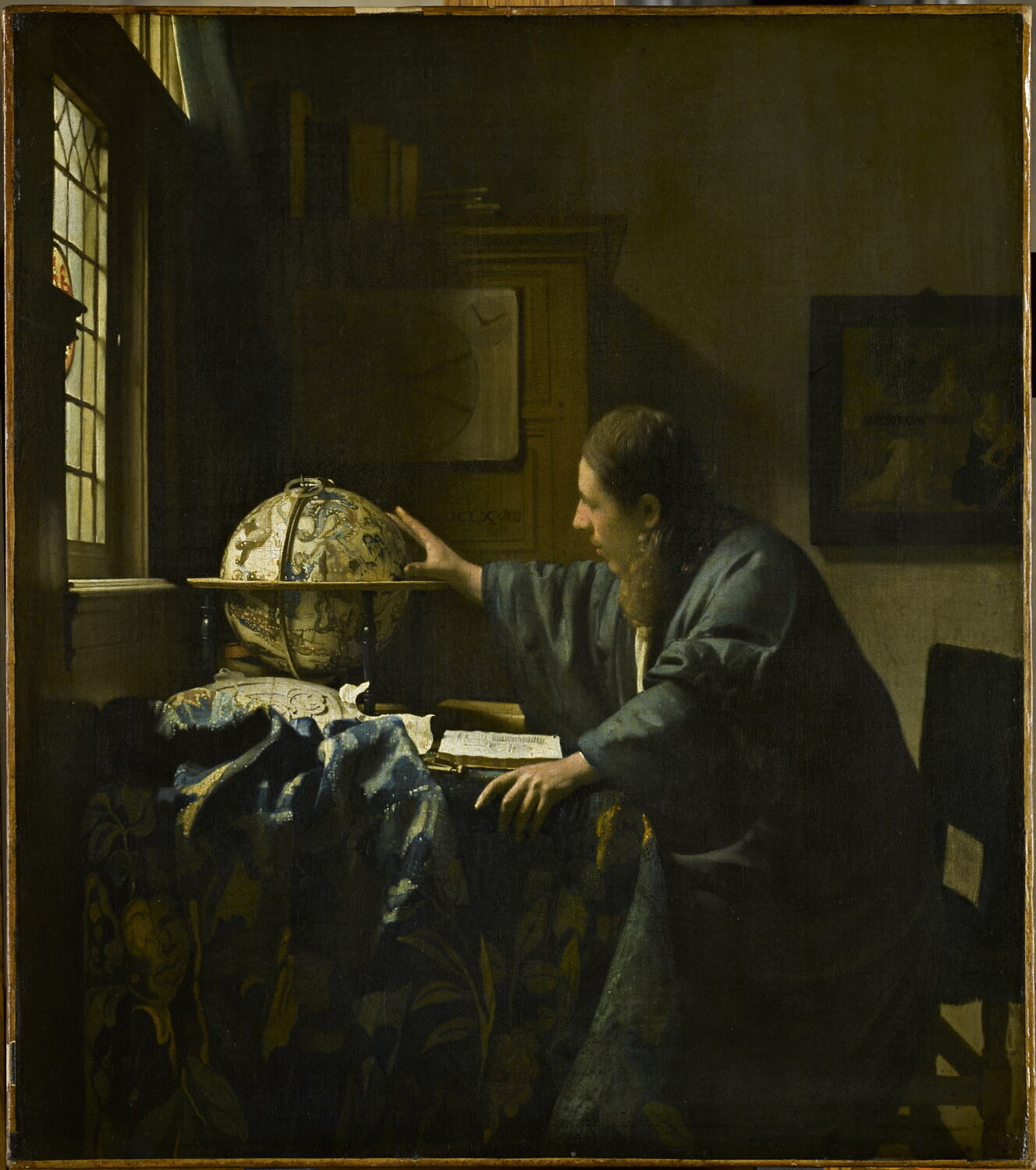
Der Astronom
L'Astronome
Kann ich es sehen?
Ja, derzeit ausgestellt
Wo ist „Der Astronom“ heute? Louvre, Salle 837, Aile Richelieu, Niveau 2, Paris. Ja, derzeit ausgestellt. Geprüft 26. September 2026.

Geschlossen· öffnet um 9:00
Öffentlich ausgestellt.
- Geprüft
- Unverändert seit
- Quelle
- Das Museum
Über das Gemälde
Der Astronom ist ein von Jan Vermeer im Jahre 1668 gemaltes Ölgemälde.
Das kleinformatige Bild zeigt einen Astronomen in seinem Arbeitszimmer und nimmt mit seinem Pendant, dem Gemälde Der Geograph aus dem Frankfurter Städel, eine Sonderstellung in Vermeers Gesamtwerk ein, da von seinen rund 37 erhaltenen Gemälden nur auf diesen beiden die Darstellung eines einzelnen Mannes zu sehen ist.
Das Bild gehört seit 1983 zur Sammlung des Pariser Louvre und ist in der permanenten Ausstellung zu sehen. Seit November 2021 wird es als Leihgabe im Louvre Abu Dhabi ausgestellt.
Angaben
- Inventarnummer
- RF 1983 28
Im Katalog
Quellen
- Louvre
- Bild: Louvre — © 2016 GrandPalaisRmn (musée du Louvre) / Franck Raux
Im Leben von Johannes Vermeer
Das ganze Leben1653–1675 · Wirkungsort
Delft
1653–1675
Patrons: van Ruijven and van Buyten
Pieter van Ruijven and his wife Maria de Knuijt were Vermeer's patrons for the better part of his career: van Ruijven bought much of his output, which kept Vermeer afloat financially but reduced the chances of his fame spreading beyond Delft. The baker Hendrick van Buyten held a couple of his paintings as collateral.
1672
The “Year of Disaster”: war and the collapse of the market
In 1672 the Rampjaar, a severe economic downturn, struck the Dutch Republic after French troops under Louis XIV invaded from the south and troops from Münster and Cologne from the east. Vermeer's sale of a painting that year was his last, and five years passed before circumstances improved.
1672
To The Hague: appraising a collection for the Elector
In 1672 Vermeer, a recognised connoisseur, travelled to The Hague, where together with the painter Jacob Jordaens he appraised Venetian and Roman paintings offered to the Elector of Brandenburg for 30,000 guilders. Before a notary he denied the collection's authenticity and declared it worth no more than a tenth of the asking price.
1675
A sudden death in December 1675
Vermeer's widow wrote to the creditors that during the war he had been forced to sell paintings at a reduced price; falling into despondency, in December 1675 he lost consciousness and died a day and a half later. What exactly happened remains unclear.
1675
Died