 Mikhail Vrubel1856–1910
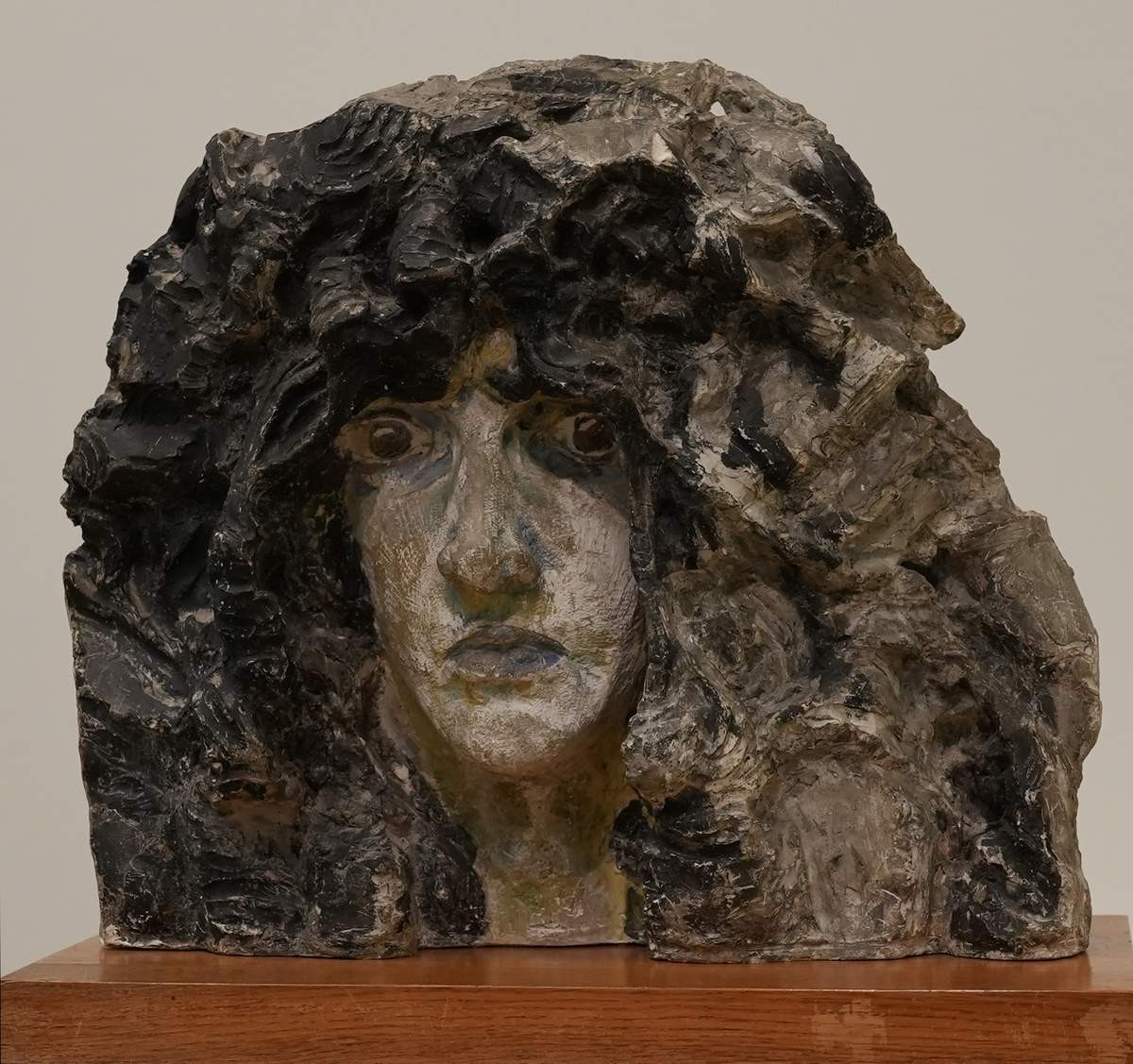
Демон
Kann ich es sehen?
Ja, derzeit ausgestellt
Wo ist „Демон“ heute? Russisches Museum, Korpus Benua, Zal 66, Sankt Petersburg. Ja, derzeit ausgestellt. Geprüft 28. September 2026.

Geschlossen· öffnet morgen um 10:00
Öffentlich ausgestellt.
- Geprüft
- Unverändert seit
- Quelle
- Das Museum
Über die Skulptur
In den Worten des Museums — auf Russisch
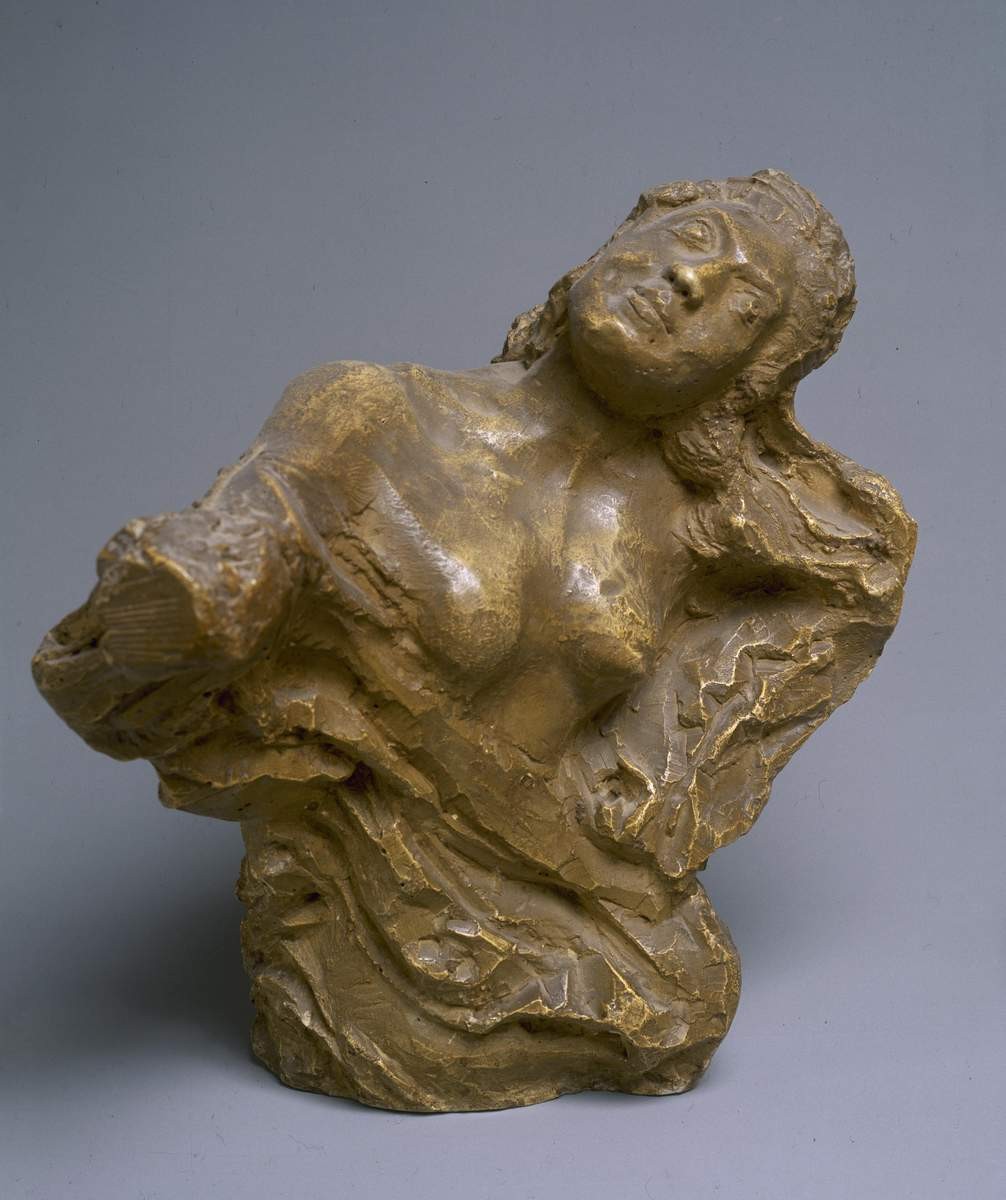
На протяжении ряда лет (с 1887 до середины 1890-х) Врубель вылепил несколько вариантов «Демона» (утрачены). Художник надеялся использовать скульптурную модель «как идеальную натуру» для воплощения в живописи образа «мятущегося человеческого духа». Голова демона из собрания Русского музея, единственная сохранившаяся вариация на эту тему, воспринимается вполне самостоятельным художественным произведением. Врубель активно вводит в скульптуру цвет — прием, которым часто пользуются в начале ХХ века как ваятели, так и живописцы, пробующие свои силы в смежном виде искусства. Елена Карпова // Михаил Врубель из собрания Русского музея. СПб, 2006. С. 296.
Mehr lesen
1894 годом помечена единственная сохранившаяся из множества скульптур — экспрессивная в трактовке образа, полихромная «Голова демона». В ней по-новому и убедительно реализованы идеи, волновавшие Врубеля при создании одноименных иллюстраций к поэме . Герой изображен страдающим, с опаленной душой. Выражение его глаз метко характеризуют слова Б. В. Асафьева: «испуганная мысль». Владимир Круглов. Наследие Михаила Врубеля в Русском музее // Михаил Врубель. СПб, 2006. С. 22.
О реставрации скульптуры, разбитой в 1928 г.
Russisches Museum
Angaben
- Inventarnummer
- Ск-565
Was es zeigt
Im Katalog
Quellen
- Russisches Museum
- Bild: Russisches Museum — © State Russian Museum
Im Leben von Mikhail Vrubel
Das ganze Leben1891–1892
A second journey to Italy
Vrubel accompanied the Mamontovs to Italy as an adviser to the Abramtsevo pottery, but quarrelled with Elizaveta Mamontova and left with Savva Mamontov for Milan, where his half-sister Lilya was studying singing. He spent the winter in Rome, where he was to carry out Mamontov’s commissions — sets for “The Merry Wives of Windsor” and a new curtain for the Private Opera: he lodged with the Svedomsky brothers and later worked in the studio of Alexander Rizzoni.
mid-1890s
With Schechtel on the Morozov mansions
His work for Mamontov secured Vrubel’s reputation in Moscow, and together with Fyodor Schechtel he decorated S. T. Morozov’s mansion on Spiridonovka Street and A. V. Morozov’s house in Podsosensky Lane. His most important sculpture is held to be the “Gothic” group “Robert and the Nuns”, which adorns the staircase lantern of the Morozov mansion.
early 1896
Meeting Nadezhda Zabela
In St Petersburg Vrubel stepped in for the ailing Korovin as designer of Humperdinck’s opera “Hansel and Gretel”, which Mamontov was financing, and at a rehearsal he first heard, then saw, the singer of Gretel — Nadezhda Zabela. Rushing up to her in the interval with the cry “What a lovely voice!”, he proposed almost on the day they met, and later told his sister that had she refused, he would have killed himself on the spot.
22 May 1896
The Academy rejects his Nizhny Novgorod panels
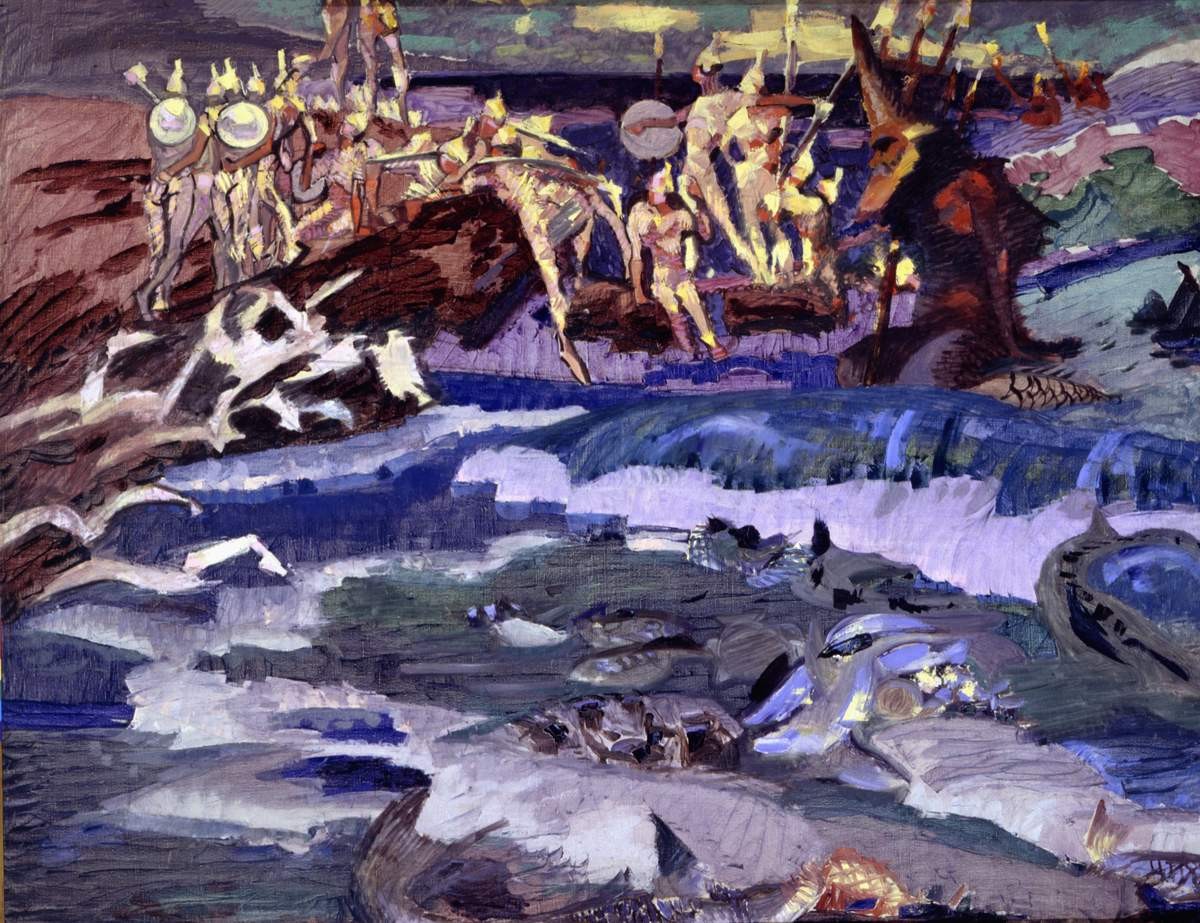
Mamontov secured Vrubel a commission for two huge panels for the art section of the All-Russian Exhibition — “Mikula Selyaninovich” and “The Princess of the Dream”, a hundred square metres in three months. But the academician Albert Benois, in charge of the pavilion, demanded sketches, a telegram went to St Petersburg — “Vrubel’s panels are monstrous, they must be removed” — the Academy’s commission ruled them unfit to show, and on 22 May the works were carried out of the pavilion.
1896
Mamontov’s pavilion for the “rejected” panels
Mamontov bought both panels for 5,000 roubles: Polenov and Korovin finished “Mikula”, Vrubel completed “The Princess of the Dream” in a shed at the Abramtsevo pottery, and in time for the imperial couple’s visit on 15–17 July the canvases were shown in a specially built pavilion signposted “Exhibition of decorative panels by the artist M. A. Vrubel, rejected by the jury of the Imperial Academy of Arts” — the words naming the Academy’s jury soon had to be painted over. A newspaper battle followed: Nikolai Garin-Mikhailovsky offered the first balanced analysis of Vrubel’s art, while Maxim Gorky mocked his panels in five articles.
28 July 1896
Marries Nadezhda Zabela in Geneva
Meeting Zabela’s family went badly — the age gap troubled them (he was 40, she 28), and the bride herself knew that Vrubel drank and squandered money — but on 28 July the couple were married in the Cathedral of the Exaltation of the Holy Cross in Geneva. They spent their honeymoon in a guesthouse in Lucerne, where Vrubel went on working on panels for A. V. Morozov’s Gothic study: by the wedding he was literally penniless and had walked from the station to his bride’s.