 Mikhail Vrubel1856–1910
Богатырь
Kann ich es sehen?
Ja, derzeit ausgestellt
Wo ist „Богатырь“ heute? Russisches Museum, Korpus Benua, Zal 66, Sankt Petersburg. Ja, derzeit ausgestellt. Geprüft 12. Oktober 2026.

Geschlossen· öffnet morgen um 10:00
Öffentlich ausgestellt.
- Geprüft
- Unverändert seit
- Quelle
- Das Museum
Über das Gemälde
In den Worten des Museums — auf Russisch
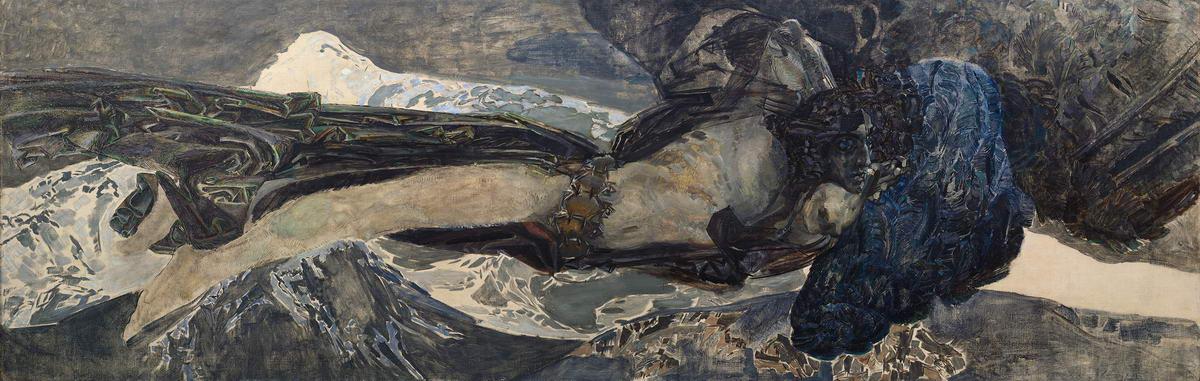
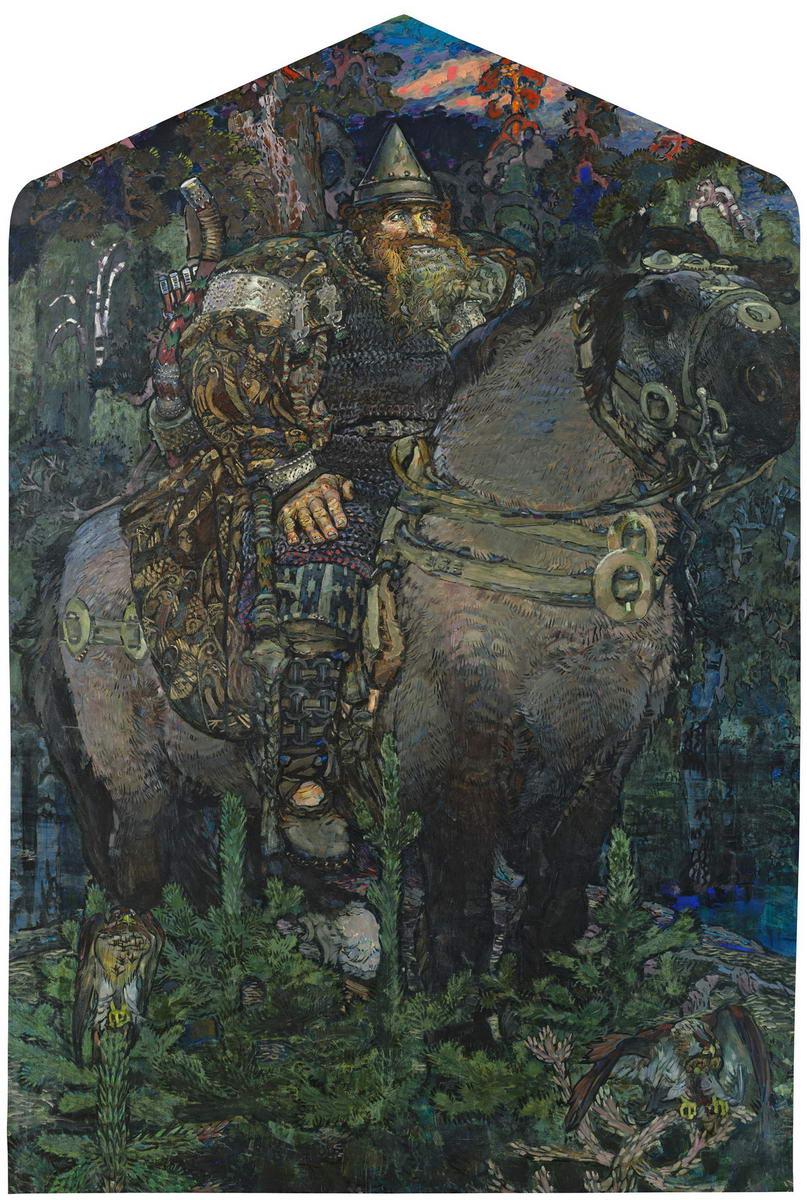
Это произведение явилось прямым продолжением богатырской темы, которая была намечена в панно « Микула Селянинович ». Толчок к работе в этом направлении дали, в частности, картины В. М. Васнецова, которые художник находил «недостаточно былинными», а также творчество композитора Н. А. Римского-Корсакова. Автору удалось создать монументальный эпический образ богатыря как порождения могучих сил природы. Его фигура занимает всю поверхность холста: « Чуть повыше леса стоячего, чуть пониже облака ходячего» . Н. Г. Гарин-Михайловский был поражен « страшно мощной и в то же время инертной фигурой с детски голубыми глазами, меньше всего сознающими эту свою силу и так поразительно выражающими ее ». Картину, вызвавшую сильное неприятие многих современников, называют теперь шедевром живописца наряду с « Паном », « Царевной-Лебедью » и другими работами.
Mehr lesen
Былинная старина влекла художника своей загадочностью, первозданной чистотой и духовным здоровьем. Облик древнего героя в затканной магическими орнаментами одежде на столь же древнем, чутко прислушивающемся коне, неотделим от среды — мрачного леса, обильно населенного доброй и зловещей живностью. Это ощущение, видимо, было еще сильнее до того, как по прихоти первого владельца, Малича, авторский квадратный формат картины был изменен, холст обрезан с трех сторон и вставлен в «готическую» раму с угольным завершением.
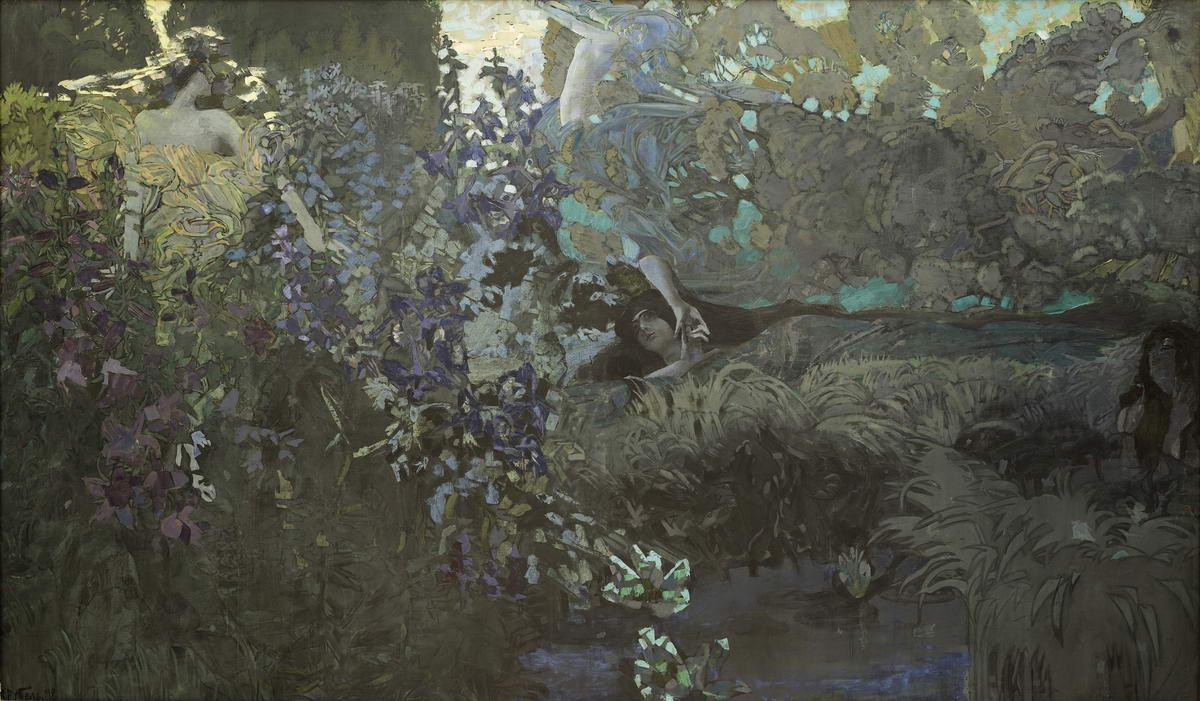
Год разделяет холсты « Утро » и « Богатырь» . Если в первом — блеклые тона, нематериальный цвет, то в «Богатыре» — плотная фактура, насыщенный колорит. «Богатырь» Врубеля — всецело детище «конца столетия», по духу и своей образности. Картина принадлежит «неорусским» поискам в русле стиля модерн, объявшим в конце 1890-х многие сферы культуры. Летом 1897 года Врубель еще «присматривался» к былинам, а в мае 1898 года уже признался Римскому-Корсакову, что под его влиянием « решил посвятить себя исключительно русскому сказочному роду» . Вместе с тем «Богатырь» — характерное проявление нового, символистского мировидения с его интересом к мифологии, к «экзотике» архаических эпох. Владимир Круглов. Наследие Михаила Врубеля в Русском музее // Михаил Врубель. СПб, 2006. С. 19.
В январе 1899 Врубель писал сестре: « Вещь почти окончена и радует меня настолько, что я хочу рискнуть с ней на академическую выставку, если примут. Ведь я аттестован декадентом. Но это недоразумение, и теперешняя моя вещь, мне кажется, достаточно его опровергает ». Панно было высоко оценено Николаем Римским-Корсаковым, мнением которого художник дорожил. Русский музей. От иконы до современности. СПб. 2015. С . 241.
Russisches Museum
Angaben
- Inventarnummer
- Ж-1837
Was es zeigt
Im Katalog
Quellen
- Russisches Museum
- Bild: Russisches Museum — © State Russian Museum
Im Leben von Mikhail Vrubel
Das ganze Lebenearly 1896
Meeting Nadezhda Zabela
In St Petersburg Vrubel stepped in for the ailing Korovin as designer of Humperdinck’s opera “Hansel and Gretel”, which Mamontov was financing, and at a rehearsal he first heard, then saw, the singer of Gretel — Nadezhda Zabela. Rushing up to her in the interval with the cry “What a lovely voice!”, he proposed almost on the day they met, and later told his sister that had she refused, he would have killed himself on the spot.
22 May 1896
The Academy rejects his Nizhny Novgorod panels
Mamontov secured Vrubel a commission for two huge panels for the art section of the All-Russian Exhibition — “Mikula Selyaninovich” and “The Princess of the Dream”, a hundred square metres in three months. But the academician Albert Benois, in charge of the pavilion, demanded sketches, a telegram went to St Petersburg — “Vrubel’s panels are monstrous, they must be removed” — the Academy’s commission ruled them unfit to show, and on 22 May the works were carried out of the pavilion.
1896
Mamontov’s pavilion for the “rejected” panels
Mamontov bought both panels for 5,000 roubles: Polenov and Korovin finished “Mikula”, Vrubel completed “The Princess of the Dream” in a shed at the Abramtsevo pottery, and in time for the imperial couple’s visit on 15–17 July the canvases were shown in a specially built pavilion signposted “Exhibition of decorative panels by the artist M. A. Vrubel, rejected by the jury of the Imperial Academy of Arts” — the words naming the Academy’s jury soon had to be painted over. A newspaper battle followed: Nikolai Garin-Mikhailovsky offered the first balanced analysis of Vrubel’s art, while Maxim Gorky mocked his panels in five articles.
28 July 1896
Marries Nadezhda Zabela in Geneva
Meeting Zabela’s family went badly — the age gap troubled them (he was 40, she 28), and the bride herself knew that Vrubel drank and squandered money — but on 28 July the couple were married in the Cathedral of the Exaltation of the Holy Cross in Geneva. They spent their honeymoon in a guesthouse in Lucerne, where Vrubel went on working on panels for A. V. Morozov’s Gothic study: by the wedding he was literally penniless and had walked from the station to his bride’s.
summer 1898
First symptoms of illness
During a summer stay in Ukraine the first symptoms of his future illness appeared: his migraines grew so severe that he took phenacetin in huge quantities — up to 25 grains or more, according to his sister-in-law. A previously unknown irritability set in too, especially when someone disagreed with his opinion of a work of art.
1898
“Morning” at Diaghilev’s exhibition
In St Petersburg Ilya Repin advised Vrubel not to destroy his panel “Morning”, which a client had turned down, but to show it at an exhibition. So the canvas went into Sergei Diaghilev’s exhibition of Russian and Finnish artists at the museum of the Stieglitz School.