ART WIKI32.963 ausgestellt
KarteSammlungKünstlerMuseenAusstellungenJournal
Anmelden

ART WIKI

Wo das Meisterwerk hängt und wann man vorgelassen wird.

Sammlungen: Art Institute of Chicago, Cleveland Museum of Art, Eremitage, Getty Villa, Harvard Art Museums, Hirshhorn Museum and Sculpture Garden, J. Paul Getty Museum, Louvre, Metropolitan Museum of Art, Minneapolis Institute of Art, Museum of Modern Art, National Gallery of Art, National Museum of Asian Art, National Portrait Gallery, Puschkin-Museum, Rijksmuseum Amsterdam, Russisches Museum, Smithsonian American Art Museum, Statens Museum for Kunst, Tretjakow-Galerie, Victoria and Albert Museum, Whitney Museum of American Art, Staatskatalog des Museumsfonds Russlands (274 Museen), Europeana (19 Museen), Wikidata (6 Museen), Paris Musées (12 Museen) und Joconde, die Museumsdatenbank des französischen Kulturministeriums (495 Museen). Die Bilder gehören ihren Rechteinhabern.

Rubriken

  • Karte
  • Suche
  • Sammlung
  • Meisterwerke
  • Jetzt ausgestellt
  • Künstler

Mehr

  • Museen & Galerien
  • Ausstellungen
  • Journal
  • Woher die Daten stammen
  • Datenschutz & Cookies
StartseiteKarteKatalog
  1. Sammlung/
  2. Metropolitan Museum of Art/
  3. A Matador
A Matador, Edouard Manet, 1866–67
Édouard Manet, PorträtÉdouard ManetFrankreich, 1832–1883

A Matador

1866–67 · Painting

Über das Gemälde

The Matador Saluting (French - Le Matador saluant ) is an oil-on-canvas painting produced by Édouard Manet between 1866 and 1867. Its precise date is unclear – Charles S. Moffett dates the first definite reference to the work to 1867, at an exhibition devoted to Manet's works at the pavillon de l'Alma.

Étienne Moreau-Nélaton and Adolphe Tabarant agree that Manet's brother Eugène was the model for the work. It was one of the works by Manet which were refused by the Paris Salon of 1866. The prefect allowed the artist to exhibit these works in his studio instead so long as he did not open the doors to the studio too wide. It shows a matador or torero receiving the crowd's applause after killing a bull, though the work's first buyer Théodore Duret instead argued that it shows a matador asking the crowd's permission to kill the bull.

Weiterlesen

Unlike the fantasy of Miss V Dressed as a Bullfighter, The Matador Saluting was produced after the artist's 1865 trip to Spain and shows his admiration for the country and its art. Charles S. Moffet argues that the work shows the inspiration Manet drew from the compositions and palette of Diego Velázquez and Francisco de Zurbarán. It was Manet's first large format work. Louisine Havemeyer hesitated before buying the work from Duret, fearing the painting's size would not be convenient for her husband, but eventually decided to buy it after Mary Cassatt affirmed that "It was exactly the format Manet wanted". In fact, Henry Osborne Havemeyer became obsessed with large format works and also bought Young Man Dressed as a Majo, another work from the artist's Spanish period. The two works were left to the Metropolitan Museum of Art in New York in 1929. Miss V Dressed as a Bullfighter is also there.

Wikipedia · CC BY-SA

Angaben

1866–67 · mit 34 Jahren
18321883
Inventarnummer
29.100.52

Derweil im Leben von Édouard Manet

Das ganze Leben
  1. 1865

    “Olympia” at the Salon: a scandal

    In 1865 the Salon accepted “Olympia”, and the frank depiction of a self-assured prostitute created a scandal; according to Antonin Proust, only the precautions taken by the administration prevented the painting from being punctured and torn. The popular press caricatured it, while the avant-garde, including Courbet, Cézanne and Monet, championed it.

  2. after 1865

    Café Guerbois and the Batignolles group

    After returning from Spain Manet became a regular at the Café Guerbois in the Batignolles quarter, where Fantin-Latour, Whistler, Duranty, Degas, Renoir, Monet and Pissarro gathered, with Émile Zola as Manet's ardent defender. After harsh reproaches from Duranty, Manet challenged him to a duel and wounded him, but they made up and remained good friends until Manet's death.

  3. 1865

    Flight to Spain: El Greco, Velázquez, Goya

    The persecution after “Olympia” forced Manet to flee, almost literally, to Spain, where he spent his time to good purpose, getting to know the works of El Greco, Velázquez and Goya and finding in them a justification of his own aesthetic taste.

  4. 1867

    His own pavilion near the Pont de l'Alma

    In 1867, during the World's Fair in Paris, Manet set up his own pavilion near the Pont de l'Alma and showed fifty of his best works of the past ten years. Possibly this step led to his works being accepted at the next two Salons.

  5. 1867

Mehr von Édouard Manet

Alle Werke

Im selben Saal · Gallery 810, Metropolitan Museum of Art

Museumsseite

Zum selben Thema · Mann

Alle Werke zum Thema

Zola defends Manet in print

In 1867 Émile Zola, who supported Manet publicly in the press, wrote that the public was not accustomed to such simple and direct translations of reality and that this luminous and serious painting interprets nature with a gentle brutality.

  • 1868

    Friendship with Berthe Morisot

    In 1868 Manet became a friend and colleague of Berthe Morisot; she is credited with convincing him to attempt plein air painting, to which Camille Corot had introduced her. Through Morisot, Manet became friends with Degas, Monet, Renoir, Sisley, Cézanne and Pissarro.

  • Darf man es sehen?

    Ja, es empfängt Besucher

    Metropolitan Museum of Art

    New York City, Vereinigte Staaten

    Saal810

    Öffentlich ausgestellt. Wer dafür bürgt, steht unten.

    Geprüft
    vor 3 Tagen
    Unverändert seit
    26. Sept. 2026
    Quelle
    Das Museum
    Auf der KarteMuseumsseite

    Was es zeigt

    MannPorträt

    Im Katalog

    GemäldeÖlFranzösische MalereiRealismusImpressionismus19. Jahrhundert

    Quellen

    • Metropolitan Museum of Art
    • Bild: Metropolitan Museum of Art — Open Access (CC0)
    The Spanish Singer, Edouard Manet, 1860

    Spanischer Sänger

    1860 · Metropolitan Museum of Art

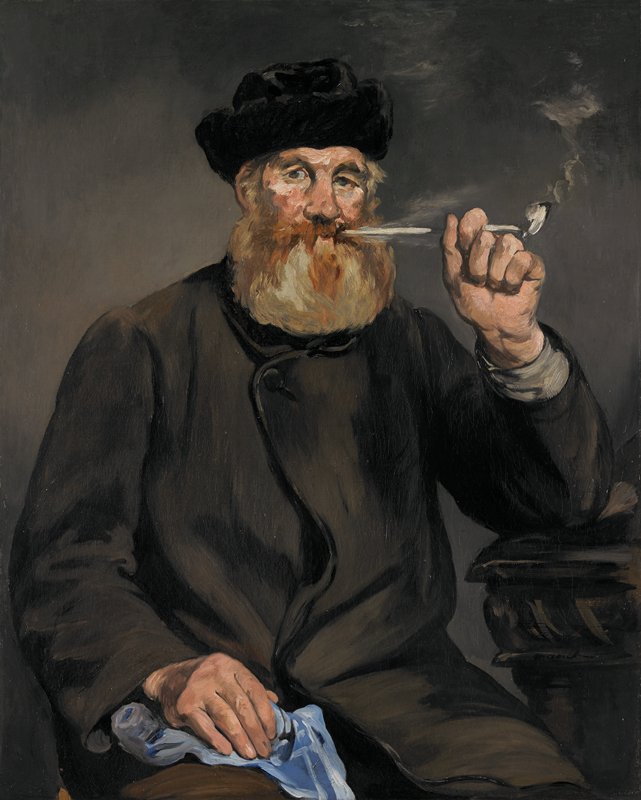
    The Smoker, Édouard Manet, 1866

    The Smoker

    1866 · Minneapolis Institute of Art

    Young Lady in 1866, Edouard Manet, 1866

    Young Lady in 1866

    1866 · Metropolitan Museum of Art

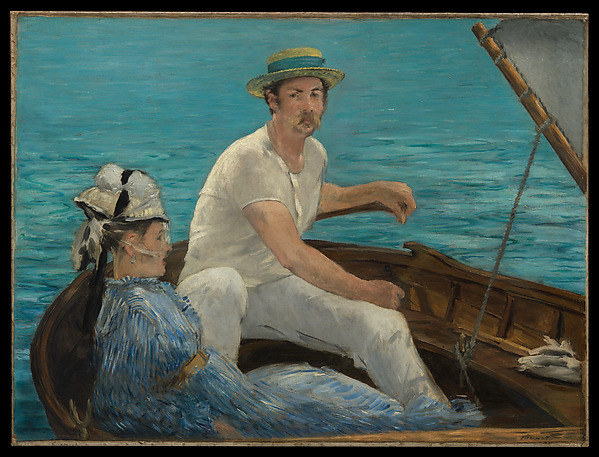
    Boating, Edouard Manet, 1874

    Im Boot

    1874 · Metropolitan Museum of Art

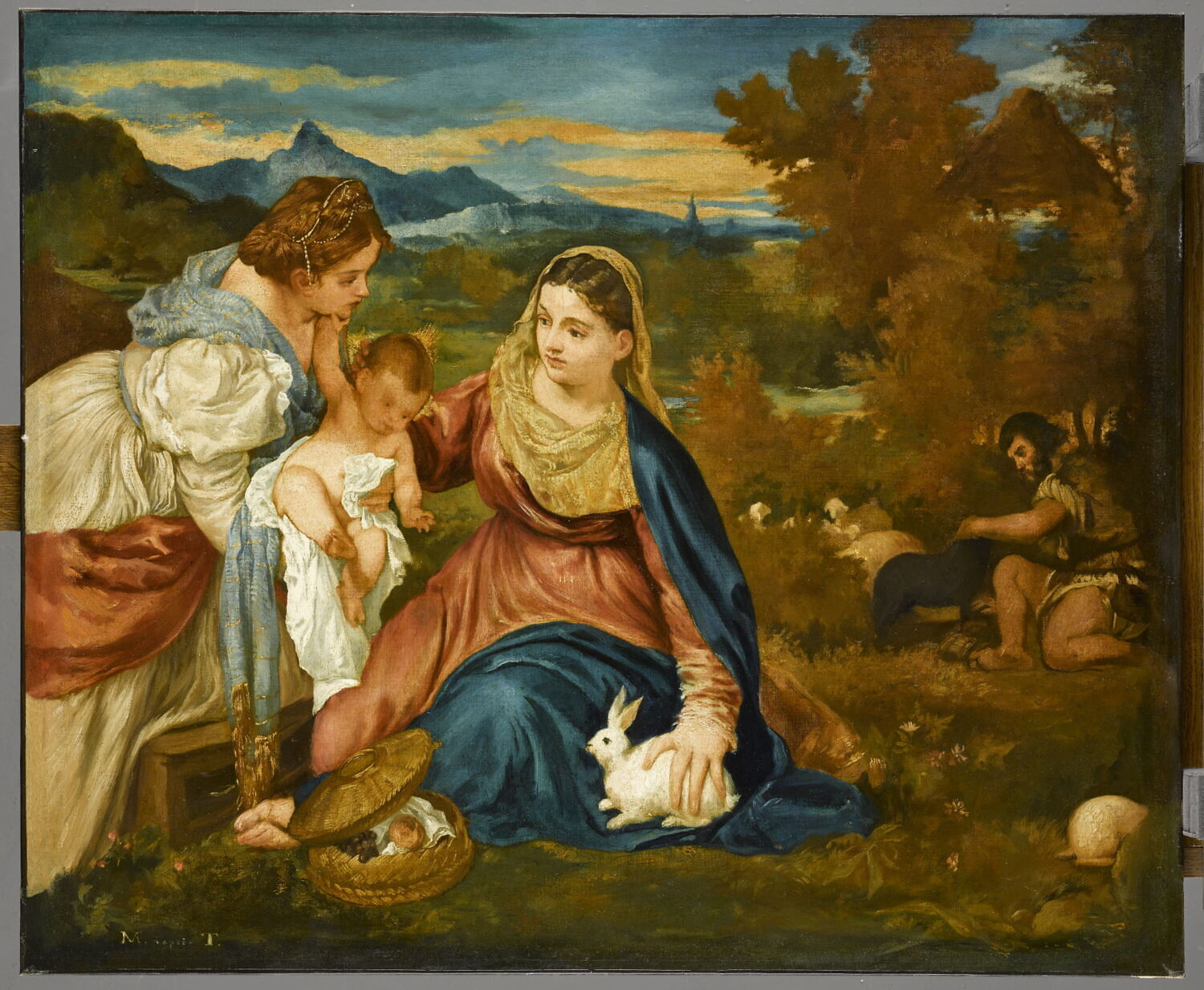
    La Vierge au lapin, Manet, Édouard, Milieu du XIXe siècle (1840 - 1860)

    La Vierge au lapin

    Milieu du XIXe siècle (1840 - 1860) · Louvre

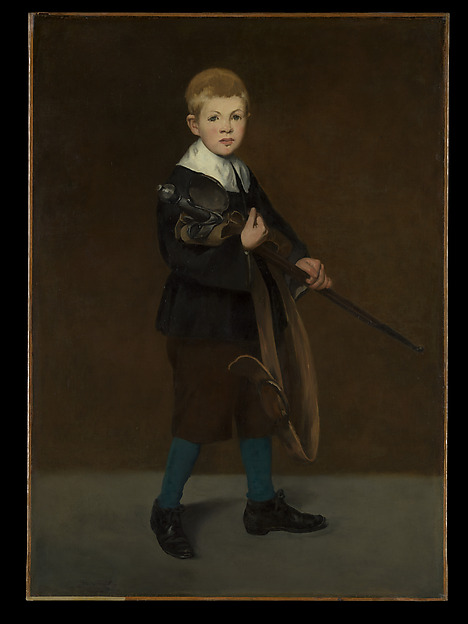
    Boy with a Sword, Edouard Manet, 1861

    Knabe mit Schwert

    1861 · Metropolitan Museum of Art

    Portrait of Madame Brunet, Édouard Manet, about 1861–1863, reworked by 1867

    Portrait of Madame Brunet

    about 1861–1863, reworked by 1867 · J. Paul Getty Museum

    The Old Musician, Edouard Manet, 1862

    Der alte Musikant

    1862 · National Gallery of Art

    Young Lady in 1866, Edouard Manet, 1866

    Édouard Manet

    Young Lady in 1866, 1866

    The Spanish Singer, Edouard Manet, 1860

    Édouard Manet

    Spanischer Sänger, 1860

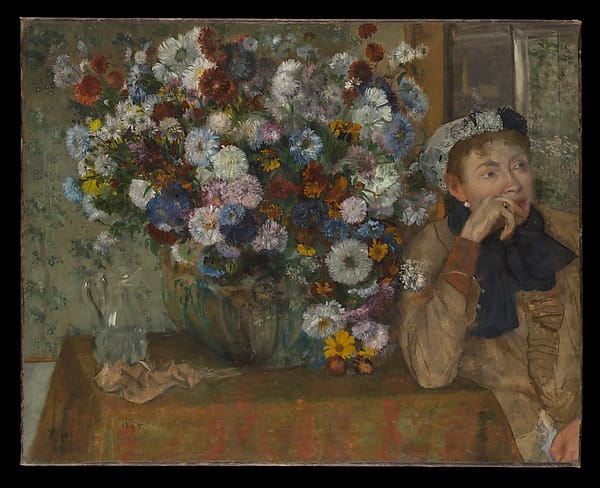
    A Woman Seated beside a Vase of Flowers (Madame Paul Valpinçon?), Edgar Degas, 1865

    Edgar Degas

    A Woman Seated beside a Vase of Flowers (Madame Paul Valpinçon?), 1865

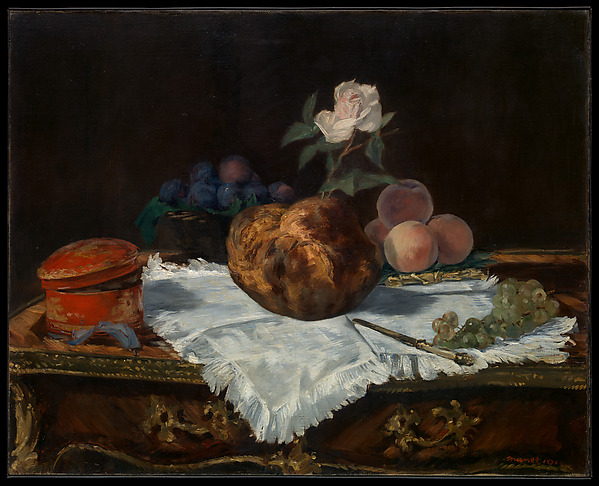
    The Brioche, Edouard Manet, 1870

    Édouard Manet

    The Brioche, 1870

    The Funeral, Edouard Manet, ca. 1867

    Édouard Manet

    The Funeral, ca. 1867

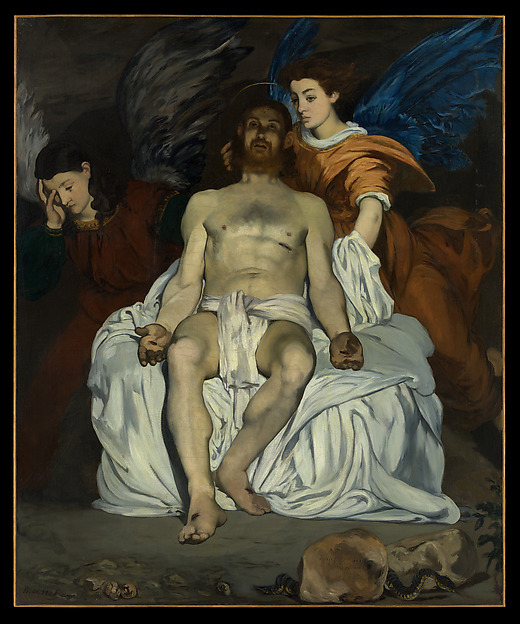
    The Dead Christ with Angels, Edouard Manet, 1864

    Édouard Manet

    The Dead Christ with Angels, 1864

    Young Man in the Costume of a Majo, Edouard Manet, 1863

    Édouard Manet

    Young Man in the Costume of a Majo, 1863

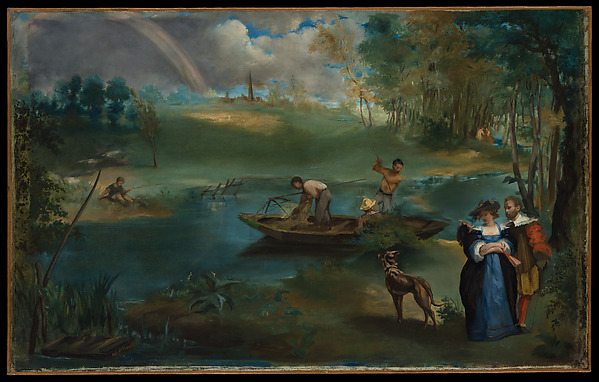
    Fishing, Edouard Manet, ca. 1862–63

    Édouard Manet

    Fishing, ca. 1862–63

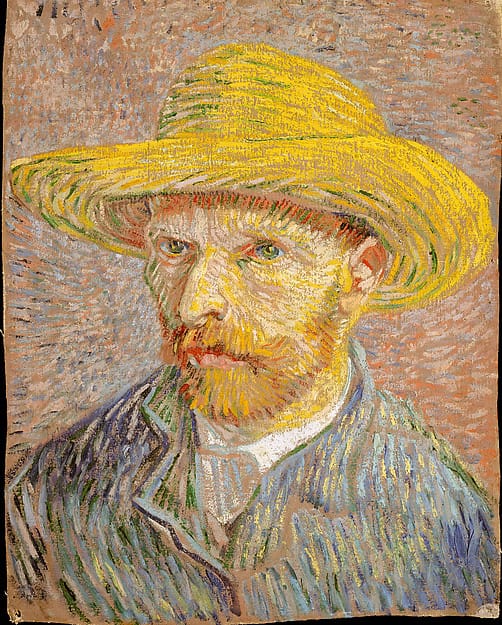
    Self-Portrait with a Straw Hat (obverse: The Potato Peeler), Vincent van Gogh, 1887

    Vincent van Gogh

    Self-Portrait with a Straw Hat (obverse: The Potato Peeler), 1887

    Metropolitan Museum of Art

    Garden at Sainte-Adresse, Claude Monet, 1867

    Claude Monet

    Garten in Sainte-Adresse, 1867

    Metropolitan Museum of Art

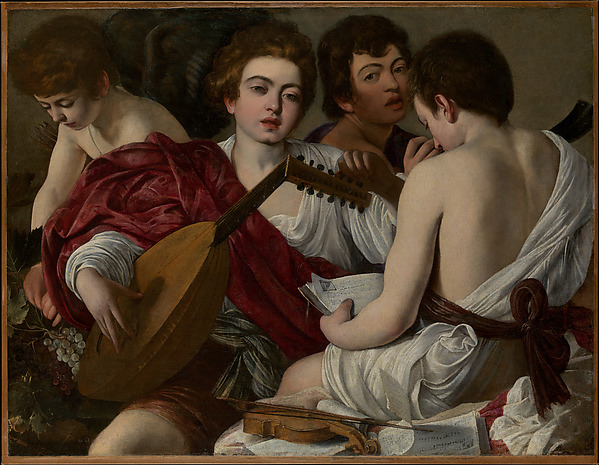
    The Musicians, Caravaggio, 1597

    Caravaggio

    Die Musiker, 1597

    Metropolitan Museum of Art

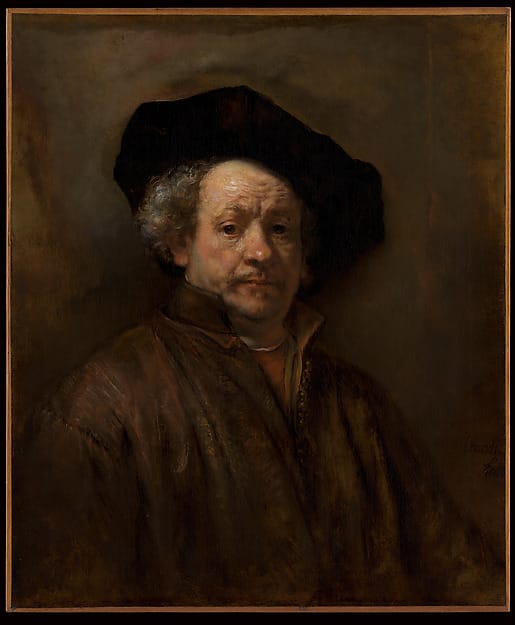
    Self-Portrait, Rembrandt van Rijn, 1660

    Rembrandt van Rijn

    Self-Portrait, 1660

    Metropolitan Museum of Art

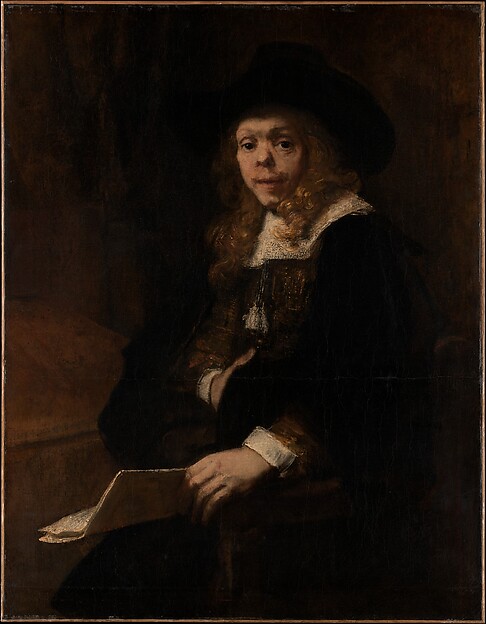
    Portrait of Gerard de Lairesse, Rembrandt van Rijn, 1665–67

    Rembrandt van Rijn

    Portrait of Gerard de Lairesse, 1665–67

    Metropolitan Museum of Art

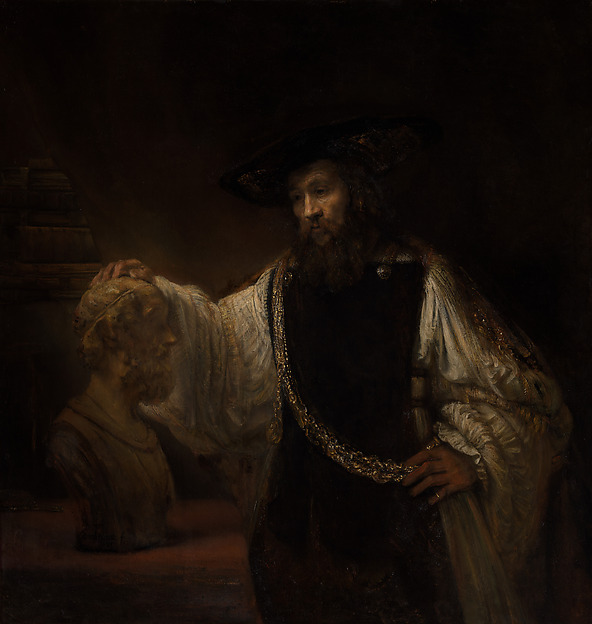
    Aristotle with a Bust of Homer, Rembrandt, 1653

    Rembrandt van Rijn

    Aristoteles mit der Büste Homers, 1653

    Metropolitan Museum of Art

    Young Sailor II, Henri Matisse, 1906

    Henri Matisse

    Young Sailor II, 1906

    Metropolitan Museum of Art

    Rubens, Helena Fourment (1614–1673), and Their Son Frans (1633–1678), Peter Paul Rubens, ca. 1635

    Peter Paul Rubens

    Rubens, Helena Fourment (1614–1673), and Their Son Frans (1633–1678), ca. 1635

    Metropolitan Museum of Art