City guide
Art in Amiens: El Greco, Frans Hals and Fragonard, from the Musée de Picardie to the Cathedral
A museum financed through lotteries holds a preacher who fought the theatre and a stranger who may never recover his name. Across town, blue dye helped pay for a Gothic cathedral.
2. november 2026 · 7 min. læsning · ART WIKI’s redaktion
A lottery ticket helped build the palace of art in Amiens. In the 1850s, a local antiquarian society with about fifty members and very little money secured permission to organise four lotteries for a museum. The ambition was out of proportion to its resources. Before this, part of the collection occupied a cramped annexe to the drawing school. The building that followed borrowed the architectural language of Napoleon III’s Louvre. It gave paintings the address their advocates believed they deserved.
Let that improbable building campaign frame a day divided between the Musée de Picardie and the cathedral. El Greco’s sitter still resists attempts to establish his identity. Hals’s preacher, by contrast, left a record of his campaign against a play. After those two encounters, Fragonard gives us a household preoccupied with a baby. The cathedral changes the scale of attention. Its building campaign depended partly on a plant that supplied the city’s textile trade with blue dye.
How a local collection acquired international company
Royal pictures arrived in Amiens in 1802 to decorate the town hall for the peace treaty with England. Later, collections from the drawing school and the antiquarian society came together with other holdings. The museum did not emerge from one princely collection preserved intact. Its contents accumulated through civic projects, state transfers and private decisions. The Lavalard donation brought 250 paintings in 1894, substantially enlarging the range of foreign painting alongside French eighteenth-century art. A regional museum could suddenly contain several quite different histories of looking.
The façade’s confidence is worth keeping in mind when the paintings become intimate. A museum built to make a public statement can also protect an encounter with a hand, a face or a patch of cloth. Resist the temptation to give every picture the same hurried glance. Choose a small group and allow the building to remain part of the visit, rather than treating the architecture as an entrance procedure to finish before the art begins.
El Greco’s sitter refuses a settled name
An inscription on the back of El Greco’s Portrait of a Man, possibly Alonso de Herrera offers a name without resolving the identity. Alonso de Herrera was already attached to the picture at the Pereire sale in 1872. Scholars have proposed different men, including a painter from Segovia and a Toledo magistrate; another reading took the books and raised hand as signs of a learned speaker. The question mark belongs in the title. It prevents a plausible suggestion from hardening into a biography.
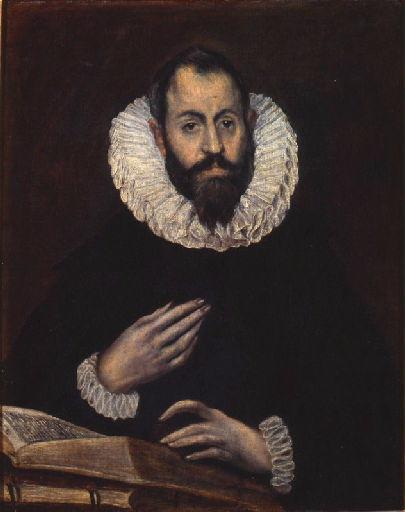
Around 1600, El Greco made this restrained arrangement of dark clothing, a white ruff and a face emerging above it. The hand interrupts the stillness. Try covering it in a reproduction and then restoring it: the man changes from someone posed for inspection into someone who might be making a point. The books can supply a claim to learning, but they do not tell us what he is saying. His painted presence survives more securely than the words or circumstances of the sitting.
The portrait entered the museum through the Lavalard brothers in 1890, before the larger donation recorded in the collection’s history. That small chronological wrinkle is a reminder that gifts can arrive in stages. It also explains why reading a label as a complete life story rarely works. The acquisition tells us how a Spanish portrait reached Amiens; the sitter’s raised hand still leaves the conversation unfinished. Carry that gesture in mind when looking at the next man with a book.
A preacher, a forbidden play and an insult to Hals
Herman Langelius did not merely disapprove of the theatre in private. The Amsterdam preacher campaigned against Joost van den Vondel’s tragedy Lucifer, seeking to stop performances and suppress printed copies. In Frans Hals’s Portrait of Herman Langelius, painted in 1660, the book is held firmly, with a finger keeping the place. The white collar sits rigidly above the dark clothing. Knowing the campaign against Vondel gives that grip a sharper context, though a painted expression alone cannot establish a person’s character.
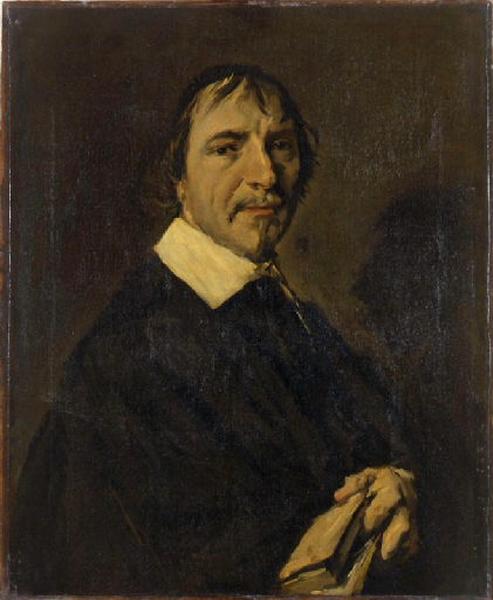
The painting itself attracted an attack. In 1660 Herman Frederik Waterloos mocked the elderly Hals’s eyes and hand as inadequate to represent the preacher’s learning. Read carefully, this is not a medical report on a failing painter. Praising a sitter by declaring his portrait insufficient was an established literary device, as modern scholarship points out. It remains an uncomfortable little episode: the qualities that make Hals’s late brushwork worth examining could also give a contemporary writer material for an insult.
Move your attention between the face and the strokes that construct it. There is no obligation to choose between seeing a person and seeing paint. Hals lets the two readings coexist, and the contrast with El Greco is more useful than a contest over who painted the better portrait. One hand seems to open a discussion; the other guards a place in a text. Neither man needs a bright costume or an elaborate setting to occupy the viewer’s attention.
Fragonard makes the baby the centre of the room
The household in Fragonard’s The Cradle has something else to attend to. Children bend towards the newborn, adults gather nearby, and a red covering catches the eye among the quieter colours. No grand public action takes place. Dating from 1760–1765, the picture gives an ordinary family moment enough weight to sustain a painting. After the two adult men and their books, the small child changes the direction of everyone’s gaze.
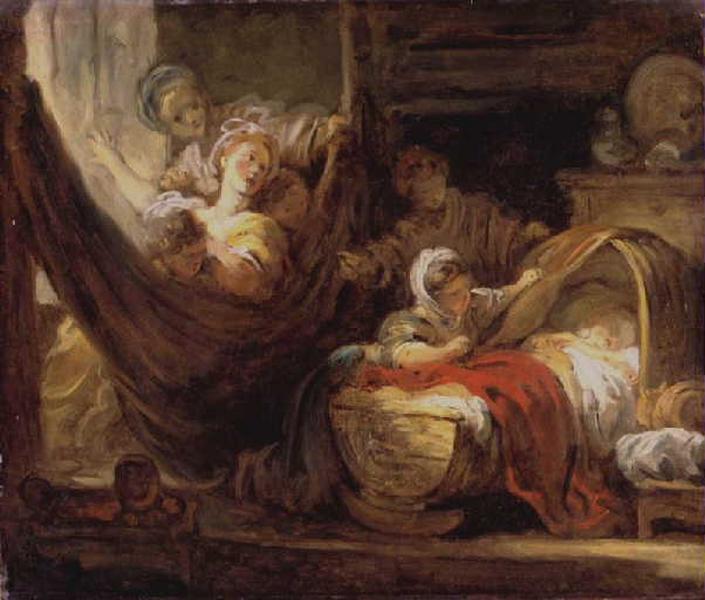
Fragonard admired Rembrandt, and the warm light against shadow here belongs to that conversation with Dutch painting. His brushwork could look too close to a sketch for viewers who expected a carefully smoothed finish. The subject also met a growing eighteenth-century interest in early childhood. Avoid turning that history into a claim that earlier parents felt nothing for their children. What changed was the attention writers and painters were prepared to give childhood as a subject in its own right.
The cathedral’s blue begins in the fields
A fire destroyed the earlier cathedral in 1218; rebuilding began in 1220. Textile wealth helped pay for the new church, including the trade in woad, called waide in Picardy, whose leaves supplied blue dye. The connection is pleasingly material. A colour worn on cloth helped finance a building of stone. Instead of approaching the cathedral only as an exercise in height, think about the labour and commerce that made such a construction possible, then follow the interior’s successive levels upwards.
Colour returned to the cathedral’s history during laser cleaning in the 1990s, when remnants of medieval paint were revealed on the western façade. Pale stone is therefore only one stage in the building’s appearance. The discovery prompted arguments over preserving traces or attempting reconstruction. It also makes an afternoon after the museum less of a change of subject than it seems. Pigment, surfaces and the choices of restorers continue to matter after the picture frames have been left behind.
Arrange the museum visit first and leave an unhurried interval for the cathedral, rather than using the church as something to squeeze in before departure. Ask the museum about the three named paintings when fixing your date: our records establish their collection but leave their current display status unresolved. If attention starts to fade, return to one pair of hands instead of adding another dozen pictures. El Greco’s open gesture and Langelius’s finger in the book are enough to hold a conversation on the journey home.
På forsiden: Portrait d'homme (Alonso de Herrera ?) — El Greco. © Jeanneteau Marc; Ministère de la Culture (France), base Joconde
Mere at læse
Art city by city →City guide
Art in Le Mans: Philippe de Champaigne at the Musée de Tessé, the Cathedral and Roman Walls
A tulip, a skull and an hourglass ask for more time than their little panel seems to need. Begin at Tessé, then follow a royal painting’s journey and a cathedral that crossed the city wall.
City guide
Art in Urbino: Raphael, Piero della Francesca and Paolo Uccello in the Ducal Palace
Two paintings survived a theft and a sale staged by undercover police. Back in Urbino’s story, they lead from a woman without a name to a room full of daylight and a troubling Renaissance legend.
City guide
Art in Castres: Goya, a Bishop’s Palace and the Houses Along the Agout
A royal meeting with an empty chair and a customer holding his own name give Castres an unexpected Spanish history. Follow Goya from a family bequest to the working houses along the river.