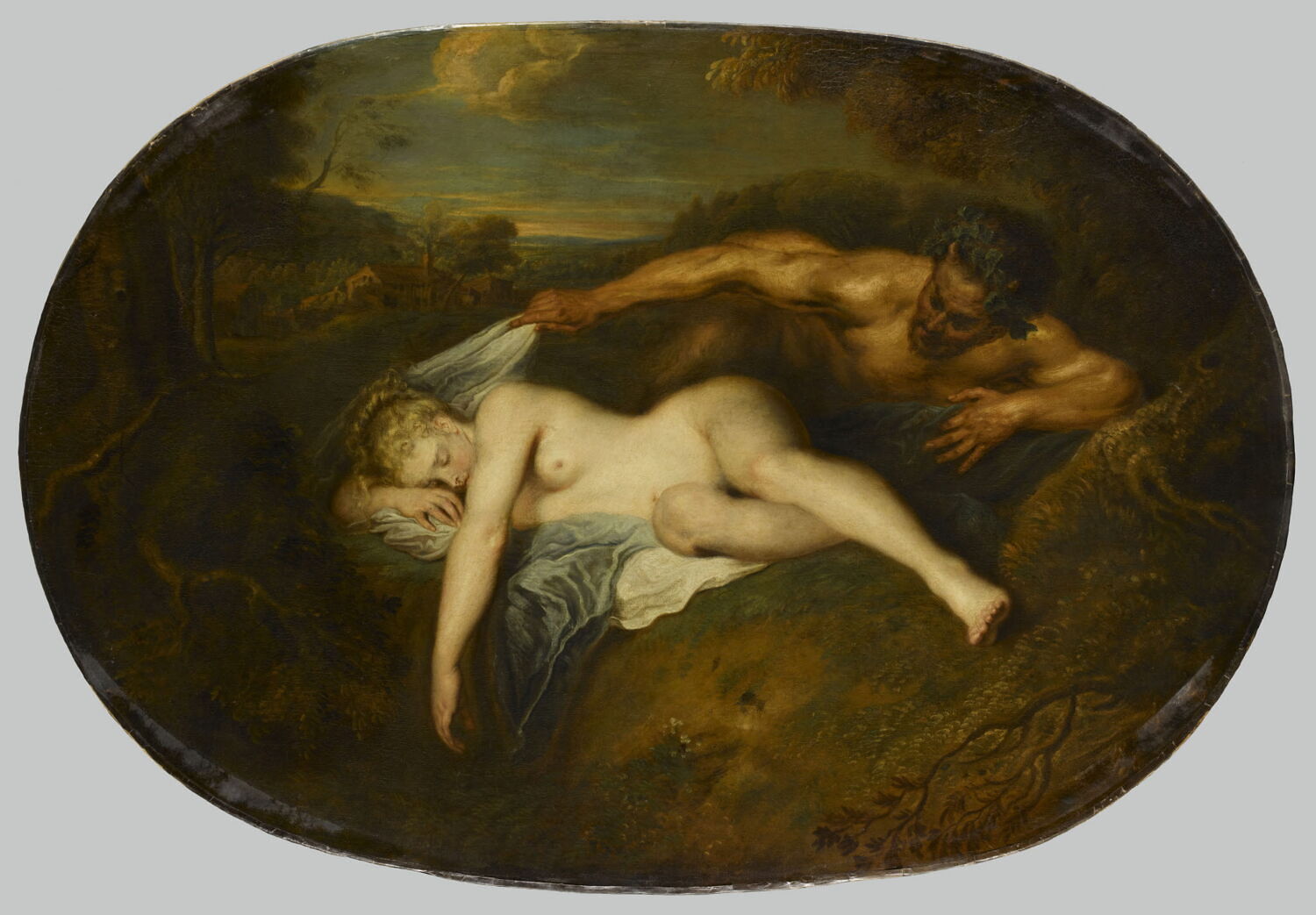
Jean-Antoine WatteauFrankrig, 1684–1721
Vrouw met sluier
Kan det ses?
Ukendt
Hvor er »Vrouw met sluier« i dag? Samling: Rijksmuseum Amsterdam, Amsterdam. Ukendt.

Amsterdam, Holland
Ejeren er kendt; om værket er udstillet i dag, vides ikke.
- Kilde
- Museet
Om værket
Med museets ord — på nederlandsk
Uit het verzamelaarsmerk rechtsonder kan worden afgeleid dat de tekening van Watteau ooit deel uitmaakte van de collectie Huquier. De collectie en winkelvoorraad van Gabriel Huquier werd in 1761 in Amsterdam geveild.
Rijksmuseum Amsterdam
Oplysninger
- Inventarnummer
- RP-T-1953-184
Hvad det viser
I kataloget
Kilder
- Rijksmuseum Amsterdam
- Billede: Rijksmuseum Amsterdam — public domain
Imens i livet hos Jean-Antoine Watteau
Hele livet1710s
Meets Edme-François Gersaint
At Sirois's house Watteau meets his son-in-law, the art dealer Edme-François Gersaint, who soon becomes a close friend.
1714
Moves into the banker Crozat's mansion
Through Sirois, Watteau finds a patron in the very wealthy banker and collector Pierre Crozat and, at his invitation, moves into Crozat's newly built Paris mansion. There he gains access to the celebrated collection and eagerly copies drawings by the great masters; next door lives the academician Charles de La Fosse, with whom he is on good terms.
28 August 1717
Elected to the Academy: a “fête galante”
By 1717 Watteau's “gallant scenes” have had such wide success that an exception is made for his reception piece, “Pilgrimage to Cythera”: in the minutes the words “pilgrimage to Cythera” are struck out and replaced by “fête galante”. Watteau is elected a full member of the Academy; the ceremony is attended by the First Painter to the King, Antoine Coypel, by Claude Gillot and by the Regent, the Duke of Orléans.
late 1719 – summer 1720
To London, to see Dr Richard Mead
Watteau's health is failing, and he goes to England at the invitation of Philippe Mercier, an admirer and imitator, hoping to overcome tuberculosis with the help of the well-known physician Richard Mead. The treatment brings no noticeable result and the London climate only aggravates his condition; he returns to Paris in summer 1720, gravely ill.
spring 1721
Moves to Nogent-sur-Marne
In spring Watteau's condition worsens; he leaves Gersaint's house but soon asks for help again, since he finds it hard to breathe in Paris. His friend the Abbé Pierre-Maurice Haranger asks Philippe Le Fèvre, the steward of the king's minor entertainments, to make available an empty house with a garden on the edge of Nogent-sur-Marne, far from the stuffiness and bustle of the capital.
18. juli 1721
Died