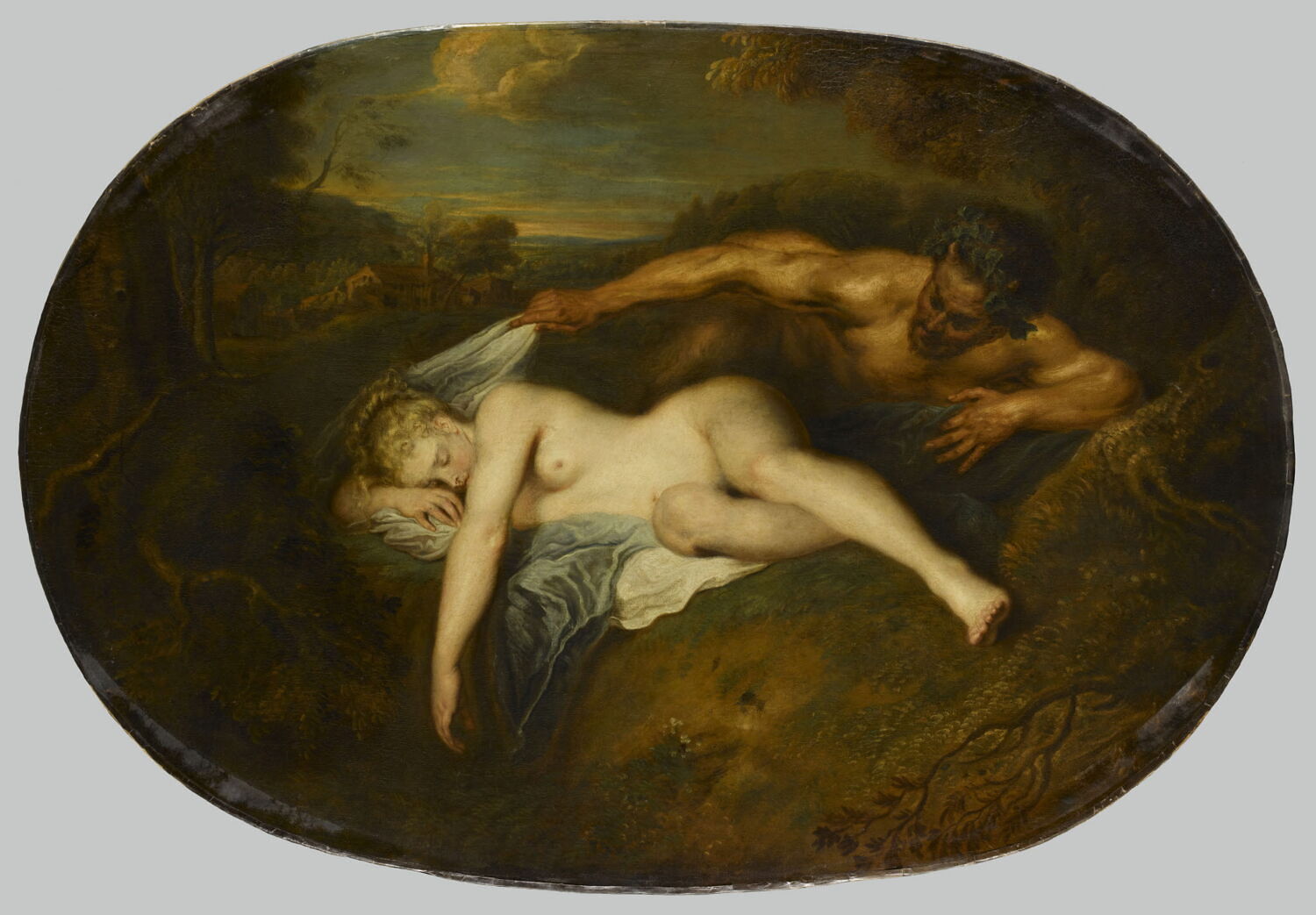
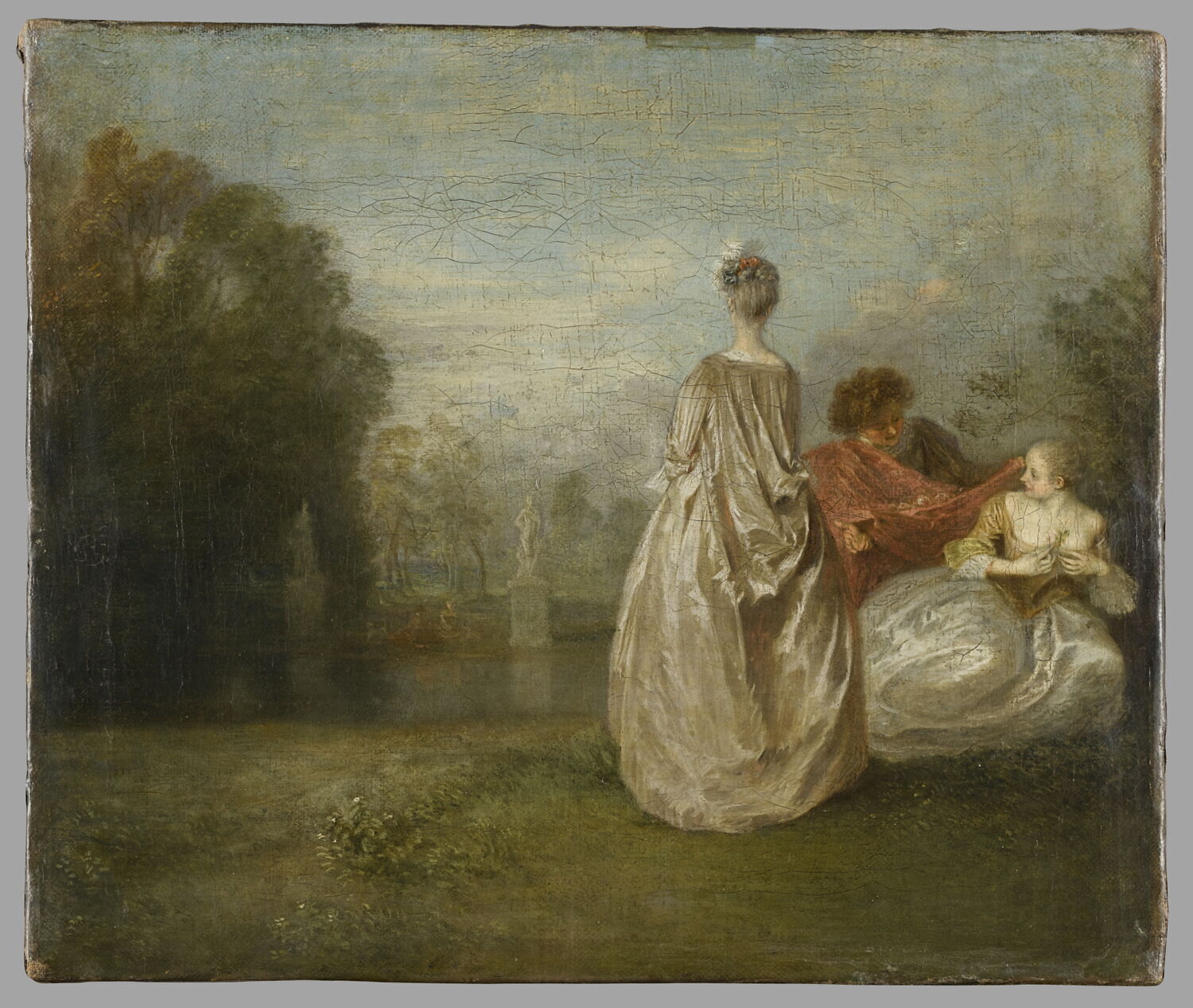
Jean-Antoine WatteauFrankrig, 1684–1721
Landscape
Kan det ses?
Ja, udstillet nu
Hvor er »Landscape« i dag? Eremitagen, Sal 284, Sankt Petersborg. Ja, udstillet nu. Kontrolleret 29. august 2026.

Sankt Petersborg, Rusland
Lukket· åbner kl. 12.00
Udstillet for publikum.
- Kontrolleret
- Uændret siden
- Kilde
- Museet
Oplysninger
- Inventarnummer
- ГЭ-7766
I kataloget
Kilder
- Eremitagen
- Billede: Eremitagen — Museum open access
Imens i livet hos Jean-Antoine Watteau
Hele livetc. 1707 – 1708
Leaves Gillot for Claude Audran
Watteau, whose touchy and difficult temperament is already showing, leaves Gillot and becomes a pupil and assistant to the noted decorator Claude Audran, curator of the art collection of the Luxembourg Palace. He never went through an academic training, but under Audran he composes scenes for wall paintings and absorbs the principles of refined ornament.
c. 1708 – 1709
The Luxembourg Palace as a school: Rubens and Poussin
Working for Audran, Watteau can study the collections of the Luxembourg Palace without restriction; the palace serves as a store for paintings, tapestries and furniture, and for him it is in effect a museum. At its heart is Rubens's cycle of 24 canvases, “The Life of Marie de’ Medici”; he also sees Poussin's mythological landscapes there.
31 August 1709
Second place in the Prix de Rome competition
In summer 1709 Watteau and four other competitors paint the set subject of David's return after his victory over Goliath. On 31 August the result is announced: he does not win the first prize and the long stay in Rome that goes with it — his picture comes second; taking the defeat hard, the 24-year-old leaves Audran and goes back to Valenciennes.
30 July 1712
Admitted to the Academy as an associate
Watteau seeks admission to the Royal Academy of Painting and Sculpture. According to Gersaint, the academician Charles de La Fosse, having seen his work, urges him to apply and helps to get him accepted among the Academy's associate members.
28 August 1717
Elected to the Academy: a “fête galante”
By 1717 Watteau's “gallant scenes” have had such wide success that an exception is made for his reception piece, “Pilgrimage to Cythera”: in the minutes the words “pilgrimage to Cythera” are struck out and replaced by “fête galante”. Watteau is elected a full member of the Academy; the ceremony is attended by the First Painter to the King, Antoine Coypel, by Claude Gillot and by the Regent, the Duke of Orléans.
18. juli 1721
Died