Andy WarholUSA, 1928–1987
Twelve Jackies
Må man se det?
Ja, det tager imod

Art Institute of Chicago
Sal296Chicago, USA
Udstillet for publikum. Hvem der står inde for det, står nedenfor.
- Kontrolleret
- i forgårs
- Uændret siden
- 19. aug. 2026
- Kilde
- Museets egne samlingsdata
About the painting
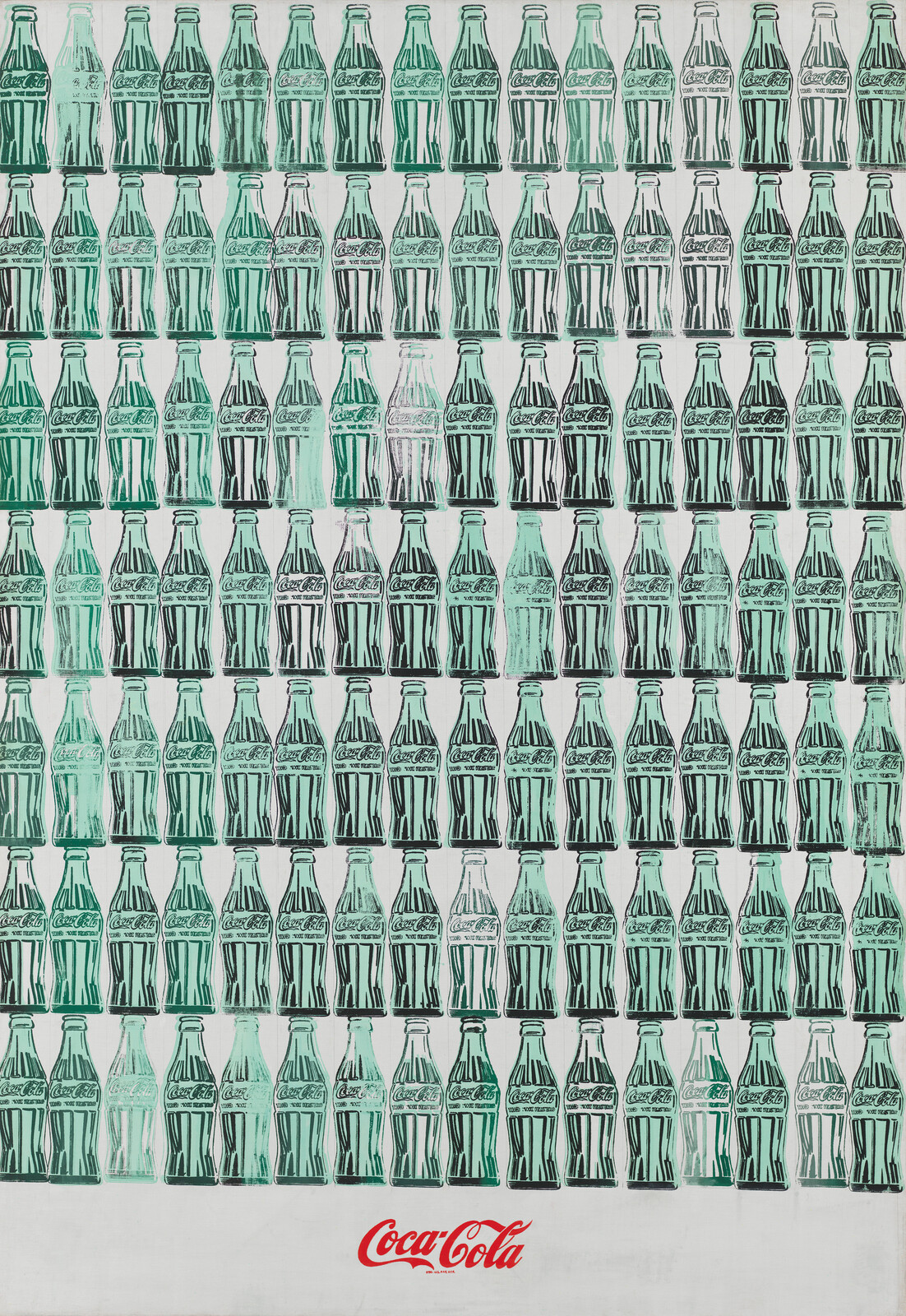
Pop artist Andy Warhol’s fascination with fame and his complicated veneration of popular culture permeated every aspect of his career. Early on he adopted the commercial printing process of photoemulsion silk screen applied to canvas as a means of reproducing the same image, over and over, quickly and efficiently. His studio became known as the Factory, a reference to his preference for mass production. He embraced both household goods and Hollywood personalities, rendering Campbell’s Soup cans and Coca-Cola bottles as stars, Marilyn Monroe and Elizabeth Taylor as products, and vice versa. He also recognized that notoriety could be found even in tragedy. Twelve Jackies comes from a body of work created shortly after the 1963 assassination of President John F. Kennedy.
Read on
As was his practice, Warhol worked from existing imagery; in this case, press photography from the slain president’s funeral. By cropping and enlarging the selected image of the veiled former First Lady, Warhol focuses attention on his “star” much like a director using a close-up lens. The effect is a chilling glamorization of the tragic. Warhol’s use of repetition not only emphasizes the feeling of mourning and loss but also imports a cinematic quality to the work. This emphasis parallels the artist’s interest in the language of film as well as his growing involvement at this time in the world of underground cinema.
Art Institute of ChicagoCC BY 4.0
Oplysninger
- Inventarnummer
- 2015.124
I kataloget
Kilder
- Art Institute of Chicago: the museum's own open data · hentet for 5 dage siden
- Billede: Art Institute of Chicago — © the artist or rights holder
Imens i livet hos Andy Warhol
Hele livet1961–1962
Mastering silkscreen
Seeking technical advice, Warhol turned to Floriano Vecchi of Tiber Press, who showed him the basics of silkscreen printing: transferring designs to acetate, preparing screens and pulling ink with a squeegee. The experiments became a turning point and soon led to some of his earliest silkscreen works.
9 July 1962
Soup cans at the Ferus Gallery
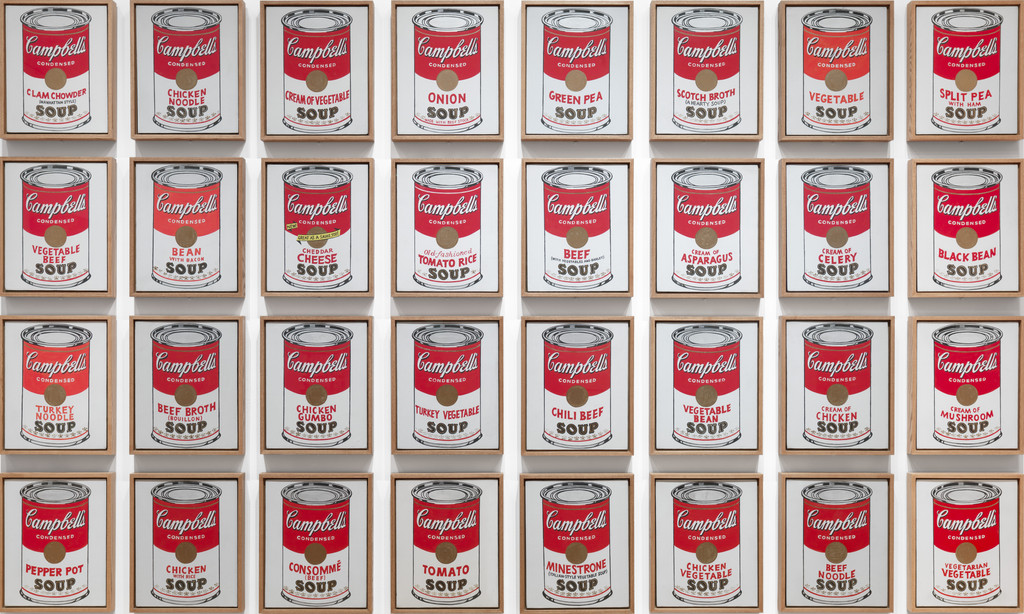
The Los Angeles dealer Irving Blum, surprised that Warhol had no gallery, offered him a solo show at the Ferus Gallery. Warhol sent 32 canvases, one for each variety of Campbell's soup; the exhibition opened on 9 July 1962 and marked his West Coast debut.
October 1962
“The New Realists” at the Sidney Janis Gallery
Invited by the dealer Sidney Janis, Warhol took part in the exhibition The New Realists, showing 200 Soup Cans, Big Campbell's Soup Can 19c (Beef Noodle) and Do It Yourself (Flowers). The show was widely seen as a turning point for the acceptance of Pop art: The New Yorker likened its effect on the New York art world to an “earthquake”.
6 November 1962
First solo Pop show in New York
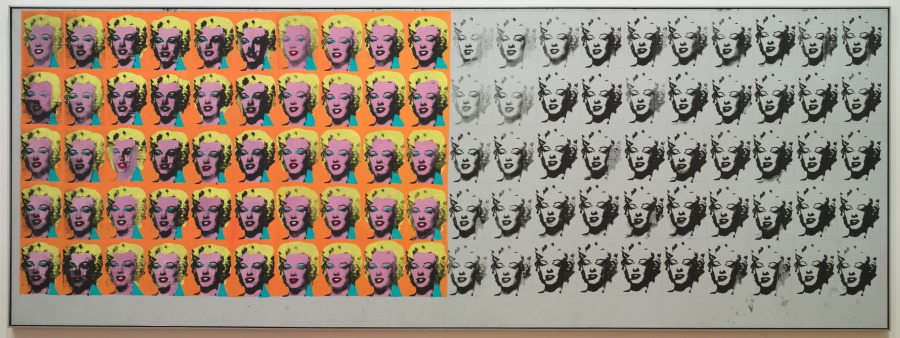
The filmmaker Emile de Antonio introduced Warhol to Eleanor Ward of the Stable Gallery, who agreed to a show in exchange for a painting of a two-dollar bill; the eighteen new works included Marilyn Monroe Twenty Times and Red Elvis. Michael Fried wrote in Art International that of all the painters working in the service of a popular iconography, Warhol was probably the most single-minded and the most spectacular.
1964
The Factory on 47th Street
By 1964 Warhol had moved his studio to 231 East 47th Street, which became known as the Factory; Billy Name covered it in aluminium foil and silver paint. The poet Gerard Malanga helped him with silkscreens and films, and working with assistants became a lasting feature of his method.
May 1965
Paris: announcing his retirement from painting
The second Flowers series was shown at Galerie Ileana Sonnabend in Paris; during the trip Warhol announced that he was retiring from painting to focus on film, saying he no longer believed in painting.

![Liz #3 [Early Colored Liz], Andy Warhol, 1963](/api/img?u=https%3A%2F%2Fwww.artic.edu%2Fiiif%2F2%2F362c0c2a-4576-2207-4ba9-2b87e6d0bad0%2Ffull%2F1200%2C%2F0%2Fdefault.jpg)