 Jean-Antoine WatteauFrankrig, 1684–1721
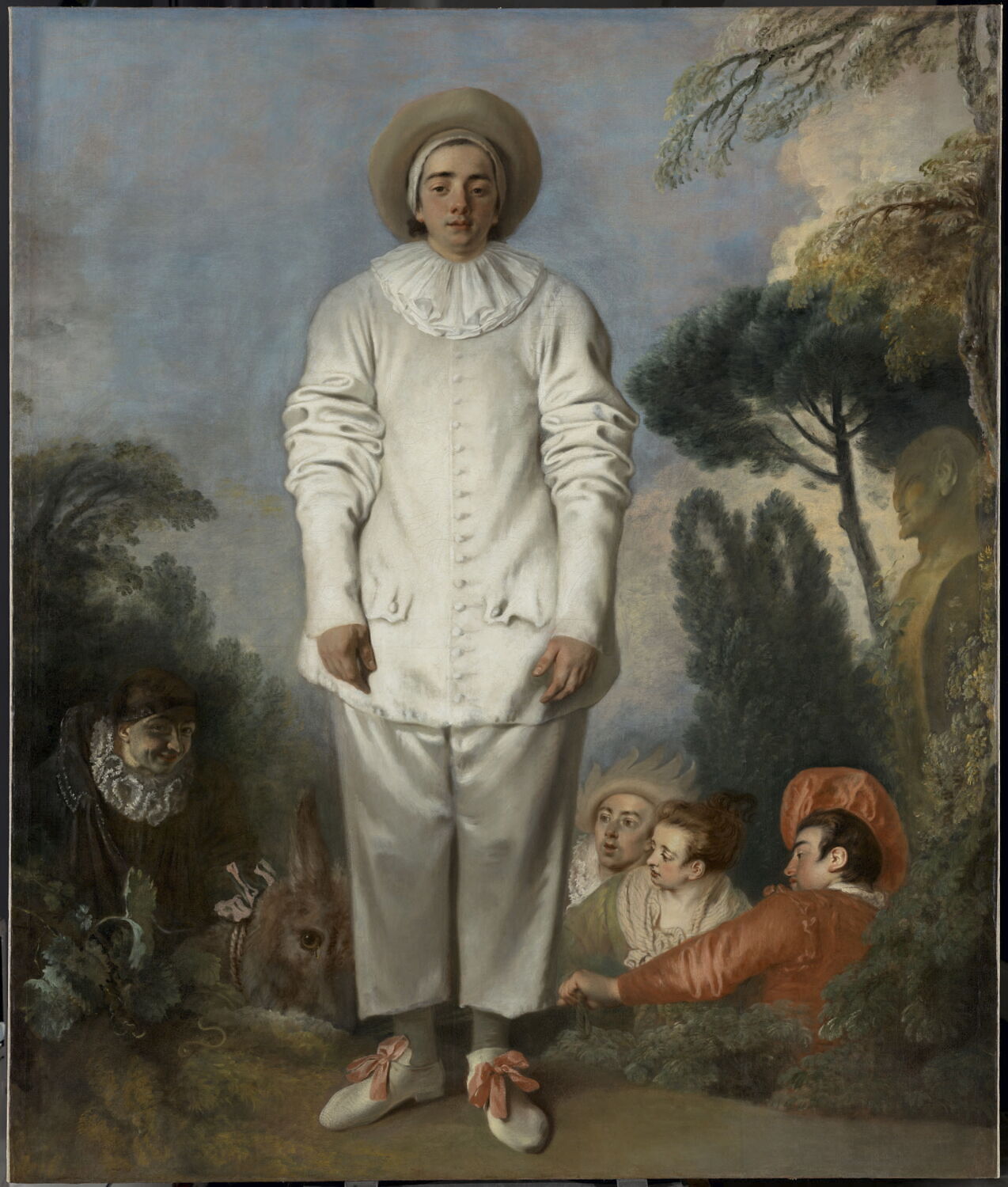
Pierrot
Må man se det?
Ja, det tager imod

Udstillet for publikum.
- Kontrolleret
- Uændret siden
- Kilde
- Museet
Om maleriet
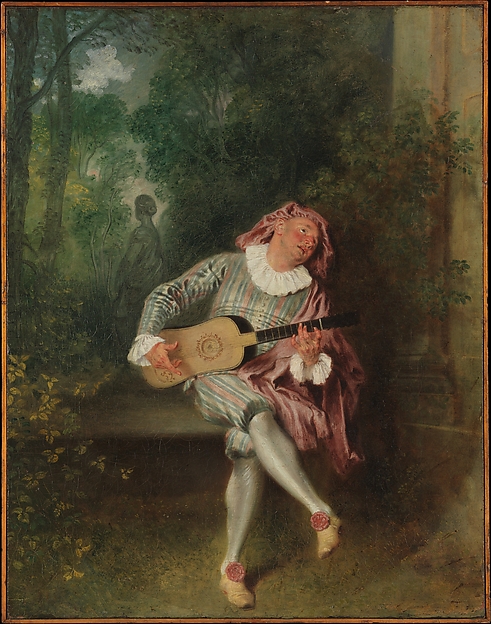
Pierrot, formerly known as Gilles, is a life-size oil-on-canvas painting by the French artist Antoine Watteau, created between 1718 and 1719. Noted for its scale, the piece measures 184.5 x 149.5 cm and is the only life-size figure Watteau has represented. The painting depicts a variety of actors with the traditional commedia dell'arte character Pierrot in a still, frontal pose. The work has been part of the Louvre's collection since it was bequeathed in 1869.
Oplysninger
- Inventarnummer
- MI 1121
I kataloget
Kilder
- Louvre
- Billede: Louvre — © 2024 GrandPalaisRmn (musée du Louvre) / Mathieu Rabeau
Imens i livet hos Jean-Antoine Watteau
Hele livet1710s
Meets Edme-François Gersaint
At Sirois's house Watteau meets his son-in-law, the art dealer Edme-François Gersaint, who soon becomes a close friend.
1710s
Tuberculosis sets in
Watteau's fame grows steadily, yet he is as a rule dissatisfied with everything that comes from his brush; at the same time he develops a serious illness, tuberculosis.
28 August 1717
Elected to the Academy: a “fête galante”
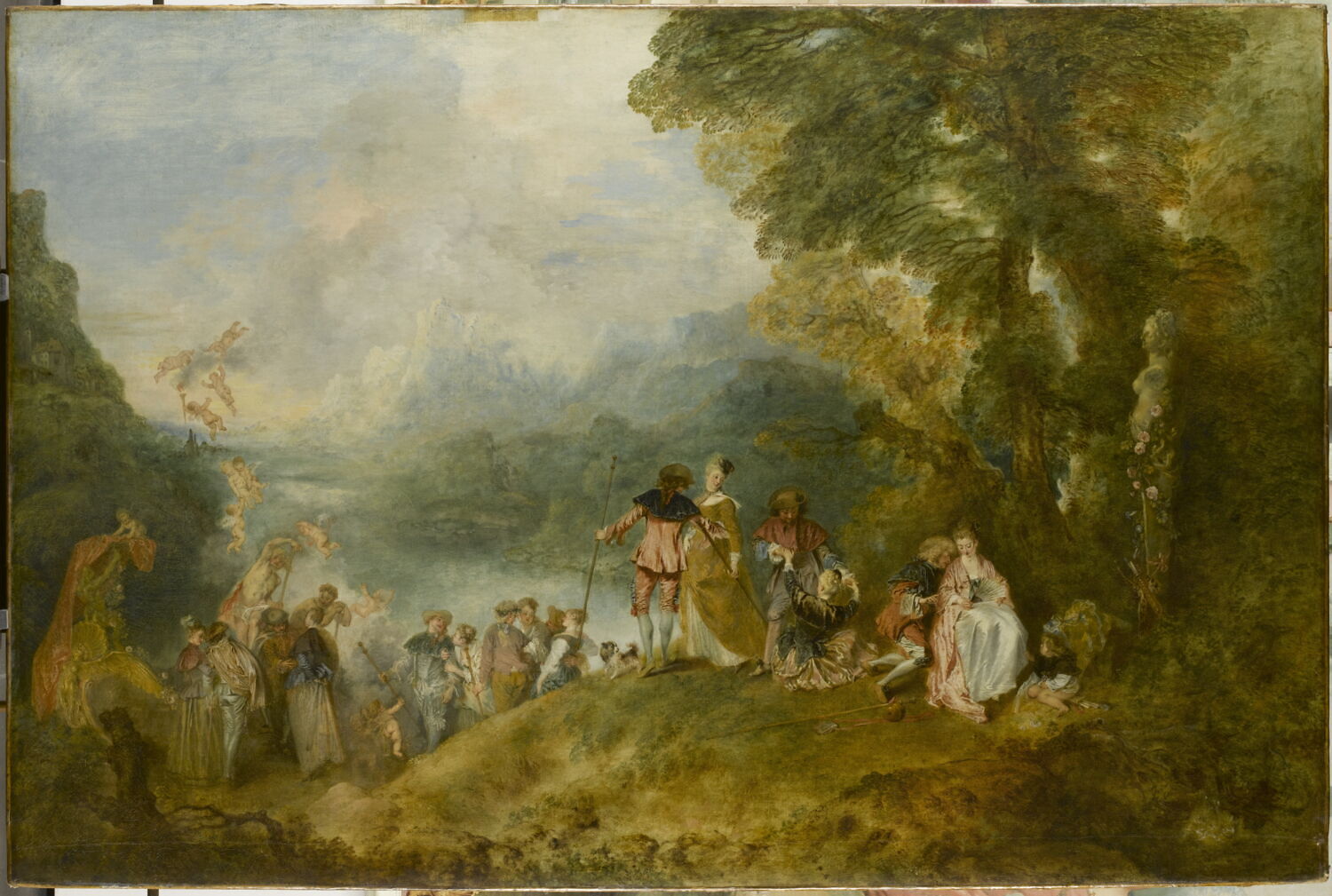
By 1717 Watteau's “gallant scenes” have had such wide success that an exception is made for his reception piece, “Pilgrimage to Cythera”: in the minutes the words “pilgrimage to Cythera” are struck out and replaced by “fête galante”. Watteau is elected a full member of the Academy; the ceremony is attended by the First Painter to the King, Antoine Coypel, by Claude Gillot and by the Regent, the Duke of Orléans.
late 1719 – summer 1720
To London, to see Dr Richard Mead
Watteau's health is failing, and he goes to England at the invitation of Philippe Mercier, an admirer and imitator, hoping to overcome tuberculosis with the help of the well-known physician Richard Mead. The treatment brings no noticeable result and the London climate only aggravates his condition; he returns to Paris in summer 1720, gravely ill.
spring 1721
Moves to Nogent-sur-Marne
In spring Watteau's condition worsens; he leaves Gersaint's house but soon asks for help again, since he finds it hard to breathe in Paris. His friend the Abbé Pierre-Maurice Haranger asks Philippe Le Fèvre, the steward of the king's minor entertainments, to make available an empty house with a garden on the edge of Nogent-sur-Marne, far from the stuffiness and bustle of the capital.
18. juli 1721
Died