 Pablo PicassoSpanien, 1881–1973
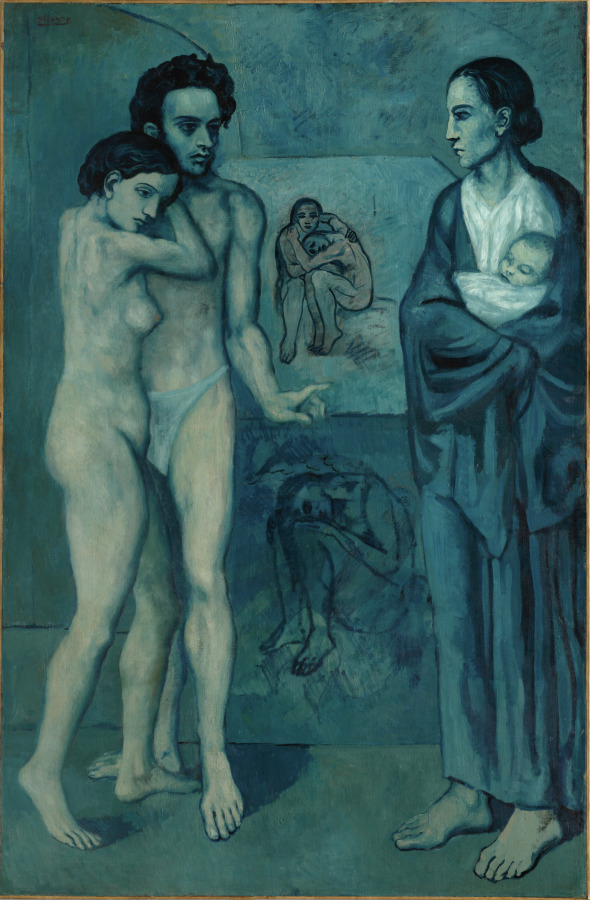
La Vie
Må man se det?
Ja, det tager imod

Udstillet for publikum. Hvem der står inde for det, står nedenfor.
- Kontrolleret
- i forgårs
- Uændret siden
- 19. aug. 2026
- Kilde
- Museets egne samlingsdata
About the painting
La Vie (Zervos I 179) is a 1903 oil painting by Pablo Picasso. It is widely regarded as the pinnacle of Picasso's Blue Period.
The painting is in the permanent collection of the Cleveland Museum of Art.
In the museum's words
The subject of this painting has been interpreted variously as a realistic portrayal of a working-class couple facing the challenges of poverty and as a symbolic representation of the cycle of life, with the infant representing childhood, the couple representing youth, and the draped woman representing age. In 1901, depressed by the suicide of his friend, the poet and painter Carles Casagemas, Pablo Picasso began the melancholic paintings of his Blue Period (1901–4). Twenty-one years old and struggling to support himself, he restricted his palette to cool colors suggestive of night, mystery, dreams, and death. His interest in themes of suffering and social alienation culminated in this painting.
The Cleveland Museum of Art
Oplysninger
- Inventarnummer
- 1945.24
I kataloget
Kilder
- The Cleveland Museum of Art: the museum's own open data · hentet for 6 dage siden
- Billede: The Cleveland Museum of Art — © Estate of Pablo Picasso / Artists Rights Society (ARS), New York
Imens i livet hos Pablo Picasso
Hele livet1895–1904 · Virkested
Barcelona
17 February 1901
Suicide of Carlos Casagemas
The suicide of his close friend Carlos Casagemas deeply shook the young Picasso and became one of the impulses behind the Blue Period.
1901–1904
The Blue Period
The Blue Period began — somber paintings in blue-green tones with themes of poverty and sorrow; Picasso divided his time between Barcelona and Paris.
1904
Move to Paris, Beginning of the Rose Period
Picasso settled in the Bateau-Lavoir residence in Montmartre; the sorrow of the Blue Period gave way to images of the theater and the circus — the Rose Period began.
1904
Meeting Fernande Olivier
In Paris Picasso met the bohemian artist Fernande Olivier, who became his lover and the model for many Rose Period paintings.
1905
Meeting the Steins and Matisse
Picasso became a favorite of the collectors Leo and Gertrude Stein; at one of Gertrude Stein's gatherings in 1905 he met Henri Matisse — a lifelong friend and rival.