City guide
Art in Strasbourg: Goya, Veronese and the Return of Gustave Doré
A museum rebuilt after bombardment and a painting rescued with an aluminium bridge make Strasbourg an art destination with unfinished stories.
2026年11月2日 · 阅读约 7 分钟 · ART WIKI 编辑部
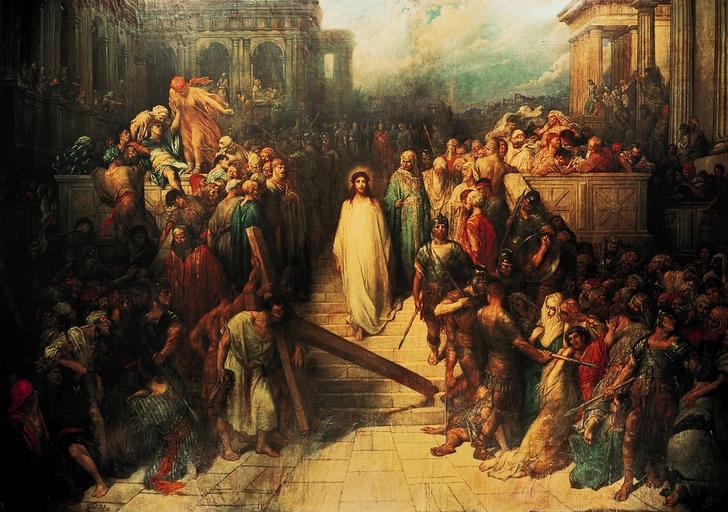
The restorers needed a bridge over the painting. Gustave Doré's Christ Leaving the Court was too large to treat like an ordinary canvas, and its previous repairs had made matters worse. An aluminium walkway gave access to the surface; a new frame would eventually tension it with 308 cables. The man in white at the centre of the crowd had survived a journey through exhibition halls, storage and a Viennese church before Strasbourg bought the picture in 1988.
That rescue makes a useful point of departure for an art day in Strasbourg. Collections here have been destroyed and assembled again; paintings have arrived through the ambitions of German museum directors and the homecoming of a French illustrator's neglected canvas. Divide your visit between the Musée des Beaux-Arts and the Museum of Modern and Contemporary Art. Begin with the older collection, then let Doré change the scale of the afternoon.
Rebuilding a museum after the fire
Prussian bombardment destroyed Strasbourg's first museum collection in 1870. Rebuilding meant buying pictures, not simply repairing walls. Wilhelm von Bode was brought in to form a new collection, with Italian, Flemish and Dutch painting receiving particular attention. The results can feel like an inherited treasury. They were, in considerable part, deliberate acquisitions after a catastrophe.
One of Bode's purchases in Florence was Carlo Crivelli's Adoration of the Shepherds, acquired in 1890. Six years later the critic Charles Loeser called it a fake. Other scholars assigned it to an unnamed follower before its acceptance as Crivelli's own work. Even its date has prompted widely differing proposals. A small panel could carry an argument about the whole reconstruction's powers of judgement.
The scene repays attention on a much smaller scale than Doré. Joseph sleeps while Mary kneels before the child. An angel brings shepherds towards the stable; another episode of their story occupies the distance. The landscape makes room for successive moments rather than freezing every figure at the same instant. Follow the route from the background to the infant. A familiar subject becomes a journey taken at several speeds, with Joseph apparently opting out altogether.
Veronese's fatal misunderstanding
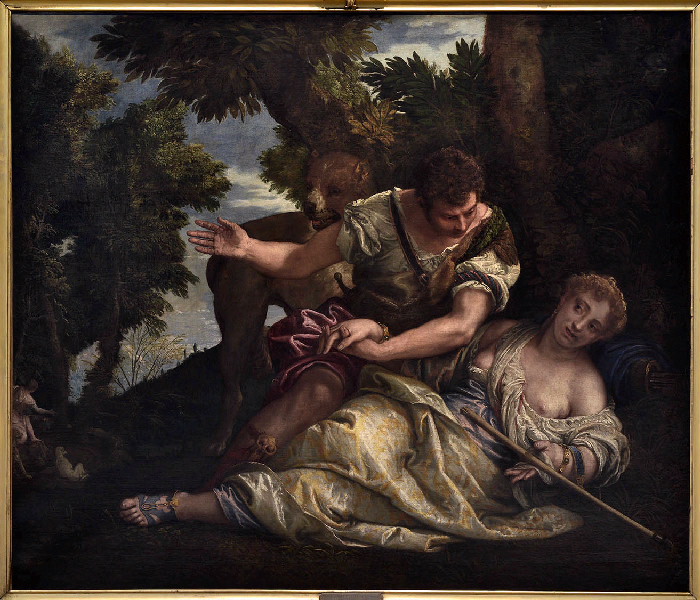
A rustle in the bushes starts the disaster in Cephalus and Procris. Procris follows her husband because she suspects another woman. Cephalus, thinking he hears an animal, throws the javelin she gave him and mortally wounds her. Veronese paints the discovery, after the weapon has done its work. Suspicion has become an irreversible fact.
The brocade of Procris's dress is a strange companion to that story. It supplies the pleasures of Venetian painting at the moment when the body can no longer enjoy them. Cephalus bends towards his wife, but the space separating their gestures cannot be repaired by another movement. Look at the fabric before the faces; its persistence makes the human collapse harder to overlook.
The picture had a second, less intimate history of violence. It belonged to the Spanish royal collection and was taken by Joseph Bonaparte during his rule in Spain. Strasbourg acquired it in 1912. Its journey from a royal setting to a municipal museum should not be confused with the history of the lovers, but it gives the canvas two stories of possession to carry.
Goya writes friendship into the portrait
Goya put the nature of his relationship with Bernardo de Iriarte directly into the inscription. The portrait was painted in 1797 as a sign of mutual regard and affection. Iriarte sits with a book, his head held back and his gaze directed outwards. The words at the bottom prevent the picture from becoming only an inventory of public rank.
Iriarte belonged to the Spanish reformers who looked towards the Enlightenment. His later support for Joseph Bonaparte forced him into exile after the war. The assured sitter does not know that future. In the portrait, the book remains a possession held easily, and the chair allows a turn towards a visitor rather than a rigid frontal presentation.
Stand far enough away to read the pose, then look at the paint. The small, broken marks refuse to imitate a perfectly continuous skin or textile. Goya gives the sitter social confidence without making the surface equally smooth. The inscription is unusually helpful here: friendship is stated, so a secret satirical verdict cannot simply be deduced from a wrinkle or the angle of a mouth.
Doré's enormous return
French critics gave Doré's painting less respect than he wanted. In 1868 he accepted an offer for a London gallery devoted to his pictures. Christ Leaving the Court, completed in 1872, became its great attraction, then travelled around the United States between 1892 and 1898. After returning to London it was stored and forgotten. A canvas more than nine metres wide had somehow slipped from view.
Its purchase for Strasbourg brought it back to the city where Doré was born. Recovery was still a long job. Earlier treatment had used a polyester varnish associated with furniture; it had yellowed and concealed damage. Restorers also found cut edges, tears and extensive losses. The campaign begun in 1998 required structural work before the missing areas of the image could be addressed.
A period engraving helped reconstruct lost drawing. That is a particularly apt tool for rescuing a painter remembered so often through printed images. The crowd's gestures lead towards the central white figure, while the stairs turn a departure into a public spectacle. First take in the distance between that figure and the edges of the canvas. Then approach the smaller incidents. The size establishes a hierarchy before the narrative supplies anybody's name.
A sword kissed, rather than swung
J. Anderson Rose commissioned Rossetti's Joan of Arc Kissing the Sword of Deliverance in 1863. Strasbourg acquired it in 1996, long after it had passed through American ownership. The sitter's identity remains disputed. Rossetti's brother named a German woman, Mrs Beyer; another interpretation proposes Agnes Manetti. It is better to retain the uncertainty than give the face a convenient biography.
Beside Doré's vast public drama, Rossetti's choice feels almost secretive. Joan does not command an army in this close view. Armour, lips and sword meet within a restricted space. The weapon receives a kiss rather than delivering a blow. Set that gesture against the javelin in Veronese: an object made for violence can become a token of devotion, or a lover's gift can become the instrument of death.
Leave a proper break between the two museums, especially if you have already spent the morning examining cathedral stonework. Confirm the availability of your chosen paintings before the trip, then keep the route short enough to linger. Doré deserves room in your afternoon, but Rossetti is a good reason not to spend every remaining minute beneath the biggest canvas.
封面: Le Christ quittant le prétoire — Gustave Doré. © musée d'art moderne et contemporain de Strasbourg; Ministère de la Culture (France), base Joconde
City guide
Art in Rotterdam: Bosch, Bruegel, Dalí and a Visit to the Depot
Bruegel gives a biblical tower a working harbour. Signac carries Rotterdam to Saint-Tropez. Plan a day around a collection whose main museum is being rebuilt.
City guide
Art in Toulouse: Ingres, Delacroix and the Musée des Augustins
A medieval Madonna recovers her colours; an emperor stops a poetry reading. Toulouse’s former convent makes room for public ceremony and private distraction.
City guide
Art in Lille: David, Goya, Delacroix and Monet at the Palais des Beaux-Arts
A general’s helmet collects coins, Medea’s embrace becomes a trap, and two Goyas turn out not to be the pair they seem.