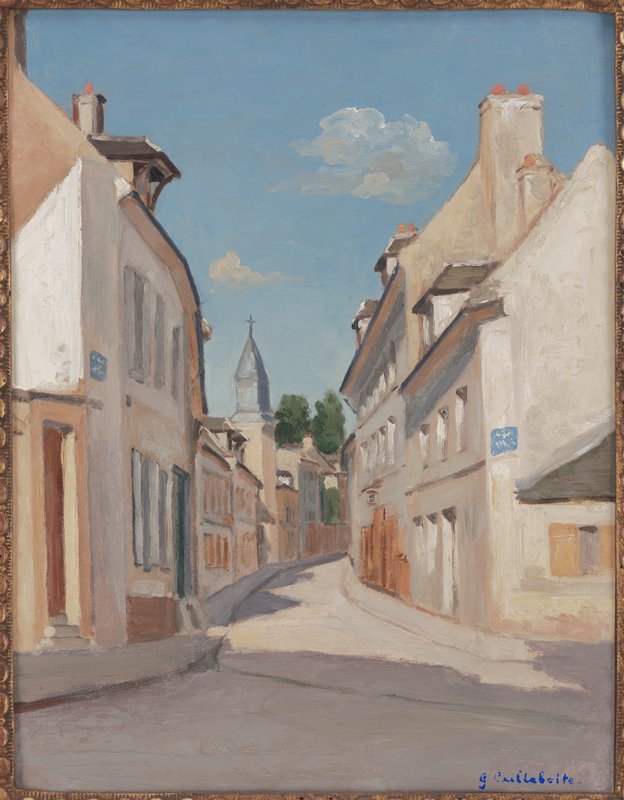
Gustave Caillebotte法国, 1848–1894
Young Man at His Window
能看到吗?
是,正在展出
《Young Man at His Window》现在在哪里? J·保羅·蓋蒂博物館, Museum West Pavilion, Gallery W204, 洛杉矶. 是,正在展出. 核实 2026年10月5日.
闭馆· 10:00 开馆
正对公众展出。
- 核实
- 此状态始于
- 出处
- 博物馆
关于这幅画
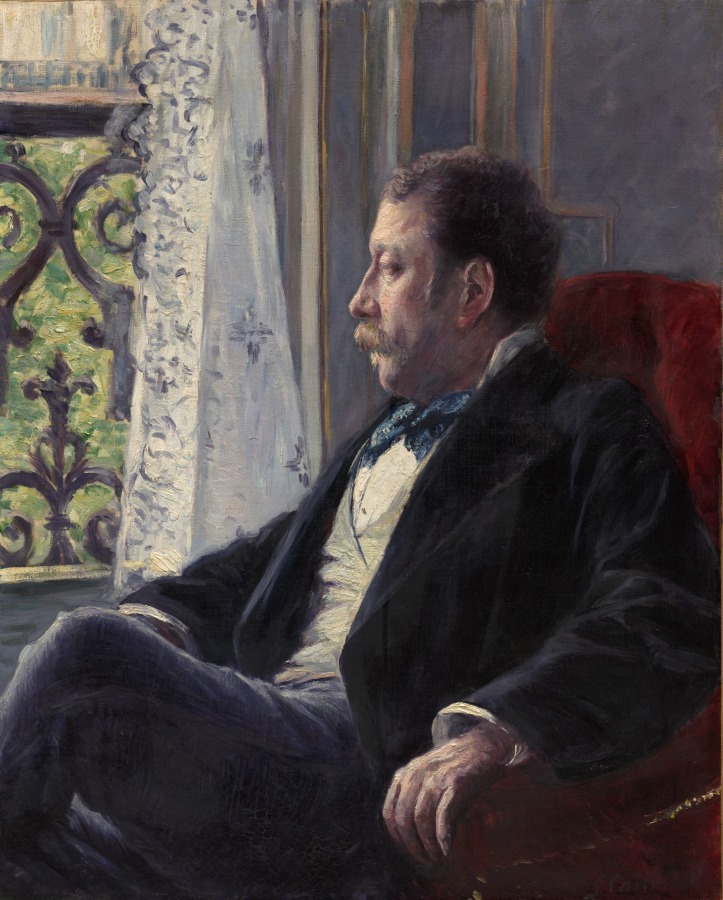
This painting presents a young man in a dark suit standing at a large open window in a well-appointed upper-story apartment. With his back to the viewer, his feet planted firmly apart and hands in his pockets, he looks out at a sun-drenched street scene tightly framed by tall, uniform apartment blocks. Beneath him, a lone woman in fashionable attire is about to cross the street, and several horse-drawn carriages complete the urban tableau. When Caillebotte first exhibited the painting, he presented it not as a portrait but as a genre scene, with the title Jeune homme à sa fenêtre (Young Man at His Window). For his model, Caillebotte used his brother René and the family’s newly-built apartment building at the corner of the rue de Lisbonne and rue de Miromesnil in the 8th arrondissement of Paris.
继续阅读
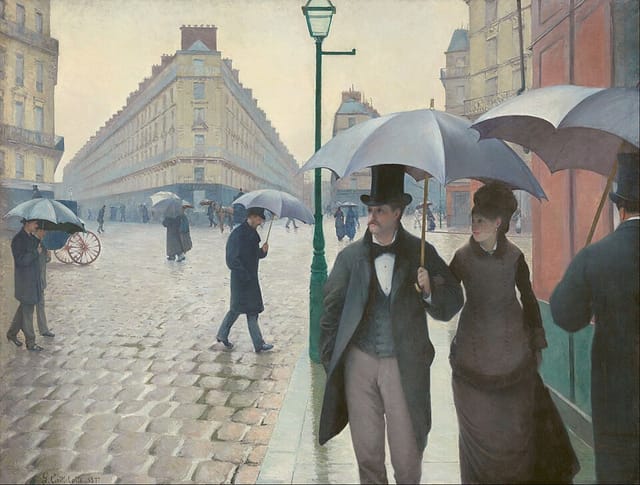
This expensive and fashionable quarter had been completely transformed by the urban renewal project initiated by Baron Haussmann, prefect of the Seine, and by real-estate speculation, in which Caillebotte’s recently deceased father Martial had been a major participant. It is this distinctly modern and bourgeois Paris that Caillebotte's painting evokes.Caillebotte exhibited the picture to acclaim at the 2nd Impressionist exhibition in 1876, when he was just twenty-seven years old. It was his public debut as a painter, and among his submissions this painting received the most critical attention, after his famous *Floor Scrapers* (Musée d’Orsay, Paris). The 1876 exhibition prompted critic and novelist Edmond Duranty to write his landmark essay, “The New Painting,” which strongly advocated for the realist depiction of modern urban life. Though he doesn't name any artists, it is clear that Caillebotte's work was among his primary models.
J·保羅·蓋蒂博物館
作品信息
- 馆藏编号
- 2021.67
已收入目录
出处
- J·保羅·蓋蒂博物館
- 图片: J·保羅·蓋蒂博物館 — Open Content
Gustave Caillebotte当时的生活
完整生平1874
His father’s death: an inheritance that frees him from need
After his father died in 1874 Caillebotte inherited a considerable fortune that allowed him to paint without having to sell his work.
c. 1874
Meeting Degas and De Nittis
Around 1874 Caillebotte met and befriended several artists working outside the Académie des Beaux-Arts, among them Edgar Degas and Giuseppe de Nittis.
1875
Buys his first Monet: the start of his support for friends
Caillebotte bought his first Monet in 1875 and was especially helpful to that artist, buying works and, at least in the case of Monet, paying the rent for his studio. He also helped fund Impressionist exhibitions.
1876
His younger brother René dies
In 1876 René (1851–1876), Gustave’s younger brother, died; in some of his early works Caillebotte had used his mother and brothers as models.
1876
A debut at the Second Impressionist Exhibition
In 1876 Caillebotte made his debut at the Second Impressionist Exhibition with eight paintings, including “The Floor Scrapers” (1875), his earliest masterpiece.
1877
Takes charge of the Third Impressionist Exhibition
By the Third Impressionist Exhibition in 1877 Caillebotte had assumed the leadership role: he secured rental space, selected artists and works and hung the paintings. His involvement eventually declined, but in the end he showed works in five of the eight Impressionist exhibitions.