Hans Memling荷兰, 1494
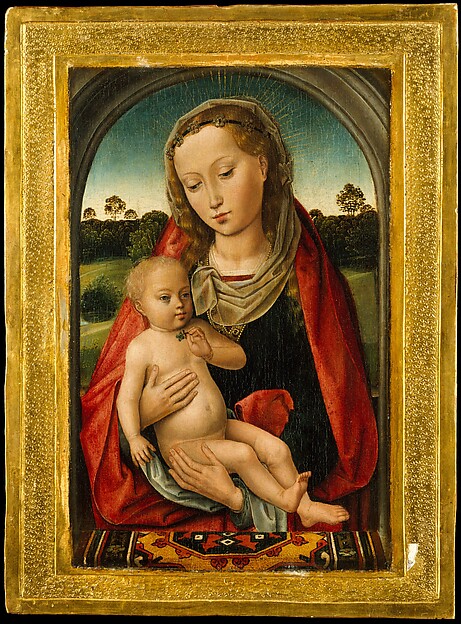
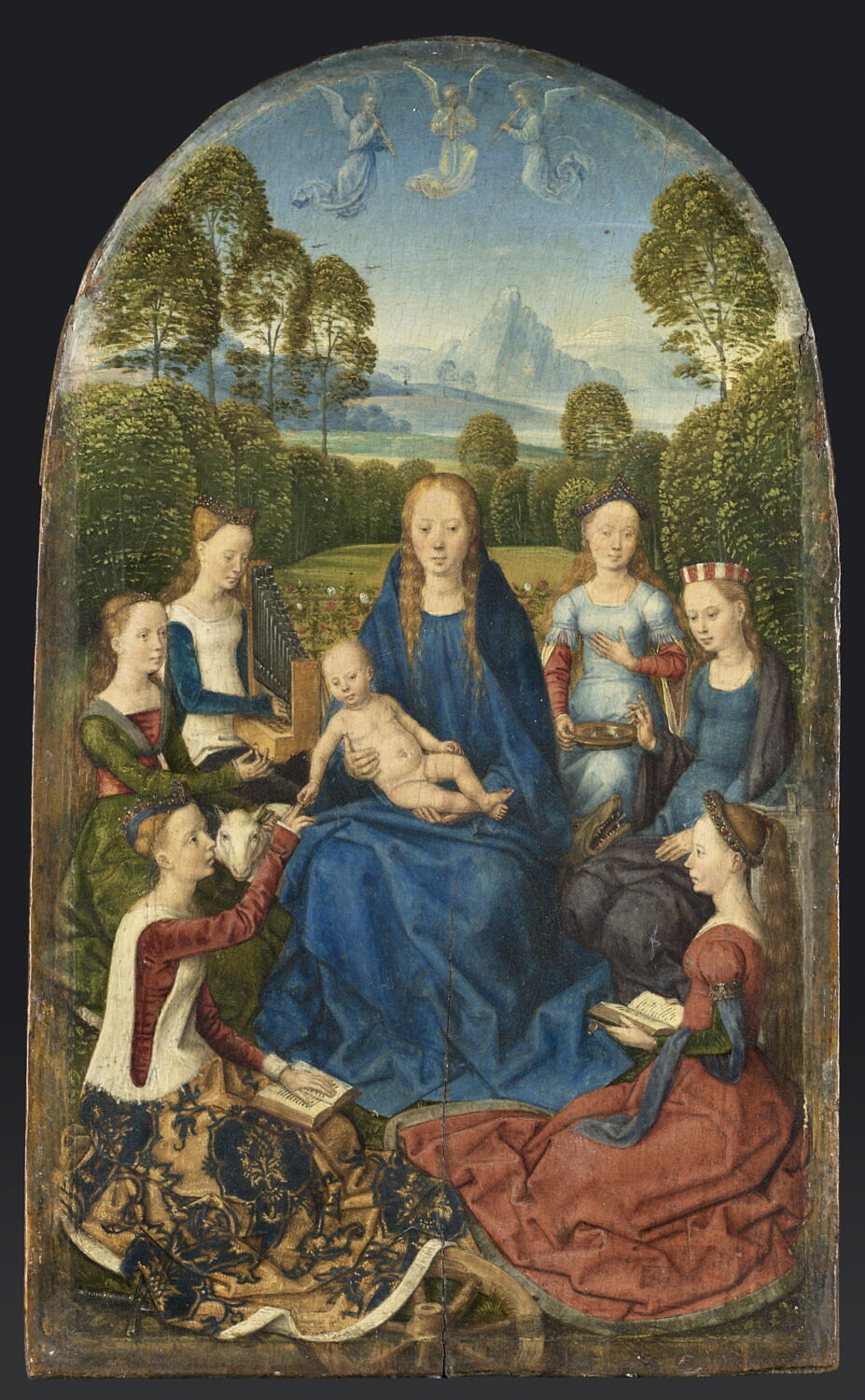
Virgin and Child

关于这幅画
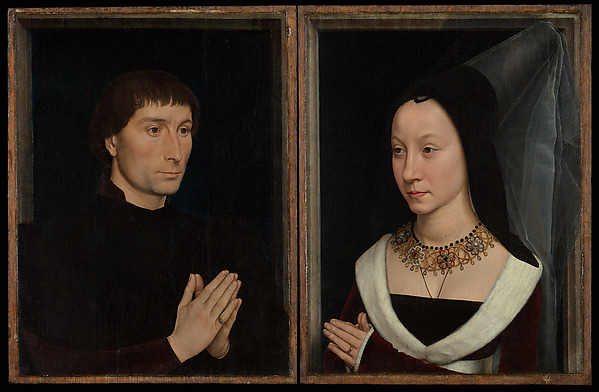
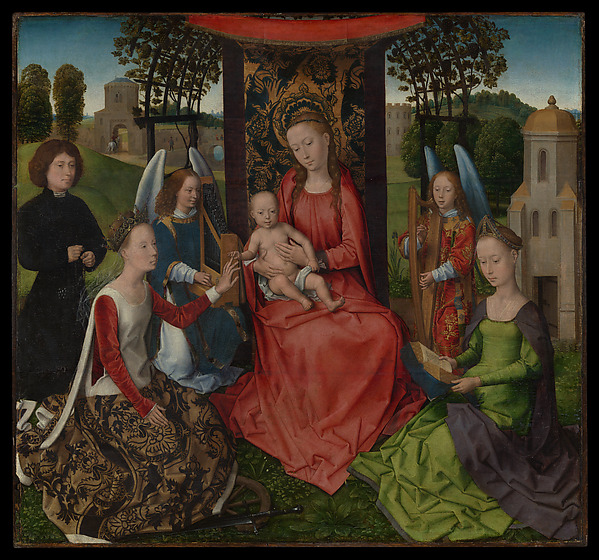
Hans Memling probably worked with Rogier van der Weyden in Brussels before settling in Bruges in 1465. Van der Weyden was well known for his exquisite devotional diptychs, and Memling was influenced by his work, though he made his paired paintings more realistic by setting the figures in a measurable domestic space. The portrait of the unidentified patron and the image of the Virgin and Child were separated many years ago; they were reunited at the Art Institute of Chicago in 1953. Unfortunately, Portrait of a Man in Prayer is in very poor condition; much better preserved is the image Saint Anthony of Padua, presumably the sitter’s patron saint, on the reverse of the portrait. The saint was painted in subdued tones of gray, in imitation of stone, a convention often used on the backs of Netherlandish altarpieces. Anthony of Padua, an important early follower of Saint Francis, was more popular in Italy, Spain and Portugal than in the Low Countries, hence the diptych may have been made for a member of the large foreign community in Bruges.
芝加哥藝術博物館CC BY 4.0
作品信息
- 馆藏编号
- 1933.1050
画面内容
已收入目录
出处
- 芝加哥藝術博物館
- 图片: 芝加哥藝術博物館 — CC0
与此同时,在Hans Memling的生活中
完整生平1466–1494 · 工作地
Bruges
1480 and 1486
Two of Memling’s apprentices join the guild
The registers of the painters’ guild of Bruges name two apprentices who served their time with Memling and paid their dues on admission to the guild in 1480 and 1486.
1487
The death of his wife Anna
Memling’s wife, Anna de Valkenaere, dies; they leave three sons — Jan, Cornelis and Nicolaas.