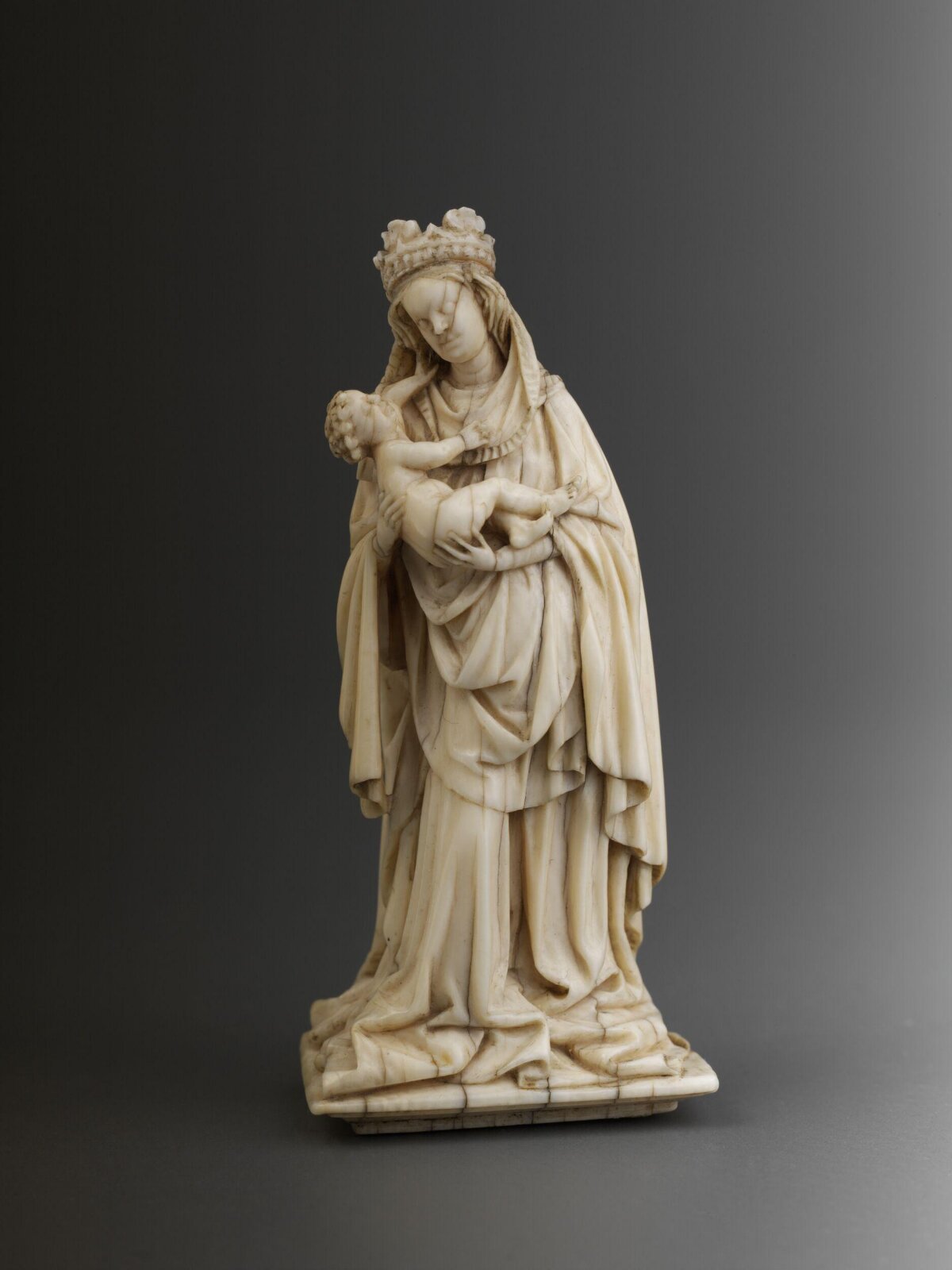
Virgin and Child
可否一睹真容?
可以,正在迎客

正对公众展出。由谁担保,见下文。
- 核实
- 9天前
- 此状态始于
- 2026年9月25日
- 出处
- 博物馆自己的馆藏数据
About the sculpture
This ivory statuette representing The Virgin and Child was made in the South Netherlands in about 1430.
Three dimensional images of the Virgin and Child were ubiquitous from the twelfth to the fifteenth centuries, produced in a wide range of materials and sizes and testifying the overwhelming devotion to th Virgin. Together with the Crucifixion, statues and statuettes of the Virgin and Child were the pricipal objects of devotion in the Christian Church, and vast numbers were made for ecclesisastical, monastic and private worship.
Read on
Ivory was used all over Europe for religious works of art. It was often combined with precious metals and usually took the form of relief panels, for book covers, portable altars and caskets. An almost unbroken tradition of ivory carving extends from the Roman and Byzantine empires until the end of the 14th century. From about 1250, Paris became the centre of production for figures and reliefs intended for private devotion.
维多利亚和阿尔伯特博物馆
作品信息
- 馆藏编号
- A.568-1910
What it shows
已收入目录
出处
- 维多利亚和阿尔伯特博物馆: the museum's own open data · 9天前获取
- 图片: 维多利亚和阿尔伯特博物馆 — © Victoria and Albert Museum, London