![[Villagio], William Henry Fox Talbot, 1834](https://media.getty.edu/iiif/image/9f98c3f4-5cdf-476a-9731-9d3718e83c77/full/!1200,1200/0/default.jpg)
 William Henry Fox Talbot英格兰, 1800–1877
[Villagio]
能看到吗?
目前未展出
《[Villagio]》现在在哪里? 收藏方: J·保羅·蓋蒂博物館, 洛杉矶. 目前未展出. 核实 2026年10月7日.
洛杉矶, 美國
仍属馆藏,只是目前没有展出。
- 核实
- 此状态始于
- 出处
- 博物馆
关于作品
This is a salt print by Talbot, from a cliché verre negative executed by an unknown amateur artist. The image is barely visible.
J·保羅·蓋蒂博物館
作品信息
- 馆藏编号
- 2004.188
已收入目录
出处
- J·保羅·蓋蒂博物館
- 图片: J·保羅·蓋蒂博物館 — Open Content
William Henry Fox Talbot当时的生活
完整生平1832年12月19日
Married: Constance Fox Talbot
1832年12月10日–1834年12月29日
Post: member of the 11th Parliament of the United Kingdom
1832–1835 · 事业
Parliament for Chippenham
A moderate Reformer who generally supported the Whig ministers, Talbot sat in Parliament for Chippenham and retired from it in 1835.
early 1834
Photographic experiments begin
In early 1834 Talbot began the experiments on which he later based his claim to priority of invention. For his “photogenic drawing” he bathed writing paper in a weak solution of table salt and brushed it with a strong solution of silver nitrate; unlike Thomas Wedgwood and Nicéphore Niépce, he found ways to fix the image chemically so that it would not darken in daylight.
1835
The first negative on salted paper
Talbot made his first negative on paper soaked in silver nitrate and a salt solution, as he later recounted in “The Pencil of Nature”. Among his early pictures is the window of his own library, taken from inside with a camera whose optical lens measured only 8 centimetres.
1836
Discovers the Talbot effect
In a paper in the Philosophical Magazine Talbot described how the image of a diffraction grating periodically changed colour as the focusing lens was moved away from it; the paper offered neither measurements nor an explanation. The self-imaging of a periodic grating is now called the Talbot effect.


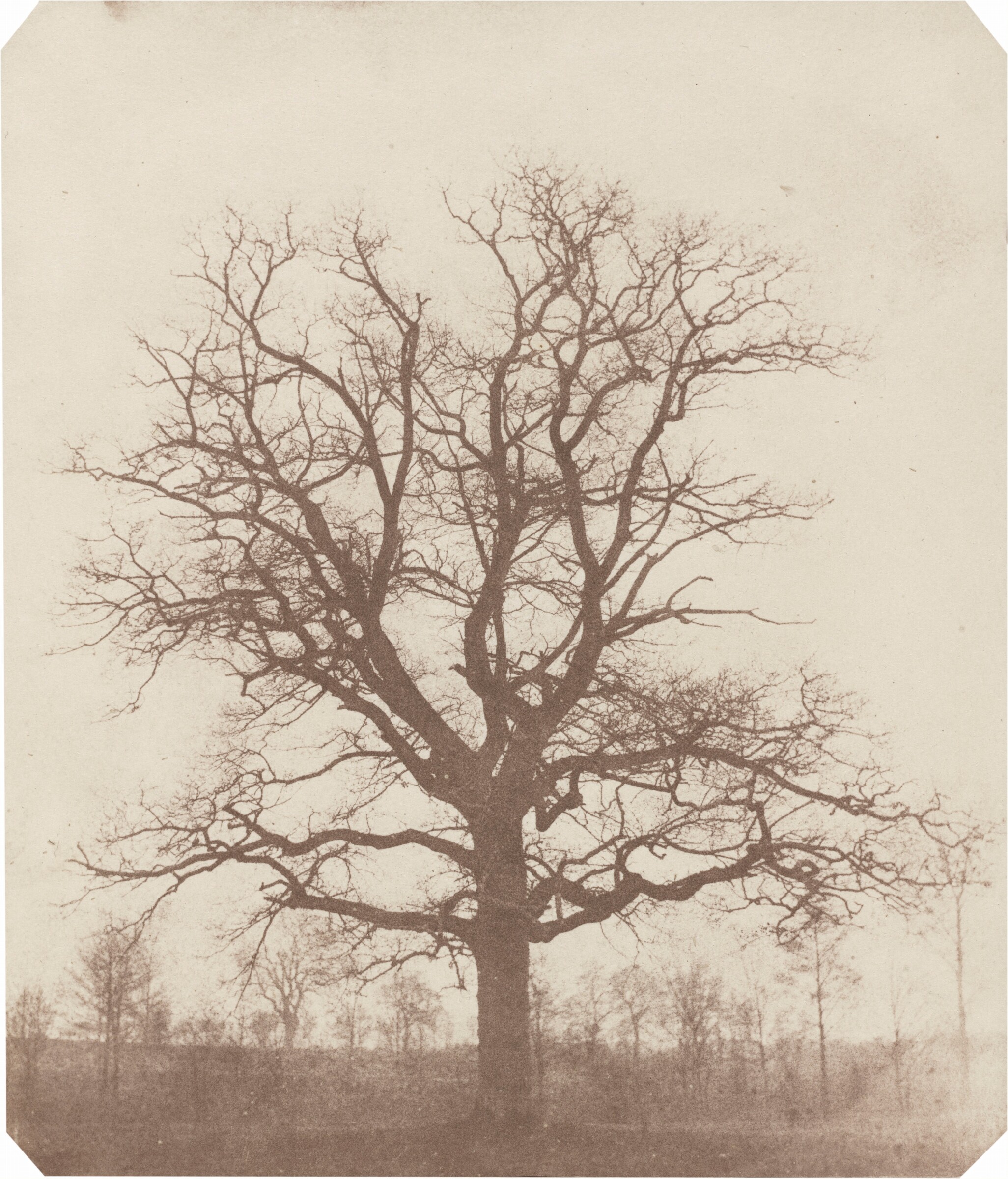
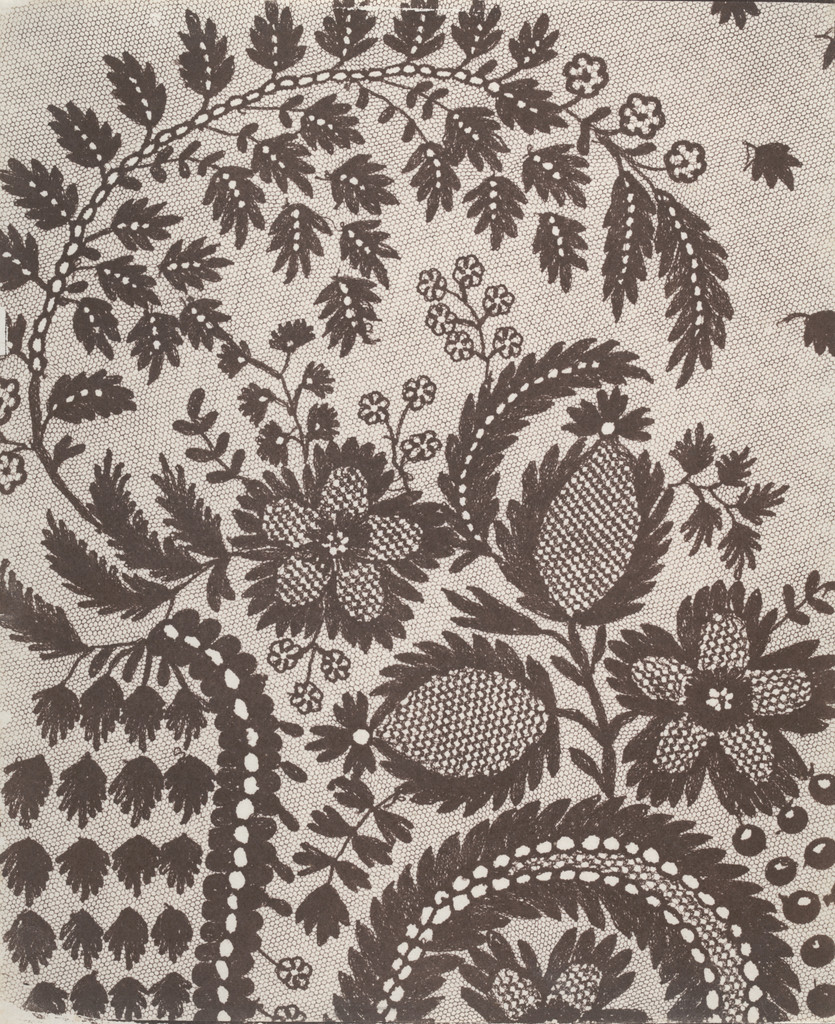

![[Group of Trees from the American Walnut], William Henry Fox Talbot, June 1, 1840](https://media.getty.edu/iiif/image/e2239044-50e4-44d2-be46-db53cdc317f1/full/!1200,1200/0/default.jpg)


